Understanding the Norwood Procedure for HLHS

Updated: 3 days ago
Medically reviewed by Dr. Baraa Alnahhal, MD · Last reviewed: October 2026
The Norwood procedure is the first of three staged surgeries designed to treat hypoplastic left heart syndrome (HLHS), a rare congenital heart defect [1]. Performed within the first two weeks of life, this complex operation reconfigures the heart’s anatomy so the right ventricle can pump blood to both the lungs and the rest of the body [1]. While not a cure [1], it provides a vital interstage solution, enabling infants to survive and progress toward subsequent surgical stages.
Quick Answer: What is the Norwood procedure?
The Norwood procedure is a heart surgery for infants born with an underdeveloped left heart, mainly hypoplastic left heart syndrome [1]. By connecting the right ventricle to the aorta and placing a shunt for lung blood flow, it lets the right side do the work of both ventricles [1]. This Stage 1 operation is typically performed within the first weeks of life [1].
What the research says
Shunt type matters little for long-term survival. In the SVR III follow-up of the Single Ventricle Reconstruction trial (549 infants enrolled), transplant-free survival by age 12 was 59% (163 of 277) with a right ventricle-to-pulmonary artery (Sano) shunt and 54% (144 of 267) with a modified Blalock-Taussig shunt (P = 0.11); protein-losing enteropathy was more common with the Sano shunt (5% vs 2%; P = 0.04) (Goldberg et al., Circulation, 2023) [2].
Hybrid palliation has not beaten the Norwood. A meta-analysis of 21 studies (1,182 infants with HLHS) found higher interstage mortality (risk ratio 1.61; 95% CI 1.10-2.33) and 1-year mortality (risk ratio 1.22; 95% CI 1.03-1.43) with hybrid palliation than with the Norwood procedure, with no difference in 3- or 5-year mortality and more unplanned interventions (risk ratio 3.38; 95% CI 2.04-5.59) (Iskander et al., Journal of Clinical Medicine, 2024) [3].
Neurodevelopmental follow-up is important. A systematic review of children with congenital heart defects (19 studies; 6 in the meta-analysis) found cognitive impairment in 26% (95% CI 20-32) and intellectual disability in 19% (95% CI 7-35) of those born preterm, and two studies reported lower IQ, communication and motor scores in children with HLHS and low birth weight (Derridj et al., European Journal of Pediatrics, 2024) [4].
The Three Stages of HLHS Surgery
The Norwood procedure is only the beginning of a multi-year surgical journey for children with HLHS. The goal of these staged operations is to gradually separate the circulation of oxygen-rich and oxygen-poor blood.
Stage | Procedure Name | Typical Age | Primary Goal |
Stage 1 | Norwood Procedure | Birth to 2 weeks [1] | Enable right ventricle to pump to the body [1]. |
Stage 2 | Glenn Procedure | 4 to 8 months [1] | Direct upper body blood directly to the lungs. |
Stage 3 | Fontan Procedure | 18 months to 5 years [1] | Direct lower body blood directly to the lungs. |

What Happens During the Surgery?
The Norwood procedure is a highly complex operation that can last for several hours, often spanning the length of a full work shift [1]. During the surgery, the baby is placed on a cardiopulmonary bypass machine, which takes over the functions of the heart and lungs, circulating oxygenated blood to the brain and the rest of the body [1].
The surgeon performs several critical steps to reconfigure the heart. First, an opening is created in the wall between the left and right atria, allowing blood returning from the lungs to reach the right ventricle [1]. Next, the small aorta is connected to the larger pulmonary artery, and a patch is used to create a new, larger aorta (neo-aorta) [1]. This new structure is then connected directly to the right ventricle, enabling it to pump blood to the body [1].
Finally, the surgeon must ensure that blood still reaches the lungs to receive oxygen. This is achieved by placing a shunt, or a small tube, to maintain pulmonary blood flow [1]. There are two primary options for this: a Blalock-Taussig (BT) shunt, which connects a major artery to the pulmonary arteries, or a Sano shunt, which connects the right ventricle directly to the pulmonary arteries [1].

Recovery and Long-Term Outlook
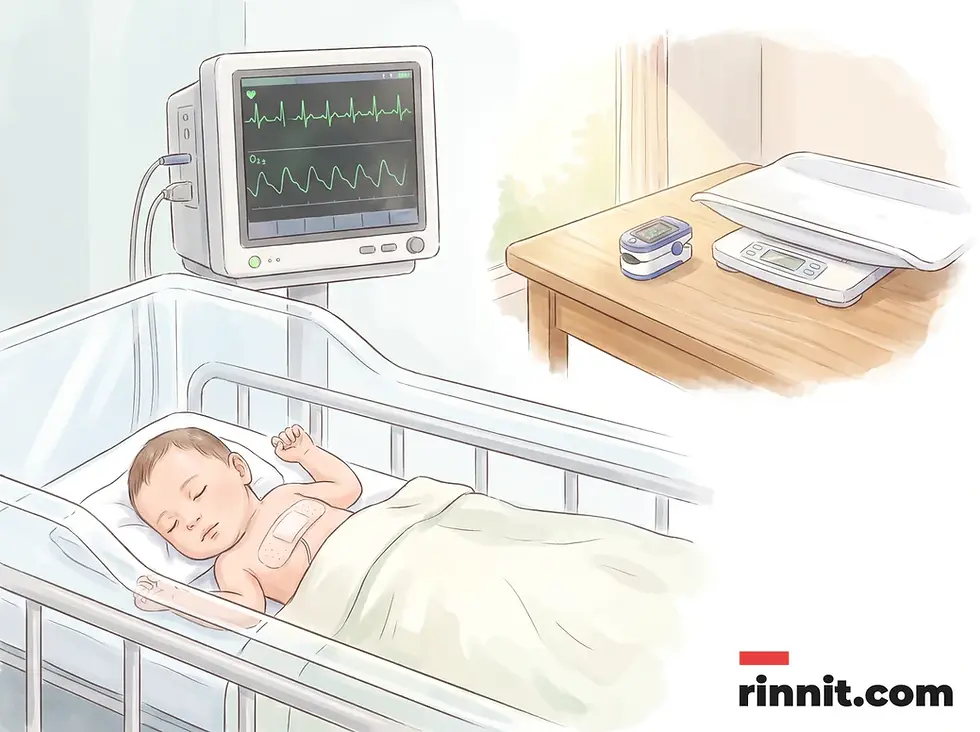
Following the Norwood procedure, infants typically spend approximately seven to 21 days in the hospital [1]. The first week is usually spent in the intensive care unit (ICU), where medical teams closely monitor the baby's heart function and oxygen levels [1]. Parents will notice various tubes and monitoring equipment, as well as a bandage in the middle of the child's chest [1].
It is important to understand that while the Norwood procedure significantly improves circulation, it is not a permanent cure [1]. Because oxygenated and deoxygenated blood still mix within the heart at this stage, the baby may continue to have a blue tint to their skin, a condition known as cyanosis [1]. Long-term success requires a dedicated home monitoring program and lifelong follow-up care with a pediatric cardiologist [1].
Conclusion and Next Steps
The Norwood procedure represents a monumental advancement in pediatric cardiac surgery, transforming HLHS from a fatal condition into one that can be managed through childhood and into adulthood. While the risks, including potential arrhythmias or neurodevelopmental delays [1], are significant, the procedure offers a vital chance for survival. If your child has undergone this surgery, it is essential to follow all prescribed medication schedules and maintain regular appointments with a multidisciplinary cardiac team.
For more information on pediatric heart health and surgical recovery, consult with a certified pediatric cardiologist or explore resources regarding the subsequent Glenn and Fontan procedures.
Frequently Asked Questions
What is the main goal of the Norwood procedure?
The primary objective is to allow the heart's right ventricle to take over the pumping duties for the entire body, bypassing the underdeveloped left side of the heart.
How soon after birth is the surgery performed?
The Norwood procedure is typically performed within the first two weeks of an infant's life, often within the first few days.
Is the Norwood procedure a cure for HLHS?
No, it is the first of three staged surgeries. It improves circulation but does not fully separate oxygenated and deoxygenated blood.
What is the difference between a BT shunt and a Sano shunt?
A BT shunt connects a major artery to the pulmonary arteries, while a Sano shunt connects the right ventricle directly to the pulmonary arteries.
How long does the hospital stay last?
Most infants remain in the hospital for seven to 21 days, including at least one week in the intensive care unit.
Why does the baby still look blue after surgery?
Because oxygen-rich and oxygen-poor blood still mix in the heart after the Stage 1 procedure, a blue skin tint (cyanosis) is common.
What are the long-term survival rates?
In-hospital survival is about 90%, with 60% to 75% of children surviving to age five and 60% surviving 20 years without a transplant.
What risks are associated with the surgery?
Potential complications include narrowing of the arteries (stenosis), shunt failure, heart rhythm issues, and neurodevelopmental delays.
What kind of follow-up care is required?
Children require lifelong monitoring by a cardiologist and often participate in specialized home monitoring programs between surgical stages.
Can a baby with HLHS live a normal life?
With successful completion of all three surgical stages and ongoing medical management, many children grow into active teens and young adults.
Related Reading
Hypoplastic Left Heart Syndrome (HLHS): What It Is, Symptoms, Surgery Stages, and Lifelong Care explains HLHS, its staged surgeries and lifelong follow-up care.
Glenn Procedure: A Critical Milestone in Congenital Heart Surgery describes the second-stage surgery that usually follows the Norwood.
Fontan Procedure: How It Works, Stages, Risks, and Long-Term Outlook covers the final stage of single-ventricle repair and long-term outlook.
BTT Shunt: A Vital Bridge for Congenital Heart Care explains how this shunt supplies blood flow to the lungs.
References
Cleveland Clinic. Norwood Procedure. Cleveland Clinic. Last updated March 6, 2023. https://my.clevelandclinic.org/health/treatments/24794-norwood-procedure
Goldberg CS, Trachtenberg F, Gaynor JW, et al. Longitudinal follow-up of children with HLHS and association between Norwood shunt type and long-term outcomes: the SVR III study. Circulation. 2023;148(17):1330-1339. PMID 37795623. https://doi.org/10.1161/CIRCULATIONAHA.123.065192
Iskander C, Nwankwo U, Kumanan KK, et al. Comparison of morbidity and mortality outcomes between hybrid palliation and Norwood palliation procedures for hypoplastic left heart syndrome: meta-analysis and systematic review. Journal of Clinical Medicine. 2024;13(14):4244. PMID 39064284. https://doi.org/10.3390/jcm13144244
Derridj N, Calderon J, Bonnet D, et al. Neurodevelopmental outcomes of preterm and growth-restricted neonate with congenital heart defect: a systematic review and meta-analysis. European Journal of Pediatrics. 2024;183(5):1967-1987. PMID 38353800. https://doi.org/10.1007/s00431-023-05419-w
Medical disclaimer
The information provided in this article is for educational purposes only and should not be used as a substitute for professional medical advice, diagnosis, or treatment. Always seek the advice of your physician or other qualified health provider with any questions you may have regarding a medical condition.



Comments