Understanding Retinol: Benefits, Side Effects, and Best Practices

Updated: 2 days ago
Medically reviewed by Dr. Baraa Alnahhal, MD · Last reviewed: October 2026
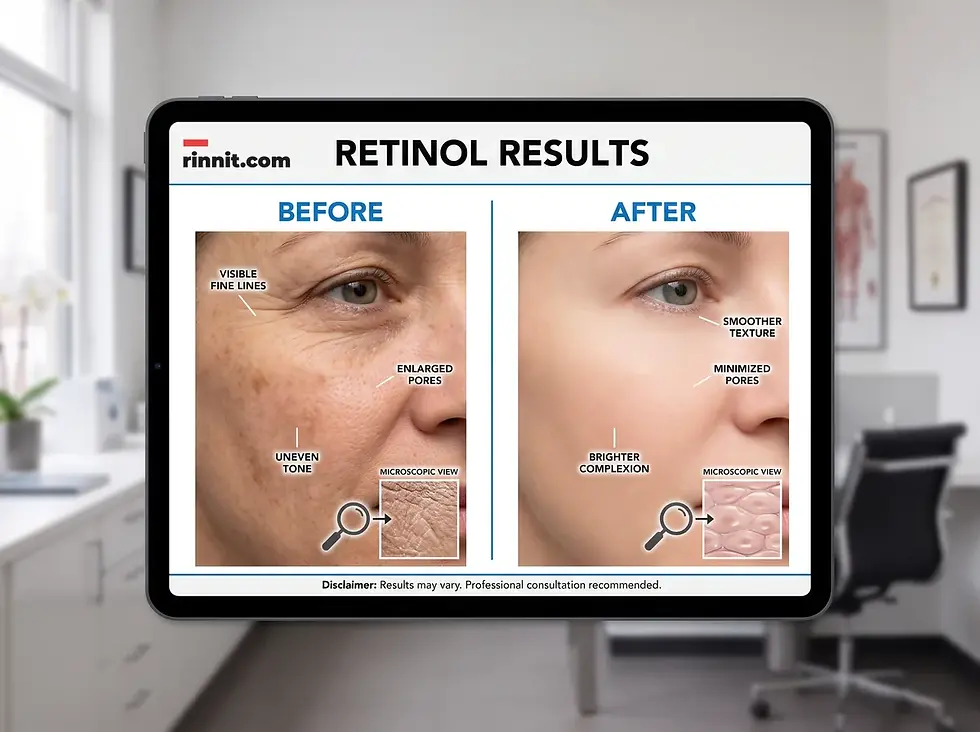
Retinol is a potent form of vitamin A widely used in skincare to treat acne and combat the signs of aging. [1] By increasing skin cell turnover and boosting collagen production, it helps unclog pores, reduce fine lines, and lighten dark spots. [1] While highly effective, retinol can cause temporary irritation and increased sun sensitivity, requiring a gradual introduction and consistent use of sunscreen. [1] Whether obtained over the counter or via prescription, it is a cornerstone of modern dermatology for achieving a clearer, more youthful complexion.
Quick Answer: What is retinol?
Retinol is a topical vitamin A derivative that improves skin by speeding cell turnover and collagen production. [1] It treats acne, fine lines, large pores and hyperpigmentation by exfoliating the skin and keeping pores clear. Because it can be irritating, apply a pea-sized amount at bedtime, starting every other day so the skin can adjust. [1]
What the research says
Retinol reduced wrinkles and dark spots in a 12-week trial, with more irritation than a gentler alternative. In a randomized, double-blind trial of 44 adults comparing retinol 0.5% cream once daily with bakuchiol 0.5% cream twice daily, both significantly decreased wrinkle surface area and hyperpigmentation with no statistical difference between them, while retinol users reported more facial scaling and stinging (Dhaliwal et al., British Journal of Dermatology, 2018 [2]).
Retinol is one of the milder retinoids. A clinical review of retinoids for skin aging found that burning, scaling and dermatitis are more prominent with tretinoin and tazarotene, whereas retinaldehyde and retinol are considerably less irritating (Mukherjee et al., Clinical Interventions in Aging, 2006 [3]).
Topical retinoids are a core acne treatment. A review of acne guidance reports that both the American Academy of Dermatology and the European Dermatology Forum agree retinoids have an essential role in acne, and the AAD describes them as the core of topical therapy because they unclog pores, resolve the earliest acne lesion and calm inflammation (Leyden et al., Dermatology and Therapy, 2017 [4]).
How Retinol Works on the Skin
Retinol functions at a cellular level to revitalize the skin's appearance. By promoting the growth of new skin cells and slowing the breakdown of collagen, it enhances skin elasticity and thickness. This process not only smooths out wrinkles but also helps to fade stubborn dark spots caused by sun damage or hormonal changes like melasma.
For those struggling with acne, retinol is a powerful ally. It prevents the accumulation of dead skin cells and oils that lead to blackheads and whiteheads. [1] While some users may experience an initial 'purge' where breakouts appear to worsen, consistent application leads to clearer, smoother skin over time. [1]
Condition | How Retinol Helps | Expected Results |
Fine Lines & Wrinkles | Boosts collagen and elasticity | Smoother, firmer skin |
Acne & Clogged Pores | Increases turnover and unclogs pores | Reduced breakouts and blackheads |
Dark Spots | Slows melanin production | Lightened sun and age spots |
Skin Texture | Exfoliates and thickens dermis | Fresher, plumper appearance |
Stretch Marks | Improves skin elasticity | Less noticeable scarring |

Choosing the Right Product
Retinol is available in various strengths and formulations, ranging from mild over-the-counter serums to potent prescription retinoids. [1] Common prescription-strength options include tretinoin, adapalene, and tazarotene. While higher concentrations offer faster results, they also carry a higher risk of irritation, making it essential to consult with a dermatologist to find the best fit for your skin type.
For individuals with sensitive skin or known allergies, alternatives to retinol may be necessary. [1] Retinoids are generally not recommended during pregnancy, and prescription tazarotene must not be used if you are pregnant, so talk to a healthcare provider before using any retinoid if you are pregnant, planning a pregnancy or breastfeeding. [1]
Proper Application and Safety
To minimize the risk of irritation, retinol should be applied correctly as part of a nightly routine. A patch test on a small area of skin is recommended before full application. [1] Once confirmed safe, a pea-sized amount should be applied to a clean, dry face, avoiding the sensitive areas around the eyes, nose, and mouth. [1]
Sun protection is non-negotiable when using retinol. The treatment increases skin sensitivity to ultraviolet rays, significantly raising the risk of sunburn. [1] Applying a broad-spectrum sunscreen every morning and limiting direct sun exposure are critical steps in maintaining skin health while using these products.

Managing Side Effects and Expectations
It is common to experience temporary side effects when first starting retinol, such as dryness, redness, itching, or peeling. These symptoms typically subside as the skin builds tolerance to the treatment. [1] Starting with application every other night and gradually increasing to daily use can help manage these initial reactions. [1]
Patience is key when using retinol. While it begins working immediately at the cellular level, visible improvements in acne may take several weeks, and changes in wrinkles or dark spots can take several months. Sticking to the regimen, even during the initial 'purge' phase, is essential for achieving long-term benefits.
Retinoid Type | Availability | Common Uses |
Retinol | Over-the-counter | Mild aging, fine lines, texture |
Adapalene | OTC & Prescription | Acne, clogged pores |
Tretinoin | Prescription only | Severe acne, deep wrinkles |
Tazarotene | Prescription only | Psoriasis, significant sun damage |
Conclusion and Next Steps
Retinol remains one of the most researched and effective ingredients in skincare. By addressing multiple concerns from acne to aging, it offers a comprehensive solution for those looking to improve their skin's health and appearance. With proper application and sun protection, it can be a safe and transformative addition to any beauty routine.
Next step: If you are interested in the benefits of retinol, start with a low-concentration over-the-counter product or consult a dermatologist to discuss prescription options. Remember to introduce it slowly and always protect your skin with sunscreen for the best results.
Frequently Asked Questions
What is the best age to start using retinol?
While there is no specific age, many people start using retinol in their mid-20s or early 30s to prevent signs of aging. It is also commonly used by teenagers and young adults to treat persistent acne.
Can I use retinol every night?
It is best to start by using retinol every other night or every few nights to see how your skin reacts. Once your skin has adjusted and you no longer experience significant irritation, you can gradually increase to every night.
Why should I only apply retinol at night?
Retinol is sensitive to sunlight, which can break down the active ingredient and make it less effective. Additionally, it increases your skin's sensitivity to UV rays, making nighttime application safer and more practical.
What is the 'retinol purge'?
The 'retinol purge' is a temporary period where acne may appear to worsen when you first start the treatment. This happens because the increased cell turnover brings existing clogs to the surface faster. It usually clears up within a few weeks.
Can I use retinol with other skincare ingredients like Vitamin C?
Yes, but it is often recommended to use them at different times. For example, you can apply Vitamin C in the morning for antioxidant protection and retinol at night for repair. Using them together can sometimes increase irritation.
Is it normal for my skin to peel?
Some mild peeling, redness, and dryness are common side effects when starting retinol. [1] However, if your skin becomes excessively painful, raw, or very red, you should reduce the frequency of use or consult a professional.
How much retinol should I use on my face?
A pea-sized amount is sufficient for the entire face. [1] Using more will not produce faster results and is much more likely to cause significant irritation and redness.
Can I use retinol if I have sensitive skin?
Yes, but you should choose a very low concentration and introduce it very slowly. You might also consider using the 'sandwich method,' where you apply moisturizer both before and after the retinol to create a buffer.
Should I stop using retinol before going on vacation?
If you plan to be in intense sun for long periods, such as at a beach, you may want to pause your retinol use a few days before and during your trip to minimize the risk of severe sunburn.
How long does one bottle of retinol usually last?
Since you only use a pea-sized amount once a day or every other day, a standard bottle or tube can often last for several months.
Related Reading
Acne: Complete Guide to Symptoms, Causes, Diagnosis, and Treatment explains what causes acne and which treatments clear breakouts.
Understanding Melasma: Causes, Symptoms, and Management covers why dark facial patches form and how to fade them.
Treatments to Reduce Wrinkles: Options, Recovery and Results compares creams, procedures and injections that soften wrinkles.
The Power of Prescription Skincare: Targeted Treatments and Results describes prescription skin treatments and what results to expect.
References
Cleveland Clinic. Retinol. Cleveland Clinic. June 17, 2022. https://my.clevelandclinic.org/health/treatments/23293-retinol
Dhaliwal S, Rybak I, Ellis SR, et al. Prospective, randomized, double-blind assessment of topical bakuchiol and retinol for facial photoageing. British Journal of Dermatology. 2018;180(2):289-296. PMID 29947134. https://doi.org/10.1111/bjd.16918
Mukherjee S, Date A, Patravale V, et al. Retinoids in the treatment of skin aging: an overview of clinical efficacy and safety. Clinical Interventions in Aging. 2006;1(4):327-348. PMID 18046911. https://doi.org/10.2147/ciia.2006.1.4.327
Leyden J, Stein-Gold L, Weiss J. Why topical retinoids are mainstay of therapy for acne. Dermatology and Therapy. 2017;7(3):293-304. PMID 28585191. https://doi.org/10.1007/s13555-017-0185-2
Medical disclaimer
The information provided in this article is for educational purposes only and should not be used as a substitute for professional medical advice, diagnosis, or treatment. Always seek the advice of your physician or other qualified health provider with any questions you may have regarding a medical condition.



Comments