Acne: Complete Guide to Symptoms, Causes, Diagnosis, and Treatment

Updated: 2 days ago
Medically reviewed by Dr. Baraa Alnahhal, MD · Last reviewed: September 2026
Quick Answer: What Is Acne?
Acne is a skin condition that occurs when hair follicles become plugged with oil and dead skin cells, causing whiteheads, blackheads, or pimples. It is most common in teenagers but affects people of all ages, and it is driven by four factors: excess oil production, clogged follicles, bacteria, and inflammation. Effective treatments exist — from gentle cleansing and over-the-counter products to prescription retinoids, antibiotics, and hormonal therapies — but most take four to eight weeks to show results, and starting treatment early lowers your risk of scars.
TL;DR
What it is: A skin condition where oil and dead skin cells plug hair follicles, causing whiteheads, blackheads, or pimples.
Where it appears: Face, forehead, chest, upper back, and shoulders — the areas with the most oil glands.
The 4 causes: Excess oil (sebum) production, clogged hair follicles, bacteria, and inflammation.
Severity spectrum: Whiteheads → blackheads → papules (small red bumps) → pustules (pimples with pus) → nodules → cystic lesions (the most severe, deep, painful form).
Key treatment fact: Most prescription acne drugs take 4 to 8 weeks to show results, and clearing can take months or years — patience matters.
Act early: The earlier you start treatment, the lower your risk of scars and skin discoloration.
Acne at a Glance
Topic | Quick Summary |
What it is | A skin condition where hair follicles plug with oil and dead skin cells |
Who gets it | Most common in teenagers, but affects people of all ages |
Where it appears | Face, forehead, chest, upper back, shoulders |
4 causes | Excess oil, clogged follicles, bacteria, inflammation |
Triggers | Hormonal changes (puberty, pregnancy, midlife), corticosteroids/testosterone/lithium, carbohydrate-rich foods, stress |
Myths debunked | Chocolate and greasy foods, dirty skin, and most cosmetics have little to no effect |
Risks of waiting | Scarring (pitted skin, keloids) and discoloration (darker or lighter skin patches) |
First steps | Gentle cleansing twice a day, OTC benzoyl peroxide or adapalene, noncomedogenic products |
Prescription options | Retinoids, topical and oral antibiotics, azelaic acid, dapsone, hormonal therapy, isotretinoin |
Timeline | 4 to 8 weeks to see results from most prescription drugs; complete clearing can take months or years |
What Is Acne?
Acne is a skin condition that occurs when your hair follicles become plugged with oil and dead skin cells. It causes whiteheads, blackheads, or pimples.
Acne is most common among teenagers, though it affects people of all ages.
Effective acne treatments are available, but acne can be persistent. The pimples and bumps heal slowly, and when one begins to go away, others seem to crop up. Depending on its severity, acne can cause emotional distress and scar the skin. The earlier you start treatment, the lower your risk of such problems.
Symptoms: From Blackheads to Cysts
Acne signs vary depending on the severity of your condition:
Whiteheads — closed plugged pores
Blackheads — open plugged pores
Papules — small red, tender bumps
Pustules — pimples, which are papules with pus at their tips
Nodules — large, solid, painful lumps under the skin
Cystic lesions — painful, pus-filled lumps under the skin
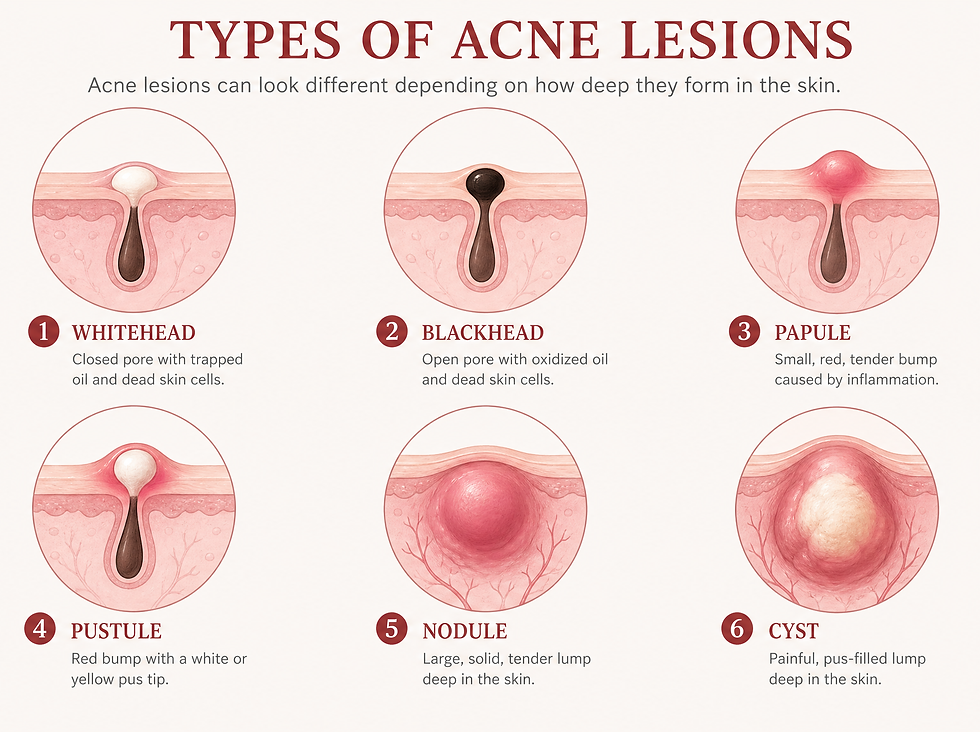
Cystic acne is the most severe form. It occurs when oil and dead skin cells build up deep within hair follicles, and the resulting rupture within your skin may form a boil-like inflammation.
Acne usually appears on the face, forehead, chest, upper back, and shoulders — these areas of skin have the most oil (sebaceous) glands, and hair follicles are connected to those oil glands.
When to See a Doctor
If self-care remedies don't clear your acne, see your primary care doctor, who can prescribe stronger medications. If acne persists or is severe, you may want to seek medical treatment from a doctor who specializes in the skin — a dermatologist or pediatric dermatologist.
For many women, acne can persist for decades, with flares common a week before menstruation. This type of acne tends to clear up without treatment in women who use contraceptives.
In older adults, a sudden onset of severe acne may signal an underlying disease requiring medical attention.
One important warning: some popular nonprescription acne lotions, cleansers, and other skin products can cause a serious reaction. This type of reaction is rare — don't confuse it with the ordinary redness, irritation, or itchiness at the area where you applied a product.
Seek emergency medical help if, after using a skin product, you experience:
Faintness
Difficulty breathing
Swelling of the eyes, face, lips, or tongue
Tightness of the throat
Causes: The Four Factors Behind Every Breakout
Acne develops when sebum — an oily substance that lubricates your hair and skin — and dead skin cells plug hair follicles. Bacteria can then trigger inflammation and infection, resulting in more severe acne.
Four main factors cause acne:
Excess oil (sebum) production
Hair follicles clogged by oil and dead skin cells
Bacteria
Inflammation

Here is how the different lesions form: the follicle wall may bulge and produce a whitehead. Or the plug may be open to the surface and darken, causing a blackhead — a blackhead may look like dirt stuck in a pore, but the pore is actually congested with bacteria and oil that turns brown when exposed to the air. Pimples are raised red spots with a white center that develop when blocked hair follicles become inflamed or infected with bacteria. Blockages and inflammation deep inside follicles produce the cyst-like lumps beneath the skin.
Certain things may trigger or worsen acne:
Hormonal changes. Androgens are hormones that increase in boys and girls during puberty and cause the sebaceous glands to enlarge and make more sebum. Hormone changes during midlife, particularly in women, can lead to breakouts too.
Certain medications. Examples include drugs containing corticosteroids, testosterone, or lithium.
Diet. Studies indicate that consuming certain foods — including carbohydrate-rich foods such as bread, bagels, and chips — may worsen acne. Further study is needed to see whether people with acne would benefit from specific dietary restrictions.
Stress. Stress doesn't cause acne, but if you have acne already, stress may make it worse.
Acne Myths
These factors have little effect on acne:
Chocolate and greasy foods. Eating chocolate or greasy food has little to no effect on acne.
Hygiene. Acne isn't caused by dirty skin. In fact, scrubbing the skin too hard or cleansing with harsh soaps or chemicals irritates the skin and can make acne worse.
Cosmetics. Cosmetics don't necessarily worsen acne, especially if you use oil-free makeup that doesn't clog pores (noncomedogenics) and remove makeup regularly. Nonoily cosmetics don't interfere with the effectiveness of acne drugs.
Risk Factors
Risk factors for acne include:
Age. People of all ages can get acne, but it's most common in teenagers.
Hormonal changes. Such changes are common during puberty or pregnancy.
Family history. Genetics plays a role in acne. If both of your parents had acne, you're likely to develop it too.
Greasy or oily substances. You may develop acne where your skin comes into contact with oil or oily lotions and creams.
Friction or pressure on your skin. This can be caused by items such as telephones, cellphones, helmets, tight collars, and backpacks.
Complications: Scars and Skin Changes
People with darker skin types are more likely than people with lighter skin to experience these acne complications:
Scars. Pitted skin (acne scars) and thick scars (keloids) can remain long-term after acne has healed.
Skin changes. After acne has cleared, the affected skin may be darker (hyperpigmented) or lighter (hypopigmented) than before the condition occurred.
This is another reason starting treatment early matters — the earlier you begin, the lower your risk of lasting scars and discoloration.
How Acne Is Diagnosed
There is no single lab test for acne. A doctor diagnoses acne by examining your skin — the type of lesions (whiteheads, blackheads, papules, pustules, nodules, cysts), their severity, and where they appear. The diagnosis also considers your age, hormonal history, medications, and how long you have tried self-care remedies, since these factors determine the right treatment plan.
Treatment Options
If you've tried over-the-counter (nonprescription) acne products for several weeks and they haven't helped, ask your doctor about prescription-strength medications. A dermatologist can help you control your acne, avoid scarring or other damage to your skin, and make scars less noticeable.
Acne medications work by reducing oil production and swelling or by treating bacterial infection. With most prescription acne drugs, you may not see results for four to eight weeks, and it can take many months or years for your acne to clear completely.
The treatment regimen depends on your age, the type and severity of your acne, and what you are willing to commit to — you may need to wash and apply medications to the affected skin twice a day for several weeks. Topical medications and oral drugs are often used in combination. Treatment options for pregnant women are limited due to the risk of side effects. Plan on follow-up appointments every three to six months until your skin improves.
Topical Medications
Topical Treatment | Best For | Key Points |
Retinoids and retinoid-like drugs | Moderate acne | Tretinoin, adapalene, tazarotene; applied in the evening, starting three times a week then daily; prevents plugging of hair follicles; increases sun sensitivity; do not apply tretinoin at the same time as benzoyl peroxide |
Antibiotics (topical) | Bacteria and redness | Kill excess skin bacteria, reduce inflammation; often combined with benzoyl peroxide (e.g., clindamycin with benzoyl peroxide, erythromycin with benzoyl peroxide); used alongside a retinoid for the first months; topical antibiotics alone aren't recommended |
Azelaic acid | Pregnancy-safe option | Naturally occurring acid with antibacterial properties; 20% cream or gel twice a day is as effective as many conventional treatments; an option during pregnancy and breastfeeding; can also manage discoloration |
Salicylic acid | Preventing plugged pores | Wash-off and leave-on products; may help prevent plugged hair follicles; studies on effectiveness are limited |
Dapsone 5% gel | Inflammatory acne, especially in women | Applied twice daily; side effects include redness and dryness |
Evidence is not strong for zinc, sulfur, nicotinamide, resorcinol, sulfacetamide sodium, or aluminum chloride in topical treatments.
Oral Medications
Antibiotics. For moderate to severe acne, you may need oral antibiotics to reduce bacteria. The first choice is usually a tetracycline (minocycline, doxycycline) or a macrolide (erythromycin, azithromycin). A macrolide might be an option for people who can't take tetracyclines, including pregnant women and children under 8. Oral antibiotics should be used for the shortest time possible and combined with drugs like benzoyl peroxide to prevent antibiotic resistance. Severe side effects are uncommon, but these drugs increase your skin's sun sensitivity.
Combined oral contraceptives. Four combined oral contraceptives are FDA-approved for acne therapy in women who also wish to use them for contraception (progestin + estrogen, such as Ortho Tri-Cyclen 21 and Yaz). You may not see the benefit for a few months, so using other acne medications with it for the first few weeks may help. Side effects include weight gain, breast tenderness, and nausea; these drugs are associated with increased risk of cardiovascular problems, breast cancer, and cervical cancer.
Anti-androgen agents. Spironolactone (Aldactone) may be considered for women and adolescent girls if oral antibiotics aren't helping. It works by blocking the effect of androgen hormones on the oil-producing glands. Possible side effects include breast tenderness and painful periods.
Isotretinoin. A derivative of vitamin A, prescribed for moderate or severe acne that hasn't responded to other treatments. Potential side effects include inflammatory bowel disease, depression, and severe birth defects. All people receiving isotretinoin must participate in an FDA-approved risk management program and see their doctors regularly to monitor for side effects.
Other Therapies
For some people, these therapies may help, alone or combined with medications:
Light therapy. Multiple visits required; further study is needed to determine the ideal method, light source, and dose.
Chemical peel. Repeated applications of salicylic acid, glycolic acid, or retinoic acid; for mild acne; improves appearance, though the change is not long-lasting and repeat treatments are usually needed.
Drainage and extraction. Special tools gently remove whiteheads, blackheads, or cysts that haven't cleared with topical medications; temporarily improves appearance but might cause scarring.
Steroid injection. Nodular and cystic lesions can be treated by injecting a steroid drug into them — rapid improvement and decreased pain; side effects may include skin thinning and discoloration.
Treating Children
Most studies of acne drugs involved people 12 years of age or older, but increasingly, younger children are getting acne too. The FDA has expanded the number of topical products approved for children, and guidelines indicate that topical benzoyl peroxide, adapalene, and tretinoin in preadolescent children are effective and don't increase the risk of side effects.
If your child has acne, consider consulting a pediatric dermatologist. Ask about drugs to avoid in children, appropriate doses, drug interactions, side effects, and how treatment may affect a child's growth and development.
Self-Care: 7 Lifestyle Steps That Help
You can avoid or control mild or moderate acne with nonprescription products, good basic skin care, and self-care techniques:
Wash problem areas with a gentle cleanser. Twice a day, use your hands to wash your face with mild soap or a gentle cleanser and warm water. Be gentle if you're shaving affected skin. Avoid facial scrubs, astringents, and masks — they irritate the skin and can worsen acne. Too much washing and scrubbing also irritates the skin.
Try over-the-counter acne products. Look for products with benzoyl peroxide and adapalene as active ingredients; you might also try salicylic acid, glycolic acid, or alpha hydroxy acids. It may take a few weeks to see improvement. Creams are less irritating than gels or ointments, and initial side effects (redness, dryness, scaling) often improve after the first month.
Avoid irritants. Oily or greasy cosmetics, sunscreens, hairstyling products, and acne concealers can worsen acne. Use products labeled water-based or noncomedogenic — less likely to cause acne.
Protect your skin from the sun. For some people, the sun worsens the discoloration that lingers after acne clears, and some acne medications increase sunburn susceptibility. If yours does, stay out of the sun as much as possible and regularly use a nonoily (noncomedogenic) moisturizer that includes a sunscreen.
Avoid friction or pressure on your skin. Protect acne-prone skin from contact with phones, helmets, tight collars or straps, and backpacks.
Avoid touching or picking. Doing so can trigger more acne or lead to infection or scarring.
Shower after strenuous activities. Oil and sweat on your skin can lead to breakouts.
Alternative Approaches
Some alternative approaches might help reduce acne:
Tea tree oil. Gels containing at least 5% tea tree oil may be as effective as lotions containing 5% benzoyl peroxide, although tea tree oil might work more slowly. Side effects include minor itching, burning, redness, and dryness — making it a poor choice for people with rosacea.
Brewer's yeast. A strain called Hansen CBS seems to help decrease acne when taken orally; it may cause gas.
More research is needed on these and other integrative approaches, such as biofeedback and ayurvedic compounds. Talk with your doctor about the pros and cons before trying them.
Coping and Support
Acne and acne scars can cause anxiety and affect your social relationships and self-image. Sometimes it helps to talk with your family, a support group, or a counselor.
Preparing for Your Appointment
Before seeing a doctor about your acne, consider what you are willing to commit to — treatments may require washing and applying medications twice a day for weeks. Be ready to discuss:
How long you have had acne and what you have already tried
Which nonprescription products you used and for how long
Any medications you take (including corticosteroids, testosterone, or lithium)
Hormonal factors, such as menstrual flares or pregnancy
Your goals: controlling breakouts, preventing scars, or treating existing scars
Frequently Asked Questions
What causes acne?
Acne develops when sebum (an oily substance that lubricates hair and skin) and dead skin cells plug hair follicles, allowing bacteria to trigger inflammation and infection. The four main factors are excess oil production, clogged follicles, bacteria, and inflammation — typically appearing on the face, forehead, chest, upper back, and shoulders, where the skin has the most oil glands.
Does eating chocolate or greasy food cause acne?
No. Eating chocolate or greasy food has little to no effect on acne. Acne also isn't caused by dirty skin — scrubbing too hard or using harsh soaps irritates the skin and can make acne worse. Some studies suggest carbohydrate-rich foods like bread, bagels, and chips may worsen acne, but more research is needed.
How long does it take for acne treatment to work?
With most prescription acne drugs, you may not see results for four to eight weeks, and it can take many months or years for acne to clear completely. This is why following the treatment plan — which may mean washing and applying medications twice a day — and keeping follow-up appointments every three to six months matters so much.
When should I see a doctor about my acne?
See your primary care doctor if self-care remedies don't clear your acne after several weeks — prescription-strength medication can help. If acne persists or is severe, seek a dermatologist or pediatric dermatologist. In older adults, a sudden onset of severe acne may signal an underlying disease and needs prompt medical attention.
What is the difference between a blackhead, a whitehead, and a cyst?
A whitehead is a closed plugged pore where the follicle wall bulges; a blackhead is an open plugged pore that darkens when exposed to air (it is congested with bacteria and oil, not dirt); and cystic acne — the most severe form — occurs when oil and dead skin cells build up deep within hair follicles and rupture inside the skin, forming painful, pus-filled boil-like lumps.
Does acne leave permanent scars?
Not always, but acne can scar the skin and cause emotional distress — and the earlier you start treatment, the lower your risk. People with darker skin types are more likely to experience complications such as pitted scars, thick scars (keloids), and long-lasting discoloration (darker or lighter patches) after acne heals.
Conclusion: What to Remember About Acne
Breakouts can feel endless, but acne is one of the most treatable conditions in dermatology — if you understand how it works and give treatment time to work. The three lessons to carry from this guide are:
Acne has real causes, not myths. Four factors drive every breakout — excess oil, clogged follicles, bacteria, and inflammation — while chocolate, greasy food, and "dirty skin" play little to no role.
Early treatment protects your skin. The earlier you start treatment, the lower your risk of permanent scars, keloids, and discoloration, which are more common and more lasting in darker skin types.
Patience is part of the plan. Most prescription treatments take four to eight weeks to show results, and clearing can take months or years; a consistent routine — gentle cleansing, the right active ingredients, and follow-up appointments every three to six months — is what gets you there.
You don't have to navigate breakouts alone. Start with the self-care steps in this guide, and see a dermatologist if over-the-counter care isn't enough after a few weeks.
References
Mayo Clinic. Acne — Symptoms & causes. mayoclinic.org
Mayo Clinic. Acne — Diagnosis & treatment. mayoclinic.org
This article is for informational purposes only and is not a substitute for professional medical advice. Always consult a qualified healthcare provider for diagnosis and treatment.
Comments