The Power of Prescription Skincare: Targeted Treatments and Results

Updated: 3 days ago
Medically reviewed by Dr. Baraa Alnahhal, MD · Last reviewed: October 2026
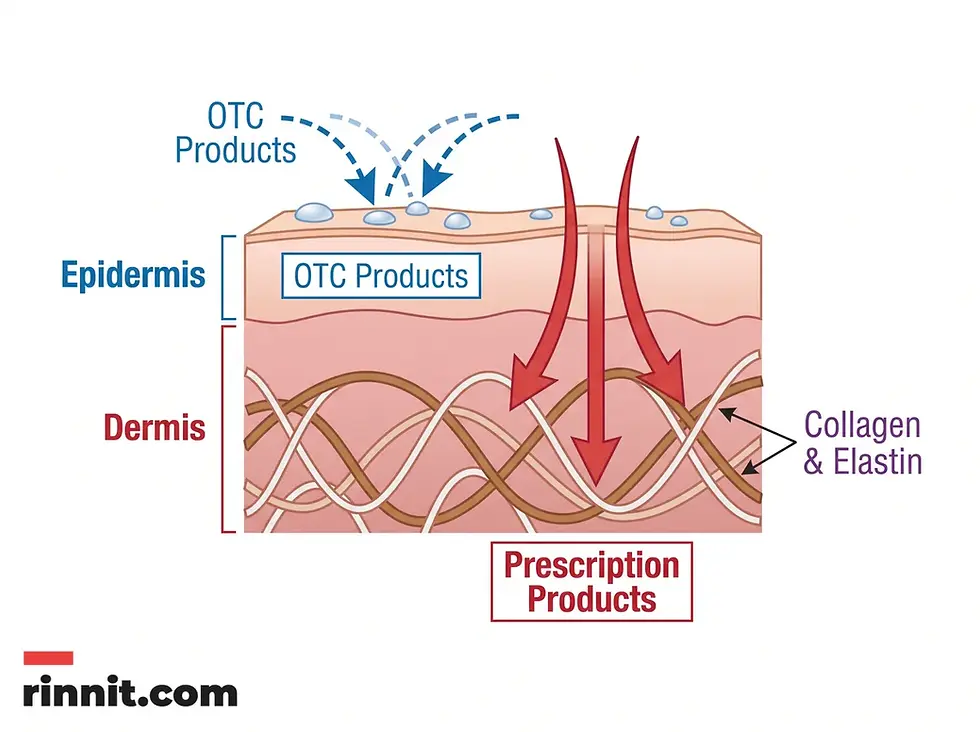
Prescription skincare offers high-strength formulations designed by dermatologists to treat specific medical conditions and aesthetic concerns. [1] Unlike over-the-counter products, these medical-grade treatments can penetrate the deeper dermis layer, targeting collagen and elastin for more effective results. [1] From managing acne and eczema to reversing signs of aging and hair loss, prescription skincare provides powerful, evidence-based solutions for long-term skin health.
Quick Answer: What is prescription skincare?
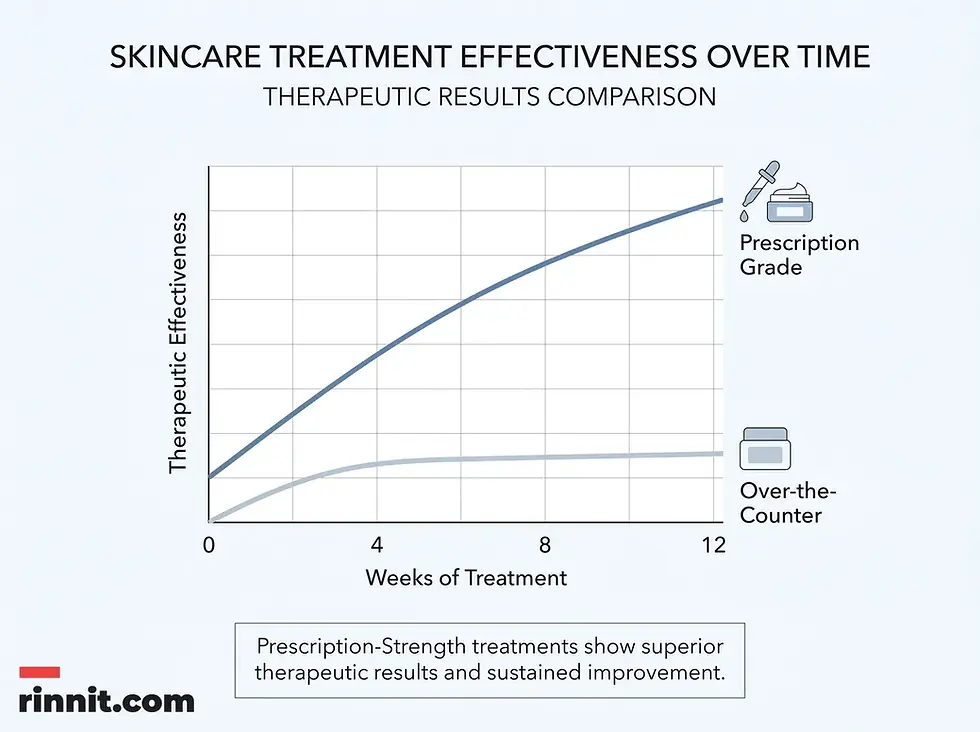
Prescription skincare is medical-grade products with higher concentrations of active ingredients than over-the-counter options, prescribed by dermatologists for conditions such as severe acne, rosacea, melasma and early skin cancers. [1] They work more deeply to stimulate collagen and cell renewal. Results typically appear within weeks, but side effects such as dryness or UV sensitivity require professional guidance. [1]
What the research says
Topical acne treatments work, and combinations are generally strongest. A systematic review and network meta-analysis of 35 randomized trials (33,472 participants) found that every single topical agent beat placebo for lesion-count reduction except tazarotene, and that combinations such as adapalene-benzoyl peroxide reduced total lesion count more than placebo (ratio of means 1.67; 95% CI 1.47-1.90) (Kakpovbia et al., Journal of the European Academy of Dermatology and Venereology, 2025) [2].
Head-to-head comparisons between topical options are often close. A Cochrane review of 49 trials (3,880 participants) found that azelaic acid probably made little or no difference compared with tretinoin on participants' own rating of acne improvement (risk ratio 0.94; 95% CI 0.78-1.14), but was probably less effective than benzoyl peroxide (risk ratio 0.82; 95% CI 0.72-0.95) (Liu et al., Cochrane Database of Systematic Reviews, 2020) [3].
What ingredients are common in prescription skincare?
Prescription products utilize specialized ingredients that are often unavailable or significantly diluted in OTC formulations. The following table outlines key medical-grade components and their primary uses.
Ingredient | Common Uses | Mechanism of Action |
Tretinoin | Acne, Fine Lines, Wrinkles | Accelerates cellular turnover and collagen production |
Hydroquinone | Melasma, Hyperpigmentation | Inhibits melanin production to brighten skin |
Corticosteroids | Eczema, Psoriasis [1] | Reduces inflammation and immune response |
Imiquimod | Actinic Keratosis, Basal Cell Carcinoma | Stimulates the immune system to target abnormal cells |
Finasteride | Male-pattern Hair Loss [1] | Blocks hormones that cause hair follicle shrinkage |
What are the advantages and effectiveness of prescription skincare?
The primary benefit of prescription skincare is its ability to deliver concentrated active ingredients directly to the dermis. This deeper layer of skin is where essential structural proteins like collagen and elastin are located [1], making it the most critical target for anti-aging and regenerative treatments.
Targeted Medical Treatment
For many chronic skin conditions, OTC products may provide temporary relief but fail to address the underlying pathology. Prescription-strength corticosteroids and immunomodulators are essential for managing the inflammatory cycles of eczema and psoriasis. Similarly, oral and topical retinoids are the clinical standard for treating moderate to severe acne, offering a level of clearance that consumer-grade products rarely achieve.
Aesthetic and Hair Restoration
Beyond medical necessity, prescription skincare is a cornerstone of aesthetic medicine. It is highly effective at reducing the appearance of acne scars, smoothing fine lines, and brightening the overall complexion. [1] Furthermore, prescription medications like finasteride are among the only FDA-approved treatments proven to restore hair growth in men with pattern baldness. [1]
Category | Typical Results Timeline | Primary Goal |
Oral Medications | 2–3 Weeks [1] | Systemic treatment of inflammation or hormones |
Topical Creams | 4–6 Weeks | Localized cellular renewal and skin repair |
Hair Restoration | 3–6 Months | Stimulation of hair follicles and growth cycles |
How safe is prescription skincare, and how do you add it to your routine?
Due to their high potency, prescription skincare products must be used with care. Common side effects include temporary skin "purging" (increased breakouts), stinging, and peeling as the skin adjusts to the new treatment. [1] It is also vital to note that many prescription-strength retinoids and other medications are not safe for use during pregnancy or nursing. [1]
Building a Balanced Routine
When using prescription products, the rest of your skincare routine should focus on support and protection. Dermatologists recommend using gentle, non-foaming cleansers and rich moisturizers to counteract the dryness often caused by active medical ingredients. Additionally, because many prescriptions increase sensitivity to ultraviolet rays, daily application of a broad-spectrum sunscreen is mandatory to prevent sun damage.

Conclusion
Prescription skincare represents the most powerful tier of dermatological care, offering results that far exceed standard over-the-counter options. By utilizing higher concentrations of active ingredients and targeting the deeper layers of the skin, these treatments provide clinical solutions for both medical conditions and aesthetic goals. With professional guidance and a balanced daily routine, prescription skincare can unlock a healthier, more youthful complexion.
Frequently Asked Questions
What makes prescription skincare different from OTC products?
Prescription skincare contains higher concentrations of active ingredients and is formulated to penetrate deeper into the skin's dermis layer.
How long does it take to see results from prescription creams?
Most people start to see visible improvements from topical prescription treatments within four to six weeks of consistent use.
Can I use prescription skincare while pregnant?
Many prescription products, especially retinoids, are not safe for use during pregnancy; always consult your doctor before starting a treatment.
What is skin "purging"?
Purging is a temporary period of increased breakouts that can occur when starting a strong prescription as the skin accelerates its renewal process.
Do I still need to use moisturizer with prescription acne cream?
Yes, prescription acne treatments often cause dryness, so using a gentle, non-comedogenic moisturizer is highly recommended.
Are prescription skincare products safe for sensitive skin?
Yes, but they must be introduced slowly under a dermatologist's guidance to minimize irritation and allow the skin to acclimate.
Can prescription skincare treat skin cancer?
Certain prescription creams like imiquimod are FDA-approved to treat early-stage skin cancers such as basal cell carcinoma.
Does prescription skincare help with hair loss?
Yes, medications like finasteride are clinically proven and FDA-approved to treat male-pattern hair loss and restore growth.
Should I use sunscreen with prescription skincare?
Yes, many prescription ingredients increase UV sensitivity, making daily broad-spectrum sunscreen essential for skin protection.
Can I combine multiple prescription products?
You should only combine products as directed by your dermatologist to avoid severe irritation or conflicting chemical reactions.
Related Reading
Understanding Retinol: Benefits, Side Effects, and Best Practices explains how retinoids work and how to use them safely.
Acne: Complete Guide to Symptoms, Causes, Diagnosis, and Treatment covers acne causes and prescription and over-the-counter treatments.
Understanding Melasma: Causes, Symptoms, and Management explains dark facial patches and the treatments that fade them.
Understanding Rosacea: Symptoms, Types, and Management Strategies describes rosacea types and prescription options to control flares.
References
Cleveland Clinic. Prescription Skin Care. Cleveland Clinic. Last updated May 24, 2021. https://my.clevelandclinic.org/health/treatments/11013-prescription-medications-for-skincare
Kakpovbia EE, Young T, Milam EC, et al. Efficacy of topical treatments for mild-to-moderate acne: a systematic review and meta-analysis of randomized control trials. Journal of the European Academy of Dermatology and Venereology. 2025;39(4):775-784. PMID 38943431. https://doi.org/10.1111/jdv.20154
Liu H, Yu H, Xia J, et al. Topical azelaic acid, salicylic acid, nicotinamide, sulphur, zinc and fruit acid (alpha-hydroxy acid) for acne. Cochrane Database of Systematic Reviews. 2020;(5):CD011368. PMID 32356369. https://doi.org/10.1002/14651858.CD011368.pub2
Medical disclaimer
The information provided in this article is for educational purposes only and should not be used as a substitute for professional medical advice, diagnosis, or treatment. Always seek the advice of your physician or other qualified health provider with any questions you may have regarding a medical condition.



Comments