Understanding Rosacea: Symptoms, Types, and Management Strategies

Updated: 2 days ago
Medically reviewed by Dr. Baraa Alnahhal, MD · Last reviewed: October 17, 2026
Rosacea is a chronic inflammatory skin condition primarily affecting the face, characterized by persistent redness, visible blood vessels, and pimple-like bumps. [1] While there is no cure, identifying personal triggers, such as sun exposure and spicy foods, combined with clinical treatments like topical medications and laser therapy can significantly reduce flares and improve skin appearance.
Quick Answer: What is rosacea?
Rosacea is a common, lifelong skin condition that causes redness, swelling and small, pus-filled bumps on the face, most often in women and fair-skinned people over 30. [1] Its four main types are vascular, acne-like, phymatous and ocular. [1] Treatment focuses on managing symptoms with antibiotics, specialized gels and lifestyle changes to avoid environmental triggers.
What the research says
Redness and acne-like rosacea are the most common types, and older men are more prone to nose thickening. In a review of 1,340 patients at a Singapore dermatology center, 65% were female, the average age at presentation was 42.8 years, 56.3% had erythematotelangiectatic rosacea and 37% had papulopustular rosacea, and phymatous rosacea was more likely in older males (OR 3.82; 95% CI 1.64 to 8.92) (Cheong et al., International Journal of Dermatology, 2018) [2].
Eye involvement is common but is diagnosed far less often. A meta-analysis of 28 studies found that ocular rosacea was formally diagnosed in 10.3% of people with skin rosacea (N = 124,093), yet 44.3% had some ocular involvement when studies looked for it (N = 1,747), which suggests eye symptoms are often missed (Kirkpatrick et al., Canadian Journal of Ophthalmology, 2025) [3].
Family history is the strongest risk factor for developing rosacea. In a case-control study of 172 people with flushing or rosacea and 145 skin-healthy controls, a family history of rosacea carried an odds ratio of 4.31 (95% CI 2.34 to 7.92), photosensitive skin types 1.75 and previous smoking 2.01, while Helicobacter pylori infection, alcohol and caffeine intake were not linked to developing the condition. Note that this concerns risk of developing rosacea, not the triggers that set off flares in people who already have it (Abram et al., Journal of the European Academy of Dermatology and Venereology, 2010) [4].
What are the signs and symptoms of rosacea?
Rosacea is more than a simple tendency to blush; it is a complex inflammatory disorder that can manifest in several distinct ways. While the exact cause remains unknown, researchers suggest it may involve malfunctions in the immune system, nervous system, or vascular structure. [1] In some cases, an overabundance of microscopic skin mites (Demodex) or specific bacterial infections may also contribute to the condition. [1]
The progression of rosacea often begins with frequent flushing or a persistent redness that resembles a sunburn. [1] As the condition advances, small red lines, which are actually enlarged blood vessels, may become visible under the skin. [1] Unlike typical acne, rosacea does not cause blackheads [1], but it can produce solid red bumps or pus-filled pimples that sting or burn.
Rosacea Type | Key Characteristics | Common Symptoms |
Erythematotelangiectatic | Vascular involvement. | Persistent redness; visible blood vessels; frequent flushing. |
Papulopustular | Acne-like presentation. | Pus-filled pimples; facial swelling; stinging sensations. |
Phymatous | Skin thickening. | Bumpy skin texture; bulbous nose appearance (rhinophyma). |
Ocular | Eye involvement. | Bloodshot eyes; light sensitivity; eyelid styes; irritation. |
What triggers rosacea and how can you manage them?
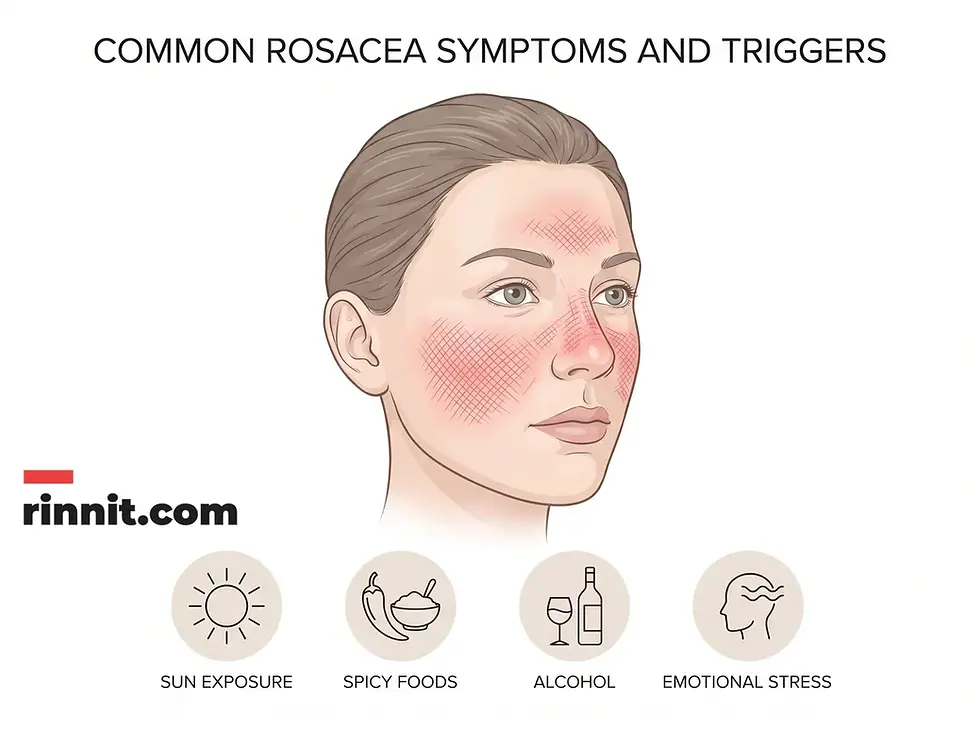
A hallmark of rosacea is the tendency for symptoms to 'flare' in response to specific environmental or lifestyle factors. Because these triggers vary significantly between individuals, clinicians often recommend keeping a detailed diary of foods, activities, and skincare products to identify personal patterns. [1]
Common triggers that frequently lead to increased facial redness and irritation include:
Environmental Factors: Prolonged sun exposure and extreme hot or cold temperatures.
Dietary Choices: Consumption of alcohol and spicy foods.
Physical & Emotional Stress: High stress levels and intense physical exertion.
Topical Irritants: Certain hairsprays, lotions, or harsh skincare products.
How is rosacea diagnosed and treated?
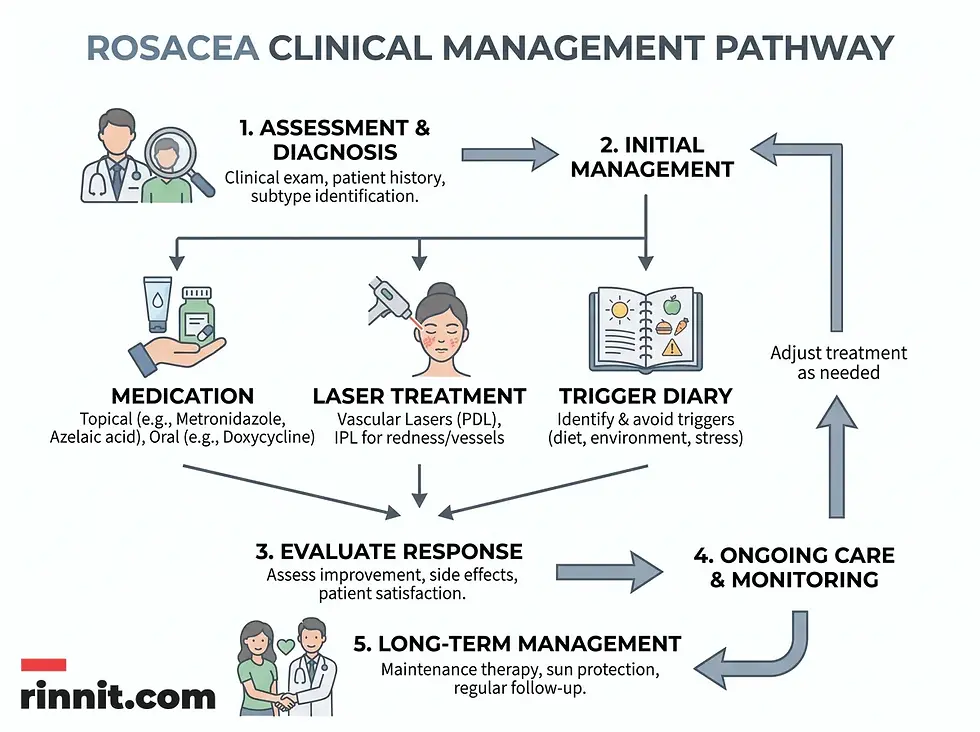
Rosacea treatment is individualized, and diagnosis cannot rely on any single laboratory test. [1] Instead, healthcare providers, often dermatologists, perform a thorough physical examination and review the patient's medical history. [1] Early diagnosis is particularly important for men, who are more likely to delay treatment until the condition has reached an advanced stage. [1]
Treatment plans are highly individualized and focused on symptom reduction. For many, a combination of topical and oral medications is effective. [1] Laser treatments may also be utilized to specifically target and remove visible blood vessels, thereby reducing overall facial redness. [1]

What is the long-term outlook for rosacea, and when is specialized care needed?
Rosacea is a lifelong condition [1], but it can be successfully managed with consistent care. For severe cases, particularly those involving skin thickening on the nose (rhinophyma), surgical procedures may be necessary to correct disfigurement and restore a natural appearance. [1]
Ocular rosacea requires specialized attention, as untreated inflammation of the eyes can lead to cornea damage and potential vision loss. [1] If you experience persistent eye irritation, redness, or light sensitivity in conjunction with facial symptoms, consulting a specialist is essential for preserving long-term health.
Frequently Asked Questions
What is the earliest sign of rosacea?
Frequent blushing or flushing that comes and goes is often the earliest indicator of the condition.
Can rosacea be cured?
No, it is a lifelong condition without a cure, but symptoms can be effectively managed with treatment.
Is rosacea a form of acne?
While it can cause pimples, it is not acne. A key difference is that rosacea does not produce blackheads.
Who is most likely to develop rosacea?
Rosacea most commonly affects women and people with fair skin, usually appearing after the age of 30.
Can men get rosacea?
Yes. While less common in men, they often experience more severe symptoms, frequently due to delaying medical consultation.
How does rosacea affect the eyes?
Ocular rosacea causes eyes to feel irritated, watery, or bloodshot and can lead to painful eyelid bumps or vision issues if left untreated.
What is rhinophyma?
Rhinophyma is a condition associated with phymatous rosacea where the skin on the nose thickens, giving it a bulbous appearance.
Are there specific foods I should avoid?
Spicy foods and alcohol are common triggers, but individual sensitivities vary. Keeping a diary can help identify your specific triggers.
How long does it take for treatment to work?
It may take several weeks or even a few months of consistent treatment to see a significant reduction in symptoms.
Does sun exposure make rosacea worse?
Yes, sunlight is one of the most common triggers for rosacea flares. Using sun protection is a vital part of management.
Related Reading
LED Light Therapy: Colors, Benefits and Risks explains LED light therapy for skin.
Tetracyclines: Uses, Side Effects and Safety explains tetracycline antibiotics such as doxycycline.
References
Cleveland Clinic. Rosacea. Cleveland Clinic. April 12, 2023. https://my.clevelandclinic.org/health/diseases/12174-rosacea
Cheong KW, Yew YW, Lai YC, et al. Clinical characteristics and management of patients with rosacea in a tertiary dermatology center in Singapore from 2009 to 2013. International Journal of Dermatology. 2018;57(5):541-546. PMID 29479666. https://doi.org/10.1111/ijd.13954
Kirkpatrick RH, Nazzicone K, Biorac A, et al. Prevalence of ocular manifestations in cutaneous rosacea: systematic review and meta-analysis. Canadian Journal of Ophthalmology. 2025;60(6):330-339. PMID 40373823. https://doi.org/10.1016/j.jcjo.2025.04.005
Abram K, Silm H, Maaroos HI, et al. Risk factors associated with rosacea. Journal of the European Academy of Dermatology and Venereology. 2010;24(5):565-571. PMID 19874433. https://doi.org/10.1111/j.1468-3083.2009.03472.x
Medical disclaimer
The information provided in this article is for educational purposes only and should not be used as a substitute for professional medical advice, diagnosis, or treatment. Always seek the advice of your physician or other qualified health provider with any questions you may have regarding a medical condition.



Comments