Understanding Laser Lithotripsy: A Minimally Invasive Approach to Urinary Stones

Updated: 2 days ago
Medically reviewed by Dr. Baraa Alnahhal, MD · Last reviewed: September 2026
TL;DR
Laser lithotripsy is a highly effective, minimally invasive procedure used to break up stones in the urinary tract using precise laser energy. Unlike traditional methods, it often requires no skin incisions and offers higher success rates for challenging stones. Most patients recover within a week, making it a preferred choice for restoring urinary health with minimal downtime.
Quick Answer
Laser lithotripsy is a surgical procedure that uses a focused laser to fragment stones in the kidneys, bladder, ureters, or urethra. Performed under general anesthesia, a urologist inserts a thin scope and laser fiber into the urinary tract to directly target and break stones into small pieces, which are then removed or passed naturally. It is particularly effective for large or hard stones and typically allows for a quick return to normal activities within seven days.
Overview of Laser Lithotripsy
Laser lithotripsy represents a significant advancement in urological care, providing a direct and efficient method for treating stones throughout the urinary system. This procedure is primarily used to address stones that have formed in the bladder, kidneys, ureters, or urethra. By utilizing a flexible laser fiber, medical professionals can reach and fragment stones without the need for major abdominal surgery. For a broader look at how stones form and what causes them, see our guide to kidney stones.
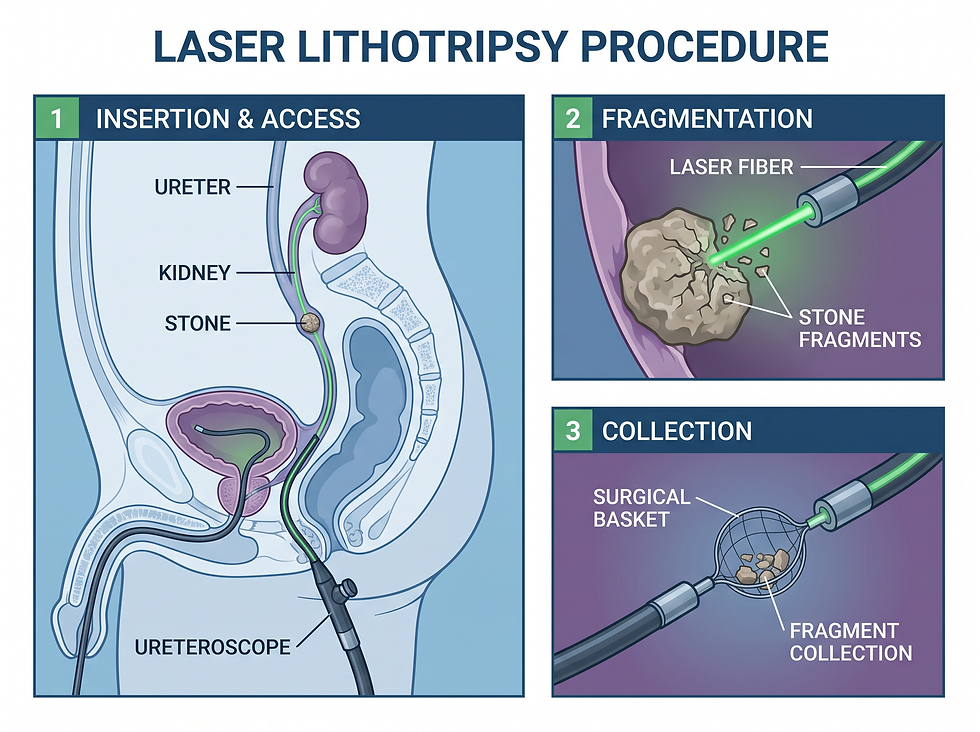
Most commonly, this technique is performed during a ureteroscopy. A urologist inserts a specialized scope—a long, thin tube equipped with a camera—into the urinary tract. Once the stone is located, the laser fiber is passed through the scope to deliver energy directly to the stone, breaking it into smaller fragments. These pieces are either collected using a small surgical basket or left to pass naturally through the urine. A closely related laser procedure for stones inside the bladder is cystolitholapaxy.
Comparing Lithotripsy Methods
When choosing a treatment for urinary stones, it is essential to understand how laser lithotripsy differs from other common methods, such as shock wave lithotripsy. While both aim to fragment stones, their approach and effectiveness vary based on the stone's characteristics and location.
Feature | Laser Lithotripsy | Shock Wave Lithotripsy |
Energy Type | Direct Laser Fiber | External Shock Waves |
Approach | Inside the Body (Internal) | Outside the Body (External) |
Effectiveness | High for hard/large stones | Limited by stone size/hardness |
Incision Required | None (Ureteroscopic) | None |
Success Rate | Generally Higher | Varies by stone location |
Laser lithotripsy is often favored for its ability to treat multiple stones simultaneously and its safety for patients on blood thinners or those who are pregnant.
The Procedure Journey
Preparation and understanding the surgical steps can significantly reduce patient anxiety and improve outcomes. Patients are typically advised to follow specific instructions, such as fasting for eight hours before the procedure and arranging for a driver to take them home afterward.
Surgical Steps
Anesthesia: The patient is placed under general anesthesia to ensure they remain comfortable and asleep.
Scope Insertion: A urologist carefully inserts a scope into the urethra to access the urinary tract.
Laser Fragmentation: A thin fiber is guided through the scope, and the laser is used to break the stone into manageable pieces.
Stone Removal: The surgeon uses a small basket to collect the larger fragments.
Stent Placement: A temporary ureteral stent is often placed to keep the ureter open and facilitate the passage of any remaining small fragments.
Completion: The scope is removed, and the patient is moved to a recovery area for monitoring.
Recovery and Aftercare
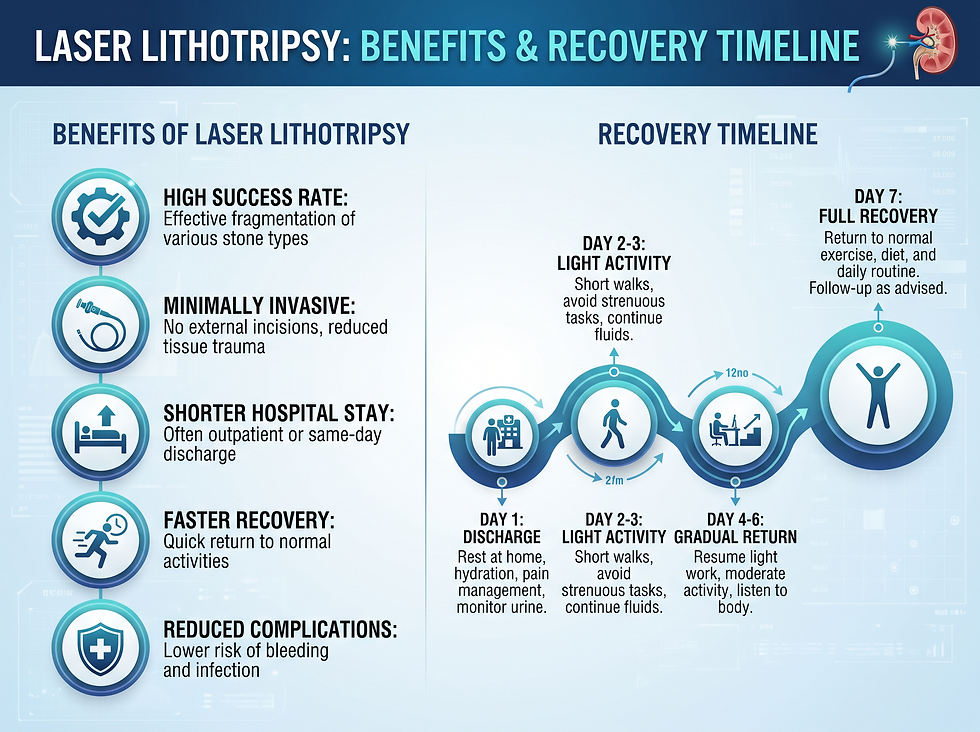
Recovery from laser lithotripsy is generally swift, with most individuals returning to their normal daily routines within one week. However, the presence of a ureteral stent may cause some temporary discomfort or a frequent urge to urinate.
Recovery Phase | Timeline | Typical Experience |
Immediate Post-Op | 1–4 Hours | Monitoring for anesthesia recovery; discharge same day. |
First 48 Hours | 1–2 Days | Mild pain, blood-tinged urine, and fatigue. |
Full Recovery | 7 Days | Return to usual activities; stent removal scheduled later. |
To support healing, patients are encouraged to drink plenty of fluids to help flush the urinary system. Medications, including pain relievers and antibiotics, may be prescribed for a few days following the surgery.
Risks and Side Effects
While laser lithotripsy is considered a safe and minimally invasive procedure, it does carry some potential risks and common side effects. Patients should be aware of these possibilities to better monitor their recovery.
Common side effects include:
Temporary pain or discomfort in the abdominal or pelvic area.
Blood in the urine (hematuria) for a few days.
Difficulty or burning during urination.
Nausea or fatigue resulting from the general anesthesia.
Rare complications may involve injury to the ureter, urinary tract infections (UTIs), or stone fragments causing a temporary blockage.

Conclusion
Laser lithotripsy is a cornerstone of modern stone management, offering a high-success, minimally invasive solution for those suffering from urinary tract stones. By combining precision technology with a quick recovery profile, it provides an effective path to relief and long-term urinary health.
Next Steps
If you are experiencing symptoms of urinary stones, such as severe pain or blood in your urine, consult with a urologist to determine if laser lithotripsy is the right option for you. Discuss the specific details of the procedure, including the potential need for a stent, and ensure you have a clear plan for your recovery week.
Frequently Asked Questions
What is the primary benefit of laser lithotripsy?
It offers a higher success rate for breaking up large, hard, or difficult-to-reach stones compared to external methods.
Is laser lithotripsy considered major surgery?
No, it is a minimally invasive procedure that typically requires no external incisions.
How long does the procedure take?
The surgery usually lasts between one and two hours.
Will I be awake during the procedure?
No, general anesthesia is used so you will be asleep and feel no pain.
Is it normal to see blood in my urine after surgery?
Yes, blood-tinged urine is common for two to three days following the procedure.
What is the purpose of a ureteral stent?
The stent keeps the ureter open to ensure urine and stone fragments can pass freely during initial healing.
How soon can I return to work?
Most patients can return to their usual activities, including work, within one week.
Are there any diet restrictions after the procedure?
While there are no specific restrictions, drinking plenty of water is essential for recovery.
Can laser lithotripsy be used during pregnancy?
Yes, it is considered a safe option for pregnant patients when necessary.
What are the signs of a urinary tract infection after surgery?
Signs include fever, persistent burning during urination, or cloudy urine.
How is the stone removed after it is broken?
The surgeon uses a small surgical basket to collect the pieces or allows them to pass naturally.
Can this procedure treat multiple stones at once?
Yes, laser lithotripsy is effective for treating multiple stones in a single session.
Is the procedure effective for bladder stones?
Yes, it can be used to treat stones in the bladder, kidneys, ureters, and urethra.
What should I do if I have a fever after surgery?
Contact your healthcare provider immediately, as this could indicate an infection.
How long does a ureteral stent stay in place?
Stents are typically removed by your doctor a few days to weeks after the procedure.
Medical Disclaimer: This content is for informational purposes only and does not constitute medical advice. Always seek the advice of your physician or other qualified health provider with any questions you may have regarding a medical condition or surgical procedure.
Comments