Sturge-Weber Syndrome: Symptoms, Causes, and Lifelong Management

Updated: 3 days ago
Medically reviewed by Dr. Baraa Alnahhal, MD · Last reviewed: October 2026
Quick Answer: What is Sturge-Weber syndrome?
Sturge-Weber syndrome is a rare, non-inherited genetic condition affecting blood vessel development before birth. It typically causes a port wine stain birthmark on one side of the face, abnormal blood vessels in the brain and increased eye pressure. Management includes seizure control with medication or surgery, glaucoma treatment to preserve vision, and supportive therapies and special education.
What the research says
One gene change explains most cases. Researchers sequenced DNA from affected tissue and tested 97 samples from 50 people. They found a somatic GNAQ variant (p.Arg183Gln) in affected tissue from 88% of people with Sturge-Weber syndrome (23 of 26) and 92% of people with non-syndromic port-wine stains (12 of 13), but in none of the control samples (Shirley et al., N Engl J Med, 2013) [2].
Epilepsy surgery can work in carefully selected children. A pooled analysis of 18 studies (108 children) found that 78.7% were seizure-free at last follow-up (median 72 months), and resective and hemispheric surgery gave comparable results (Mozaffari et al., Seizure, 2023) [3].
Headaches are common. A systematic review of 48 studies reported headache prevalence of 37% to 71% in people with Sturge-Weber syndrome, with migraine-like headaches affecting up to 52% (Ferretti et al., Cephalalgia, 2024) [4].
What is Sturge-Weber syndrome?
Sturge-Weber syndrome is a rare genetic disorder that primarily impacts the development of blood vessels in the brain, skin, and eyes. [1] The condition is often first identified shortly after birth when a newborn presents with a characteristic port wine stain—a flat, smooth birthmark that ranges in color from pink to dark purple. This birthmark typically appears on one side of the face, most commonly affecting the forehead and eyelid areas. [1]
While port wine stains themselves are relatively common, Sturge-Weber syndrome is not. Not every child born with this type of birthmark will have the additional neurological or ocular symptoms associated with the syndrome. [1] However, when the condition is present, it can lead to significant health challenges, including seizures and vision issues, making early diagnosis and lifelong management essential for maintaining a good quality of life.

What are the symptoms of Sturge-Weber syndrome?
The clinical presentation of Sturge-Weber syndrome is often described through a triad of primary features: skin involvement, eye complications, and neurological abnormalities. The severity and combination of these symptoms vary significantly from one individual to another.
Feature Category | Common Manifestations |
|---|---|
Skin Involvement | Port wine stain birthmark (pink to purple); skin may thicken or darken over time. [1] |
Eye Complications | Glaucoma (increased eye pressure); potential for vision loss if untreated. [1] |
Neurological Issues | Leptomeningeal angiomas (abnormal brain vessels); seizures; muscle weakness. [1] |
Additional Signs |
Neurological symptoms, particularly seizures, often manifest within the first two years of life. These seizures typically affect one side of the body and may be accompanied by a temporary darkening of the facial birthmark. [1] In some cases, the abnormal blood vessels in the brain can lead to one-sided muscle weakness, known as hemiparesis, or more severe complications such as brain atrophy and calcification. [1]
What causes Sturge-Weber syndrome, and what is its genetic basis?
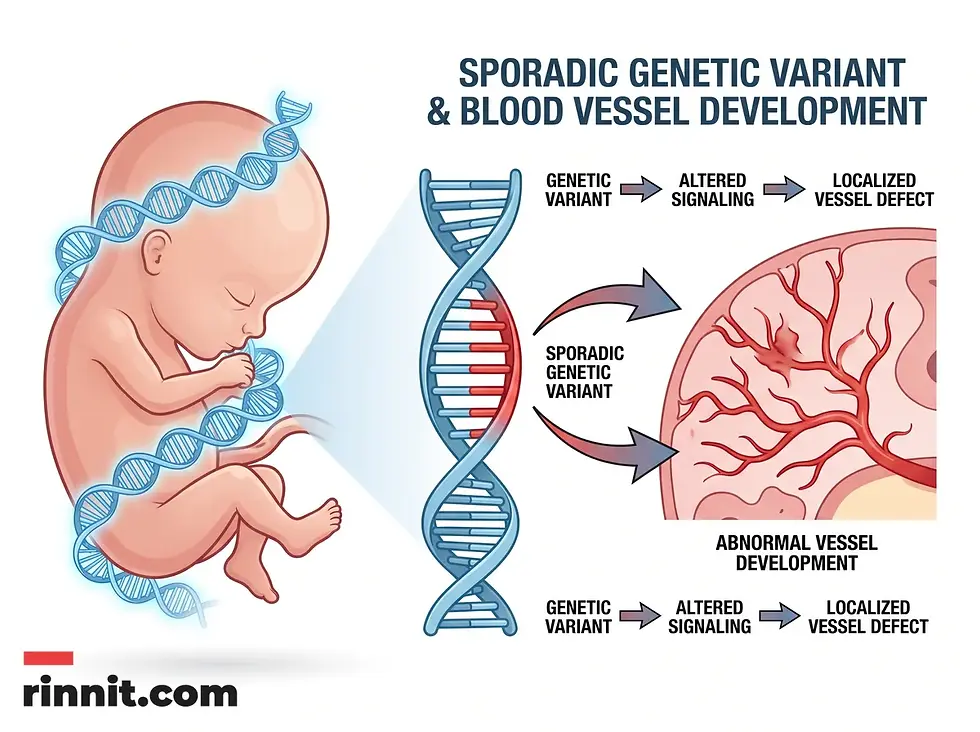
Sturge-Weber syndrome is caused by a variant in a specific gene, GNAQ, which is involved in regulating blood vessel development and function. [1] [2] This genetic change occurs sporadically, meaning it is not inherited from parents and happens randomly during early embryonic development. [1] Because the mutation is somatic, it only affects certain cells in the body—a phenomenon known as mosaicism. [1] [2] This explains why some blood vessels develop normally while others do not.
Because the condition is not passed down through families, it can affect any child regardless of their family medical history. Research indicates that the genetic instructions for vessel formation are disrupted before birth, leading to the characteristic overgrowth of vessels in the affected tissues.
How is Sturge-Weber syndrome diagnosed?
A diagnosis of Sturge-Weber syndrome is typically made shortly after birth. While the presence of a port wine stain is a strong indicator, healthcare providers must perform detailed evaluations to determine the extent of brain and eye involvement.
Physical and Neurological Exams: Initial assessments to identify the birthmark and check for muscle or coordination issues.
Imaging Tests: MRI and CT scans are used to locate abnormal blood vessels (angiomas) and check for calcium deposits in the brain.
Electroencephalogram (EEG): A test used to monitor brain activity and identify the source of seizures. [1]
Comprehensive Eye Exams: Essential for detecting early signs of glaucoma and monitoring eye pressure.
How is Sturge-Weber syndrome managed and treated?
Management of Sturge-Weber syndrome is highly individualized and focused on addressing specific symptoms to improve daily functioning and prevent complications. A multidisciplinary team, including neurologists and ophthalmologists, typically oversees long-term care.
Symptom | Treatment Approach |
|---|---|
Seizures | |
Glaucoma | Medicated eyedrops; surgical procedures to reduce pressure. [1] |
Birthmark | Laser skin resurfacing to reduce appearance and skin thickening. [1] |
Muscle Weakness | Physical therapy to improve strength and mobility. [1] |
Developmental Needs | Special education and supportive therapies for learning delays. [1] |
For adults, healthcare providers may recommend a low-dose daily aspirin to reduce the risk of stroke-like symptoms associated with abnormal brain vessels. It is important to note that children should only take aspirin under strict medical guidance. [1]

Conclusion
Sturge-Weber syndrome is a complex, lifelong condition that requires dedicated medical attention and a supportive environment. While the disorder presents unique challenges, particularly regarding seizure control and vision health, modern management strategies allow many individuals to lead fulfilling lives. Early intervention and consistent monitoring are the cornerstones of successful care for those born with this rare genetic condition.
What are the next steps for Sturge-Weber syndrome?
If your child was born with a port wine stain or is experiencing unexplained seizures, consult a healthcare professional for a comprehensive evaluation. Early diagnosis and a personalized management plan are vital for supporting your child's long-term health and development.
Trusted resources: National Institute of Neurological Disorders and Stroke (NINDS): Sturge-Weber Syndrome
Related reading on Rinnit: Port-Wine Stain: Clinical Characteristics, Risks, and Management · Central Nervous System Vascular Malformations: Symptoms, Causes, Diagnosis and Treatment — What You Need to Know · Epilepsy Guide: Symptoms, Causes, Diagnosis, and Treatment · Genetic Mutations: Understanding the Blueprint of Human Variation
Frequently Asked Questions
What is Sturge-Weber syndrome?
Sturge-Weber syndrome is a rare genetic condition that causes abnormal blood vessel growth in the skin, brain, and eyes.
Is Sturge-Weber syndrome inherited?
No, it occurs sporadically and is not passed down from parents to children.
What is a port wine stain?
A port wine stain is a flat, pink to dark purple birthmark commonly found on the face in individuals with this syndrome.
Does every port wine stain mean a child has the syndrome?
No, many children have these birthmarks without any other symptoms of the condition.
What are the neurological symptoms?
The most common are seizures, which often begin before age two, and one-sided muscle weakness.
How does the condition affect the eyes?
Sturge-Weber syndrome can cause glaucoma, which is increased pressure in the eye that can lead to vision loss.
What causes the condition?
A random genetic variant that occurs during early embryonic development.
How is it diagnosed?
Diagnosis involves physical exams, MRI or CT scans, EEGs, and specialized eye exams.
Can the birthmark be treated?
Yes, laser skin resurfacing can reduce its appearance and prevent the skin from thickening.
How are seizures managed?
Typically through antiseizure medications, though surgery may be an option for severe cases.
Does it affect life expectancy?
Generally, it does not affect a child's life expectancy.
What is mosaicism?
Mosaicism is a condition where only some cells in the body have the genetic mutation while others are normal.
Can adults take medication to prevent complications?
Some adults are prescribed low-dose aspirin to reduce the risk of stroke-like symptoms.
Is physical therapy helpful?
Yes, it is often used to help manage muscle weakness and improve mobility.
What is the long-term outlook?
With lifelong management and appropriate care, many individuals live normal, active lives.
Related Reading
Hemispherectomy: Types, Procedure, Recovery and Outcomes explains how removing or disconnecting half of the brain stops seizures that medicine cannot control, plus recovery and outcomes.
References
Cleveland Clinic. Sturge-Weber Syndrome. Cleveland Clinic. September 3, 2024. https://my.clevelandclinic.org/health/diseases/6074-sturge-weber-syndrome
Shirley MD, Tang H, Gallione CJ, et al. Sturge-Weber syndrome and port-wine stains caused by somatic mutation in GNAQ. N Engl J Med. 2013;368(21):1971-1979. PMID 23656586. https://doi.org/10.1056/NEJMoa1213507
Mozaffari K, Krishnakumar A, Chen JS, et al. Seizure outcomes in children with Sturge-Weber syndrome undergoing epilepsy surgery: an individual participant data meta-analysis. Seizure. 2023;107:43-51. PMID 36958063. https://doi.org/10.1016/j.seizure.2023.03.008
Ferretti A, Muscianese M, Fanfoni C, et al. Headache in Sturge-Weber syndrome: a systematic review. Cephalalgia. 2024;44(7):3331024241265881. PMID 39043228. https://doi.org/10.1177/03331024241265881
Medical Disclaimer
This article is for informational purposes only and does not constitute medical advice. Always seek the advice of your physician or other qualified health provider with any questions you may have regarding a medical condition.



Comments