Slip and Fall Injury: Types, Causes, Complications, Diagnosis, Treatment and Prevention — What You Need to Know

Updated: 3 days ago
Medically reviewed by Dr. Baraa Alnahhal, MD · Last reviewed: October 17, 2026
MEDICAL EMERGENCY: If a fall causes loss of consciousness, severe bleeding, a suspected broken hip or pelvis, or signs of a traumatic brain injury, call your local emergency number (911 in the United States) immediately.
Quick Answer: What Are Slip and Fall Injuries?
Slip and fall injuries are unintentional accidents and a leading cause of injury in the United States, with young children and adults over 65 at highest risk of serious harm. Injuries range from bruises to hip fractures, brain injuries and internal bleeding. Causes include slippery floors, medical conditions and medications. Prevention includes home safety checks and staying active. [1]
What the research says
Exercise reduces falls. A Cochrane review of 108 randomized trials (23,407 community-dwelling adults, average age 76) found that exercise reduced the rate of falls by 23% (rate ratio 0.77, 95% CI 0.71 to 0.83; high-certainty evidence). Balance and functional exercises reduced the rate by 24% (Sherrington et al., Cochrane Database of Systematic Reviews, 2019).
Falls are common and costly in older adults. In 2014, 28.7% of U.S. adults aged 65 and older reported falling, and the estimated 29.0 million falls caused 7.0 million injuries. About 27,000 older adults died from falls, 2.8 million were treated in emergency departments, and roughly 800,000 of them were hospitalized (Bergen et al., MMWR, 2016).
Fall deaths are concentrated in older adults. Of 42,114 fall-related deaths in the U.S. in 2020, 86% occurred in adults 65 and older, and deaths in that group rose from 10,097 in 1999 to 36,508 in 2020 (Santos-Lozada, JAMA, 2023). In a study of 21,340 older adults seen in emergency departments after a fall, about 15% had died within a year (Liu et al., American Journal of Emergency Medicine, 2015).
How Serious Are Fall Injuries?
Falls are some of the most common reasons people seek medical attention [1]. A fall may be no big deal when you are not hurt, but it can also cause dangerous injuries. Doctors often group fall injuries by severity:
Injury Severity | Description and Typical Care |
|---|---|
No harm | You fall but are not hurt. No treatment is needed. |
Minor harm | Superficial injuries such as bruises, small cuts, or low-grade sprains. You can usually self-treat at home. |
Moderate harm | Not an emergency, but you need professional care (for example urgent care): sprains that limit use of a limb, larger cuts, broken ribs or spine, or minor concussions. |
Major harm | Medical emergencies: broken bones in the hip, pelvis, arms, legs or hands, brain bleeds, and traumatic brain injuries. |

What Causes Falling Accidents?
Falls happen for many reasons, from simple human error to complex interactions between medical conditions and medications. Tripping over something you did not see or slipping on a wet floor can happen to anyone, but some age groups face particular challenges [1]. Other common causes include sports and leisure activities, falls at work, and unstable or uneven surfaces such as cracked pavement.
Why Do Children Fall?
Toddlers are at especially high risk because they are still learning to walk and may lack the experience to avoid hazards [1].
Hazard Type | Examples |
|---|---|
Structural | Stairs and open windows. |
Furniture | Beds, bunk beds, and furniture children can climb. |
Play areas | Playground equipment and treehouses. |
Why Are Older Adults More Likely to Fall?
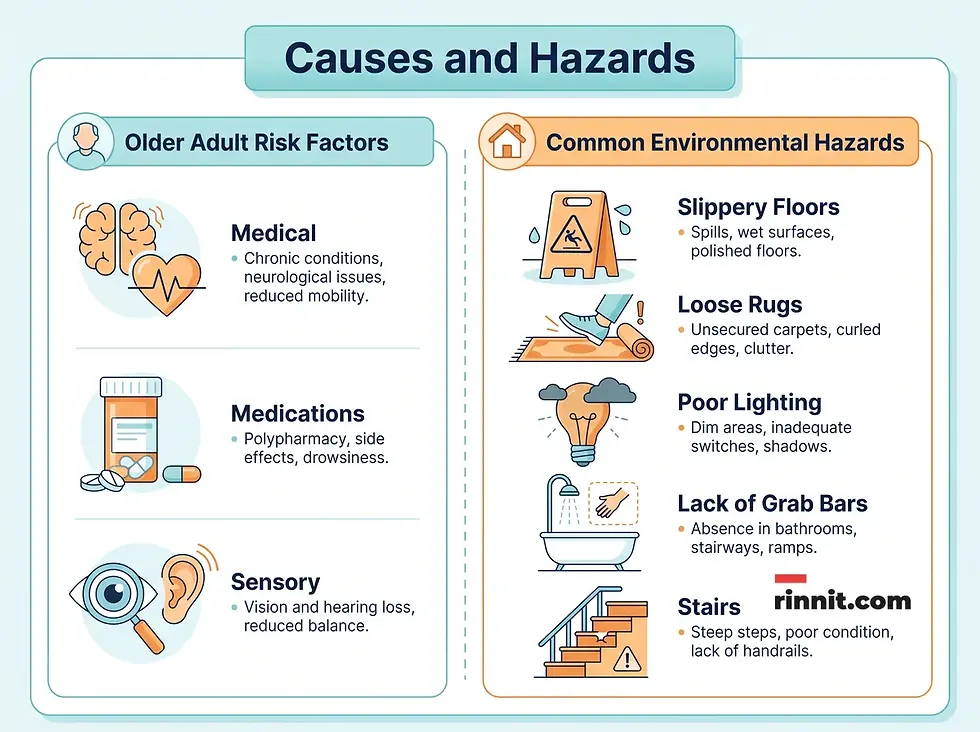
In older adults, a fall is rarely caused by a single factor. Medical, environmental, and social factors usually add up, and the more of them there are, the greater the risk [1].
Medical Cause | Description |
|---|---|
Neurological | Strokes, movement disorders such as Parkinson's disease, or dementia. |
Sensory loss | Vision loss, or numbness in the feet from diabetes-related neuropathy. |
Physical weakness | Muscle weakness, loss of muscle mass (sarcopenia), or frailty. |
Which Medications Increase Fall Risk?
Many common medications have side effects that raise the risk of falls [1].
Medication Type | Why It Increases Fall Risk |
|---|---|
Blood pressure medicines | Can cause dizziness or lightheadedness, especially when standing. |
Sedatives | Anxiety medicines that cause drowsiness or slowed reactions. |
Opioids | Pain medicines that can affect balance and alertness. |
Polypharmacy | Taking five or more medications daily increases the chance of side effects. |
What Environmental and Personal Factors Raise the Risk?
Factors from outside your body and factors about your life situation can also contribute [1].
Environmental Factor | Tripping or Slipping Hazard |
|---|---|
Home furnishings | Loose rugs, cluttered walkways, and slippery surfaces, especially in bathrooms. |
Lack of support | No grab bars or railings in bathrooms, on stairs, and in other areas. |
Footwear | Shoes with poor grip or fit, or walking in socks on slick floors. |
Weather | Ice, snow, or wet leaves on outdoor walkways. |
Personal Factor | Impact on Fall Risk |
|---|---|
Previous falls | Falling once makes you more likely to fall again. |
Age | About 1 in 4 adults over 65 fall at least once a year, and about 1 in 3 of those 85 and older. |
Living situation | People who live alone are more likely to fall. |
Needing help with daily activities | People who need help with bathing, dressing, or eating are more likely to fall. |
Fear of falling | People who fear falling are much more likely to do so. |
What Are the Complications of a Fall?
The effects of a fall depend on the injuries, the care you receive, and your health history. For people over 65, even a fall that seems minor can set off a chain of problems that affect quality of life [1].
Complication for Older Adults | Potential Outcome |
|---|---|
Extended hospitalization | A longer stay in the hospital to recover. |
Permanent disability | Long-term need for a cane, walker, or wheelchair. |
Loss of independence | Needing to live with family, in assisted living, or in a long-term care facility. |
Death |
How Are Fall Injuries Diagnosed and Treated?
Healthcare providers start with physical and neurological exams. They also look for underlying conditions that may have caused the fall, such as a sudden drop in blood pressure or a neurological event [1].
Imaging tests used to look for broken bones and internal injuries include X-rays, CT scans, MRI, and ultrasound. Treatment depends on the injury and your health history, from rest and ice for a minor sprain to surgery for a hip fracture or a brain bleed [1].
When Should You Go to the Hospital After a Fall?
Go to the hospital after a fall if any of these apply [1]:
You take blood thinners: Bleeding inside the body can be dangerous even without a visible injury, especially after a blow to the head, chest, back, or abdomen.
You may have a serious injury such as a broken bone: If you cannot use a limb as usual, get professional care.
You may have a head injury: This includes hitting your head hard enough to black out or see stars, and delayed symptoms such as confusion, drowsiness, or behavior changes.
Also get care immediately if you fell because of symptoms of a stroke, heart attack, or another medical emergency. Talk to your provider if you often start to fall but catch yourself, since near misses can be an early warning sign [1].
How Can You Prevent Falls?
Most falls can be prevented, and because falls are most likely to happen at home, many of the best steps start there [1].
Prevention Step | Action to Take |
|---|---|
Stay active | Do exercise or physical therapy to improve strength and balance [2]. |
Review medications | See your provider regularly to review your medications and manage fall risk. |
Check your eyes and feet | See an eye care specialist at least every one to two years, wear shoes that fit, and take care of your feet, especially if you have diabetes. |
Audit your home | Remove loose rugs and clutter, add grab bars and railings, use nightlights, and ask about a home safety assessment. |
Child safety | Use gates, locks, and window protection, move climbable furniture away from windows, and supervise young children. |

Conclusion: Taking Control of Fall Safety
Falls are a serious health concern, but they do not have to be an unavoidable part of aging or childhood. Understanding the specific risks, from loose rugs to medication side effects, helps you make your home and your health safer for you and your loved ones.
Prevention is the most effective tool against fall-related complications. Regular exercise, medical reviews, and home safety changes are small steps with a large effect on long-term health and independence.
Take these three steps:
Audit your home. Walk through every room, remove tripping hazards such as rugs and clutter, and install grab bars in high-risk areas like the bathroom.
Review your health. Ask your provider whether any of your medications could cause dizziness, and schedule a vision exam.
Stay moving. Choose activities that build strength and balance, such as walking or physical therapy exercises.
Related Reading
Using a walking aid safely: How to Use a Cane: Sizing, Walking, Stairs and Safety Tips
Frequently Asked Questions
What is a slip and fall injury?
A slip and fall injury is an unintentional accident in which a person loses balance and hits the ground. The result can range from a bruise to a dangerous or life-changing injury [1].
Are falls a major health concern?
Yes. Unintentional falls are a leading cause of injury in the United States for almost all age groups [1].
Who is at the highest risk of falling?
Falls are a bigger concern for children around ages 1 to 2 and for adults over 65 [1].
What is considered a minor fall injury?
Minor injuries include bruises, small cuts (lacerations), and low-grade sprains. You can usually treat these at home [1].
When is a fall considered a medical emergency?
A fall is an emergency if it causes broken bones (especially the hip or pelvis), a head injury such as a traumatic brain injury or brain bleed, or other major harm. Call your local emergency number (911 in the United States) right away [1].
Why do toddlers fall so often?
Toddlers are still learning to walk, so their fall risk is very high, and they may not yet have the experience to avoid hazards such as stairs or furniture [1].
What are common fall hazards for children?
Stairs, open windows, furniture, beds (especially bunk beds), playground equipment, and treehouses [1].
Why do older adults have a higher fall risk?
In older adults, falls usually happen because several factors add up: medical conditions, medications, sensory and balance problems, environmental hazards, and psychological or social factors [1].
What medical conditions increase fall risk?
Examples include stroke, movement disorders such as Parkinson's disease, dementia, vision loss, muscle weakness or loss of muscle mass (sarcopenia), and frailty [1].
Can medications cause falls?
Yes. Blood pressure medicines, anxiety medicines with sedative effects, and opioids are common examples. They can cause side effects such as dizziness, drowsiness, or coordination problems [1].
What is polypharmacy?
Polypharmacy means taking five or more medications daily. Your fall risk goes up because medications often intensify each other's side effects [1].
How does diabetes affect fall risk?
Over time, type 2 diabetes can damage nerves in the legs and feet (neuropathy). If you cannot feel your feet, it is harder to sense uneven surfaces or stop yourself from tripping [1].
What are common environmental hazards at home?
Loose rugs and other furnishings, slippery bathroom surfaces, poor lighting, and a lack of grab bars and railings [1].
Does footwear matter?
Yes. What you wear on your feet can make a fall more or less likely. Choose shoes that fit properly and grip well, and replace them as needed. Walking in socks on slick floors raises the risk of a slip [1].
How does weather contribute to falls?
Snow, ice, and wet leaves on walkways around your home make slips and falls more likely [1].
Are people who live alone more likely to fall?
Yes. People who live alone are more likely to fall, partly because they try to do tasks on their own that may need help [1].
What is the fear of falling?
The fear of falling is anxiety about falling. People who fear falling are much more likely to fall, so talk to your provider if fear is limiting your activity [1].
What are the complications of a fall for older adults?
Complications can include extended hospitalization, long-term or permanent disability, loss of independence, and death [1].
How many older adults die from falls?
In the United States in 2020, 86% of the 42,114 fall-related deaths occurred in adults aged 65 and older [4]. In one study of 21,340 older adults treated in emergency departments after a fall, about 15% had died within a year [5].
How do doctors diagnose fall injuries?
Doctors start with physical and neurological exams and often use imaging such as X-rays, CT scans, MRI, or ultrasound. Lab tests can look for underlying conditions that contributed to the fall [1].
Can falls be prevented?
Many can. Although some falls happen for reasons outside your control, it is very possible to prevent most of them with home changes, regular medical reviews, and staying active [1].
What is the best way to prevent falls at home?
Remove tripping hazards such as loose rugs and clutter, add grab bars and railings, keep every area well lit (nightlights help), and ask about a home safety assessment from an occupational therapist [1].
How does physical activity help?
Exercise and physical therapy can improve strength and balance. A Cochrane review of 108 trials found that exercise reduced the rate of falls by 23% in older adults living in the community [2].
Should I get my vision checked?
Yes. Keep your eyeglass prescription up to date by seeing an eye care specialist at least every one to two years, or more often if needed [1].
What should I do for a minor sprain after a fall?
Low-grade sprains can usually be treated at home with rest, ice, and elevation. See a provider if the sprain limits use of the limb or the pain persists [1].
When should I go to the ER after a fall?
Go if you take blood thinners, think you have a serious injury such as a broken bone or cannot use a limb as usual, or may have a head injury (hitting your head hard, blacking out or seeing stars, or delayed confusion or drowsiness). Seek care immediately if you fell because of stroke or heart attack symptoms [1].
Are bunk beds safe for young children?
Beds, especially bunk beds, are a common place for children to fall. Supervise young children around them and keep climbable furniture away from windows [1].
What is a traumatic brain injury (TBI)?
A traumatic brain injury is a serious brain injury caused by a blow or jolt to the head, such as in a major fall. It is a medical emergency [1].
How do grab bars help?
Grab bars give you something stable to hold in slippery or high-risk areas such as showers, tubs, toilets, and stairs [1].
What is the outlook after a fall?
It depends on the injuries you had, the care you received, and your health history. Seeing a provider and joining a strength and balance program can help you recover and lower the risk of another fall [1].
References
Cleveland Clinic. Falling accidents and injuries. Cleveland Clinic Health Library. Last updated June 25, 2025. https://my.clevelandclinic.org/health/diseases/slip-and-fall-injury
Sherrington C, Fairhall NJ, Wallbank GK, et al. Exercise for preventing falls in older people living in the community. Cochrane Database Syst Rev. 2019;1(1):CD012424. PMID 30703272. https://doi.org/10.1002/14651858.CD012424.pub2
Bergen G, Stevens MR, Burns ER. Falls and fall injuries among adults aged ≥65 years — United States, 2014. MMWR Morb Mortal Wkly Rep. 2016;65(37):993-998. PMID 27656914. https://doi.org/10.15585/mmwr.mm6537a2
Santos-Lozada AR. Trends in deaths from falls among adults aged 65 years or older in the US, 1999-2020. JAMA. 2023;329(18):1605-1607. PMID 37159042. https://doi.org/10.1001/jama.2023.3054
Liu SW, Obermeyer Z, Chang Y, et al. Frequency of ED revisits and death among older adults after a fall. Am J Emerg Med. 2015;33(8):1012-1018. PMID 25983268. https://doi.org/10.1016/j.ajem.2015.04.023
National Institute for Health and Care Excellence (NICE). Falls: assessment and prevention in older people and in people 50 and over at higher risk (NG249). NICE. Published April 29, 2025. https://www.nice.org.uk/guidance/ng249
Medical disclaimer
This guide is based on medical information last reviewed on June 25, 2025. Always consult a healthcare professional for diagnosis and treatment decisions.
Health information, not medical advice. This article is for general education and is not a substitute for professional diagnosis or treatment. Always consult a qualified healthcare provider about your own health, and seek emergency care for urgent symptoms.



Comments