Sleeping Pills: Types, How They Work and Side Effects

Updated: 2 days ago
Written and medically reviewed by Dr. Baraa Alnahhal, MD · Last reviewed: November 2026 · How we review
Quick Answer
Sleeping pills (sleep aids, hypnotics) are medicines that make you drowsy and relaxed so you can fall asleep or stay asleep. They're meant for short-term use. Long-term use can cause dependence and rebound insomnia, and older adults face a higher risk of falls. Cognitive behavioral therapy for insomnia (CBT-I) is an effective alternative.
What the research says
Z-drugs give a small benefit: in 13 trials with 4,378 adults, Z-drugs such as zolpidem helped people fall asleep about 22 minutes faster than placebo on sleep-lab testing, a small benefit of uncertain importance (Huedo-Medina TB et al., BMJ, 2012) [2]
Risks may outweigh benefits in older adults: in 24 trials with 2,417 people aged 60 and older, sleeping pills added about 25 minutes of sleep, but memory and thinking problems were 4.8 times and daytime tiredness 3.8 times more likely than with placebo (Glass J et al., BMJ, 2005) [3]
Key takeaways
Sleeping pills help you fall or stay asleep.
Types include OTC antihistamines, supplements and prescription medicines.
They're meant for short-term use.
Next-day drowsiness and dizziness are common.
CBT-I treats insomnia without medicine.
What are sleeping pills?
Sleeping pills treat insomnia and other sleep problems. About 1 in 7 people in the U.S. have long-term insomnia, and about 1 in 3 adults age 65 and older take some kind of sleep medicine. Sleeping pills can help during a stressful time, but they don't cure insomnia. Sources: [1]
Types of sleeping pills

Talk to your provider before taking any sleep aid.
Type | Examples | How it works |
OTC antihistamines | Diphenhydramine, doxylamine | Block histamine, a chemical that keeps you alert |
Supplements | Melatonin, valerian | Melatonin helps time your sleep cycle; valerian calms the nervous system |
Z-drugs | Zolpidem, eszopiclone | Slow brain activity |
Several prescription types | Boost GABA to relax and sedate you | |
Others | Some antidepressants, barbiturates | Prescription only |
OTC sleep aids are for adults 18 and older. Sources: [1]
How to use them safely
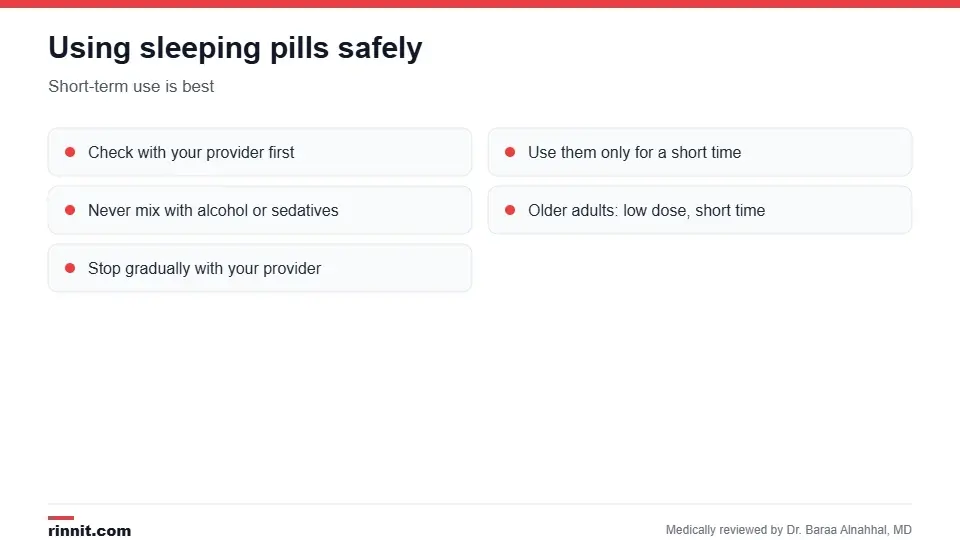
Never drive if you feel drowsy.
Ask your provider before taking OTC sleep aids or supplements, since they can interact with other medicines.
Use them only for a short time.
Never mix them with alcohol or other sedatives, which can cause an overdose.
Older adults should use a low dose for a short time.
If you've taken them for a long time, stop with your provider's guidance; it may take months. Sources: [1]
Side effects
Type | Examples |
Next-day effects | Drowsiness, muddled thinking, dizziness, balance problems (about 8 in 10 people) |
Common | Dry mouth, headaches, constipation or diarrhea, upset stomach, muscle weakness, worse snoring or sleep apnea |
Long-term | Dependence, rebound insomnia |
Z-drugs | Sleepwalking, eating or driving while not fully awake |
Benzodiazepines | Can be addictive |
Sources: [1, 3]
Who should be careful
Older adults, who have a higher risk of confusion, falls and hip fractures.
People who are pregnant or breastfeeding.
Children; OTC antihistamines aren't approved for children's sleep.
People with heart disease or sleep apnea. Sources: [1]
Alternatives and sleep tips
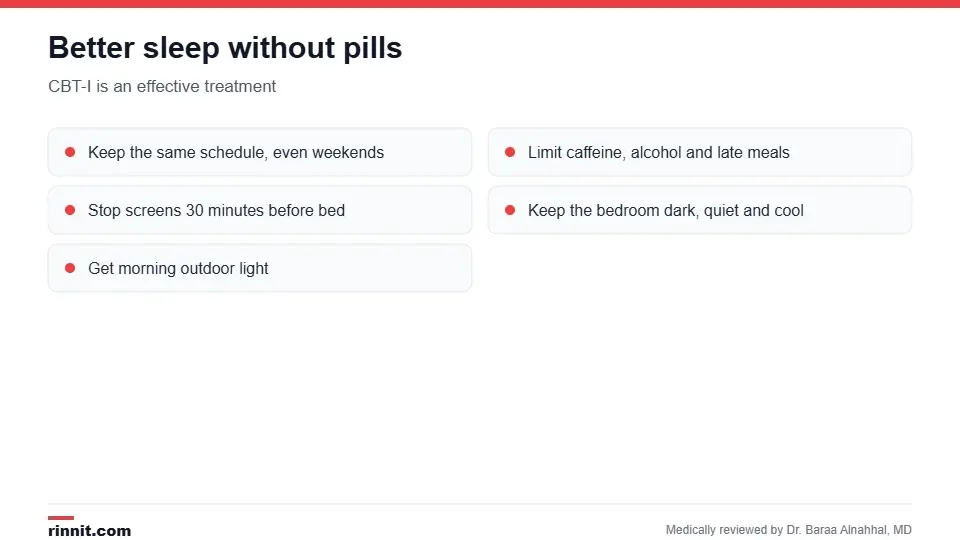
CBT-I is an effective treatment for insomnia.
Keep the same sleep schedule, even on weekends.
Avoid large meals, alcohol and caffeine late in the day.
Stop screens 30 minutes before bed.
Keep your bedroom dark, quiet and cool.
Get 30 to 40 minutes of outdoor light within 15 minutes of waking. Sources: [1]
When to call your provider
Ongoing tiredness during the day.
Confusion or memory problems.
Sleepwalking or doing things while not fully awake.
Trouble focusing or driving.
Severe stomach upset.
If you have thoughts of harming yourself, call or text 988. Sources: [1]
Conclusion
Sleeping pills can offer short-term relief from insomnia, but they come with side effects and don't fix the cause. Talk with your provider about the safest option and about CBT-I and healthy sleep habits for lasting results.
Keep learning: read about CBT-I and benzodiazepines.
Frequently asked questions
What are sleeping pills?
Medicines that help you fall or stay asleep.
What are the types of sleeping pills?
OTC antihistamines, supplements like melatonin, and prescription medicines.
How much do sleeping pills help?
People fall asleep about 8 to 20 minutes faster and sleep about 35 minutes longer.
Are sleeping pills safe long term?
They're meant for short-term use; long-term use can cause dependence.
What is a sleeping pill hangover?
Drowsiness, dizziness and muddled thinking the next day.
Can I take sleeping pills with alcohol?
No. It can cause an overdose.
Are sleeping pills safe for older adults?
They raise the risk of confusion and falls, so use caution.
Is melatonin a sleeping pill?
It's a supplement sleep aid that helps time your sleep cycle.
What is rebound insomnia?
Worse insomnia after stopping sleeping pills.
What works better than sleeping pills?
CBT-I is an effective long-term treatment.
Related Reading
Cognitive Behavioral Therapy for Insomnia (CBT-I): How It Works, How Long It Takes, and Results a drug-free treatment for insomnia.
Benzodiazepines (Benzos): Uses, Side Effects and Risks a type of prescription sleep medicine.
Antihistamines: Types, Uses and Side Effects the main ingredient in OTC sleep aids.
Paradoxical Insomnia: Symptoms, Causes, and Management a type of insomnia.
Obstructive Sleep Apnea: Symptoms, Causes, and What Actually Helps a sleep disorder sleeping pills can worsen.
References
Cleveland Clinic. Sleeping Pills: How They Work, Side Effects, Risks & Types. Cleveland Clinic. Last updated June 22, 2024. https://my.clevelandclinic.org/health/treatments/15308-sleeping-pills
Huedo-Medina TB, Kirsch I, Middlemass J, et al. Effectiveness of non-benzodiazepine hypnotics in treatment of adult insomnia: meta-analysis of data submitted to the Food and Drug Administration. BMJ. 2012;345:e8343. PMID 23248080. https://doi.org/10.1136/bmj.e8343
Glass J, Lanctôt KL, Herrmann N, et al. Sedative hypnotics in older people with insomnia: meta-analysis of risks and benefits. BMJ. 2005;331(7526):1169. PMID 16284208. https://doi.org/10.1136/bmj.38623.768588.47
Medical disclaimer
This article is for general education only and does not replace advice from a qualified healthcare professional. Talk to your doctor about your own diagnosis and treatment, and seek emergency care right away for severe or sudden symptoms.



Comments