Antihistamines: Types, Uses and Side Effects

Updated: 2 days ago
Written and medically reviewed by Dr. Baraa Alnahhal, MD · Last reviewed: November 2026 · How we review
Quick Answer
Antihistamines are medicines that block histamine, a chemical the immune system releases during an allergic reaction. H1 antihistamines treat allergy symptoms such as sneezing, runny nose, itchy eyes and hives; H2 antihistamines lower stomach acid. First-generation types often cause drowsiness. Don't drive after taking a drowsy antihistamine, and never take more than the label says.
What the research says
Common allergy pills all help: in 13 trials with 6,867 people with allergic rhinitis, cetirizine, loratadine and desloratadine all improved quality of life more than placebo, with cetirizine ranking most effective (Xiao J et al., Am J Ther, 2016) [2]
Older antihistamines impair driving: 16 on-the-road driving studies showed first-generation antihistamines such as diphenhydramine clearly impair driving, while fexofenadine and levocetirizine showed no impairment (Verster JC and Volkerts ER, Ann Allergy Asthma Immunol, 2004) [3]
Key takeaways
Antihistamines block histamine to relieve allergy symptoms.
H1 antihistamines treat allergies; H2 antihistamines lower stomach acid.
First-generation types cause more drowsiness.
Second-generation types such as cetirizine and loratadine are less sedating.
Don't drive after a drowsy antihistamine or take more than directed.
What are antihistamines?
When you meet an allergy trigger, such as pollen, dust, mold, pet dander, insect stings, foods or medicines, your immune system releases histamine. Histamine causes itching, sneezing, swelling and a runny nose. Antihistamines block histamine from attaching to its receptors. They're among the most commonly used medicines and are often found in cold, cough and sleep products. Sources: [1]
Types of antihistamines

Choosing the best one can take some trial and error.
Type | Examples | Notes |
First-generation H1 | Diphenhydramine (Benadryl), chlorpheniramine (Chlor-Trimeton), doxylamine (Unisom), hydroxyzine, dimenhydrinate (Dramamine) | Cross into the brain easily; cause drowsiness |
Second-generation H1 | Cetirizine (Zyrtec), loratadine (Claritin), fexofenadine (Allegra), desloratadine (Clarinex), azelastine spray | Less drowsiness; often called "non-drowsy" |
H2 | Famotidine (Pepcid), cimetidine (Tagamet), nizatidine | Lower stomach acid |
They come as tablets, capsules, chewables, liquids, creams, eye drops, nasal sprays and injections. Sources: [1]
What they treat
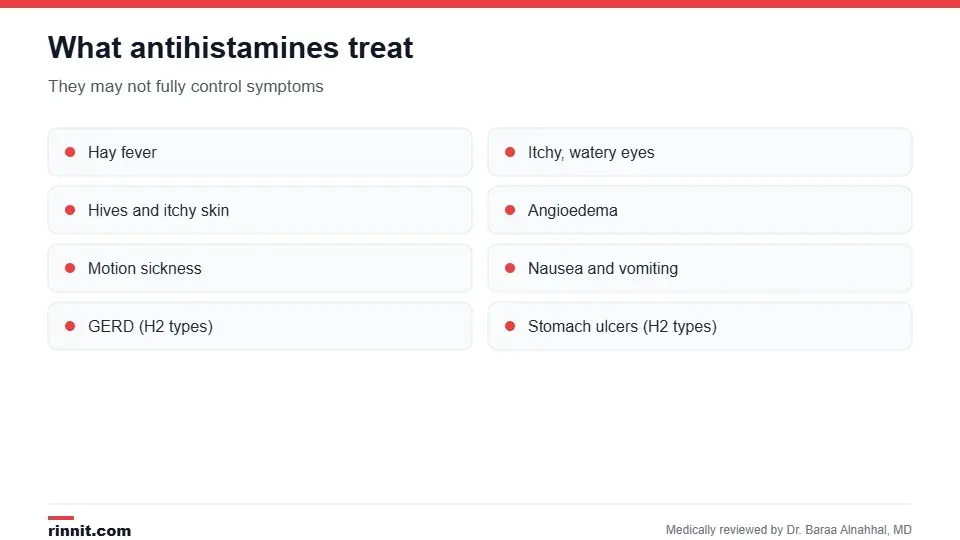
Antihistamines may not fully control symptoms, since other chemicals also play a role.
Allergic conjunctivitis (itchy, watery eyes).
Hives and angioedema, eczema and itchy skin.
Motion sickness, nausea and vomiting.
GERD, gastritis and peptic ulcers (H2 antihistamines). Sources: [1, 2]
How to take them
Follow the label or your pharmacist's directions; the dose depends on the drug, your age and your weight.
Don't double up, take two antihistamines together or take doses early unless your provider says so.
Taking a dose at bedtime may help with morning allergy symptoms.
Don't give over-the-counter cough and cold antihistamines to children under 4.
Don't drive or use heavy machinery after a first-generation antihistamine. Sources: [1]
Side effects
Type | Possible side effects |
First-generation | Drowsiness, slow reaction time, dry mouth and eyes, blurred vision, dizziness, trouble urinating, constipation |
Second-generation | Headache, sore throat, stomach upset; drowsiness at high doses |
H2 | Uncommon: tiredness, diarrhea or constipation, headache, confusion in people over 65 |
Sources: [1, 3]
Overdose and safety

Children and adults over 65 are most at risk of overdose.
Taking too much, especially of a first-generation antihistamine or mixed with sleeping pills, can cause an overdose. Signs include extreme drowsiness, hallucinations, agitation, a fast heartbeat and seizures. Children and people over 65 are most at risk. Call 911 if you suspect an overdose. Sources: [1]
Antihistamines can worsen some conditions, including glaucoma, an enlarged prostate, epilepsy, heart disease and high blood pressure. Many studies show first-generation antihistamines don't significantly raise birth defect risk, but ask your provider before using any medicine in pregnancy. Sources: [1]
When to call your provider
Symptoms don't improve.
Side effects bother you.
You get new nosebleeds or nasal symptoms.
You want to give an antihistamine to a child.
You have other health conditions or take other medicines. Sources: [1]
Conclusion
Antihistamines are safe, effective and widely available for allergies and some stomach problems. Choosing a non-drowsy type and following the label helps you get relief with fewer side effects.
Keep learning: read about allergy testing and allergy shots.
Frequently asked questions
What do antihistamines do?
They block histamine to relieve allergy symptoms.
What's the difference between first- and second-generation antihistamines?
First-generation types cause more drowsiness; second-generation types are less sedating.
Which antihistamines are non-drowsy?
Cetirizine, loratadine, fexofenadine and desloratadine are less sedating.
What are H2 antihistamines?
Medicines such as famotidine that lower stomach acid.
Can I take two antihistamines together?
Not unless your provider tells you to.
Can antihistamines make me sleepy?
Yes, especially first-generation types like diphenhydramine.
Can I drive after taking one?
Not after a first-generation antihistamine.
Are antihistamines safe for children?
Don't give OTC cough and cold antihistamines to children under 4; ask your provider.
Can you overdose on antihistamines?
Yes. Signs include extreme drowsiness, hallucinations and seizures.
Are antihistamines safe in pregnancy?
Many studies are reassuring, but ask your provider first.
Related Reading
Sleeping Pills: Types, How They Work and Side Effects explains the types and risks of sleeping pills.
Allergic Rhinitis (Hay Fever): Symptoms, Triggers, and Treatment That Actually Works the most common reason to take antihistamines.
Hives and Angioedema: Symptoms, Causes, Treatment & Complete Guide itchy welts treated with antihistamines.
Allergy Testing: Types, How to Prepare and What Results Mean tests to find your allergy triggers.
Allergy Shots (Immunotherapy): Long-Term Relief for Chronic Allergies a long-term allergy treatment.
Allergies: What Happens in Your Immune System, What the Symptoms Mean, and How to Take Control how allergies work.
References
Cleveland Clinic. Antihistamine Types & Side Effects. Cleveland Clinic. Last updated July 26, 2024. https://my.clevelandclinic.org/health/treatments/antihistamines
Xiao J, Wu WX, Ye YY, et al. A network meta-analysis of randomized controlled trials focusing on different allergic rhinitis medications. Am J Ther. 2016;23(6):e1568-e1578. PMID 25867532. https://doi.org/10.1097/MJT.0000000000000242
Verster JC, Volkerts ER. Antihistamines and driving ability: evidence from on-the-road driving studies during normal traffic. Ann Allergy Asthma Immunol. 2004;92(3):294-303. PMID 15049392. https://doi.org/10.1016/S1081-1206(10)61566-9
Medical disclaimer
This article is for general education only and does not replace advice from a qualified healthcare professional. Talk to your doctor about your own diagnosis and treatment, and seek emergency care right away for severe or sudden symptoms.



Comments