Shoulder Joint: Anatomy, Function, and Common Conditions

Updated: 2 days ago
Medically reviewed by Dr. Baraa Alnahhal, MD · Last reviewed: October 2026
The shoulder joint, or glenohumeral joint, is a highly mobile ball-and-socket joint that connects the humerus to the scapula. [1] It provides the greatest range of motion of any joint in the human body [1], enabling essential movements like lifting, reaching, and rotating the arms. While its flexibility is a significant asset, it also makes the shoulder susceptible to injuries such as dislocations, rotator cuff tears, and osteoarthritis. [1] Maintaining joint health through an anti-inflammatory diet, regular flexibility exercises, and avoiding smoking is crucial for long-term shoulder function and pain prevention.
Quick Answer: What is the shoulder joint?
The shoulder joint, medically known as the glenohumeral joint, is a ball-and-socket joint where the upper arm bone (humerus) meets the shoulder blade (scapula). [1] It has the greatest range of motion of any joint in the body. [1] The rotator cuff muscles and tendons, along with cartilage and ligaments, give it the stability needed for lifting, reaching and rotating.
What the research says
Exercise-based rehabilitation reduces pain and improves function in rotator cuff-related shoulder pain. A systematic review and meta-analysis of 21 randomized trials with 1,152 middle-aged and older adults found significant improvements with exercise in pain (g = -1.454), function (g = 0.457) and range of motion (g = -2.477), while the gain in strength was smaller and not statistically significant (g = 0.229, p = 0.085); heterogeneity between trials was very high (I² = 96%) (Vico-Rodríguez et al., BMC Musculoskelet Disord, 2026) [2].
Smoking is linked to a higher risk of failed healing after rotator cuff repair. A meta-analysis of 10 cohort studies covering 1,683 shoulders found that smoking was associated with a higher risk of imaging-confirmed structural failure after arthroscopic rotator cuff repair (risk ratio 1.53; 95% CI 1.13–2.08), although functional outcomes were broadly similar between smokers and non-smokers (Nguyen et al., J Shoulder Elbow Surg, 2026) [3].
Age, high blood pressure and shoulder shape were linked to full-thickness cuff tears. A pooled analysis of 11 studies (1,518 people with full-thickness tears and 2,529 controls) found that age, hypertension (RR 1.46; 95% CI 1.17–1.81) and critical shoulder angle were risk factors, while body mass index, sex, smoking and diabetes were not (Zhao et al., EFORT Open Rev, 2021) [4].
What is the anatomy of the shoulder joint?
The shoulder joint is a complex structure where three primary bones—the humerus, scapula, and clavicle—converge. [1] As a ball-and-socket joint, the rounded head of the humerus fits into a shallow socket in the scapula known as the glenoid cavity. This configuration is what allows the arm to spin and move in multiple directions. [1] Surrounding the joint is the synovial membrane, which produces a lubricating fluid that facilitates smooth, frictionless movement [1] during daily activities.
Several critical structures provide support and stability to the glenohumeral joint. The glenoid labrum, a ring of strong cartilage, lines the socket [1] to deepen it and cushion the bone ends. The rotator cuff, a specialized group of muscles and tendons, plays a vital role in holding the humerus in place while enabling rotation. [1] Additionally, fluid-filled sacs called bursae act as cushions between the bones and soft tissues, reducing friction and protecting the joint from wear and tear.
Structure | Type | Primary Function |
Glenohumeral Joint | Ball-and-Socket | Connects the humerus to the scapula; enables rotation. |
Rotator Cuff | Muscles/Tendons | Supports the joint and facilitates arm rotation. |
AC Joint | Joint | Connects the shoulder blade to the collarbone. |
Glenoid Labrum | Cartilage | Lines and cushions the shoulder socket. |

What range of motion does the shoulder joint have?
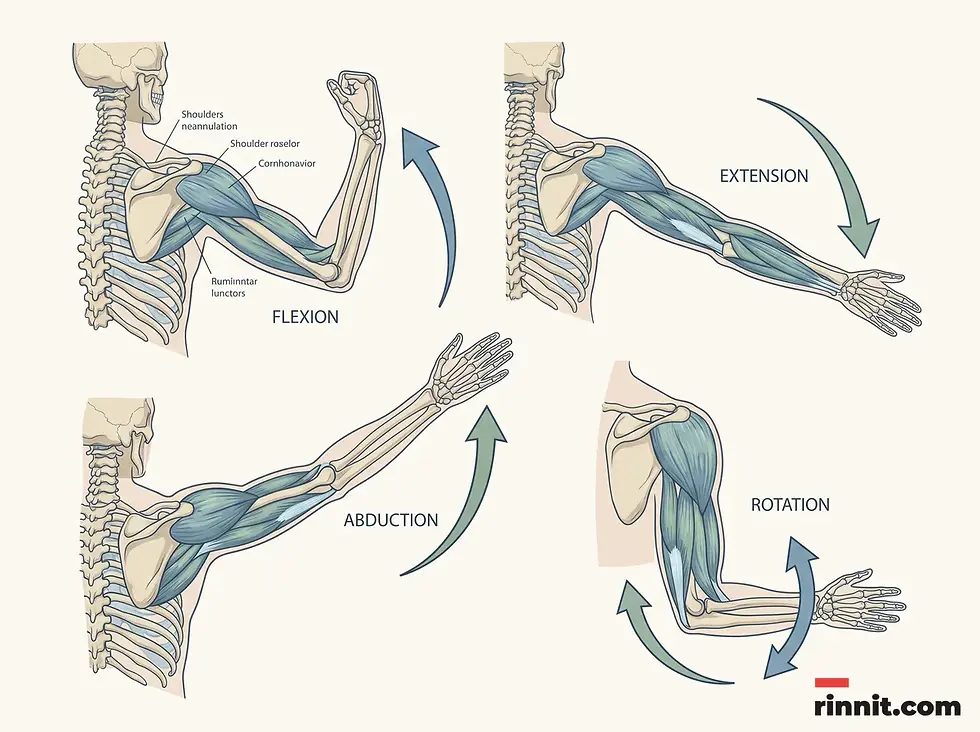
The shoulder joint is unique due to its exceptional range of motion, which exceeds that of any other joint in the body. [1] This flexibility is essential for a wide array of functional movements, from basic daily tasks to complex athletic maneuvers. The joint allows for flexion (lifting the arm forward), extension (reaching behind the back), abduction (lifting the arm to the side), and both internal and external rotation.
Because the shoulder joint is so "free-wheeling," it relies heavily on the surrounding soft tissues for stability. The coordinated action of the rotator cuff and other shoulder muscles ensures that the ball remains centered in the socket even during extreme movements. This balance between mobility and stability is what enables humans to perform tasks like throwing a ball, reaching overhead to grab items, or rotating a faucet handle with precision and ease.
Movement | Functional Example |
Flexion | Lifting a cup of coffee or shaking hands. |
Extension | Reaching behind the back to put on a coat. |
Abduction | Raising the arm to wave or stretching overhead. |
Rotation | Turning a handle or throwing a ball. |
What common conditions and symptoms affect the shoulder joint?
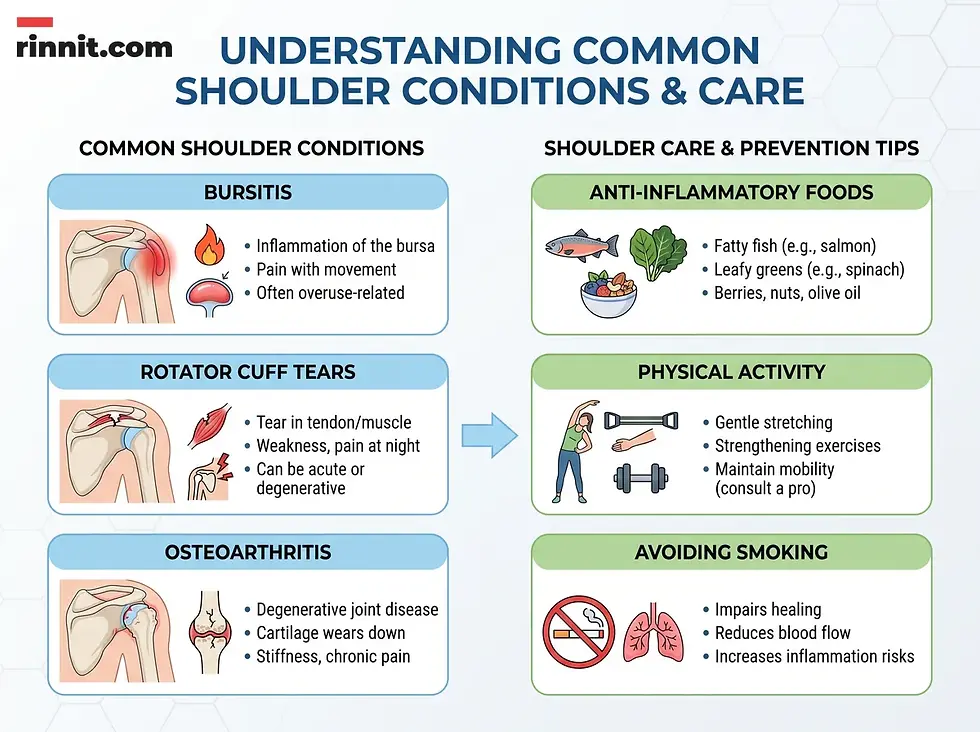
The shoulder's high degree of mobility makes it vulnerable to various injuries and chronic conditions. Dislocations occur when the humerus is forced out of the glenoid socket [1], often due to trauma. Osteoarthritis, a degenerative "wear-and-tear" condition, develops as the protective cartilage wears down over time, leading to bone-on-bone friction. [1] Additionally, bursitis can occur when the fluid-filled sacs in the joint become irritated, resulting in significant pain and swelling. [1]
Soft tissue injuries are also prevalent, particularly involving the rotator cuff. Repeated overhead movements or sudden stress can lead to tendinitis or even full tears of the rotator cuff tendons. [1] Common symptoms across these conditions include moderate to severe pain, stiffness, weakness, and visible bruising or swelling. [1] Early intervention and proper care are essential to prevent these issues from becoming chronic and limiting a person's ability to perform everyday tasks.
Clinical Note: Sudden or persistent shoulder pain that interferes with sleep or daily activities should be evaluated by a healthcare professional to rule out fractures or significant soft tissue tears.
How can you keep your shoulder joint healthy?
Keeping the shoulder joint healthy requires a combination of proper nutrition, regular exercise, and healthy lifestyle choices. An anti-inflammatory diet rich in fish and leafy green vegetables can help reduce joint inflammation and lower the risk of developing osteoarthritis. [1] Regular physical activity, including aerobic exercise and strength training, helps protect the cartilage [1] and strengthens the supporting muscles, ensuring the joint remains stable.
Flexibility routines are particularly important for the shoulder to maintain its wide range of motion. Simple stretching and mobility exercises can prevent stiffness and reduce the likelihood of sprains. Additionally, avoiding habits like smoking and choosing water over sugary drinks can improve overall circulation and joint health. Maintaining a healthy weight further reduces the stress placed on the joints, helping them function optimally throughout a person's life.
What everyday tips help protect a healthy shoulder joint?
A healthy shoulder joint benefits from anti-inflammatory foods, strength and flexibility training, not smoking, good hydration, a healthy weight and avoiding painful overhead activity.
Eat Anti-Inflammatory Foods: Focus on fish, broccoli, and leafy greens to support joint health. [1]
Stay Active: Incorporate strength and flexibility training into your weekly routine.
Quit Smoking: Smoking can impair circulation and hinder the body's ability to repair joint tissues.
Hydrate Properly: Choose water over sugary or energy drinks to maintain joint lubrication.
Monitor Weight: Keeping a healthy weight reduces unnecessary pressure on the shoulder joints.
Listen to Your Body: Avoid repetitive overhead activities if you experience persistent pain or stiffness.
Frequently Asked Questions
What is the shoulder joint?
The shoulder joint, or glenohumeral joint, is a ball-and-socket joint connecting the upper arm bone to the shoulder blade.
Which joint has the greatest range of motion?
The shoulder joint has the greatest range of motion of any joint in the human body.
What is the rotator cuff?
The rotator cuff is a group of muscles and tendons that support the shoulder and help it rotate.
What causes a dislocated shoulder?
A dislocation occurs when the rounded end of the humerus is forced out of the shoulder blade's socket.
What is shoulder bursitis?
Shoulder bursitis is the inflammation of the fluid-filled sacs (bursae) that cushion the shoulder joint.
Can the shoulder joint wear out?
Yes, osteoarthritis can develop over time as the cartilage lining the joint wears down.
What are the symptoms of a rotator cuff tear?
Common symptoms include pain, weakness, and difficulty lifting or rotating the arm.
How can I improve shoulder flexibility?
Regular stretching and flexibility exercises can help maintain and improve the joint's range of motion.
Does diet affect joint health?
Yes, an anti-inflammatory diet rich in vegetables and fish can help protect against joint pain and arthritis.
When should I see a doctor for shoulder pain?
You should consult a provider if pain is severe, persistent, or accompanied by significant weakness or stiffness.
Related Reading
Shoulder Replacement Surgery: Types, Recovery and Restrictions explains shoulder replacement surgery and recovery.
SLAP Tear Surgery: Procedure, Recovery and Success Rate explains SLAP tear surgery and recovery.
Neer's Test: How It Checks for Shoulder Impingement, Steps and What Results Mean explains the quick in-office shoulder exam providers use to check for shoulder impingement.
Shoulder X-Ray: Why It's Done, What It Shows and What to Expect explains the X-ray used first for shoulder pain and injuries.
References
Cleveland Clinic. Shoulder Joint. Cleveland Clinic. September 19, 2025. https://my.clevelandclinic.org/health/body/24780-shoulder-joint
Vico-Rodríguez P, Aibar-Almazán A, Hita-Contreras F, et al. Exercise interventions for rotator cuff-related shoulder pain in middle-aged and older adults: a systematic review and meta-analysis. BMC Musculoskelet Disord. 2026;27(1). PMID 42260441. https://doi.org/10.1186/s12891-026-10035-4
Nguyen VT, Kuo YJ, Wu LC, et al. Impact of smoking on structural failure after arthroscopic rotator cuff repair: a systematic review and meta-analysis. J Shoulder Elbow Surg. 2026;35(10):e958-e969. PMID 42134569. https://doi.org/10.1016/j.jse.2026.04.050
Zhao J, Pan J, Zeng LF, et al. Risk factors for full-thickness rotator cuff tears: a systematic review and meta-analysis. EFORT Open Rev. 2021;6(11):1087-1096. PMID 34909227. https://doi.org/10.1302/2058-5241.6.210027
Medical disclaimer
The information provided in this article is for educational purposes only and should not be used as a substitute for professional medical advice, diagnosis, or treatment. Always seek the advice of your physician or other qualified health provider with any questions you may have regarding a medical condition.



Comments