Rectal Prolapse Surgery (Rectopexy)

Updated: 3 days ago
Medically reviewed by Dr. Baraa Alnahhal, MD · Last reviewed: October 2026
Rectal prolapse surgery, also known as rectopexy, is the primary treatment for adults whose rectal tissue has shifted out of its normal position. [1] The procedure involves repositioning the rectum and securing it to the pelvic wall to restore function and prevent complications like incontinence or constipation. Surgeons may use abdominal or perineal approaches depending on the patient's age and health. [1] While recovery takes several weeks, surgery offers a definitive fix with high success rates, particularly in abdominal procedures. [1]
Quick Answer: What is rectal prolapse surgery?
Rectal prolapse surgery is a procedure that repairs a condition in which the rectum slides into or through the anal opening. In adults, surgery is the only definitive treatment. [1] It can be performed through the abdomen, often laparoscopically or robotically, or through the perineum. [1] Securing the rectum relieves pressure and pain and helps restore normal bowel control.
What the research says
Abdominal repair may lower the chance of the prolapse returning, but the evidence is mixed. A meta-analysis of 15 studies and 1,611 patients found recurrence of 7.7% after abdominal versus 20.1% after perineal surgery in non-randomized studies, but no significant difference in the three randomized trials (9.8% versus 16.3%; odds ratio 0.82, 95% CI 0.29 to 2.37) [2] (Pellino et al., BJS Open, 2022).
Abdominal surgery trades less incontinence for more constipation. In the same analysis, incontinence was less likely after abdominal surgery (odds ratio 0.32) but constipation was more frequent (odds ratio 1.68), and median hospital stay was 7.2 days after abdominal versus 4.9 days after perineal surgery [2] (Pellino et al., BJS Open, 2022).
Laparoscopic rectopexy has fewer complications, but high-quality evidence is limited. A Cochrane review of 15 randomized trials (1,007 participants) found laparoscopic rectopexy had fewer complications and a shorter hospital stay than open rectopexy, and bowel resection during rectopexy was linked to lower rates of constipation, yet the authors concluded the evidence was too limited to say which operation is best (Tou et al., Cochrane Database of Systematic Reviews, 2015 [3]).
Understanding Rectal Prolapse Surgery
Rectal prolapse is a relatively uncommon condition, affecting approximately 0.5% of the population, but it can significantly impact quality of life if left untreated. While children may sometimes recover through non-surgical management of underlying issues like chronic constipation, adults almost always require surgical intervention. [1] Rectal prolapse surgery, or rectopexy, aims to put the rectal tissue back where it belongs, preventing the condition from worsening and avoiding serious complications such as rectal ulcers or tissue gangrene. [1]
Healthcare providers consider several factors when deciding on the best surgical approach, including the patient's age, overall health, and the severity of the prolapse. Abdominal procedures are often preferred for their lower recurrence rates, while perineal procedures may be safer for older patients or those with multiple health conditions. [1] Regardless of the method, the goal is to stabilize the rectum and improve the patient's digestive and pelvic health.
Approach Type | Common Procedures | Typical Recovery Time | Recurrence Risk |
Abdominal | Abdominal Rectopexy, Laparoscopic, Robotic | Up to 1 week hospital stay | Less than 5% |
Perineal | Altemeier Procedure, Delorme's Procedure | 2 to 3 days hospital stay | Up to 25% |
Abdominal Surgical Techniques
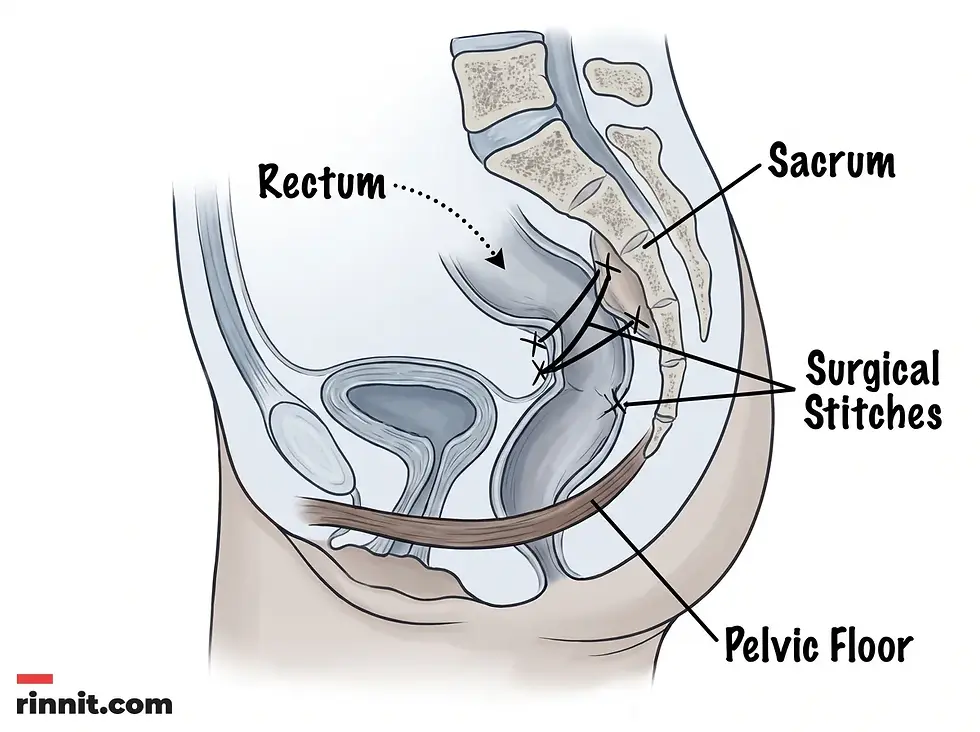
Abdominal rectopexy is a comprehensive approach where the surgeon accesses the rectum through the belly. During this procedure, the rectum is pulled back into its natural position and secured to the sacrum, the bone at the back of the pelvis, using permanent stitches or a specialized mesh sling. [1] Over time, the body forms scar tissue that helps hold the rectum firmly in place. [1]
Modern advancements have made minimally invasive options like laparoscopic and robotic rectopexy widely available. These techniques use small incisions, a camera, and specialized instruments to perform the repair, often resulting in less post-operative pain and a faster return to daily activities. In some cases, a bowel resection (colectomy) is performed simultaneously to remove a portion of the large intestine, which can help alleviate chronic constipation associated with the prolapse. [1]
Perineal Surgical Techniques
For patients who may not tolerate abdominal surgery well, such as the elderly or those with significant underlying health issues, a perineal approach is often recommended. This surgery is performed through an incision in the perineal area, the space between the anus and the genitals. [1] One common method, the Altemeier procedure, involves pulling the prolapsed rectum through the anus, removing the excess tissue, and reattaching the remaining healthy sections. [1]
Another option is the Delorme’s procedure, which is typically used for smaller prolapses. [1] In this method, the surgeon removes the lining of the rectum and folds the muscular wall over itself, stitching it together to create a thicker, more stable rectal wall. [1] While perineal surgeries generally have a shorter hospital stay, they do carry a higher risk of the prolapse returning compared to abdominal repairs. [1]

Risks and Potential Complications
Like any major surgery, rectopexy carries certain risks that patients should discuss with their surgical team. General complications can include bleeding, blood clots, or scarring at the incision sites. [1] Specific to rectal surgery, there is a small risk of developing an anal fistula or an anastomotic leak where the bowel was reattached. [1]
For male patients, abdominal surgery carries a roughly 2% risk of nerve damage that could lead to sexual dysfunction. [1] Additionally, while the surgery is intended to improve bowel function, some patients may experience worsening constipation or a temporary change in their ability to control bowel movements. Most of these issues are manageable with proper post-operative care and medical follow-up.
Recovery and Post-Operative Care
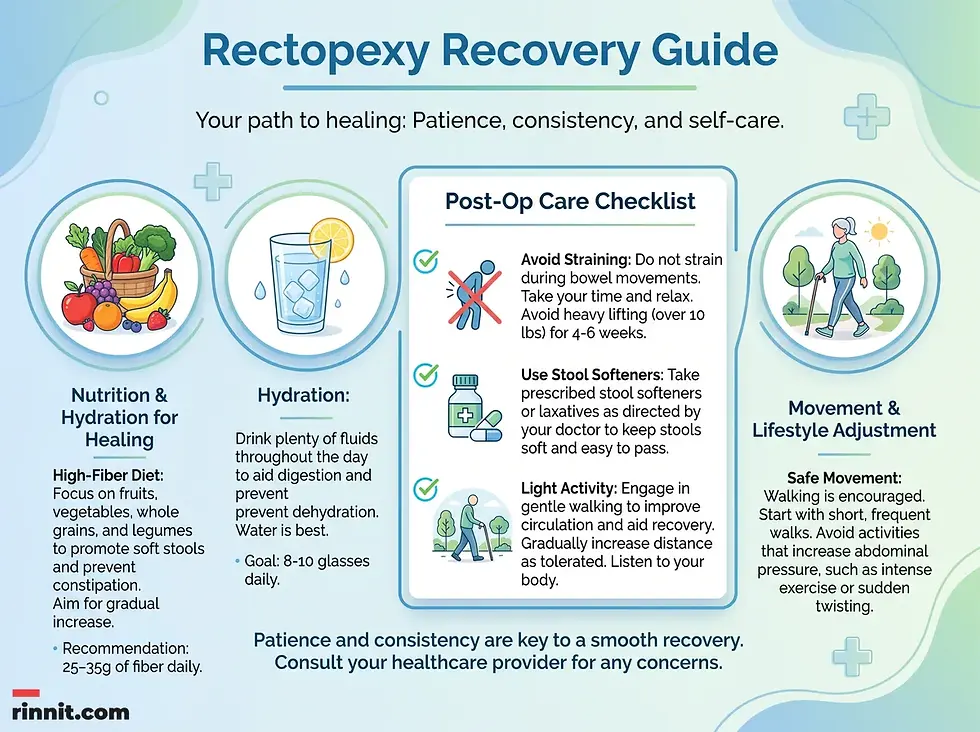
Recovery from rectal prolapse surgery is a gradual process that takes several weeks. [1] Patients typically stay in the hospital until they can comfortably eat solid food and pass gas, signaling that their digestive system is functioning correctly. [1] Once home, it is crucial to avoid straining during bowel movements, as this can put undue pressure on the surgical repair.
Long-term success depends heavily on maintaining healthy bowel habits. Surgeons often recommend a high-fiber diet, increased water intake, and the use of stool softeners to ensure easy passage of stool. [1] It may take several months for bowel function to fully stabilize, during which regular check-ups are necessary to monitor the healing process and ensure the prolapse has not recurred.
Conclusion and Next Steps
Rectal prolapse surgery is a vital intervention that restores anatomical function and prevents the long-term complications of a prolapsed rectum. Whether performed through an abdominal or perineal approach, the procedure offers a path back to comfort and normal bowel control. By following a dedicated recovery plan and maintaining healthy habits, most patients achieve excellent results and a significantly improved quality of life.
If you are experiencing symptoms of rectal prolapse, such as a bulge or pressure after bowel movements, consult a colorectal specialist to discuss your surgical options. Early intervention can prevent worsening symptoms and ensure a smoother recovery process.
Frequently Asked Questions
Is rectal prolapse surgery considered a major operation?
Yes, rectal prolapse surgery is a major procedure that requires either general anesthesia or an epidural. It involves internal repair of the pelvic organs and usually requires a hospital stay ranging from a few days to a week.
Will I have a large scar after rectopexy?
If you have laparoscopic or robotic surgery, you will only have a few small scars on your abdomen. [1] Traditional open abdominal surgery results in one larger scar, while perineal surgery leaves no visible external abdominal scars.
Can rectal prolapse return after it has been surgically fixed?
Yes, there is a risk of recurrence. Abdominal repairs generally have a lower recurrence rate than perineal procedures: in one pooled analysis, recurrence was about 8% after abdominal and 20% after perineal surgery, although randomized trials showed no clear difference. [1]
What should I eat during my recovery?
A high-fiber diet is essential to prevent constipation and straining. Your doctor will likely recommend plenty of fruits, vegetables, and whole grains, along with increased water intake and possibly stool softeners.
When can I return to normal activities after rectal prolapse surgery?
After you leave the hospital, it can take a few to several weeks to return to normal. [1] Your surgeon will tell you when it is safe to return to work and how long to avoid heavy lifting and straining.
Is the surgery painful?
You should expect some pain or discomfort in the rectal area after surgery, and your abdomen may also be tender after an abdominal procedure. [1] Follow your healthcare provider's recommendations for pain relief.
Does surgery always fix fecal incontinence?
Not always. Bowel function after surgery may be the same, worse, or better than before, and it can take several months to see what it will be like long term. [1]
Why is surgery not always recommended for children?
Children often develop rectal prolapse due to temporary issues like severe constipation or infections. Treating these underlying causes usually allows the rectal support muscles to strengthen and fix the problem naturally. [1]
What are the signs of a complication after surgery?
Contact your doctor if you have excessive rectal bleeding, severe or recurrent constipation, signs of another prolapse, or signs of infection such as fever or redness at the surgical site. [1]
Related Reading
What Is Rectal Prolapse? A Plain-Language Guide to the Condition, Its Signs, and Its Treatment explains rectal prolapse symptoms, causes and treatment choices.
Fecal Incontinence: Symptoms, Causes, and Treatment covers loss of bowel control, which often comes with prolapse.
Obstructed Defecation Syndrome Comprehensive Guide: Signs, Diagnosis, and Relief explains trouble emptying the bowel and how it is relieved.
Constipation: Symptoms, Causes, Diagnosis and Treatment — What You Need to Know covers constipation causes and treatments that lower straining.
References
Cleveland Clinic. Rectal Prolapse Surgery (Rectopexy). Cleveland Clinic. May 5, 2023. https://my.clevelandclinic.org/health/treatments/4550-rectal-prolapse-surgery-rectopexy
Pellino G, et al. Abdominal versus perineal approach for external rectal prolapse: systematic review with meta-analysis. BJS Open. 2022;6(2):zrac018. PMID 35390136. https://doi.org/10.1093/bjsopen/zrac018
Tou S, et al. Surgery for complete (full-thickness) rectal prolapse in adults. Cochrane Database of Systematic Reviews. 2015;(11):CD001758. PMID 26599079. https://doi.org/10.1002/14651858.CD001758.pub3
Medical disclaimer
The information provided in this article is for educational purposes only and should not be used as a substitute for professional medical advice, diagnosis, or treatment. Always seek the advice of your physician or other qualified health provider with any questions you may have regarding a medical condition.



Comments