Obstructed Defecation Syndrome Comprehensive Guide: Signs, Diagnosis, and Relief

Updated: 2 days ago
Medically reviewed by Dr. Baraa Alnahhal, MD · Last reviewed: October 2026
Quick Answer: Obstructed Defecation at a Glance
Obstructed defecation syndrome (ODS) is difficulty having a bowel movement that leads to chronic constipation, with straining, a feeling of incomplete emptying and reliance on laxatives. [1] It mostly affects people with a female reproductive system. [1] Causes include organ prolapse and dyssynergic defecation. [1] Initial treatment includes fiber, hydration, stool softeners or laxatives and relaxation techniques. [1]
Feature | Details |
Definition | A hard time having a bowel movement, leading to chronic constipation. [1] |
Who is affected | Most people with ODS have a female reproductive system, so being female may increase the risk. [1] |
Primary signs | Straining, a feeling of incomplete emptying, needing to use fingers to help, and heavy reliance on laxatives or enemas. [1] |
Key causes | Organ prolapse, rectal intussusception, perineal hernia, anismus (dyssynergic defecation), rectal hyposensitivity, and mental health factors. [1] |
Initial treatment | Fiber-rich foods or supplements, staying hydrated, stool softeners or laxatives, and relaxation techniques. [1] |
Diagnosis | Symptom scoring, digital rectal exam, anorectal manometry, defecography, and sometimes colonoscopy. [1] |
What the research says
Biofeedback plus electrical stimulation helped people with pelvic floor dyssynergia. In a randomized trial comparing biofeedback plus transanal electrostimulation with standard therapy (diet, exercise, and laxatives), the obstructed defecation score fell from 18.3 to 5.7 in the biofeedback group (p < 0.0001) and did not change significantly in the standard-therapy group. Quality-of-life scores improved too. (Cadeddu et al., Tech Coloproctol, 2015) [2]
Biofeedback worked well compared with botulinum toxin injections. In a randomized trial of 78 people with dyssynergic defecation, six biofeedback sessions over about six weeks and botulinum toxin injections were both effective. Biofeedback gave greater short-term improvement in constipation scores, while botulinum toxin improved measurements of anorectal function. (Emad et al., Colorectal Dis, 2025) [3]
What Is Obstructed Defecation Syndrome?
Obstructed defecation is when you have a hard time pooping. [1] This can happen for many reasons, from your physical health and even your mental health. [1] People with ODS often deal with bowel problems frequently, and over time lots of straining and passing hard stools can damage the muscles and nerves involved, which makes the condition worse. [1]
ODS is not a single disease. It is a clinical term for a group of problems that all make it hard to empty the bowel. Your experience with ODS may also point to underlying conditions that haven’t been properly diagnosed, and long-term constipation can create problems of its own, which makes it hard to tell the difference between cause and effect. [1]
What are the symptoms of obstructed defecation syndrome (ODS)?
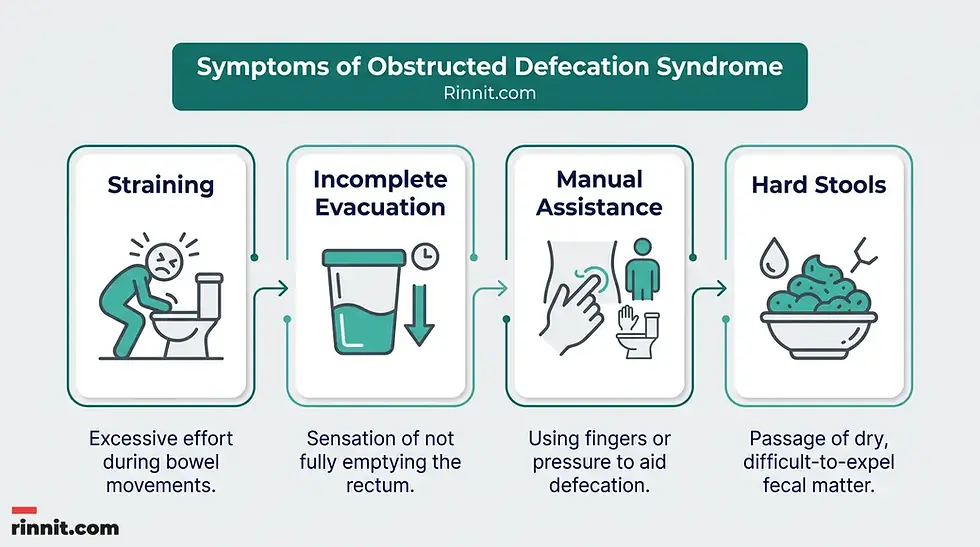
Obstructed defecation syndrome (ODS) can make you feel you can't go when you want to, aren't going often enough, aren't emptying fully or are constipated while leaking stool. [1]
Can’t go when you want to
Aren’t going often enough
Aren’t getting everything out
Are constipated even though you are leaking stool
You may also spend a lot of time on the toilet waiting or straining, feel the need to use your fingers to help empty your bowel, or rely heavily on laxatives or enemas. [1]
Other Physical and Emotional Effects
Other symptoms, on or off the toilet, include an inflamed or swollen rectum, a painful and swollen belly, anal pain, nausea and loss of appetite, and fatigue. [1] When ODS gets in the way of plans or time with others, it can also lead to anxiety and depression. [1]
Causes: Why Is It So Hard to Go?
Many conditions can cause ODS. Providers usually group them into mechanical (organic) causes and functional causes [1], and some causes depend on a person’s situation.
Mechanical Causes
These are differences in the body that make it more likely that something blocks stool from coming out [1]:
Prolapse [1]: an organ in the pelvis has fallen out of place and sags into the rectum or anus.
Rectal intussusception [1]: the rectum collapses on itself internally, which can make you feel like you have to go and can also lead to rectal ulcers.
Perineal hernia [1]: organs in the belly or pelvis bulge through the pelvic floor.
Functional Causes
These are problems with how the muscles move when you try to go, because the brain and nervous system aren’t working together [1]:
Anismus (dyssynergic defecation) [1]: you can’t relax your pelvic floor muscles or push enough to get everything out.
Rectal hyposensitivity [1]: you’ve lost sensation in the rectum, possibly from nerve damage.
Mental health: anxiety, depression, phobias, OCD, and eating disorders can affect how you relate to and use your pelvic muscles. [1]
Situational Causes and Risk Factors
Pregnancy and childbirth, surgery in the pelvic region, and traumatic injury or abuse can all lead to ODS. [1] Because most people with ODS have a female reproductive system, being female may raise the risk. [1] Endometriosis that affects tissue near the digestive tract can also cause bowel problems, including obstructed defecation, but this is rare. [1]

What are the potential complications of obstructed defecation syndrome?
Without treatment, ODS may cause fecal impaction, rectocele, intussusception, and rectal prolapse. [1] In the past, experts thought these conditions contributed to ODS, but newer research suggests they may happen because of it. [1]
How is obstructed defecation syndrome (ODS) diagnosed?
Your healthcare provider starts by asking about your symptoms. They may use a constipation scoring chart that rates straining, incomplete emptying, using fingers, abdominal discomfort, and use of enemas or laxatives. [1] Scores range from 0 to 20, and a higher score suggests more severe chronic constipation. [1] Your provider still has to rule out other causes, so they will also review your medical history and run tests. [1]
Test | What it does |
Digital rectal exam | A provider uses a gloved, lubricated finger to look for blockages, causes of pain, and signs of prolapse, and to test muscle reflexes. [1] |
Anorectal manometry with balloon expulsion test | A catheter with an inflated balloon is placed in the rectum to measure muscle activity. You may be asked to try to push the balloon out. [1] |
Defecography | An X-ray with contrast dye, or an MRI, lets providers watch your muscles and organs work together during a bowel movement. [1] |
Colonoscopy | A tube with a light and camera is used to inspect the colon for signs of disease or damage. [1] |
What are the management and treatment options for obstructed defecation syndrome?
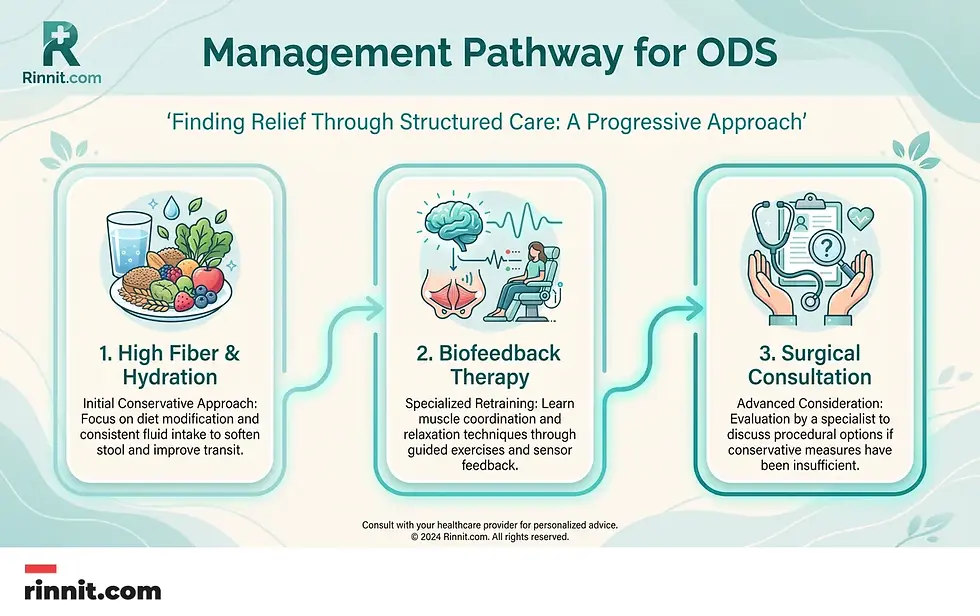
The causes of ODS often involve many factors, so providers like to take a conservative and holistic approach. [1] Even when surgery is recommended, and even when it successfully corrects the structure of a body part, it doesn’t always bring lasting relief. Symptoms can continue or return, because other factors may not have been diagnosed. [1]
At-Home and Conservative Approaches
It is still a good idea to talk to your healthcare provider before trying anything new.
Specialized Therapies
If your symptoms have to do with how your brain and body communicate while you go, your provider may suggest biofeedback therapy, pelvic floor rehabilitation, or psychotherapy. [1] These therapies take time and commitment, but they may offer lasting improvements in quality of life. [1]
Surgery
If a problem with a specific body part is involved and other treatments aren’t working, your provider may recommend surgery. Posterior colporrhaphy pushes a fallen rectum back into place when you have a rectocele. [1] Rectopexy puts the rectum back in place and uses mesh to support it when you have rectal prolapse, and sometimes part of the colon is also removed. [1]
When should you seek care for obstructed defecation syndrome (ODS)?
Seek care for obstructed defecation syndrome (ODS) if symptoms return or worsen despite treatment, you feel rectal or vaginal pressure, or you leak mucus, stool or blood. [1]
Your symptoms come back or get worse, even with treatment
You feel pressure or fullness inside your rectum or vagina
You are leaking mucus, stool, or blood from your anus
What is the bottom line on obstructed defecation syndrome?
Obstructed defecation syndrome is common but complex, and it usually needs a multifaceted approach. ODS is a lifelong condition and it may take time to find the right treatments, but combining daily habits with therapies such as biofeedback, and surgery when it is part of the plan, can offer real relief. [1] If you are constipated all the time, you can start at-home treatments right away, and a healthcare provider can run tests to see whether other issues are adding to your situation. [1]
Want to learn more? For more information on digestive health and wellness, visit Rinnit.com.
Frequently Asked Questions
Is obstructed defecation the same as normal constipation?
ODS causes chronic constipation, but it is specifically about having a hard time getting stool out. It can have many causes, including physical blockages and problems with how the muscles and nerves work together. [1]
Can childbirth cause ODS?
Childbirth can contribute. Pregnancy and childbirth are among the situations that can lead to ODS. [1]
Can I be constipated and still leak stool?
Yes. Feeling constipated even though you are leaking stool is one of the symptoms of ODS. [1] Seek medical help if you are leaking mucus, stool, or blood from your anus. [1]
How much fiber do I need?
Providers may recommend fiber-rich foods or fiber supplements. [1] The right amount depends on you, so ask your healthcare provider before making big changes.
What is biofeedback therapy?
Biofeedback therapy is a therapy that can help when your symptoms come from how your brain and body communicate while you go. It is often paired with pelvic floor rehabilitation. [1]
Is ODS more common in women?
Most people with ODS have a female reproductive system, so being female may increase the risk. [1]
Can anxiety or depression play a role?
Yes. Anxiety, depression, phobias, OCD, and eating disorders can affect how you relate to and use your pelvic muscles. [1] ODS can also cause anxiety and depression when it gets in the way of daily life. [1]
What is a rectocele?
A rectocele is a type of prolapse in which the rectum bulges toward the vagina. Newer research suggests it may be a result of ODS rather than only a cause. [1] Posterior colporrhaphy is a surgery used to repair it. [1]
Does surgery always fix ODS?
No. Even successful surgery that corrects the structure of a body part doesn’t always lead to lasting relief, because other factors that haven’t been diagnosed may still be involved. [1]
What is defecography?
Defecography is a test, using X-rays with contrast dye or MRI, that lets providers watch your muscles and organs work together during a bowel movement. [1]
Can nerve damage cause ODS?
Yes. Nerve damage can lead to rectal hyposensitivity, which means you lose sensation in the rectum and may not feel when you need to go. [1]
What is anismus?
Anismus, also called dyssynergic defecation, is when you can’t relax your pelvic floor muscles or push enough to get all the stool out. [1]
Is ODS dangerous?
Over time, lots of straining can damage the muscles and nerves involved, which makes the condition worse. [1] Without treatment, ODS may also lead to fecal impaction, rectocele, intussusception, and rectal prolapse. [1]
Can yoga help with ODS?
Yoga and guided relaxation are among the approaches providers may recommend for ODS, alongside diet changes, hydration, and other treatments. [1]
Can endometriosis cause ODS?
Yes, but it is rare. If endometriosis affects the tissue near your digestive tract, it can lead to bowel problems, including obstructed defecation. [1]
References
Cleveland Clinic. Obstructed Defecation Syndrome: Symptoms & Causes. Cleveland Clinic. Updated September 7, 2026. https://my.clevelandclinic.org/health/diseases/22089-obstructed-defecation
Cadeddu F, et al. Efficacy of biofeedback plus transanal stimulation in the management of pelvic floor dyssynergia: a randomized trial. Tech Coloproctol. 2015;19(6):333-338. PMID 25744688. https://doi.org/10.1007/s10151-015-1292-7
Emad N, et al. Biofeedback training versus botox injection for the treatment of dyssynergic defaecation: A randomized controlled trial. Colorectal Dis. 2025;27(5):e70109. PMID 40329927. https://doi.org/10.1111/codi.70109
Medical disclaimer
This article is for informational purposes only and does not constitute medical advice. Always seek the advice of your physician or other qualified health provider with any questions you may have regarding a medical condition or digestive disorder.



Comments