Polypectomy: Understanding the Procedure and Recovery

Updated: 3 days ago
Medically reviewed by Dr. Baraa Alnahhal, MD · Last reviewed: October 2026
A polypectomy is a minimally invasive surgical procedure used to remove polyps—abnormal growths—from the lining of organs such as the colon, stomach, or uterus. Often performed during a routine screening like a colonoscopy, this procedure is vital for identifying and removing potentially cancerous or precancerous tissue. Most patients recover quickly and can return home the same day, making it a highly effective preventative health measure with minimal downtime. [1]
Quick Answer
A polypectomy is a medical procedure that removes polyps, abnormal growths on the inner lining of organs or body cavities. Most polyps are benign, but some can be precancerous or cancerous, so removal helps prevent disease. It is usually done endoscopically under sedation, using forceps or a wire snare, and most patients return to normal activities within a few days. [1]
Common Organs Targeted for Polypectomy
Polyps can develop in several hollow organs throughout the body. [1] The following table highlights the most common locations where a polypectomy is performed and the associated screening goals.
Organ | Procedure Name | Primary Screening Goal |
Colon | Colonoscopy | Colorectal Cancer Prevention |
Uterus | Hysteroscopy | Cervical/Uterine Health Monitoring |
Stomach | Upper Endoscopy | Stomach Cancer Prevention |
Gallbladder | Laparoscopy | Gallbladder Cancer Screening |

What the research says
Removing adenomas at colonoscopy is linked to a large drop in colorectal cancer deaths. In the National Polyp Study, 2,602 patients who had adenomas removed were followed for a median of 15.8 years; 12 died of colorectal cancer versus 25.4 expected in the general population (standardized incidence-based mortality ratio 0.47, 95% CI 0.26–0.80), suggesting a 53% reduction in mortality (Zauber et al., N Engl J Med, 2012) [2].
Heat-based ablation of the resection site after endoscopic mucosal resection lowers the chance of recurrence. A network meta-analysis of 13 studies (2,686 patients) found lower recurrence with argon plasma coagulation (RR 0.33, 95% CI 0.20–0.54) and snare tip soft coagulation (RR 0.27, 95% CI 0.21–0.34) than with placebo, with no statistically significant difference in individual adverse events (Haghbin et al., J Clin Med, 2024) [3].
After removing large polyps in older adults, bleeding and perforation occurred in single-digit percentages of patients. In a meta-analysis of 6 studies (2,903 patients) of endoscopic mucosal resection for large (>20 mm) colorectal lesions in patients aged 75 or older, post-polypectomy bleeding occurred in 5.3% (95% CI 2.3–11.7%) and perforation in 1.9% (95% CI 0.9–3.8%), and risks in patients over 80 did not differ significantly from those in younger patients (Iqbal et al., Ann Gastroenterol, 2022) [4].
Research summaries are based on article abstracts retrieved from PubMed.
What happens during a polypectomy procedure?
Understanding the steps involved in a polypectomy can help alleviate anxiety and ensure proper preparation. The procedure is highly standardized and focuses on patient comfort and diagnostic accuracy.
Preparation and Sedation
Preparation varies depending on the organ being examined. For a colon polypectomy, patients must undergo a bowel prep to clear the large intestine. Most polypectomies are performed while the patient is awake but under sedation, which helps them relax and prevents pain. Anesthesiologists typically administer these medications through an IV, and the patient may feel only vague pressure during the removal. [1]
Endoscopic Techniques
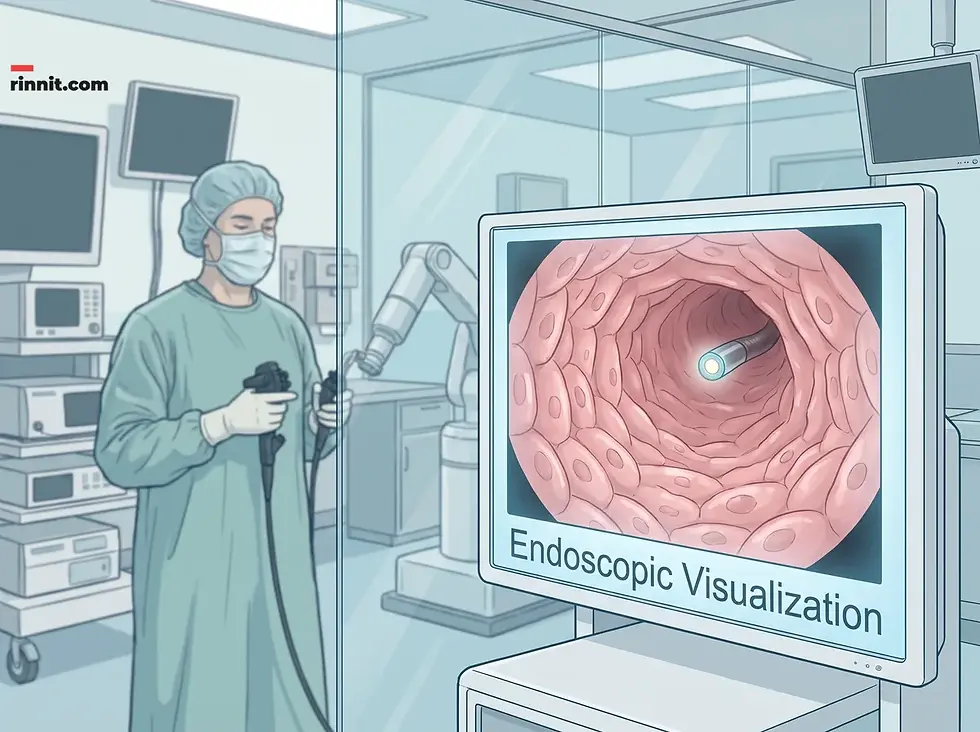
The surgeon uses an endoscope—a long, flexible tube equipped with a light and camera—to reach the polyp through a natural body opening, such as the throat, cervix, or anus. Once the polyp is identified, the surgeon may use a wire snare to scrape it off or forceps to grasp it. Carbon dioxide gas is sometimes pumped through the scope to inflate the organ, providing a clearer view of the tissue. [1]
Technique | Description | Best For |
Simple Polypectomy | Removal at the base using a snare or forceps | Small, stalked polyps |
EMR (Mucosal Resection) | Cutting into the mucosa layer under the polyp | Flat or larger polyps |
ESD (Submucosal Dissection) | Cutting into the deeper submucosa layer | Very large or cancerous polyps |
Electrocautery | Using electric current to burn tissue | Sealing wounds and preventing recurrence |
What is recovery and follow-up like after a polypectomy?
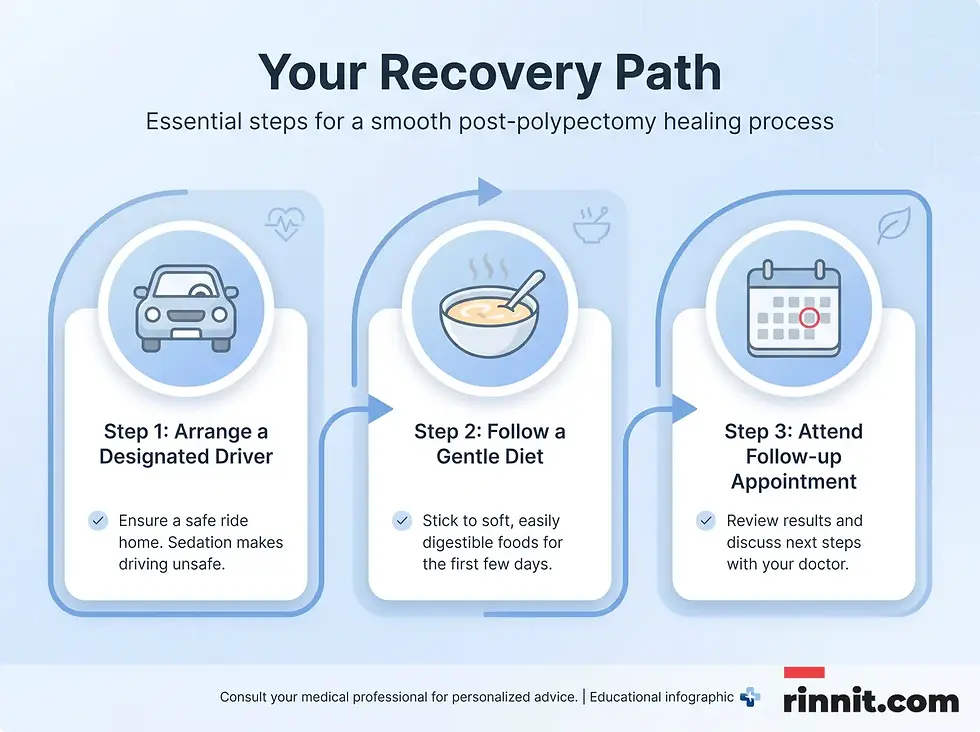
Most patients are able to go home shortly after the procedure once the effects of sedation have begun to wear off. It is important to have a designated driver, as coordination may be temporarily affected. [1]
Post-Procedure Care
Patients may experience mild side effects such as trapped gas or slight discomfort in the digestive system. [1] A gentle diet is often recommended for the first 24 to 48 hours. The removed polyp is sent to a pathology lab for analysis, with results typically available within one to two weeks. Even if the results are benign, regular follow-up screenings are essential, as new polyps can develop over time. [1]
Conclusion
Polypectomy is a cornerstone of modern preventative medicine, offering a safe and efficient way to remove potentially harmful growths before they can develop into serious conditions. By utilizing minimally invasive endoscopic techniques, healthcare providers can screen for and prevent various types of cancer with minimal risk to the patient. Regular screenings and timely polyp removal are key to maintaining long-term health and wellness.
Frequently Asked Questions
Is a polypectomy considered major surgery?
No, it is typically a minimally invasive procedure that does not require large incisions and allows patients to return home the same day. [1]
Will I be asleep during the procedure?
Most patients are given a sedative to relax and pain-blocking medication, but they are often awake and comfortable throughout the process. [1]
Are all polyps cancerous?
No, most polyps are benign (noncancerous), but they are removed for testing to ensure they do not contain precancerous cells. [1]
How long does it take to get lab results?
Pathology results for the removed polyp are usually available within one to two weeks after the procedure. [1]
Can polyps grow back after being removed?
While the specific polyp removed is unlikely to return, new polyps can develop in the same organ, making regular follow-up screenings important. [1]
What is the purpose of electrocautery?
Electrocautery uses an electric current to burn away any remaining polyp tissue and seal the wound to prevent bleeding. [1]
Why is bowel prep necessary for a colon polypectomy?
Bowel prep clears the large intestine, allowing the surgeon to have a clear view of the lining and identify any small polyps. [1]
What should I eat after the procedure?
A gentle diet, such as soups and soft foods, is usually recommended for the first day or two to avoid irritating the digestive system.
Can a polypectomy be performed during a routine colonoscopy?
Yes, many polyps are discovered and removed during the same screening session to prevent the need for a second procedure. [1]
What are the main risks of the procedure?
Risks are usually low but include bleeding (which can start days after the procedure), infection, a tear (perforation) in the organ wall, and discomfort from trapped gas. Call your provider right away for heavy bleeding, severe belly pain, or fever. [1]
Related Reading
Colon Polyps: Complete Guide to Symptoms, Causes, and Treatment explains colon polyp types, risks and why removal matters.
Colonoscopy: Purpose, Prep, Procedure, Results and Risks describes the test used to find and remove most colon polyps.
Endoscopic Mucosal Resection (EMR): Procedure, Recovery and Risks covers a technique for removing larger or flat growths.
Colorectal Cancer Screening: When to Start, Test Options and What Results Mean explains screening options and when to start them.
References
Cleveland Clinic. Polypectomy. Cleveland Clinic Health Library. Accessed October 11, 2026. https://my.clevelandclinic.org/health/treatments/23479-polypectomy
Zauber AG, Winawer SJ, O'Brien MJ, et al. Colonoscopic polypectomy and long-term prevention of colorectal-cancer deaths. N Engl J Med. 2012;366(8):687-696. PMID: 22356322. https://doi.org/10.1056/NEJMoa1100370
Haghbin H, Zakirkhodjaev N, Fatima R, et al. Efficacy and Safety of Thermal Ablation after Endoscopic Mucosal Resection: A Systematic Review and Network Meta-Analysis. J Clin Med. 2024;13(5):1298. PMID: 38592137. https://doi.org/10.3390/jcm13051298
Iqbal U, Nawaz A, Ahmed Z, et al. Safety of endoscopic mucosal resection of large colonic polyps in elderly patients: a systematic review and meta-analysis. Ann Gastroenterol. 2022;35(4):420-426. PMID: 35784623. https://doi.org/10.20524/aog.2022.0727
Medical disclaimer
This article is for informational purposes only and is not a substitute for professional medical advice, diagnosis, or treatment. Always seek the advice of your physician or other qualified health provider with any questions you may have about a medical condition.



Comments