Peripheral Nervous System: Parts, Functions, Symptoms, Tests and Care

Updated: 3 days ago
Medically reviewed by Dr. Baraa Alnahhal, MD · Last reviewed: October 2026
Quick Answer: What is the peripheral nervous system?
The peripheral nervous system (PNS) is the part of the nervous system outside the brain and spinal cord. It carries sensory information to the brain, sends movement commands to muscles and helps regulate heartbeat, breathing and digestion. Nerve problems can cause numbness, tingling, pain or weakness, and sudden weakness or trouble breathing needs prompt medical evaluation. [1]
What the research says
Diabetes-related nerve damage affects roughly three in ten people with diabetes. A systematic review and meta-analysis of 29 studies (50,112 participants) found a pooled diabetic peripheral neuropathy prevalence of 30% (95% CI 25–34%). It was higher in type 2 diabetes (31.5%, 95% CI 24.4–38.6%) than in type 1 diabetes (17.5%, 95% CI 4.8–30.2%), with wide ranges around the estimates (Sun et al., Primary Care Diabetes, 2020). [4]
Nerve damage from chemotherapy is common early and fades in many, but not all, people. A systematic review and meta-analysis of 31 studies (4,179 patients) estimated chemotherapy-induced peripheral neuropathy in 68.1% of patients within the first month (95% CI 57.7–78.4), 60.0% at three months and 30.0% at six months or longer (95% CI 6.4–53.5) (Seretny et al., Pain, 2014). [5]
Exercise is among the best-studied non-drug approaches for neuropathy. A systematic review of 41 randomized controlled trials (20 in the quantitative analysis) concluded that exercise benefits people with neuropathy, best documented for diabetic neuropathy (27 studies) and chemotherapy-induced neuropathy (9 studies); a combination of endurance and sensorimotor training appeared most beneficial for diabetic neuropathy. Ask a clinician before starting a new exercise plan (Streckmann et al., Sports Medicine, 2022). [6]

What is the peripheral nervous system?
The peripheral nervous system is the part of the nervous system that lies outside the brain and spinal cord. It sends information from the body back toward the brain and carries commands from the brain to muscles and organs. [1]
The word “peripheral” means around or outside the center. In practical terms, the PNS is the extensive network that links the central nervous system with the rest of the body. [1]
What is the difference between the central and peripheral nervous systems?
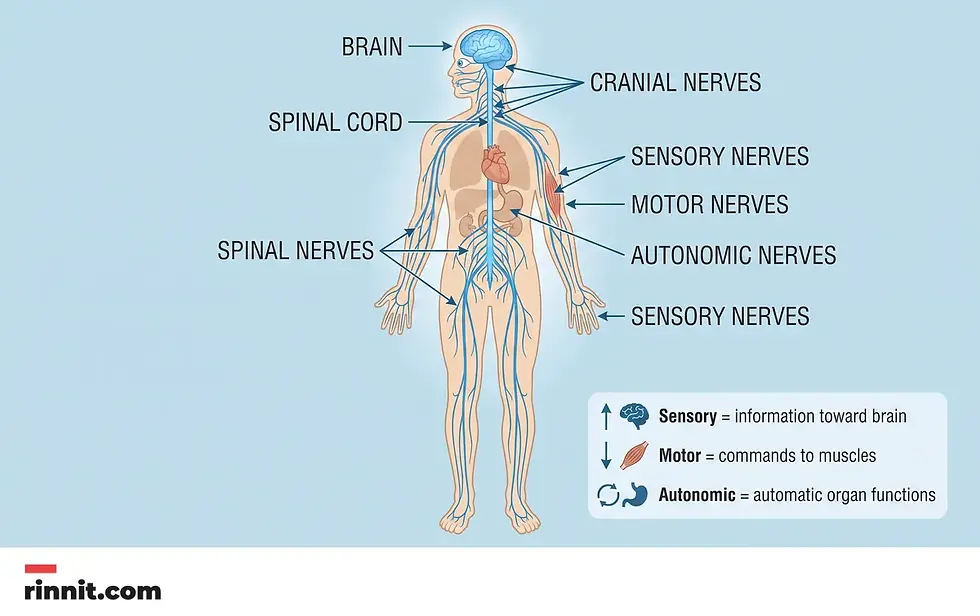
The nervous system has two main parts. The central nervous system includes the brain and spinal cord. The peripheral nervous system includes the nerves traveling from the brain and spinal cord to the face and the rest of the body. [1]
System | Main structures and broad role |
Central nervous system | Brain and spinal cord; processes information and organizes responses. |
Peripheral nervous system | Cranial nerves, spinal nerves and their branches; carries information between the central nervous system and the body. |
The two systems work together. A sensation in the foot, a deliberate hand movement and an automatic change in heart rate all depend on communication across neural pathways.
What does the peripheral nervous system do?
The PNS has two major subsystems: the somatic nervous system and the autonomic nervous system. These systems support three broad jobs: sensing, conscious movement and unconscious processes. [1]
PNS job | What happens | Main subsystem |
Sensing | Information about touch, temperature, vibration, pain and the environment travels toward the brain. | Somatic |
Movement | Commands travel from the brain to muscles that you consciously control. | Somatic |
Unconscious processes | Signals help regulate heartbeat, breathing, blood pressure, digestion and other automatic functions. | Autonomic |
Sensing
Peripheral sensory nerves help the brain receive information from the outside world and from inside the body. They reach the skin, hands, feet, face, head, neck and organs. [1]
Cranial nerves connect directly to the brain and help carry information related to smell, sound, taste and touch in the head, face and neck. Other nerves connect with the spinal cord and extend through the body to the fingertips, toes and skin. [1]
Movement
Motor nerves deliver command signals from the brain to muscles that you can consciously control. This communication supports everything from a simple scratch to a complex coordinated task. [1]
Unconscious processes
The autonomic nervous system works without deliberate thought. It helps the brain regulate heartbeat, breathing, blood pressure and digestion. It also carries information back from organs, such as the feeling of warmth in the stomach after a hot drink or fullness after a meal. [1]
What are the types of peripheral nerve signals?
Peripheral nerve bundles contain nerve cells and long extensions called axons. Nerve cells and their axons combine into nerve fibers, and different fibers can carry information in different directions. [1]
Signal type | Direction or role |
Sensory | Carries information toward the brain and spinal cord. |
Motor | Carries movement commands away from the brain to the body. |
Autonomic | Helps control automatic organ functions and can carry information in both directions. |
The same peripheral nerve bundle may contain more than one type of fiber. This is why one nerve problem can sometimes affect sensation, movement and automatic functions together.
Where is the peripheral nervous system located?
The PNS extends throughout the body outside the brain and spinal cord. It includes cranial nerves, spinal nerves and the smaller branches that reach the skin, muscles, organs, fingers and toes. [1]
There are 12 pairs of cranial nerves. Eleven pairs are part of the PNS; the second cranial nerve, which controls vision, belongs to the central nervous system. The vagus nerve extends from the neck to vital organs as far down as the colon. [1]
There are also 31 pairs of spinal nerves attached to the spine at approximately the level of each vertebral segment. These nerves branch into smaller pathways across the body. [1]
A useful mental picture is an upside-down tree: the brain is the root, the spinal cord is the trunk and the peripheral nerves are the limbs, branches and twigs reaching outward. [1]
What are peripheral nerves made of?
Peripheral nerves contain neurons, axons, dendrites, myelin and glial cells. [1]
Structure | Plain-language role |
Neuron | Cell that sends and relays electrical and chemical signals. |
Cell body | Main part of a neuron. |
Axon | Long extension that carries signals away from the cell body. |
Dendrite | Branch-like receiving extension that accepts chemical signals. |
Myelin | Fatty protective coating around many axons. |
Glial cell | Support cell that helps develop, protect and maintain neurons and regulate their environment. |
Glial cells also help create myelin and protect the nervous system from infection. The nervous system has many more glial cells than neurons. [1]
What conditions affect the peripheral nervous system?
Disease or damage affecting the PNS is often called peripheral neuropathy. The possible causes are broad, so the same symptom can have different explanations in different people. [1]
Cause or associated condition | How it can affect peripheral nerves |
Type 2 diabetes | Long-term high blood sugar can gradually damage peripheral nerves, especially in the feet and lower legs. |
Autoimmune or inflammatory disease | Conditions such as lupus, Guillain-Barré syndrome and rheumatoid arthritis can affect nerve function. |
Inherited or congenital conditions | Genetic or present-from-birth conditions can alter nerve structure or signaling. |
Infections | HIV, Lyme disease, shingles and other infections can injure nerves or leave persistent nerve pain. |
Medicines and procedures | Certain antibiotics, chemotherapy medicines and surgery can contribute to nerve damage. |
Toxins | Heavy metals such as mercury or lead and industrial chemicals can harm peripheral nerves. |
Trauma or compression | Injury, swelling or pressure can disrupt a nerve; examples include carpal tunnel syndrome and sciatica. |
Tumors | Benign or malignant tumors can compress or disrupt peripheral nerves. |
Not every cause is preventable, and symptoms do not identify the cause by themselves. A clinical evaluation is needed when symptoms persist, spread or interfere with daily life. For further reading, see the NINDS overview of peripheral neuropathy and the CDC guide to diabetes and nerve damage.

What are symptoms of peripheral nerve problems?
Symptoms depend on the type of nerve affected. Motor, sensory and autonomic symptoms can overlap, especially when more than one nerve pathway is involved. [1]
Motor symptoms
Motor nerve problems can cause weakness, cramps, spasms, tremors, twitches, muscle wasting or loss of control. A person may notice that a limb feels less reliable, a task takes more effort or a muscle has visibly changed in size. [1]
Sensory symptoms
Sensory nerve problems can reduce touch, temperature or vibration. They can also cause tingling, numbness, pins-and-needles sensations or neuropathic pain that feels burning, sharp or electric. [1]
Some people develop pain from light contact, such as clothing or bedding. Reduced sensation in the hands or feet can make walking, buttoning clothing or handling objects more difficult.
Autonomic symptoms
Autonomic nerve problems can affect blood-pressure regulation, digestion, sweating and temperature comfort. Some people sweat too much, while others sweat too little. Digestive difficulty or changes in how the body responds to standing can also occur, depending on the nerves involved. [1]
Nerve group | Possible symptoms |
Motor | Weakness, cramps, spasms, tremors, twitches, muscle wasting or reduced control. |
Sensory | Numbness, tingling, reduced touch, temperature or vibration, burning pain or pain from light contact. |
Autonomic | Blood-pressure changes, digestive problems, excessive sweating, reduced sweating or difficulty regulating temperature. |
When should someone seek urgent care?
Seek emergency help for sudden or rapidly worsening weakness, new trouble breathing or swallowing, fainting, severe new neurological symptoms, loss of bladder or bowel control, confusion or symptoms that feel life-threatening.
A new pattern of numbness, weakness, burning pain, balance difficulty, muscle wasting or autonomic symptoms also deserves timely medical evaluation, especially when it is progressive or interferes with walking, hand use, sleep or daily activities.
How are peripheral nerve problems evaluated?
Evaluation usually begins with a neurological examination. A healthcare professional may ask you to move or position your arms, hands, legs and feet in specific ways and may check strength, reflexes, sensation, coordination and walking. [1]
Additional tests depend on the symptoms and the suspected cause. [1]
Test | What it may help evaluate |
Blood tests | Immune-system problems, metabolic issues, infections or toxins such as heavy metals. |
Nerve-conduction studies | How quickly and effectively electrical signals travel through nerves. |
Electromyography | Electrical activity in muscles and the nerves that control them. |
Nerve ultrasound | Structure, swelling or compression in selected superficial nerves. |
Nerve biopsy | Tissue changes in selected complex cases. |
Genetic testing | Inherited causes of neuropathy or unusual nerve symptoms. |
MRI | Nerves, spine, surrounding tissues or another possible reason for symptoms. |
Testing is selected for the individual situation. Not everyone needs every test.
How are peripheral nerve problems treated?
Treatment depends on the cause. Addressing an underlying condition can sometimes reduce symptoms or limit further nerve damage, while other plans focus on pain, mobility, function and adaptation. [1]
Treatment approach | General purpose |
Medicines | Treat a cause, reduce nerve pain or manage related symptoms when appropriate. |
Surgery | Reconnect a cut nerve or relieve pressure from a trapped nerve in selected situations. |
Transcutaneous electrical nerve stimulation | Use a mild electrical current as part of some pain-management plans. |
Nerve ablation | Intentionally disrupt a malfunctioning nerve in selected chronic-pain situations. |
Physical therapy | Support recovery, strength, mobility, pain management or adaptation after injury or a procedure. |
Acupuncture | A clinician-guided option that some people use for selected neurological or pain concerns. |
Devices and wearable support | Braces, canes, walkers, prescribed footwear and other tools can improve safety or function. |
A treatment that helps one cause of nerve trouble may not help another. Do not start, stop or change medicines, supplements, electrical devices or exercise plans without individualized guidance.
How can someone reduce peripheral nerve risk?
Some causes of peripheral nerve damage can be reduced, although not all are preventable. [1]
A balanced diet can help reduce the risk of nutritional deficiencies. Vitamin B12 deficiency can affect the nervous system, while excessive vitamin B6 can itself contribute to neuropathy. Supplement use should be individualized rather than based on a general assumption that more is better. [1]
Regular physical activity and weight management can support general health and help reduce the risk of type 2 diabetes and injury. Safety equipment at work, during sports and during other activities can reduce the chance or severity of trauma. [1]
People with diabetes or another chronic condition that can affect peripheral nerves should follow their healthcare plan and attend recommended monitoring visits. Early attention to symptoms can help identify a treatable cause or support safer adaptation. [1]
Questions to ask a healthcare professional
Which type of nerve appears to be affected: motor, sensory, autonomic or more than one?
Could diabetes, an autoimmune condition, infection, medicine, toxin, compression or injury explain the symptoms?
Which tests are appropriate, and what will each test help evaluate?
What symptoms should prompt emergency care?
How can I protect numb areas from burns, falls, pressure or injury?
Would physical therapy, a brace, prescribed footwear or another device improve safety?
Should my medicines or supplements be reviewed for possible nerve effects?
What follow-up should I expect if the symptoms continue or worsen?
Conclusion: The body’s communication network
The peripheral nervous system is the body-wide communication network outside the brain and spinal cord. It carries sensory information toward the brain, sends movement commands to muscles and helps regulate automatic processes such as heartbeat, breathing, blood pressure and digestion. [1]
Because the PNS includes many kinds of nerves, symptoms can vary from numbness and burning pain to weakness, cramps, muscle wasting, sweating changes or digestive and blood-pressure problems. Evaluation focuses on the pattern of symptoms, neurological findings and possible causes. Treatment is individualized and may combine medicines, surgery, therapy, devices and cause-focused care. [1]
Frequently Asked Questions
What is the peripheral nervous system?
The peripheral nervous system is the part of the nervous system outside the brain and spinal cord. It includes cranial nerves, spinal nerves and the smaller branches that reach throughout the body.
What are the two main parts of the PNS?
The PNS has somatic and autonomic subsystems. Somatic nerves support conscious sensation and movement. Autonomic nerves regulate automatic processes such as heartbeat, breathing, blood pressure and digestion.
What is the difference between sensory and motor nerves?
Sensory nerves carry information toward the brain and spinal cord. Motor nerves carry commands away from the brain to muscles and other body targets.
What do autonomic nerves control?
Autonomic nerves help regulate processes that happen without deliberate thought, including heartbeat, breathing, blood pressure, digestion, sweating and temperature control.
What is peripheral neuropathy?
Peripheral neuropathy is disease or damage affecting the peripheral nervous system. It can have many causes, including diabetes, autoimmune disease, infection, toxins, medicines, trauma, compression and tumors.
What are common peripheral neuropathy symptoms?
Symptoms may include numbness, tingling, burning or sharp pain, reduced touch or temperature sensation, weakness, cramps, spasms, twitches, muscle wasting, sweating changes or digestive and blood-pressure problems.
How are peripheral nerve problems diagnosed?
Evaluation may include a neurological examination, blood tests, nerve-conduction studies, electromyography, nerve ultrasound, biopsy, genetic testing or MRI. The appropriate tests depend on the symptom pattern and suspected cause.
Can peripheral nerves heal?
Recovery depends on the cause, location, severity and duration of the nerve problem. Some causes can improve when treated; others may require long-term symptom management, rehabilitation or supportive devices.
Can diabetes affect peripheral nerves?
Yes. Type 2 diabetes is a common cause of peripheral neuropathy, especially when blood sugar remains elevated over time. Diabetes management and regular clinical follow-up can help reduce risk and identify symptoms earlier.
Can vitamin supplements cause neuropathy?
Certain deficiencies, including vitamin B12 deficiency, can affect the nervous system. Excessive vitamin B6 can also cause peripheral neuropathy. Discuss supplements and doses with a healthcare professional.
Related Reading
Peripheral Neuropathy: Symptoms, Causes, and Treatment Options Explained explains nerve damage that causes numbness, tingling and weakness.
Understanding the Central Nervous System (CNS) describes the brain and spinal cord that the peripheral nerves connect to.
The Autonomic Nervous System: Understanding Your Body's Automatic Controls explains the nerves that run heart rate, digestion and other automatic functions.
Nerve Conduction Study: What It Is, Procedure and Results explains the test that measures how well signals travel along nerves.
References
Cleveland Clinic. Peripheral Nervous System (PNS): What It Is & Function. Cleveland Clinic. Last updated May 25, 2022. https://my.clevelandclinic.org/health/body/23123-peripheral-nervous-system-pns
National Institute of Neurological Disorders and Stroke. Peripheral Neuropathy. NINDS. Last reviewed March 13, 2026. https://www.ninds.nih.gov/health-information/disorders/peripheral-neuropathy
Centers for Disease Control and Prevention. Nerve Damage. CDC. Updated May 15, 2024. https://www.cdc.gov/diabetes/diabetes-complications/diabetes-and-nerve-damage.html
Sun J, Wang Y, Zhang X, et al. Prevalence of peripheral neuropathy in patients with diabetes: a systematic review and meta-analysis. Prim Care Diabetes. 2020;14(5):435-444. PMID 31917119. https://doi.org/10.1016/j.pcd.2019.12.005
Seretny M, Currie GL, Sena ES, et al. Incidence, prevalence, and predictors of chemotherapy-induced peripheral neuropathy: a systematic review and meta-analysis. Pain. 2014;155(12):2461-2470. PMID 25261162. https://doi.org/10.1016/j.pain.2014.09.020
Streckmann F, Balke M, Cavaletti G, et al. Exercise and neuropathy: systematic review with meta-analysis. Sports Med. 2022;52(5):1043-1065. PMID 34964950. https://doi.org/10.1007/s40279-021-01596-6
Disclaimer
This article is for general educational purposes and is not a substitute for professional medical advice, diagnosis or treatment. Always seek the advice of a qualified health provider with any questions you may have regarding a medical condition.
It explains peripheral nervous system anatomy, functions, nerve types, symptoms, common causes, evaluation, treatment categories and risk reduction. It does not diagnose peripheral neuropathy or another neurological condition; prescribe medication, supplements or exercise; or replace individualized medical care. Seek urgent help for sudden or rapidly worsening weakness, trouble breathing or swallowing, fainting, loss of bladder or bowel control, confusion, severe new neurological symptoms or other signs of a medical emergency.



Comments