Understanding the Central Nervous System (CNS)

Updated: 3 days ago
Medically reviewed by Dr. Baraa Alnahhal, MD · Last reviewed: October 2026
TL;DR: The central nervous system (CNS) is made up of the brain and spinal cord. [1] It receives sensory information, processes it, and sends out motor commands, and it helps manage automatic functions such as breathing and digestion. [1] The skull, vertebrae, meninges, cerebrospinal fluid, and blood-brain barrier protect it. Stroke, brain and spinal cord injuries, and degenerative diseases can affect it, so a healthy lifestyle and safety gear matter.
Call your local emergency number right away for signs of a stroke, such as sudden confusion, face drooping, slurred speech, or weakness or paralysis on one side of the body, or after a head injury that affects vision, memory, or awareness.
Quick Answer
The central nervous system (CNS) is the body's main processing center. It consists of the brain and the spinal cord and manages everything from thoughts, feelings, and movements to automatic functions such as breathing and digestion. [1] By collecting and interpreting sensory information, the CNS coordinates how your body responds to the world around it.
What the research says
Neurological disorders are a leading cause of lost health worldwide. In 2016, they were the leading cause of disability-adjusted life-years (276 million) and the second leading cause of death (9.0 million) globally, with stroke responsible for 42.2% of the neurological burden (GBD 2016 Neurology Collaborators, Lancet Neurol, 2019) [2].
Helmets protect the head. In a Cochrane review of 61 observational studies, motorcycle helmets reduced the risk of death by 42% (OR 0.58, 95% CI 0.50-0.68) and the risk of head injury by 69% (OR 0.31, 95% CI 0.25-0.38) in riders who crashed (Liu et al., Cochrane Database Syst Rev, 2008) [3].
Staying active is linked to lower dementia risk. Pooling 58 studies, physical activity was associated with a lower risk of all-cause dementia (pooled relative risk 0.80, 95% CI 0.77-0.84; 257,983 participants), including in follow-ups of 20 years or more (Iso-Markku et al., Br J Sports Med, 2022) [4].
Key takeaways
The CNS is the brain and the spinal cord. The nerves that branch out to the rest of the body form the peripheral nervous system.
It works in three steps: it receives sensory input, integrates (processes) it, and produces a motor response. [1]
The skull and vertebrae, three layers of meninges, cerebrospinal fluid, and the blood-brain barrier protect it.
Stroke, traumatic brain injury, spinal cord injury, Alzheimer's disease, and tumors are among the conditions that affect it. [1]
Healthy habits, regular checkups, and protective gear help preserve CNS health.
Core Components of the CNS
The CNS has two main structures. The brain, housed in the skull, is the control center for thinking, memory, emotion, and movement. The spinal cord runs from the brain down through the vertebral column and is the main pathway for signals traveling between the brain and the rest of the body. [1] It is called "central" because it takes in information from the whole body and coordinates activity everywhere. [1]

Primary Functions and Mechanisms
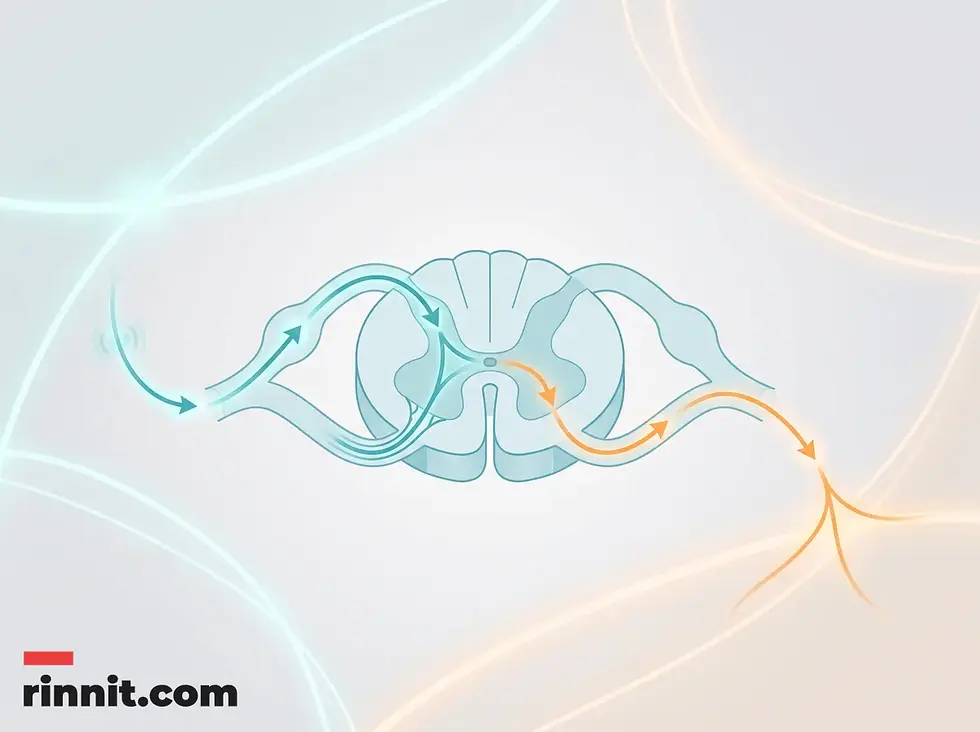
The CNS works in three steps. For example, when you decide to walk across the room, your brain sends a signal down the spinal cord to the nerves of your leg muscles, which contract to move you. [1]
Function | Description | Example |
Sensory input | Receiving information from the environment | Feeling the heat of a stove |
Integration | Processing and interpreting that information | Recognizing that the heat is dangerous |
Motor output | Coordinating a physical response | Pulling your hand away quickly |
Some responses, such as pulling your hand off a hot surface, are reflexes handled at the level of the spinal cord, which makes your reaction faster.
Protective Structures
Because the CNS is delicate, it is shielded by several layers of protection. Beyond bone, three layers of membranes called the meninges and the cerebrospinal fluid cushion the brain and spinal cord. The blood-brain barrier is a highly selective filter that controls which substances can enter the brain.
Protective layer | Location | Main purpose |
Skull and vertebrae | Outer casing | Hard bone protection against impact |
Meninges | Surrounding the brain and spinal cord | Three-layer cushioning membranes |
Cerebrospinal fluid | Around and within the brain and spinal cord | Fluid cushion that protects the CNS |
Blood-brain barrier | Blood vessels of the brain | Filters chemicals and pathogens |
Common Disorders and Symptoms
Many conditions can affect the CNS. Some of the most common include:
Traumatic brain injury (see Post-Concussion Syndrome)
Alzheimer's disease
Amyotrophic lateral sclerosis (ALS)
Brain tumors
Inflammation of the spinal cord (transverse myelitis)
Symptoms depend on the condition. They may include loss of consciousness, muscle weakness or paralysis, dizziness, confusion or memory loss, involuntary movements, headaches, pain, tingling or numbness in the arms or legs, and seizures. [1] To check CNS health, providers may use CT scans, MRI scans, an electroencephalogram (EEG), or a lumbar puncture (spinal tap). [1]

How to Keep Your CNS Healthy
Your CNS connects to every part of your body, so staying healthy overall helps it work well:
Eat healthy foods and stay hydrated. [1]
Exercise regularly.
Manage underlying health conditions and see your provider for regular checkups.
Protect yourself from injury, for example by wearing a helmet when playing sports or riding. [1] [3]
Look after your mental health: rest, get enough sleep, spend time with people you care about, and keep learning new things. [1]
When to See a Healthcare Provider
See a provider if you have persistent headaches, sudden vision changes, unexplained muscle weakness, or numbness or tingling that does not go away. Get emergency help right away for signs of a stroke or after a head injury that affects your vision, memory, or awareness.
Conclusion
The central nervous system is the cornerstone of human life. It manages every thought, movement, and biological rhythm through a network of neurons and protective barriers. Knowing how it works shows why protecting it matters, through good nutrition, safety, and regular medical care.
Related reading
Frequently Asked Questions
What are the two main parts of the CNS?
The brain and the spinal cord.
How does the CNS differ from the peripheral nervous system?
The CNS is the central processing hub. The peripheral nervous system is the network of nerves that branches out to the rest of the body.
What does the brain do in the CNS?
The brain regulates thoughts, feelings, memory, and movement.
What does the spinal cord do?
The spinal cord is the main communication route between the brain and the peripheral nerves, and it handles some reflexes.
What are meninges?
Three layers of membranes that surround and cushion the brain and spinal cord.
What is the blood-brain barrier?
A selective barrier that controls which substances in the blood can enter the brain.
How does the CNS control automatic functions?
Brain centers send signals to the organs through the nerves to manage breathing, heart rate, and digestion without conscious effort.
What are the three main functions of the CNS?
Receiving sensory information, processing it, and responding with motor output.
Can the CNS recover from injury?
Some recovery is possible, but major brain or spinal cord damage is often permanent because CNS neurons regenerate poorly.
What is integration in the CNS?
The step where the brain interprets sensory signals and decides on a response.
What are common symptoms of a CNS disorder?
Weakness or paralysis, dizziness, confusion, memory loss, seizures, headaches, and numbness or tingling.
How does a stroke affect the CNS?
A stroke cuts off blood flow to part of the brain and damages brain tissue.
What is a traumatic brain injury (TBI)?
An injury to the brain caused by an outside force, such as a fall or a blow to the head.
What tests check the CNS?
CT scans, MRI scans, EEG, and lumbar puncture (spinal tap).
How can I protect my CNS?
Wear a helmet when needed, stay active, eat well, sleep enough, and manage conditions such as high blood pressure.
Sources
Cleveland Clinic. Central Nervous System (CNS). Cleveland Clinic. Last updated November 12, 2023. https://my.clevelandclinic.org/health/body/central-nervous-system-cns
GBD 2016 Neurology Collaborators. Global, regional, and national burden of neurological disorders, 1990-2016: a systematic analysis for the Global Burden of Disease Study 2016. Lancet Neurol. 2019;18(5):459-480. PMID 30879893. https://doi.org/10.1016/S1474-4422(18)30499-X
Liu BC, Ivers R, Norton R, et al. Helmets for preventing injury in motorcycle riders. Cochrane Database Syst Rev. 2008;(1):CD004333. PMID 18254047. https://doi.org/10.1002/14651858.CD004333.pub3
Iso-Markku P, Kujala UM, Knittle K, et al. Physical activity as a protective factor for dementia and Alzheimer's disease: systematic review, meta-analysis and quality assessment of cohort and case-control studies. Br J Sports Med. 2022;56(12):701-709. PMID 35301183. https://doi.org/10.1136/bjsports-2021-104981
Medical disclaimer
The information in this article is for educational purposes only and is not a substitute for professional medical advice, diagnosis, or treatment. Always seek the advice of your physician or another qualified health provider with any questions you may have about a medical condition. Never disregard professional medical advice or delay seeking it because of something you have read here. If you think you may have a medical emergency, call your doctor or your local emergency number immediately.



Comments