Myositis (Idiopathic Inflammatory Myopathy): Symptoms, Types, Causes, Treatment and Outlook

Updated: 3 days ago
Medically reviewed by Dr. Baraa Alnahhal, MD · Last reviewed: October 2026
Quick Answer: What is myositis?
Myositis, or idiopathic inflammatory myopathy, is chronic inflammation caused by the immune system attacking muscles. Main symptoms are muscle weakness, pain, fatigue and swelling, sometimes with breathing or swallowing problems or a rash. It is an autoimmune disease with no cure and usually lifelong, but treatment can put it into remission in most cases. [1]

What the research says
IVIG improved disease activity in adults with dermatomyositis in a randomized trial. In the placebo-controlled ProDERM trial of 95 adults with active dermatomyositis, 79% of the IVIG group (37 of 47) versus 44% of the placebo group (21 of 48) reached at least minimal improvement on a composite disease-activity score at week 16 (difference 35 percentage points, 95% CI 17–53). Treatment-related adverse events included headache (42%), fever (19%) and nausea (16%), and 9 serious related events occurred, including 6 thromboembolic events (Aggarwal et al., N Engl J Med, 2022). [2]
IVIG has a growing evidence base across several types of myositis, but access and cost still limit its use. A clinical review of IVIG in idiopathic inflammatory myopathies (dermatomyositis, polymyositis, immune-mediated necrotizing myositis and inclusion body myositis) noted that IVIG has been used for severe disease for more than 30 years, is generally well tolerated with a good safety profile, and can serve as a steroid-sparing first-line option or an add-on to other treatments (Gandiga et al., Curr Rheumatol Rep, 2023). [3]
What is myositis?
Myositis is a disease that makes the immune system attack muscles. This causes chronic muscle inflammation, which can gradually make muscles weaker and can sometimes cause pain. [1]
Healthcare providers may use the term idiopathic inflammatory myopathy, or IIM, for myositis. Both names refer to the same condition. IIM is a type of myopathy, a group of diseases that affect skeletal muscles, the muscles that connect to bones and help with movement. [1]
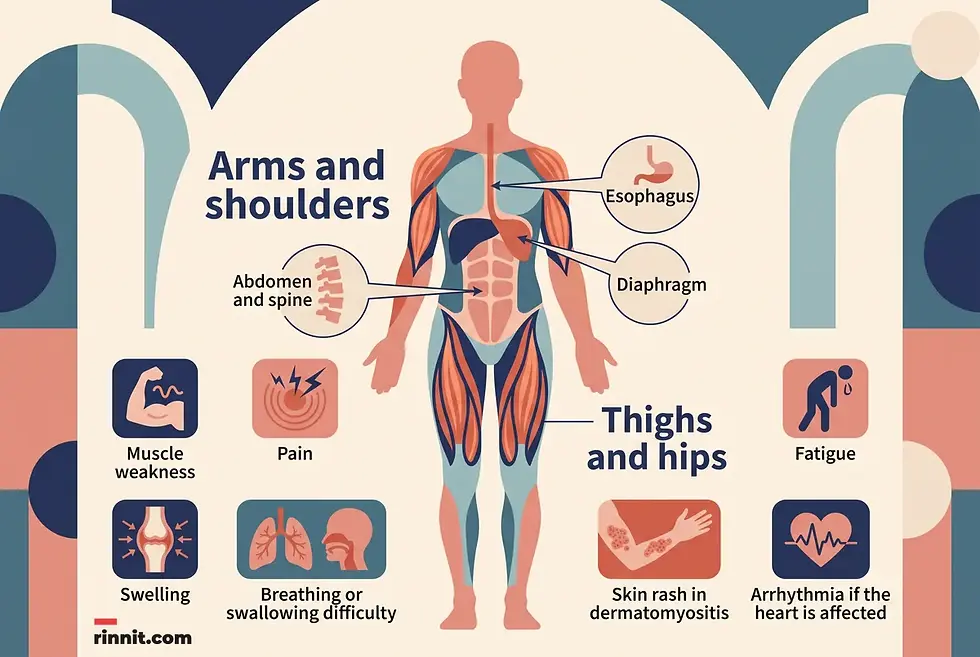
Myositis can affect different muscle groups depending on the type. It commonly affects the arms and shoulders and the thighs and hips. The abdomen and spine are less common sites. Weakness can also occur in or near the esophagus and diaphragm. [1]
What are the types of myositis?
A healthcare provider identifies the type of idiopathic inflammatory myopathy based on symptoms and the muscles affected. Several forms exist.
Type | Key features |
Anti-synthetase syndrome | Inflammation can affect muscles, joints and lungs. Weakness often affects muscles close to the center of the body, and joint pain, breathing problems and skin changes on the hands may occur. |
Immune-mediated necrotizing myopathy | Severe weakness can affect the shoulders, hips, arms and legs. Symptoms often develop quickly and can make physical activity difficult. |
Dermatomyositis | Symptoms affect the skin as well as the muscles. Prompt medical care is important because untreated dermatomyositis can be fatal. |
Inclusion body myositis | The extremities, including the hands and legs below the knees, are affected. Throat muscles that help with swallowing may also weaken. It is most common in people over 50. |
The names describe patterns, not a diagnosis that can be made from one symptom. Different forms can overlap in how they feel, so a clinician may need an examination and several tests.
What are the symptoms of myositis?
Symptoms vary by type and by which muscles are affected.
Symptom | How it may show up |
Muscle weakness | Difficulty moving or doing activities that were previously manageable; a feeling of reduced control in the arms, hands or legs. |
Joint or muscle pain | Pain in muscles or joints, which may occur with weakness or other inflammatory symptoms. |
Fatigue | Becoming tired faster than usual or having less energy for routine activities. |
Swelling | Swelling may occur as part of the condition. |
Breathing or swallowing difficulty | Weakness may affect muscles involved in breathing or swallowing. |
Abnormal heart rhythm | Arrhythmia may occur if myositis affects the heart. |
Skin rash | A skin rash may occur in dermatomyositis. |
During a flare or episode of symptoms, everyday activities may become difficult. A person may have trouble moving, tire more quickly or feel unable to control an arm, hand or leg as usual.
When weakness needs urgent attention
New muscle weakness, pain or other symptoms should be assessed by a healthcare provider, especially if they do not improve within a few days. Symptoms that worsen or spread to other parts of the body also warrant contact with a provider. [1]
Trouble breathing, trouble swallowing or an inability to move a body part that is usually movable requires emergency care. [1]
What causes myositis?
Experts do not know exactly what causes myositis. It can occur on its own, or another health condition may trigger it. [1]
Idiopathic inflammatory myopathy is an autoimmune disease. In autoimmune diseases, the immune system mistakenly attacks the body instead of protecting it, but it is unclear why this happens. [1]
Autoimmune conditions associated with myositis
People are more likely to develop myositis if they have other autoimmune diseases, including lupus, rheumatoid arthritis or scleroderma. Having one of these conditions does not mean a person will develop myositis. A clinician must interpret the person's symptoms and tests. [1]
Viral infections associated with myositis
Myositis may develop after a viral infection. The common cold, influenza, HIV and COVID-19 are listed as possible causes of viral myositis. A recent infection can be clinically relevant, but it does not by itself confirm myositis. New weakness, pain or breathing or swallowing changes should be discussed with a healthcare professional. [1]
How is myositis diagnosed?
A healthcare provider diagnoses myositis with a physical examination and tests. The clinician may ask about symptoms and assess how movement feels during particular motions. [1]
Test | What it contributes |
Blood tests | May provide information that helps assess muscle inflammation and related findings. |
MRI | Provides imaging of muscles and may help identify affected areas. |
EMG | Assesses electrical activity in muscles. |
Nerve conduction velocity test | Assesses how signals travel through nerves and can help distinguish muscle-related from nerve-related problems. |
Muscle biopsy | Examines a small sample of muscle tissue as part of the diagnostic workup. |
No single symptom or test establishes the type of myositis. The diagnosis depends on the overall clinical picture, the examination and the results of testing.
How is myositis treated?
Treatment aims to reduce the effect of symptoms on daily life and bring myositis into remission, meaning there is little or no inflammation in the muscles. A healthcare provider selects the plan based on the person's symptoms, type of myositis and test results. [1]
Treatment category | Purpose |
Corticosteroids | A typical medication category for treating myositis symptoms and inflammation. |
Immunosuppressants | A typical medication category used in the treatment plan. |
Intravenous immunoglobulin (IVIG) | A typical treatment option. |
Stretches and exercises | A provider or physical therapist may recommend them to keep affected muscles flexible and strong and to help reduce pain, stiffness and the effect of future episodes. |
This article does not provide medication doses or individualized treatment instructions. Follow the plan prescribed by your healthcare team and discuss side effects or concerns with the appropriate clinician.
Physical therapy and movement
A provider or physical therapist may recommend exercises or stretches between episodes. These can help keep affected muscles flexible and strong and may reduce pain, stiffness and the effect of future episodes. The right activity level depends on the person's symptoms and affected muscles. A qualified professional should guide exercise choices, especially when weakness involves breathing, swallowing or the heart. [1]
What are remission and the long-term outlook for myositis?
In most cases, treatment can put myositis into remission. Most people with IIM have the condition for the rest of their lives, so remission does not necessarily mean the underlying disease is permanently gone. [1]
Myositis can cause severe, potentially life-threatening complications, but this is rare. Regular checkups and tests help clinicians monitor for changes, and you should contact a provider promptly when symptoms change. [1]
Outlook point | What to know |
Remission | Treatment can put myositis into remission in most cases. |
Duration | Most people with IIM have it for the rest of their lives. |
Severe complications | Possible but rare. |
Monitoring | Checkups, tests and attention to symptom changes are important. |
How can people live well with myositis?
Living with myositis often involves monitoring symptoms, attending follow-up appointments and using a treatment and movement plan developed with healthcare professionals. Ask which type of myositis you have and what changes in your muscles or body you should watch for. Contact a provider when you notice changes that feel concerning or uncomfortable.
Questions to ask a healthcare provider
Question | Why it may help |
Which type of myositis do I have? | Different types affect different muscles and can have different symptoms. |
Which muscles are affected? | The affected muscle groups help guide monitoring and treatment. |
What changes should I watch for? | New or spreading symptoms may need reassessment. |
What exercises or stretches are appropriate? | A provider or physical therapist can recommend activities that support flexibility and strength. |
When should I call, and when should I seek emergency care? | Breathing, swallowing and major movement changes require urgent attention. |

When should you seek care for myositis?
Visit a healthcare provider right away for new muscle weakness, pain or other symptoms, especially when symptoms do not improve within a few days. Contact a provider if symptoms worsen or spread to other parts of your body. [1]
Go to an emergency room if you cannot move a body part you usually can, have trouble breathing or have trouble swallowing. These warning signs do not identify the cause, but they indicate that prompt assessment is important. [1]
Conclusion
Myositis, or idiopathic inflammatory myopathy, is an autoimmune disease that causes chronic inflammation in muscles. It often affects the shoulders, arms, hips and thighs, but different types can involve other muscles, the skin, joints, lungs, throat or heart. Weakness is the central symptom, but pain, fatigue, swelling, breathing or swallowing difficulty, abnormal heart rhythms and skin changes can also occur.
Diagnosis may involve a physical exam, blood tests, MRI, EMG or nerve-conduction testing and a muscle biopsy. There is no cure, but treatment can put the disease into remission in most cases. A qualified healthcare team can help coordinate medication, physical therapy, symptom monitoring and follow-up care. If you have new or worsening muscle weakness, pain, a skin rash or difficulty moving, arrange a medical assessment, and seek emergency care for trouble breathing, trouble swallowing or sudden inability to move a normally movable body part.
Frequently Asked Questions
Is myositis an autoimmune disease?
Yes. Idiopathic inflammatory myopathy is an autoimmune disease in which the immune system mistakenly attacks the body.
What is another name for myositis?
Healthcare providers may call myositis idiopathic inflammatory myopathy, or IIM. Both names refer to the same condition.
What muscles does myositis affect?
Myositis usually affects muscles used for movement, especially the arms and shoulders and the thighs and hips. The abdomen and spine are less common sites, and weakness may also occur near the esophagus and diaphragm.
Can myositis affect swallowing or breathing?
Yes. Myositis can cause trouble breathing or swallowing, and weakness may occur in or near the diaphragm and esophagus.
What are the different types of myositis?
Types include anti-synthetase syndrome, immune-mediated necrotizing myopathy, dermatomyositis and inclusion body myositis.
Can a viral infection cause myositis?
Myositis may develop after a viral infection. The common cold, influenza, HIV and COVID-19 are listed as possible causes of viral myositis.
How is myositis diagnosed?
A provider may use a physical exam, blood tests, MRI, EMG or nerve-conduction-velocity testing and a muscle biopsy.
Is there a cure for myositis?
There is no cure, and most people with IIM have it for the rest of their lives. Treatment can put myositis into remission in most cases.
What treatments are used for myositis?
Treatments include corticosteroids, immunosuppressants and intravenous immunoglobulin. Providers or physical therapists may also recommend stretches and exercises to maintain flexibility and strength.
When should someone with myositis seek emergency care?
Emergency care is advised if a person cannot move a body part they normally can move, has trouble breathing or has trouble swallowing.
Related reading
Polymyositis guide: symptoms, causes, diagnosis and treatment
Juvenile dermatomyositis: a guide for parents and caregivers
Antisynthetase syndrome: causes, symptoms, diagnosis and living with a rare autoimmune disease
Autoimmune diseases: why your immune system turns on your body and how it's managed
Rheumatoid arthritis: symptoms, causes, diagnosis, treatment and complete guide
Scleroderma guide: symptoms, causes, diagnosis and treatment
Dysphagia (trouble swallowing): symptoms, causes, diagnosis and treatment
Intravenous immunoglobulin (IVIG): uses, infusion and side effects
Learn more in our guide to Creatine Kinase (CK) Test: What It Is, Normal Levels and High CK Causes.
References
Cleveland Clinic. Myositis: What It Is, Types, Causes & Treatment. Cleveland Clinic. Updated May 21, 2026. https://my.clevelandclinic.org/health/diseases/24170-myositis
Aggarwal R, Charles-Schoeman C, Schessl J, et al. Trial of Intravenous Immune Globulin in Dermatomyositis. N Engl J Med. 2022;387(14):1264-1278. PMID 36198179. https://doi.org/10.1056/NEJMoa2117912
Gandiga PC, Ghetie D, Anderson E, et al. Intravenous Immunoglobulin in Idiopathic Inflammatory Myopathies: a Practical Guide for Clinical Use. Curr Rheumatol Rep. 2023;25(8):152-168. PMID 37261663. https://doi.org/10.1007/s11926-023-01105-w
Disclaimer
This article is for general educational purposes and is not a substitute for professional medical advice, diagnosis or treatment. Always seek the advice of a qualified healthcare professional with any questions about a medical condition or treatment.



Comments