Medical Nutrition Therapy (MNT): What It Is, How It Works, and Who It Helps

Updated: 6 days ago
Written and medically reviewed by Dr. Baraa Alnahhal, MD · Last reviewed: October 2026 · How we review
Quick Answer: What is medical nutrition therapy?
Medical nutrition therapy (MNT) is a nutrition-based treatment in which a registered dietitian builds a personal eating plan to prevent or manage a medical condition such as diabetes, kidney disease or high cholesterol. It can mean changing foods, adding supplements, or receiving nutrients through a feeding tube or IV, and may last months, years or for life. [1][2]
What the research says
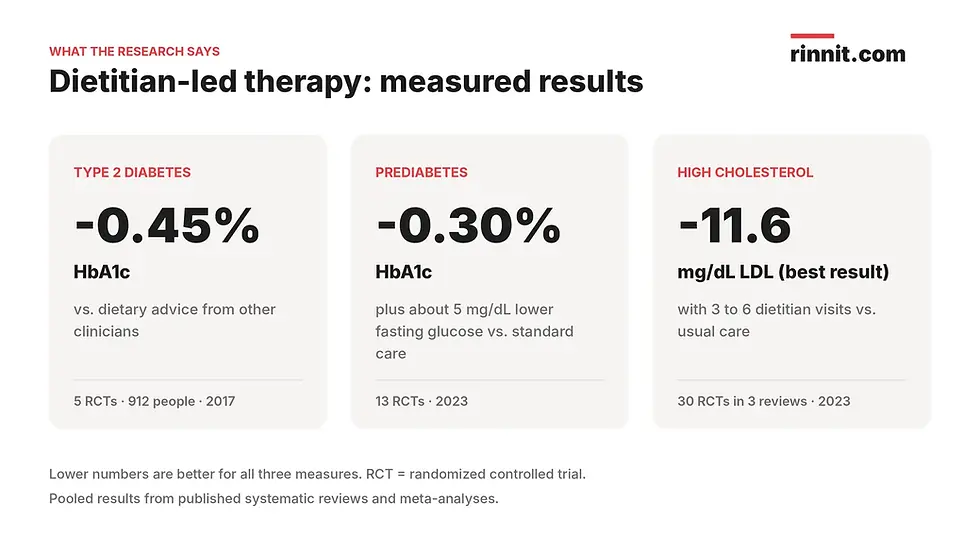
Dietitian-led therapy lowers blood sugar more than general dietary advice in type 2 diabetes. In 5 randomized trials with 912 people, individualized nutrition therapy from a registered dietitian lowered HbA1c by 0.45 percentage points more, and body weight by 2.1 kg more, than dietary advice from nurses or doctors over 6 to 12 months. (Møller et al., Am J Clin Nutr, 2017) [4]
Medical nutrition therapy improves blood sugar in prediabetes. A meta-analysis of 13 randomized trials found dietitian-delivered MNT lowered HbA1c by 0.30 percentage points and fasting blood glucose by about 5 mg/dL compared with standard care, with gains in weight, waist size, cholesterol and blood pressure. (Dudzik et al., Am J Clin Nutr, 2023) [5]
Three to six dietitian visits improve cholesterol and save costs. A synthesis of 3 systematic reviews covering 30 randomized trials found that 3 to 6 MNT visits lowered LDL cholesterol by up to 11.6 mg/dL, triglycerides by up to 32.6 mg/dL and systolic blood pressure by up to 8.8 mm Hg, with savings from lower medication costs. (Sikand et al., Curr Atheroscler Rep, 2023) [6]
Key takeaways
MNT is a medical treatment, not a general diet: a dietitian designs it around one person's diagnosis, test results, culture and daily life. [1]
It follows 4 steps: nutrition assessment, nutrition diagnosis, nutrition intervention, and monitoring and evaluation. [1]
It helps manage diabetes, prediabetes, kidney disease, heart and blood pressure conditions, digestive diseases, malnutrition and obesity. [1]
Changing what you eat under a dietitian's guidance is low risk; tube and IV feeding carry infection and digestive risks. [1]
Trials show dietitian-led therapy lowers HbA1c, LDL cholesterol and weight more than usual care. [4][5][6]

What is medical nutrition therapy?
Medical nutrition therapy is a form of treatment that uses nutrition education and behavioral counseling to prevent or manage a medical condition. [1]
A registered dietitian works with you and the rest of your healthcare team. Together, they identify your health needs and personal goals. [1]
The dietitian then builds a nutrition plan that helps you get the right amount of macronutrients (carbohydrates, protein, fat) and micronutrients (vitamins, minerals). Finally, they help you put that plan into action. [1]
MNT can work alongside other treatments, such as medicines. In some cases, it may help you avoid needing medicines at all. [1]
What can medical nutrition therapy involve?
Medical nutrition therapy can involve four kinds of change, depending on your needs. [1]
Avoiding or limiting certain foods
Making sure you get enough of certain foods and nutrients
Taking nutritional supplements
Receiving nutrients through a feeding tube (enteral nutrition) or through a vein (parenteral nutrition, also called IV nutrition therapy)
When eating by mouth is possible but not enough, oral nutritional supplements are usually the first choice. Tube feeding and IV nutrition become the main way to deliver nutrients when supplements fall short. [2]
You may still hear the older term "artificial nutrition." Today, the preferred terms are enteral nutrition for tube feeding and parenteral nutrition for IV nutrition therapy. [1]
Which conditions does medical nutrition therapy help manage?
Medical nutrition therapy helps manage many short-term and long-term conditions, from diabetes and kidney disease to malnutrition. Your primary care doctor or a specialist may recommend it. [1]
Condition group | Examples managed with MNT |
Blood sugar conditions | |
Heart and blood vessel conditions | Heart failure; high blood pressure; high cholesterol, high triglycerides and other blood lipid imbalances (dyslipidemia) |
Kidney and lung conditions | Chronic kidney disease (CKD); chronic obstructive pulmonary disease (COPD) |
Digestive conditions | |
Body weight and nutrition status | Malnutrition, including in people with cancer; overweight and obesity |
MNT is also vital for people who cannot swallow or digest food in the usual way, whether for a short time or long term. [1]
Who provides medical nutrition therapy?
Registered dietitians (RDs) and registered dietitian nutritionists (RDNs) provide medical nutrition therapy. Their specialized training prepares them to give credible, safe guidance. [1]
The general title "nutritionist," or even "nutritional therapy practitioner," may not require the same level of training. [1] In some countries, nutrition advice is not regulated at all, so anyone can offer it regardless of education. This raises the risk of unsafe or ineffective advice and delayed treatment. [3]
Registered dietitian (RD / RDN) | General "nutritionist" title | |
Training | Specialized, standardized training | May not have the same level of training |
Provides MNT | Yes | Not reliably |
Works with your doctors and nurses | Yes, as part of your care team | Varies |
Insurance coverage | Sessions may be covered | Plans may cover only RD/RDN sessions |
Your dietitian works with your doctors and nurses to build your plan and support you at each step. [1]
How does medical nutrition therapy work?
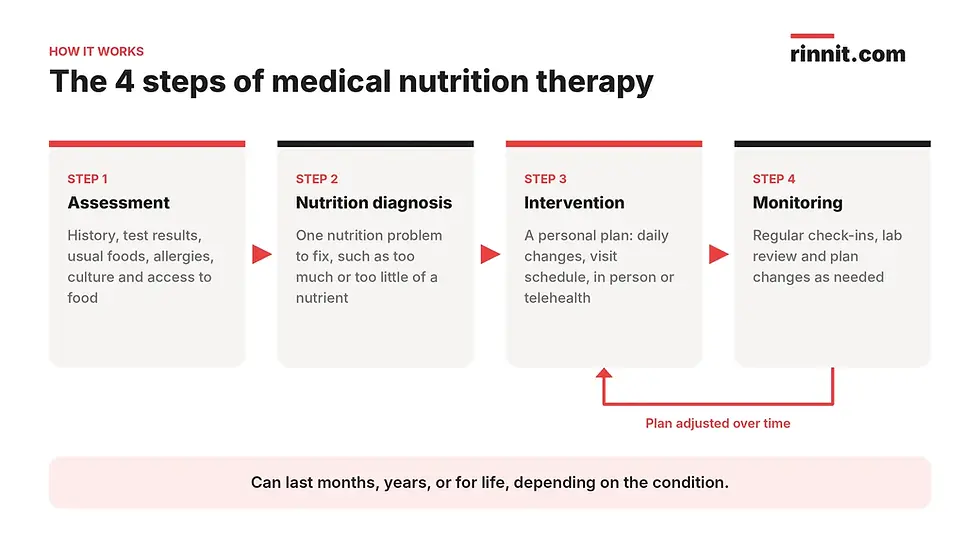
Medical nutrition therapy works through four steps that dietitians generally follow: assessment, diagnosis, intervention, and monitoring. [1]
Step | What happens | Your role |
1. Nutrition assessment | The dietitian learns about you and your nutritional needs | Share your usual foods, goals and challenges |
2. Nutrition diagnosis | The dietitian names one nutrition-related problem to treat | Ask what the problem means for you |
3. Nutrition intervention | The dietitian creates a plan and explains what to do | Agree on changes you can keep up |
4. Monitoring and evaluation | The dietitian checks progress and adjusts the plan | Report what is and isn't working |
The process can look different for different people. Someone in hospital with a critical illness may not be able to take an active part at first. For a child, a parent often works with the dietitian to coordinate care. [1]
What happens during the nutrition assessment?
The nutrition assessment is the step where your dietitian first learns about you and your health. They review your medical history and test results, but your own voice matters just as much. [1]
Your dietitian may ask about:
The foods you usually eat
Lifestyle or cultural factors that shape how and what you eat
Challenges you face in getting or preparing food
Which foods are and aren't available to you
What is a nutrition diagnosis?
A nutrition diagnosis is the specific nutrition-related problem your dietitian will focus on treating. It is different from a medical diagnosis such as diabetes. [1]
A nutrition diagnosis usually relates to how much of a nutrient you take in. For example, you may be getting too much or too little carbohydrate. [1]
Your dietitian also identifies the root cause, the signs (such as lab results) and the symptoms (such as gas and gas pain). [1]
What happens during the nutrition intervention?
The nutrition intervention is the plan your dietitian creates to fix the nutrition problem found in the assessment and diagnosis. [1]
Your dietitian explains your role, such as the changes to make in daily life. They also tell you which meetings to expect: one-on-one sessions, possibly group sessions, and sometimes virtual visits (telehealth). [1]
What happens during monitoring and evaluation?
Monitoring and evaluation is the step where your dietitian checks in regularly to see how the plan is working. They review test results, ask how you feel and talk with your other healthcare providers. [1]
If something isn't going well, tell your dietitian. They will answer your questions and change the plan as needed. [1]
How long does medical nutrition therapy last?
Medical nutrition therapy can last several months or years, and for some conditions it is lifelong. The length depends on your situation and the condition being managed. [1]
Your healthcare team will explain your own timeline. [1]
What are the benefits of medical nutrition therapy?
Medical nutrition therapy helps you get the nutrients you need while bringing key health numbers, such as cholesterol and blood sugar, toward healthy levels. [1]
MNT can help you:
Get nutrients that lessen the symptoms or effects of a medical condition
Get nutrients you can't take in through food alone
Reach healthy cholesterol, blood sugar or other numbers, either to avoid medicine or to support the effect of your medicines
Nourish your body when your digestive system isn't working as it should
Overcome barriers to eating well
Build physical activity into daily life
Take an active role in your own healthcare
Research supports these benefits. Dietitian-led therapy has lowered HbA1c in type 2 diabetes and prediabetes, and improved LDL cholesterol, triglycerides and blood pressure in people with high cholesterol. [4][5][6] In people with high cholesterol, the savings came mainly from lower medication costs. [6]
What are the risks of medical nutrition therapy?
The risks of medical nutrition therapy depend mainly on how you receive your nutrition. [1]
Type of MNT | Main risks |
Changes to the foods you eat | Safe and low risk when you follow your dietitian's guidance |
Tube feeding (enteral nutrition) | Infection at the tube site; digestive problems such as constipation, nausea or diarrhea |
IV nutrition (parenteral nutrition) | Bloodstream infection |
Your dietitian will tell you about any changes in how you may feel as you adjust your eating. Your healthcare team can explain other possible risks and how they manage them. [1]
How can you make medical nutrition therapy easier?
Medical nutrition therapy becomes easier when you share your preferences and barriers openly with your dietitian. [1]
Barriers might include having no healthy food options nearby, or working a late shift and being too tired to cook. Naming these problems helps you and your dietitian find solutions together. [1]
Two simple steps can help before your first visit: [1]
Keep a food log. Write down your usual foods and drinks and when you have them.
Note your limits. List the changes you are willing, and not willing, to make.
Starting MNT can feel exciting, but also scary or overwhelming. Tell your dietitian how you feel, because they can tailor treatment to your needs. [1]
When should you contact your dietitian or doctor?
Contact your dietitian any time you have questions or concerns about your nutrition plan. They will help you understand the plan, schedule regular follow-ups and adjust it as needed. [1]
If you receive tube feeding or IV nutrition, tell your care team promptly about any signs of infection at the tube site or digestive problems such as constipation, nausea or diarrhea. [1]
Conclusion
Medical nutrition therapy turns food into part of your treatment plan. A registered dietitian assesses your needs, names one nutrition problem, builds a plan you can follow, and keeps adjusting it with you. For conditions such as diabetes, prediabetes and high cholesterol, trials show measurable gains in blood sugar, cholesterol and weight. [1][4][5][6]
Your next step: If you live with a long-term condition, ask your doctor whether medical nutrition therapy with a registered dietitian is right for you. Bring a 3-day food log to your first visit. To understand the condition behind your plan, start with our guides to diabetes, prediabetes and chronic kidney disease.
FAQ
What is the difference between medical nutrition therapy and a regular diet?
Medical nutrition therapy is a treatment designed by a registered dietitian for a specific medical condition, while a regular diet is general eating advice. MNT starts with an assessment of your history, test results and lifestyle, and the plan is monitored and adjusted over time. [1]
Who can provide medical nutrition therapy?
Medical nutrition therapy is provided by registered dietitians (RDs) and registered dietitian nutritionists (RDNs). People using the general title "nutritionist" may not have the same level of training, and insurance plans may only cover sessions with an RD or RDN. [1]
Is medical nutrition therapy only for diabetes?
Medical nutrition therapy is not only for diabetes. It also helps manage prediabetes, chronic kidney disease, COPD, heart failure, high blood pressure, high cholesterol, digestive conditions such as celiac disease and Crohn's disease, malnutrition, and overweight and obesity. [1]
What are the 4 steps of medical nutrition therapy?
The 4 steps of medical nutrition therapy are nutrition assessment, nutrition diagnosis, nutrition intervention, and nutrition monitoring and evaluation. The dietitian learns about you, names one nutrition problem, builds a plan, and then checks progress and adjusts the plan. [1]
How long does medical nutrition therapy take to work?
Medical nutrition therapy timelines depend on the condition being treated, and therapy can last months, years or a lifetime. In trials, dietitian-led therapy lowered HbA1c and weight within 6 to 12 months in type 2 diabetes. [1][4]
Can medical nutrition therapy replace medication?
Medical nutrition therapy can sometimes help you avoid medication, and in other cases it supports the medicines you already take. Never stop or change a medicine without talking to your doctor first. [1]
Is medical nutrition therapy safe?
Medical nutrition therapy based on food changes is safe and low risk when you follow your dietitian's guidance. Tube feeding can cause infection at the tube site or digestive upset, and IV nutrition carries a risk of bloodstream infection. [1]
Does insurance cover medical nutrition therapy?
Many insurance plans cover medical nutrition therapy for certain conditions, but coverage varies. For example, Medicare Part B covers it for diabetes and kidney disease when a doctor refers you. Check with your plan before your first visit.
What should I bring to my first medical nutrition therapy visit?
Bring a list of your medicines and supplements, recent lab results and a 3-day food log. Write down your questions and any foods or changes you are not willing to try.
Can medical nutrition therapy help with weight loss?
Yes. Medical nutrition therapy can help people with overweight or obesity lose weight safely with a plan built around their health conditions, tastes and daily routine.
Related Reading
Diabetes: Symptoms, Types, Causes, Diagnosis & Treatment — Complete Guide explains the types of diabetes and how they are treated.
Prediabetes: Symptoms, Causes, and Treatment covers prediabetes signs, causes and ways to prevent type 2 diabetes.
Chronic Kidney Disease: What It Is, Its 5 Stages, Causes, and How It's Treated explains chronic kidney disease stages, causes and treatment options.
High Blood Cholesterol: What Your Numbers Mean, Why It Matters, and How to Lower It explains what high cholesterol means and how to lower it.
References
Cleveland Clinic. Medical Nutrition Therapy (MNT) To Manage Chronic Medical Conditions. Cleveland Clinic. Last updated February 29, 2024. https://my.clevelandclinic.org/health/treatments/medical-nutrition-therapy-mnt
Cederholm T, Barazzoni R, Austin P, et al. ESPEN guidelines on definitions and terminology of clinical nutrition. Clin Nutr. 2017;36(1):49-64. PMID 27642056. https://doi.org/10.1016/j.clnu.2016.09.004
Keathley JR, Arbour A, Vohl MC. Towards a Standardized Definition of Medical Nutrition Therapy and Regulatory Reform in Canada. Can J Diet Pract Res. 2022;83(2):75-80. PMID 35014549. https://doi.org/10.3148/cjdpr-2021-033
Møller G, Andersen HK, Snorgaard O. A systematic review and meta-analysis of nutrition therapy compared with dietary advice in patients with type 2 diabetes. Am J Clin Nutr. 2017;106(6):1394-1400. PMID 29092883. https://doi.org/10.3945/ajcn.116.139626
Dudzik JM, Senkus KE, Evert AB, et al. The effectiveness of medical nutrition therapy provided by a dietitian in adults with prediabetes: a systematic review and meta-analysis. Am J Clin Nutr. 2023;118(5):892-910. PMID 37689140. https://doi.org/10.1016/j.ajcnut.2023.08.022
Sikand G, Handu D, Rozga M, et al. Medical Nutrition Therapy Provided by Dietitians is Effective and Saves Healthcare Costs in the Management of Adults with Dyslipidemia. Curr Atheroscler Rep. 2023;25(6):331-342. PMID 37165278. https://doi.org/10.1007/s11883-023-01096-0
Medical disclaimer
This article is for general education and does not replace advice from your doctor or registered dietitian. Do not start, stop or change any diet, supplement, feeding method or medicine without speaking to a qualified healthcare professional. If you have a medical emergency, contact your local emergency number right away.



Comments