Lymphatic Drainage Massage: Benefits, Technique, Risks and When to Call a Healthcare Provider

Updated: 3 days ago
Medically reviewed by Dr. Baraa Alnahhal, MD · Last reviewed: October 2026
Quick Answer: What is lymphatic drainage massage?
Lymphatic drainage massage is a gentle form of massage that moves excess lymph fluid from swollen tissues toward lymph vessels and nodes. It is mainly used to relieve lymphedema swelling, especially after breast cancer surgery, and uses light pressure unlike deep-tissue massage. It is not suitable for people with blood clots, infection, heart disease or kidney failure. [1]
What the research says
Manual lymphatic drainage may ease pain but did not clearly reduce arm swelling in breast cancer–related lymphedema. A meta-analysis of 11 randomized trials (1,564 patients; 10 trials in the pooled analysis) found that manual lymphatic drainage was associated with a lower incidence of lymphedema (RR 0.58, 95% CI 0.37–0.93) and less pain (SMD −0.72, 95% CI −1.34 to −0.09), but no statistically significant effect on arm volume or quality of life (Lin et al., Clin Breast Cancer, 2022). [2]
The number and length of treatments may matter. In a meta-analysis of randomized trials including 457 patients, manual lymphatic drainage did not reduce upper-limb volume overall (P = .11), but courses of 20 or more sessions (P = .03) or lasting longer than 2 weeks (P = .03) were associated with a significant reduction in arm volume. These studies looked at arm swelling after breast cancer treatment and may not apply to other causes of swelling or to cosmetic use (Qiao et al., Cancer Nurs, 2023). [3]
What is the lymphatic system?
The lymphatic system collects lymph and returns it toward the heart through a network of vessels and lymph nodes. When illness or medical treatment disrupts this process, lymph can collect in the arms, legs, ankles or other body areas and cause swelling. [1]
Lymphedema is swelling caused by a buildup of lymph fluid. It can occur with many health conditions and is common after some cancer treatments. Breast cancer surgery is a notable example because surgeons may remove several lymph nodes during the procedure. [1]
Lymphatic drainage massage does not remove the underlying cause of every swelling problem. Its purpose is to help move excess fluid toward functioning lymph vessels and lymph nodes.
Who may benefit from lymphatic drainage massage?
Healthcare providers mainly use manual lymphatic drainage to relieve lymphedema after breast cancer surgery. The technique may also be used when lymphedema is related to certain other health conditions or injuries. [1]
Situation or condition | How it relates to lymphatic drainage massage |
Lymphedema after breast cancer surgery | The main clinical use. Surgeons may remove several lymph nodes during the procedure. |
A condition related to lymphedema for which providers may use the technique. | |
Fibromyalgia | A condition associated with lymphatic drainage massage use. |
Injury | Lymphedema related to injury may be considered. |
A related condition for which the technique may be used. | |
A related condition for which the technique may be used. | |
Cosmetic facial puffiness | Facial lymphatic drainage may increase blood circulation and reduce puffiness. |
Having one of these conditions does not automatically mean lymphatic drainage massage is appropriate. A healthcare provider should assess the cause of swelling and whether massage is safe.
What symptoms may come with lymphatic congestion?
Several symptoms may occur when the lymphatic system is not working as it should. These symptoms can have many possible causes, so they should not be used to diagnose a lymphatic disorder on their own.
Symptom or change | Description |
Bloating | A possible symptom. |
Brain fog | A possible symptom. |
Chronic sinus infections | A possible symptom. |
Fatigue | A possible symptom. |
Headaches | A possible symptom. |
Swollen ankles or hands | Puffy or swollen extremities. |
Skin changes | Acne, dryness or rashes. |
Swollen neck lymph nodes | A possible symptom. |
Persistent swelling in the arms, legs, abdomen or another area deserves medical attention, particularly when it is worsening, uncomfortable or changing daily activities.

What happens during a lymphatic drainage massage?
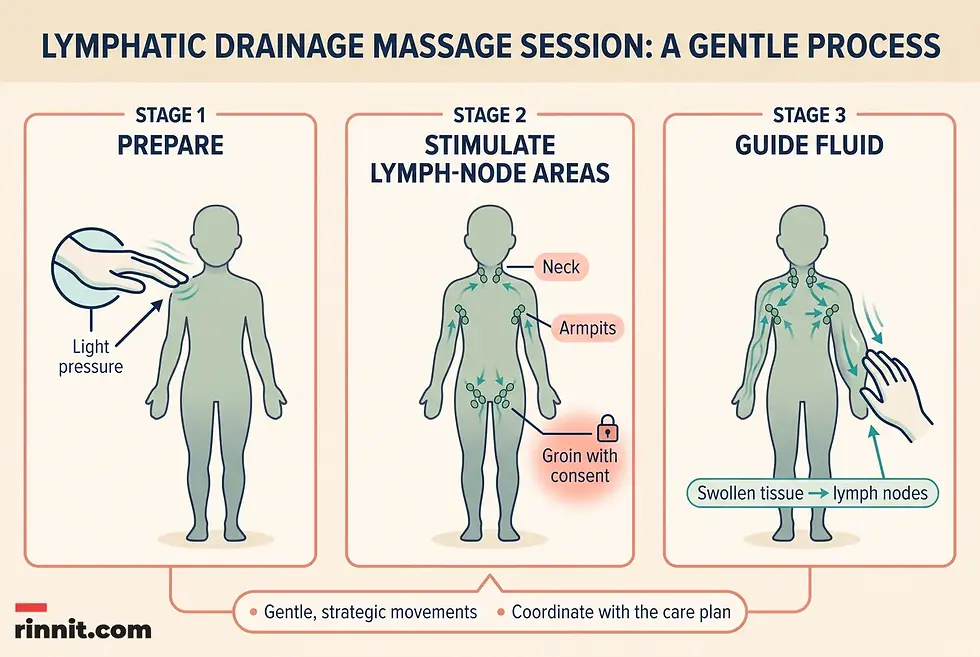
A healthcare provider uses light pressure and strategic massage techniques to prepare and clear the lymphatic system. The session usually begins by stimulating areas of the body that house lymph nodes. [1]
These areas may include the neck, the armpits and, with the person's consent, the groin. Starting in these regions is intended to prepare pathways toward working lymph vessels and lymph nodes before the provider addresses swollen tissues. [1]
Next, the provider gently guides excess lymph fluid from swollen tissues toward lymph nodes, where the lymph can reabsorb. The exact movements and areas treated depend on the person's condition and the provider's assessment. [1]
Session stage | What happens |
Preparation | The provider uses light pressure and strategic movements to prepare the lymphatic system. |
Lymph-node areas | The provider may stimulate areas containing lymph nodes, including the neck and armpits and, with consent, the groin. |
Fluid movement | Excess lymph fluid is guided from swollen tissues toward lymph nodes. |
Reabsorption | Fluid reaches areas where lymph can reabsorb. |
The technique should be comfortable and gentle rather than forceful. Consent matters, especially when treatment involves sensitive areas such as the groin.
What are the potential benefits of lymphatic drainage massage?
Lymphatic drainage massage may reduce swelling and help lymph move more freely around the body. Possible benefits include the following, although results vary and not everyone experiences meaningful improvement. [1]
Potential benefit | What it may do |
Reduced swelling | Massage may reduce swelling in the body. |
Reduced fluid retention | It may reduce fluid retention. |
Immune-system support | It may support the immune system. |
Relief from neuropathy | Relief from neuropathy is a possible benefit. |
Stress management | Stress management is a possible benefit. |
Cosmetic facial effect | When used cosmetically, it may increase blood circulation, reduce facial puffiness and give the skin a glowing boost. |
Potential benefits should not be interpreted as promises. Lymphatic massage may be quite helpful for some people with lymphedema, but it may not produce meaningful results for people who do not have lymphedema. [1]
Who should avoid lymphatic drainage massage?
Avoid lymphatic drainage massage if you have certain conditions. These exclusions are important because swelling, infection, blood clots and serious heart or kidney problems may require medical assessment rather than massage.
Condition or situation | Safety message |
Blood clots | Avoid lymphatic massage. |
Avoid lymphatic massage. | |
Avoid lymphatic massage. | |
Fever | Avoid lymphatic massage. |
Heart disease | Avoid lymphatic massage. |
Infection | Avoid lymphatic massage. |
Kidney failure | Avoid lymphatic massage. |
Stroke | Avoid lymphatic massage. |
Cancerous tissue | Providers will not massage directly over cancerous tissue. |
Radiation-damaged skin | Providers will not massage directly over skin damaged by radiation therapy. |
Do not use this table to decide whether it is safe to massage a new or unexplained swelling. Ask a healthcare provider to identify the likely cause first.
What are the possible side effects of lymphatic drainage massage?
Most people do not have negative reactions, but some people develop fatigue, headaches or nausea after lymphatic drainage massage. Tell your healthcare provider if any of these occur so they can discuss ways to reduce the risk of complications. [1]
Possible reaction | What to do |
Fatigue | Let the healthcare provider know. |
Headache | Let the healthcare provider know. |
Nausea | Let the healthcare provider know. |
A new, severe or rapidly worsening symptom should not be assumed to be a normal massage reaction. Contact a healthcare professional for advice.
Can lymphatic drainage massage be done at home?
Self-lymphatic massage may be appropriate in some cases, but ask a healthcare provider to explain how to do it properly before trying it. Depending on the situation, a person may still need to work with a trained massage therapist. [1]
Do not begin self-massage over a new area of swelling without understanding why the swelling is present. This is especially important because blood clots, cellulitis, deep vein thrombosis, fever, heart disease, infection, kidney failure and stroke are all reasons to avoid lymphatic massage. [1]
A provider can also explain which areas are appropriate, how much pressure to use and whether self-massage fits with other parts of the care plan.
Is lymphatic drainage massage the only treatment for lymphedema?
No. Lymphatic massage should not be the only treatment for lymphedema. If you wear compression garments such as socks or sleeves to reduce fluid retention, continue wearing them as directed. [1]
The most appropriate care plan depends on the cause and location of swelling, the condition of the skin and other health factors. Ask the healthcare provider how massage fits with compression garments and other treatments.
How quickly does it work?
You may not see immediate results from lymphatic drainage massage. If you have several sessions without noticeable improvement, ask your healthcare provider about alternative treatments. [1]
Lack of immediate improvement does not establish the cause of swelling, and improvement after massage does not prove a diagnosis. A healthcare provider should interpret persistent or changing symptoms.
What does persistent swelling feel like?
Persistent fluid buildup can affect comfort and daily life. Limbs may feel tired and heavy, skin may feel tight or uncomfortable, and clothing or jewelry may no longer fit. [1]
Swelling can occur in the arms, legs, belly or other areas. If lymphedema symptoms worsen, including abdominal puffiness, joint tightness or swelling in the arms or legs, contact your healthcare provider.
What is cosmetic facial lymphatic drainage?
Facial lymphatic drainage is also used as a cosmetic treatment. It may increase blood circulation and reduce puffiness in the face, giving the skin a glowing boost. [1]
Cosmetic use is not the same as treating lymphedema. People without lymphedema may not see meaningful results, so expectations should remain realistic.
A qualified provider should assess whether facial massage is appropriate when there is a rash, skin damage, infection, unexplained swelling or another health concern.

When should you call a healthcare provider?
Contact your healthcare provider any time lymphedema symptoms get worse. This includes puffiness in the belly, tightness in the joints and swelling in the arms or legs. [1]
You should also tell the provider if you develop fatigue, headaches or nausea after lymphatic drainage massage. These may be side effects that need discussion.
If you have persistent swelling, tired or heavy limbs, tight or uncomfortable skin, or clothing and jewelry that no longer fit, ask for medical evaluation rather than relying only on massage.
Change to report | Recommended action |
Worsening swelling | Call your healthcare provider. |
Abdominal puffiness | Call your healthcare provider. |
Joint tightness | Call your healthcare provider. |
Swelling in the arms or legs | Call your healthcare provider. |
Fatigue, headache or nausea after massage | Tell your healthcare provider. |
Persistent or uncomfortable swelling | Ask for evaluation and discuss the care plan. |
What questions should you ask before a lymphatic drainage massage session?
Question | Why it matters |
What is causing the swelling? | Massage is not appropriate for every cause of swelling. |
Is lymphatic drainage massage safe for me? | Several conditions call for avoiding it. |
Which areas will you treat? | Sessions may include the neck, armpits and, with consent, the groin. |
How light should the pressure be? | The technique uses light pressure and strategic movements. |
Should I continue compression garments? | Massage should not be the only lymphedema treatment; compression garments may remain part of care. |
How many sessions should I try? | Results may not be immediate; ask what to do if several sessions do not help. |
Can I do self-massage? | Ask a healthcare provider to teach proper technique first. |
Which changes should prompt a call? | Worsening swelling and side effects should be reported. |
Conclusion
Lymphatic drainage massage is a gentle, light-pressure technique that may help move excess lymph fluid away from swollen tissues and toward working lymph vessels and lymph nodes. It is mainly used for lymphedema, including lymphedema after breast cancer surgery, and may also be used in relation to several other conditions.
It is not appropriate for everyone. Avoid it with blood clots, cellulitis, deep vein thrombosis, fever, heart disease, infection, kidney failure or stroke, and do not massage directly over cancerous tissue or radiation-damaged skin.
If you are considering lymphatic drainage massage, talk with a healthcare provider first, ask whether self-massage is appropriate, continue compression garments as directed and report worsening swelling or side effects.
Frequently Asked Questions
Does lymphatic drainage massage hurt?
The technique is described as gentle and uses light pressure. Tell the provider if the pressure is uncomfortable or if you develop a new symptom.
Is lymphatic drainage massage the same as a regular massage?
No. Lymphatic drainage massage uses light pressure and strategic movements intended to guide lymph fluid toward working lymph vessels and lymph nodes.
Can it cure lymphedema?
Lymphatic drainage massage is a way to help relieve lymphedema-related swelling, not a guaranteed cure. It should not be the only treatment, and compression garments should continue if you use them.
Can I do lymphatic massage myself?
In some cases, self-massage may be possible. Ask a healthcare provider how to do it properly first; you may still need a trained massage therapist.
Will it detox my body?
Lymphatic drainage massage moves fluid toward lymph vessels and lymph nodes, which can help lymph nodes get rid of toxins. That does not make it a universal detox treatment or a replacement for medical care.
Can it reduce facial puffiness?
Facial lymphatic drainage may increase blood circulation and reduce facial puffiness when used cosmetically. Results are not guaranteed.
How many sessions will I need?
There is no universal number of sessions. If several sessions produce no noticeable improvement, ask your healthcare provider about alternatives.
Should I keep wearing compression garments?
Yes, if you wear compression garments such as socks or sleeves to reduce fluid retention, continue wearing them as directed. Lymphatic massage should not be your only lymphedema treatment.
Can I have lymphatic drainage massage with an infection?
Avoid lymphatic massage when you have an infection, cellulitis, fever, blood clots, deep vein thrombosis, heart disease, kidney failure, stroke or other listed conditions. Ask a healthcare provider what to do instead.
Can lymphatic massage be done over cancerous tissue?
Providers will not perform lymphatic drainage directly over cancerous tissue or skin damaged by radiation therapy.
What side effects can happen?
Fatigue, headaches and nausea are possible side effects. Tell your healthcare provider if they occur.
When should I call a healthcare provider?
Call if lymphedema symptoms worsen, including abdominal puffiness, joint tightness or swelling in the arms or legs. Tell the provider about fatigue, headaches or nausea after massage.
What if massage does not help?
Results may not be immediate. After several sessions without noticeable improvement, ask your healthcare provider about alternative treatments.
Related Reading
Understanding the Lymphatic System: Your Body's Silent Guardian explains how the lymphatic system moves fluid and fights infection.
Lipedema: Understanding Abnormal Fat Buildup and Management Options describes a fat disorder of the legs often treated with lymphatic massage.
Compression Therapy: Types, Pressure Levels, Benefits, and Risks — What You Need to Know covers compression garments often paired with lymphatic drainage.
Axillary Lymph Node Dissection: Understanding the Procedure, Risks, and Recovery explains underarm lymph node surgery, a common cause of arm lymphedema.
References
Cleveland Clinic. Lymphatic Drainage Massage: What It Is & Benefits. Cleveland Clinic. Last updated September 19, 2024. https://my.clevelandclinic.org/health/treatments/21768-lymphatic-drainage-massage
Lin Y, Yang Y, Zhang X, et al. Manual Lymphatic Drainage for Breast Cancer-related Lymphedema: A Systematic Review and Meta-analysis of Randomized Controlled Trials. Clin Breast Cancer. 2022;22(5):e664-e673. PMID 35370085. https://doi.org/10.1016/j.clbc.2022.01.013
Qiao J, Yang LN, Kong YH, et al. Effect of Manual Lymphatic Drainage on Breast Cancer-Related Postmastectomy Lymphedema: A Meta-analysis of Randomized Controlled Trials. Cancer Nurs. 2023;46(2):159-166. PMID 35324506. https://doi.org/10.1097/NCC.0000000000001061
Disclaimer
This article is for general educational purposes and is not a substitute for professional medical advice, diagnosis or treatment. Always seek the advice of a qualified healthcare professional with any questions about a medical condition or treatment.



Comments