Compression Therapy: Types, Pressure Levels, Benefits, and Risks — What You Need to Know

Updated: 6 days ago
Written and medically reviewed by Dr. Baraa Alnahhal, MD · Last reviewed: October 2026 · How we review
Quick Answer: What is compression therapy?
Compression therapy is a treatment that uses elastic stockings, wraps or inflatable garments to gently squeeze the lower legs, helping veins return blood to the heart. It eases pain and swelling from chronic venous insufficiency, varicose veins, edema and leg ulcers, and helps prevent blood clots. Report new pain, tingling, numbness or skin changes promptly. [1]
What the research says
Compression stockings cut the clot rate after surgery from about 1 in 5 to under 1 in 10. Across 20 randomized trials with 1,681 hospitalized patients, 9% of legs protected with graduated compression stockings developed a deep vein clot, compared with 21% without them; clots reaching the lungs were also less common in surgical patients (2% vs 5%). (Sachdeva et al., Cochrane Database Syst Rev, 2018) [2]
Compression helps venous leg ulcers heal. A review of 48 randomized trials (4,321 participants) found ulcers healed better with compression than without it, and high-compression stockings healed more ulcers at 2–4 months than short-stretch bandages (62% more likely to heal; RR 1.62). (O'Meara et al., Cochrane Database Syst Rev, 2012) [3]
Serious side effects are very rare when compression is used correctly. An international panel of 15 experts reviewing 62 publications found the most common problems were skin irritation, discomfort and pain; nerve and soft-tissue injury were very rare when correct use and medical precautions were followed. (Rabe et al., Phlebology, 2020) [4]
Key takeaways
Compression therapy squeezes the legs, ankles and feet so blood and fluid do not pool there.
The main devices are compression stockings, elastic bandages or Velcro wraps, and inflatable garments.
Pressure is measured in mmHg: low (under 20), medium (20–30) and high (over 30).
Low-pressure stockings are sold over the counter; stockings rated 20 mmHg or higher need a prescription.
Most side effects are mild, such as skin irritation or discomfort. Good fit and correct use prevent most problems.
Call your doctor right away for skin redness or infection, pain, tingling or numbness.
Compression therapy at a glance
Question | Short answer |
What it does | Applies pressure to the lower legs to improve blood flow and reduce pooling and swelling |
Main devices | Stockings, elastic bandages, Velcro wraps, inflatable garments |
Pressure unit | mmHg (millimeters of mercury) |
Common uses | Chronic venous insufficiency, varicose veins, DVT prevention, leg swelling, leg ulcers, orthostatic hypotension |
When to wear | Usually while awake; removed for sleep unless your doctor says otherwise |
Common side effects | Skin irritation, discomfort, infection, swelling of the toes and lower foot |
Rare side effects | Nerve damage, soft tissue damage, superficial thrombophlebitis |
What is compression therapy and how does it work?
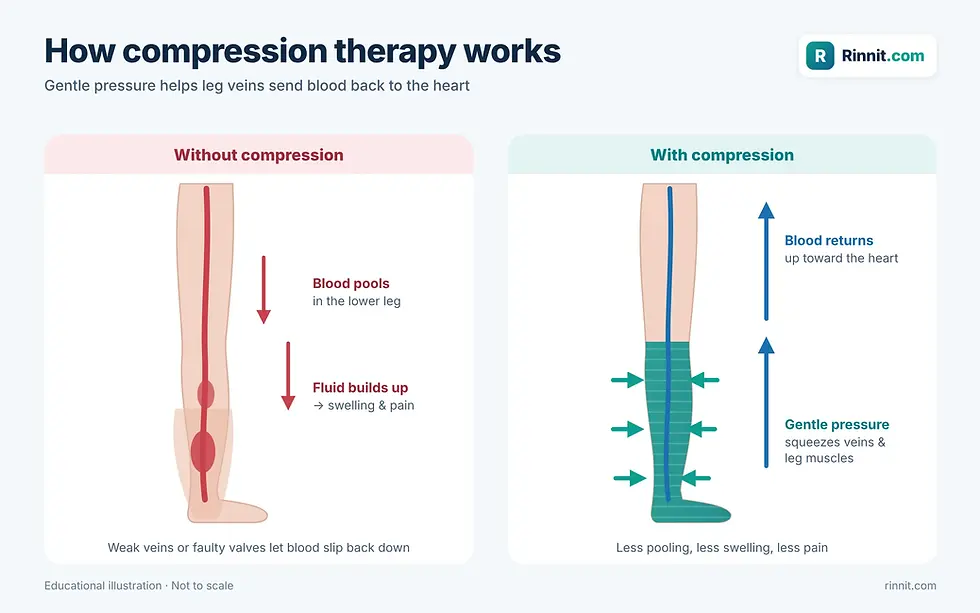
Compression therapy is a common treatment that improves blood flow in the lower legs by applying steady pressure with elastic stockings or wraps.
Your leg veins must push blood upward, against gravity, back to your heart. When vein walls are weak or the small valves inside them do not close properly, blood and fluid collect in the legs, ankles and feet.
The elastic pressure gently squeezes your legs and leg muscles. This helps the veins move blood back toward the heart and stops fluid from building up in the tissues.
Your doctor may use compression therapy on its own or together with other treatments.
What are the types of compression therapy?
The three main types of compression therapy are compression stockings, bandages and wraps, and inflatable devices.
Type | What it is | Best suited for |
Compression stockings | Elastic socks, most often knee-high; longer stockings or waist-high tights if swelling goes above the knee | The most common choice for everyday use |
Bandages and wraps | Elastic bandages (often applied in several layers) or adjustable Velcro wraps | People who find it hard to pull on stockings; ulcers and wounds |
Inflatable devices | Garments that fully cover the legs and fill with air to create pressure | Used in hospitals to prevent blood clots, for lymphedema, and by some athletes |

What compression levels do compression stockings come in?
Compression stockings come in low, medium and high pressure levels, measured in millimeters of mercury (mmHg).
There is no single standard scale, and manufacturers rate their own products. The level you need depends on your condition.
Level | Pressure | How you get it | Typical fit |
Low | Less than 20 mmHg | Over the counter | Long periods of standing or sitting, pregnancy |
Medium | 20–30 mmHg | Prescription | Conditions your doctor is treating |
High | More than 30 mmHg | Prescription | Conditions your doctor is treating |
Even for low-pressure stockings, check with your doctor before buying them. This matters most if you have poor artery circulation (peripheral artery disease), nerve damage in the feet or severe heart failure, because compression can harm the skin and tissue or worsen these conditions.

Who needs compression therapy?
Compression therapy is recommended for conditions caused by poor blood circulation in the legs.
Condition | What happens | How compression helps |
Weak vein walls and faulty valves let blood build up in the legs | Squeezes leg muscles to push blood back to the heart | |
Varicose veins | Raised, twisting, rope-like veins caused by venous insufficiency | Relieves the swelling and pain |
A clot in a deep vein blocks blood flow, so blood and swelling build up behind it | Lowers clot risk in people at risk | |
Fluid gets trapped in the tissues | Moves fluid along and stops it collecting | |
Leg ulcers and wounds | Open sores, often on the legs, ankles and feet | Supports healing |
Blood pressure drops quickly on standing, causing dizziness | Squeezes blood from the legs back up to the heart |
Chronic venous insufficiency
Chronic venous insufficiency is a common condition in which damaged leg veins cannot move blood back to the heart properly. It can follow a deep vein clot, and it can also develop with age or long periods of sitting or standing.
Varicose veins
Varicose veins are a result of chronic venous insufficiency. Compression helps relieve the swelling and pain they cause. If you are expecting, read our guide to varicose veins in pregnancy.
Deep vein thrombosis risk
Compression therapy may be recommended for people at higher risk of a deep vein clot, including people who:
Carry excess weight
Are having chemotherapy
Are inactive or unable to move much
Are pregnant or within six weeks after giving birth
If you already have a DVT and take blood thinners (anticoagulants), compression can be reasonable to consider. Talk with your doctor first to see if it is right for you. Learn more about venous thromboembolism.
Swelling of the feet, ankles or legs
Leg swelling happens when fluid becomes trapped in the tissues. Common causes include chronic venous insufficiency, congestive heart failure, lymphedema, pregnancy, and sitting or standing in one place for a long time.
Leg ulcers and wounds
People with diabetes, varicose veins or poor circulation have a higher risk of ulcers on the lower legs and feet. Compression can help these ulcers and wounds recover. Related skin changes are covered in our guide to venous stasis dermatitis.
Orthostatic hypotension
Orthostatic hypotension happens because too little blood returns from the legs to the heart when you stand up. This can make you feel dizzy or lightheaded.
Should athletes use compression therapy?
Some endurance athletes wear compression on their legs during or after exercise because better circulation is thought to speed muscle recovery and reduce soreness. Some studies support these effects.
Physical therapists also use compression to reduce swelling and support rehabilitation.
How do you start compression therapy?
You start compression therapy with your doctor choosing the right pressure level for your condition.
Your doctor will also guide you on:
Size and fit
How to put the garments on correctly
How long to wear them each day
Prescriptions are usually filled at a medical supply store. Trained staff measure your legs for a good fit and show you how to put the garments on and take them off. If you find stockings hard to grip and pull on, there are devices that can help.
How long should you wear compression stockings each day?
Most people wear compression socks or stockings while awake and take them off to sleep.
Bandages used for some conditions, such as ulcers or wounds, may stay on overnight. Always follow your doctor's specific instructions.
What are the benefits of compression therapy?
Compression therapy improves blood flow in the legs and reduces pain and swelling. It can also help:
Heal ulcers and wounds caused by blood pooling
Manage chronic venous insufficiency and orthostatic hypotension
Prevent deep vein thrombosis
For a wider view of options, see our overview of venous disease treatments.
What are the risks and side effects of compression therapy?
Most problems with compression therapy are mild, and severe side effects are rare.
How common | Side effect |
Common, usually mild | Skin irritation |
Discomfort or pain | |
Bacterial or fungal skin infection | |
Swelling of the lower foot and toes (where compression is usually lower) | |
Rare, but serious | Nerve damage |
Soft tissue damage | |
Superficial thrombophlebitis (inflamed, clotted surface vein) |
How can you wear compression stockings safely?
You can avoid most problems by making sure your garments fit properly and by using them exactly as prescribed.
✅ Check stockings for wrinkles or bunching
✅ Do not fold the top of the stockings over
✅ Make sure your skin is completely dry before putting them on
✅ Wear slippers or shoes to protect the socks
✅ Replace socks that are worn out or stretched
When should you call a doctor about compression therapy?
Call your doctor right away if you notice any of these while using compression therapy:
Skin changes, such as redness, irritation or infection
Pain
Tingling or numbness
Conclusion
Compression therapy is a simple, effective way to improve blood flow in the legs and ease the pain and swelling of poor circulation. Stockings, bandages and inflatable wraps all work by squeezing the legs so blood can return to the heart.
Mild compression is available over the counter, but stronger levels need a prescription and a proper fitting. If your legs, ankles or feet swell, ask your doctor whether compression therapy is right for you.
Next step: Save or share this guide and bring it to your next appointment. Have your questions ready: which pressure level you need, how long to wear it each day, and which warning signs to watch for. For more plain-language guides on circulation and vein health, explore our health library.
FAQ
What does compression therapy do?
Compression therapy applies gentle pressure to the lower legs, ankles and feet. This helps veins send blood back to the heart and stops blood and fluid from pooling, which reduces pain and swelling.
What mmHg compression level do I need?
It depends on your condition. Low compression (under 20 mmHg) is sold over the counter, while medium (20–30 mmHg) and high (over 30 mmHg) need a prescription. Ask your doctor before buying any level.
Can I sleep in compression socks?
Most people take compression socks or stockings off for sleep. Some bandages for ulcers or wounds stay on overnight, but only if your doctor tells you to.
Are compression stockings good for varicose veins?
Yes. Compression therapy can help relieve the swelling and pain linked to varicose veins.
Can compression therapy prevent blood clots?
Yes. It can help prevent deep vein thrombosis, especially in people at higher risk, such as those who are inactive, having chemotherapy, carrying excess weight, or pregnant or recently postpartum.
What are the side effects of compression stockings?
The most common are skin irritation, discomfort and skin infection. Nerve or soft tissue damage is rare. Call your doctor if you develop pain, tingling, numbness or skin changes.
Who should not wear compression stockings?
People with poor artery circulation (peripheral artery disease), nerve damage in the feet or severe heart failure should check with a doctor first. In these cases, compression can harm the skin or make the condition worse.
Do I need a prescription for compression stockings?
Low-pressure stockings can be bought over the counter. Stockings rated 20 mmHg or higher need a prescription, and trained staff can measure you for a proper fit.
How often should I replace compression stockings?
Replace them when they look worn out or feel stretched, because they lose pressure over time. Your provider or supplier can tell you how long your type should last.
Should compression stockings hurt?
No. They should feel snug but not painful. Take them off and call your doctor if you have pain, numbness, tingling, skin color changes or sores.
Related Reading
Chronic Venous Insufficiency (CVI): What It Is, Why It Happens, and How It Gets Treated explains weak leg veins, swelling and how the condition is treated.
What Are Varicose Veins? A Plain-Language Guide to the Bulging, Twisted Veins That Most Often Show Up on the Legs describes why veins bulge and the treatments that can help.
Deep Vein Thrombosis (DVT): Symptoms, Causes, Diagnosis & Treatment — Complete Guide covers leg blood clot warning signs, risks and treatment.
Preventing Blood Clots with Intermittent Pneumatic Compression (IPC) explains how inflatable leg sleeves help prevent blood clots.
References
Cleveland Clinic. Compression Therapy: Types and Benefits. Cleveland Clinic. Last updated July 11, 2022. https://my.clevelandclinic.org/health/treatments/23449-compression-therapy
Sachdeva A, Dalton M, Lees T. Graduated compression stockings for prevention of deep vein thrombosis. Cochrane Database of Systematic Reviews. 2018;11(11):CD001484. PMID 30390397. https://doi.org/10.1002/14651858.CD001484.pub4
O'Meara S, Cullum N, Nelson EA, et al. Compression for venous leg ulcers. Cochrane Database of Systematic Reviews. 2012;11(11):CD000265. PMID 23152202. https://doi.org/10.1002/14651858.CD000265.pub3
Rabe E, Partsch H, Morrison N, et al. Risks and contraindications of medical compression treatment – A critical reappraisal. An international consensus statement. Phlebology. 2020;35(7):447-460. PMID 32122269. https://doi.org/10.1177/0268355520909066
Disclaimer
This article is for general education only and does not replace advice from your own doctor. Do not start, stop or change compression therapy without medical guidance.



Comments