Preventing Blood Clots with Intermittent Pneumatic Compression (IPC)

Updated: 2 days ago
Medically reviewed by Dr. Baraa Alnahhal, MD · Last reviewed: October 2026
Quick Answer: What is an intermittent pneumatic compression (IPC) device?
An intermittent pneumatic compression (IPC) device is a medical tool of inflatable calf sleeves that prevents blood clots. Inflating and deflating every 20 to 60 seconds, it supports circulation in patients temporarily immobile from surgery, stroke or illness. This reduces the risk of deep vein thrombosis and pulmonary embolism, offering a safe, drug-free protection during recovery. [1]
What the research says
In immobile stroke patients, IPC lowered the rate of deep vein thrombosis. In the CLOTS 3 randomized trial of 2,876 patients in 94 UK hospitals, DVT in the proximal (upper-leg) veins occurred in 8.5% (122 of 1,438) of those given IPC versus 12.1% (174 of 1,438) of those given no IPC, an absolute reduction of 3.6% (95% CI 1.4–5.8). Skin breaks on the legs were more common with IPC (3% vs 1%) (PubMed: CLOTS Trials Collaboration, Lancet, 2013) [2].
After brain and spine surgery, compression performed about as well as drug prophylaxis. A systematic review and network meta-analysis of 18 randomized trials (2,474 adults having cranial or spinal surgery) found IPC reduced the risk of DVT compared with placebo (RR 0.41, 95% CrI 0.26–0.60) and of pulmonary embolism (RR 0.10, 95% CrI 0.01–0.60), and judged IPC equivalent to anticoagulants for efficacy (PubMed: Wang et al., Neurosurg Rev, 2021) [3].
The evidence is less certain in intensive care. A network meta-analysis of 13 randomized trials (9,619 critically ill adults) found low-molecular-weight heparin reduced DVT (OR 0.59, 95% CrI 0.33–0.90), while compression devices may reduce DVT but on low-certainty evidence (OR 0.85, 95% CrI 0.50–1.50) (PubMed: Fernando et al., Chest, 2022) [4].
Understanding Intermittent Pneumatic Compression
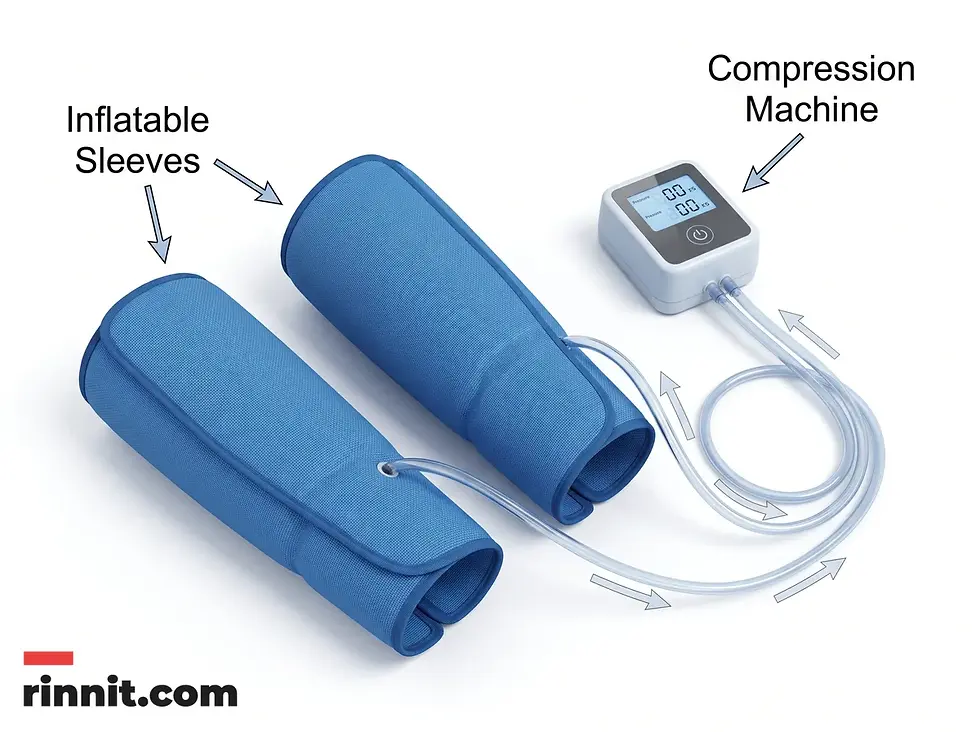
Intermittent pneumatic compression (IPC), also known as sequential compression device (SCD) therapy, is a specialized medical treatment designed to maintain healthy blood flow in the lower limbs. The system typically consists of two plastic sleeves that wrap around the calves and connect to a small, automated machine. This machine controls the rhythmic inflation and deflation of the sleeves, creating a sensation similar to a gentle leg massage. [1]
The primary function of an IPC device is to prevent the formation of blood clots in the deep veins of the legs, a condition known as deep vein thrombosis (DVT). When a person is inactive for long periods—such as during a hospital stay or recovery from a major operation—blood can pool in the legs, increasing the risk of clotting. IPC devices address this by mechanically assisting the body's circulatory system. [1]
Component | Function |
Inflatable sleeves | Wrap around the calves to apply rhythmic pressure. |
Compression machine | Controls the timing and intensity of the inflation cycles. |
Connecting tubing | Delivers air from the machine to the leg sleeves. |
How IPC Devices Work
The mechanism behind IPC therapy is both simple and effective. The device operates in cycles, usually lasting between 20 and 60 seconds. During the compression phase, the sleeves inflate, gently squeezing the leg muscles. This action pushes blood through the veins and back toward the heart. When the sleeves deflate, the pressure is released, allowing oxygen-rich blood to flow back into the leg arteries. [1]
Beyond the mechanical movement of blood, the compression also triggers the body to release natural substances that help prevent clotting. [1] This dual action makes IPC a powerful tool in hospital settings, especially for patients who cannot tolerate traditional blood-thinning medications. [1]
Benefits and Clinical Effectiveness
The most significant benefit of IPC therapy is the prevention of venous thromboembolism (VTE), which includes both DVT and pulmonary embolism (PE). VTE is a leading cause of preventable death in hospital environments. By supporting circulation without the use of drugs, IPC devices save lives while avoiding the bleeding risks associated with anticoagulants. [1]
Clinical trials have demonstrated the effectiveness of these devices. In one large-scale study, the use of IPC was shown to decrease the risk of DVT by approximately 4%. [1] [2] This reduction is critical for high-risk populations, such as those recovering from a stroke or major orthopedic surgery.
Benefit | Description |
Clot prevention | Rhythmic pressure prevents blood from pooling and forming clots. |
Drug-free | Provides protection for patients who cannot take blood thinners. |
Enhanced recovery | Mimics the circulatory benefits of walking for immobile patients. |
Lymphedema care | Can be adapted to treat swelling caused by lymphatic issues. |
Risks and Safety Considerations
While IPC devices are generally safe and non-invasive, they do carry some minor risks and complications. Most issues are related to the physical presence of the sleeves on the skin or the limitations they place on a patient's mobility. [1]
Complications of intermittent pneumatic compression devices include warmth in your legs that may make them sweat, limited leg movement, and discomfort or skin irritation. — Cleveland Clinic [1]
Rare but serious complications can include nerve damage or pressure injuries if the sleeves are not fitted correctly or if the patient has extremely sensitive skin. It is essential for patients to communicate any pain or unusual sensations to their healthcare provider immediately. [1]
Using IPC Devices Safely
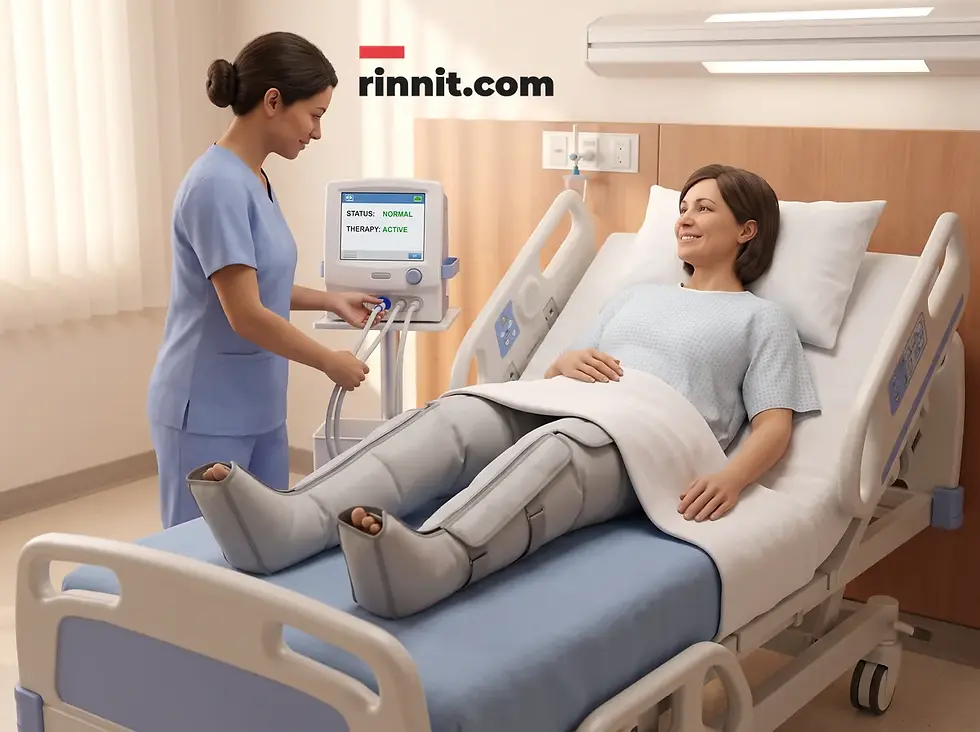
To maximize the benefits of IPC therapy, the sleeves should be worn as much as possible while the patient is resting in bed or sitting in a chair. [1] However, safety protocols must be followed to prevent falls and skin damage.
Removal for activity: Always remove the sleeves before getting up to walk or shower. Walking while wearing the device significantly increases the risk of tripping. [1]
Skin inspection: Regularly check the skin under the sleeves for redness, sores, or irritation.
Foot exercises: While awake, patients should perform simple foot exercises, such as pointing and flexing the toes, to further support circulation. [1]
Machine alerts: If the machine stops inflating or sounds an alarm, notify a nurse or healthcare provider immediately. [1]
Recovery and Long-Term Outlook
Most patients only need to use an IPC device until they are able to get up and walk regularly. Once normal activity levels are restored, the risk of DVT naturally decreases, and the device can be discontinued. [1] In some cases, a provider may recommend continued use at home if the patient remains at high risk for clots.

Conclusion
Intermittent pneumatic compression is a vital, non-invasive technology that protects patients during their most vulnerable stages of recovery. By supporting the body's natural circulatory processes, IPC devices prevent life-threatening blood clots and ensure a safer path back to full mobility. If you or a loved one are scheduled for surgery, discuss the use of IPC therapy with your surgical team to incorporate it into your recovery plan.
Frequently Asked Questions
1. What is the primary purpose of an IPC device?
The primary purpose is to prevent blood clots, specifically deep vein thrombosis (DVT), by improving blood circulation in the legs through rhythmic inflation and deflation of sleeves. [1]
2. Can I walk while wearing the IPC sleeves?
No, you should always remove the sleeves before walking. Wearing them while moving around can lead to tripping and falling. [1]
3. How often do the sleeves inflate?
The sleeves typically inflate and deflate every 20 to 60 seconds, depending on the specific machine settings prescribed by your doctor. [1]
4. Does IPC therapy hurt?
IPC therapy should not be painful; the sensation is often described as a gentle leg massage. If you experience pain, notify your healthcare provider immediately. [1]
5. Who needs to use an IPC device?
IPC devices are commonly prescribed for patients who are immobile due to surgery, stroke, or illness, as well as for some pregnant women and individuals with lymphedema. [1]
6. Are IPC devices as effective as blood thinners?
While blood thinners can be more effective in some cases, they carry higher risks of bleeding. IPC is an effective drug-free alternative or supplement. [1]
7. Can I use an IPC device at home?
Yes, some patients are prescribed portable IPC devices for home use during their recovery if they remain less active than usual. [1]
8. What should I do if my legs feel too hot under the sleeves?
It is common for the legs to feel warm or sweaty. If the discomfort is significant, ask your provider to check the fit and skin condition. [1]
9. How long do I need to wear the device each day?
You should wear the device for the full amount of time recommended by your provider, typically whenever you are resting in bed or sitting down. [1]
10. What are the signs of a blood clot I should watch for?
Call your doctor right away if you have sudden swelling, warmth, or pain in one leg. Call 911 if you have sudden shortness of breath, chest pain, or cough up blood, because these can be signs of a blood clot in the lungs. [1]
Related Reading
Deep Vein Thrombosis (DVT): Symptoms, Causes, Diagnosis & Treatment — Complete Guide explains leg vein clots, their warning signs and treatment.
Pulmonary Embolism Guide: Symptoms, Causes, Diagnosis, and Treatment covers lung blood clots and why they are an emergency.
Anticoagulants (Blood Thinners): Types, Uses and Side Effects explains blood thinners used to prevent and treat clots.
Compression Therapy: Types, Pressure Levels, Benefits, and Risks — What You Need to Know compares compression stockings, wraps and pumps for circulation.
References
Cleveland Clinic. Intermittent Pneumatic Compression. Cleveland Clinic. Last updated Apr. 18, 2023. https://my.clevelandclinic.org/health/treatments/14791-intermittent-pneumatic-compression-ipc-device
CLOTS (Clots in Legs Or sTockings after Stroke) Trials Collaboration, Dennis M, Sandercock P, Reid J, Graham C, Forbes J, Murray G. Effectiveness of intermittent pneumatic compression in reduction of risk of deep vein thrombosis in patients who have had a stroke (CLOTS 3): a multicentre randomised controlled trial. Lancet. 2013;382(9891):516-524. PMID: 23727163. https://doi.org/10.1016/S0140-6736(13)61050-8
Wang X, Zhang Y, Fang F, et al. Comparative efficacy and safety of pharmacological prophylaxis and intermittent pneumatic compression for prevention of venous thromboembolism in adult undergoing neurosurgery: a systematic review and network meta-analysis. Neurosurg Rev. 2021;44(2):721-729. PMID: 32300889. https://doi.org/10.1007/s10143-020-01297-0
Fernando SM, Tran A, Cheng W, et al. VTE prophylaxis in critically ill adults: a systematic review and network meta-analysis. Chest. 2022;161(2):418-428. PMID: 34419428. https://doi.org/10.1016/j.chest.2021.08.050
Medical Disclaimer
This article is for informational purposes only and does not constitute medical advice. Always seek the advice of your physician or other qualified health provider with any questions you may have regarding a medical condition. Never disregard professional medical advice or delay in seeking it because of something you have read here.



Comments