Venous Disease Treatments: Restoring Healthy Blood Flow

Updated: 3 days ago
Medically reviewed by Dr. Baraa Alnahhal, MD · Last reviewed: October 2026
Editorial note: This article is provided for educational purposes only. It is not medical advice. Always consult a qualified healthcare professional about your individual health situation.
Quick Answer: What Are Venous Disease Treatments?
Venous disease treatments are medical interventions designed to fix malfunctioning vein valves and improve circulation. Healthcare providers use a combination of medications, such as anticoagulants, and procedures like angioplasty or thermal ablation to address issues like blood clots and varicose veins. [1] These treatments help reduce symptoms such as swelling and pain while significantly lowering the risk of life-threatening events.
What the research says
Several ways of closing a faulty great saphenous vein perform similarly. A Cochrane review of 24 randomized trials with 5,135 participants compared laser and radiofrequency ablation, foam sclerotherapy, glue, mechanochemical ablation and surgical ligation and stripping. Laser and radiofrequency ablation had comparable technical success up to five years (OR 0.98; 95% CI 0.41 to 2.38), and laser ablation and surgery had comparable recurrence within three years (OR 0.78; 95% CI 0.47 to 1.29), though the authors note the evidence is limited by few studies per comparison (Whing et al., Cochrane Database Syst Rev, 2021 [2]).
Heat-based and non-heat ablation close veins equally well, but non-heat methods may be gentler. A meta-analysis of 8 randomized trials with 1,956 patients found no significant difference in vein occlusion at four weeks (RR 0.99; 95% CI 0.96 to 1.02) or at one to two years (RR 0.95; 95% CI 0.88 to 1.01). Non-thermal ablation was better tolerated and carried less risk of nerve injury (Shahzad et al., Eur J Vasc Endovasc Surg, 2023 [3]).
Compression remains a cornerstone of non-surgical care for venous ulcers. In a Cochrane review of 14 trials with 1,391 participants, compression bandages or stockings made complete healing within 12 months more likely than no compression (risk ratio 1.77; 95% CI 1.41 to 2.21), with moderate-certainty evidence (Shi et al., Cochrane Database Syst Rev, 2021 [4]).
Understanding Venous Disease Management
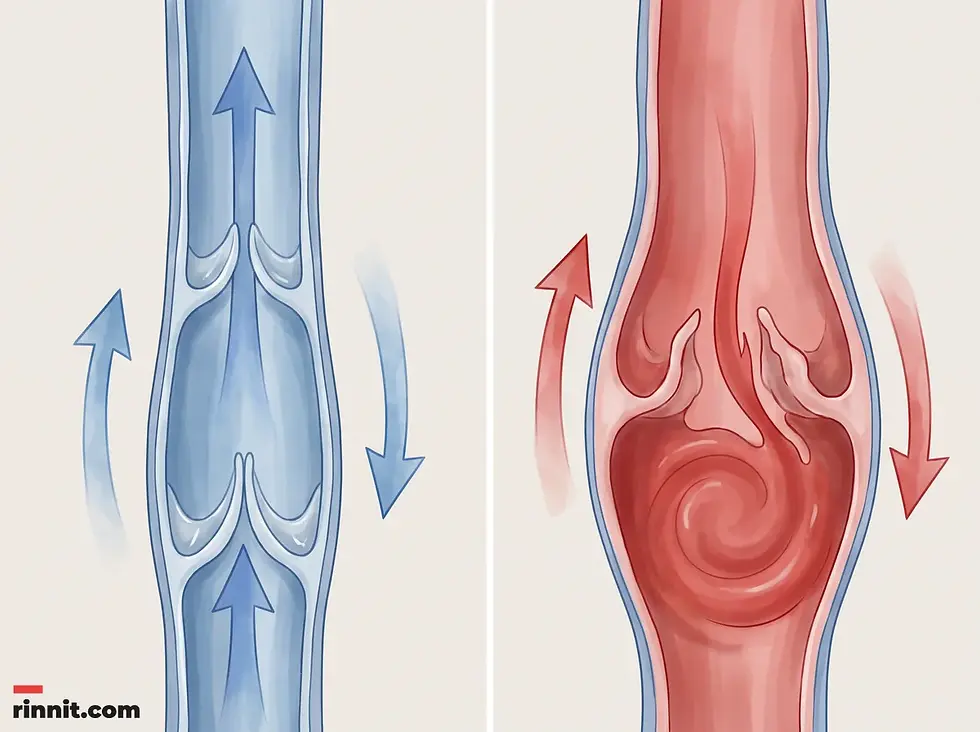
Venous disease encompasses a variety of conditions that disrupt the normal flow of blood back to the heart. Healthy veins utilize one-way valves to ensure blood moves in the correct direction; however, when these valves fail, blood can pool or flow backward, leading to venous insufficiency. [1] Treatments are tailored to the specific type of disease, such as deep vein thrombosis (DVT), chronic venous insufficiency (CVI), or varicose veins, with the primary goal of restoring circulatory efficiency.
Nonsurgical Treatment Approaches
For many patients, the first line of defense against venous disease involves nonsurgical methods. These treatments are often used to manage symptoms and prevent the progression of the condition without the need for invasive measures. Lifestyle modifications, such as regular walking and weight management, play a crucial role in supporting vascular health. [1]
Treatment Type | Description and Purpose |
Anticoagulation | Medications that thin the blood to treat DVT and prevent new clots. [1] |
Compression Therapy | Specialized stockings that apply pressure to prevent blood pooling in the legs. [1] |
Sclerotherapy | An injected medicine (sclerosant) used to collapse and eliminate varicose veins. [1] |
Lifestyle Changes | Elevating the legs and engaging in regular exercise to improve blood flow. [1] |
Minimally Invasive Catheter-Based Procedures
Catheter-based treatments offer a middle ground between medication and surgery, utilizing small incisions and advanced imaging for precise intervention. These procedures typically involve a shorter recovery time and a lower risk of complications compared to traditional surgical methods. [1]
One common procedure is endovenous thermal ablation, also known as laser therapy, which uses heat energy to close off malfunctioning veins. [1] Other options include angioplasty, where a small balloon stretches a narrowed vein, and the placement of a vena cava filter to trap blood clots before they reach the lungs. [1]

Surgical Options for Advanced Venous Disease
In cases where minimally invasive options are not suitable or have proven ineffective, surgical intervention may be necessary. [1] Surgery is often recommended when venous disease interferes with daily activities or poses a high risk for serious complications. [1]
Recovery and Long-Term Outlook
The recovery process varies significantly depending on the type of treatment received. Patients undergoing catheter-based procedures can often return to their normal activities within a few days. [1] In contrast, recovery from more extensive surgeries like the SEPS procedure may take two weeks or longer. [1] While some treatments, such as those for varicose veins, can provide a cure, patients must remain vigilant as new vascular issues can develop over time. [1]

Conclusion
Venous disease treatments are essential for maintaining vascular health and preventing the dangerous complications associated with poor circulation. By utilizing a range of options from simple lifestyle changes to advanced surgical techniques, healthcare providers can help patients lead full and active lives. Early intervention and a personalized treatment plan are key to achieving the best possible outcomes.
Next Steps
If you are experiencing symptoms of venous disease, such as leg swelling or bulging veins, consult with a healthcare professional. Discuss the various treatment options available and determine whether a minimally invasive or surgical approach is right for you. Ensure you follow all post-procedure care instructions and maintain a heart-healthy lifestyle to support long-term vascular wellness.
Related reading: Venous Disease: Symptoms, Types, and Management Options | Sclerotherapy: A Minimally Invasive Treatment for Varicose and Spider Veins | Vena Cava Filters: Preventing Pulmonary Embolism
Sources: Cleveland Clinic — Venous Disease Treatments | Whing et al., 2021 | Shahzad et al., 2023 | Shi et al., 2021
Frequently Asked Questions
1. What is the primary goal of venous disease treatments?
The main objective is to restore proper blood flow and prevent complications like pulmonary embolism.
2. Can venous disease be cured?
Some conditions, like varicose veins, can be cured, but management is often required to prevent new issues.
3. What are the common symptoms of venous disease?
Symptoms include leg swelling, pain, heaviness, itching, and the appearance of bulging veins.
4. Is angioplasty a common treatment for veins?
Yes, it is used to stretch open narrowed veins and improve circulation.
5. What is a vena cava filter?
A vena cava filter is a small device placed in a large vein to catch blood clots before they reach the lungs.
6. How long does recovery take after a catheter procedure?
Most patients can return to normal activities within a few days.
7. Are blood thinners necessary for all patients?
No, they are typically prescribed for those with blood clots or a high risk of developing them.
8. What is sclerotherapy?
Sclerotherapy is a procedure where a solution is injected into a vein to cause it to collapse and disappear.
9. Do compression stockings really help?
Yes, they provide pressure that helps prevent blood from pooling in the lower legs.
10. What is a surgical bypass for veins?
A surgical bypass for veins is a procedure that creates a new path for blood to flow around a blocked vein.
11. When should I call my doctor after a procedure?
Call 911 for chest pain or sudden shortness of breath; call your doctor for fever or worsening pain and swelling at the incision site.
12. Are lifestyle changes effective on their own?
Lifestyle changes can be very effective for mild cases or as a supplement to other treatments.
13. What is thermal ablation?
Thermal ablation is a minimally invasive treatment that uses heat or lasers to close off damaged veins.
14. Does insurance typically cover these treatments?
Coverage varies, but many treatments for symptomatic venous disease are covered.
15. Can I prevent new varicose veins from forming?
While you can't always prevent them, maintaining a healthy weight and exercising can help.
References
Cleveland Clinic. Venous Disease Treatments. Cleveland Clinic. August 15, 2022. https://my.clevelandclinic.org/health/treatments/17613-venous-disease-treatments
Whing J, Nandhra S, Nesbitt C, et al. Interventions for great saphenous vein incompetence. Cochrane Database Syst Rev. 2021;8(8):CD005624. PMID 34378180. https://doi.org/10.1002/14651858.CD005624.pub4
Shahzad N, Elsherif M, Obaidat I, et al. A Systematic Review and Meta-Analysis of Randomised Controlled Trials Comparing Thermal Versus Non-Thermal Endovenous Ablation in Superficial Venous Incompetence. Eur J Vasc Endovasc Surg. 2023;66(5):687-695. PMID 37295602. https://doi.org/10.1016/j.ejvs.2023.06.002
Shi C, Dumville JC, Cullum N, et al. Compression bandages or stockings versus no compression for treating venous leg ulcers. Cochrane Database Syst Rev. 2021;7(7):CD013397. PMID 34308565. https://doi.org/10.1002/14651858.CD013397.pub2
Medical disclaimer
The information provided in this article is for educational purposes only and should not be used as a substitute for professional medical advice, diagnosis, or treatment. Always seek the advice of your physician or other qualified health provider with any questions you may have regarding a medical condition.



Comments