Eye Drops: Types, Uses, Risks and How to Use Them Safely

Updated: 6 days ago
Written and medically reviewed by Dr. Baraa Alnahhal, MD · Last reviewed: October 2026 · How we review
Quick Answer: What are eye drops?
Eye drops are liquid medicines placed on the surface of the eye, one or two drops at a time. Over-the-counter drops lubricate, rinse or ease redness, while prescription drops treat infections, allergies, inflammation and glaucoma. Using the wrong drop can hide or worsen a problem, so see an eye specialist when symptoms persist. [1]
What the research says
Eye drop technique errors are common. A systematic review of 22 studies found that 77.3% of them reported improper eye drop technique or not using drops as directed — errors linked to infections, weaker treatment and treatment failure, especially in older adults with glaucoma. (Al-Taie, Clin Exp Optom, 2025)
Artificial tears help many people, but brands perform similarly. A review of 43 randomized trials with 3,497 people with dry eye found OTC artificial tears may be safe and effective, with most formulas showing similar results; overall evidence quality was low. (Pucker et al., Cochrane Database Syst Rev, 2016)
Containers used at home can become contaminated. Testing of 271 multi-use lubricant containers from 168 patients found bacteria in 12.2% of them — 7.9% of tear drops, 11.7% of gels and 32% of ointments. (Faruk Yilmaz et al., Cont Lens Anterior Eye, 2023)
Key takeaways
Eye drops work best when the drop matches the condition.
Over-the-counter (OTC) drops ease mild symptoms; prescription drops treat diseases.
OTC drops cannot treat cataracts, glaucoma, macular degeneration or diabetes-related eye disease.
Redness-relief drops can hide a problem, and redness may return worse.
Clean hands, a clean dropper tip and in-date drops lower your risk of harm.
What are eye drops?
Eye drops are liquid medications you apply directly to the surface of your eye. [1]
Their ingredients vary widely. That is why one bottle may soothe dry eyes while another treats an infection or lowers eye pressure.
Some drops are sold over the counter. Others need a prescription from an eye specialist.
What can over-the-counter eye drops treat?
Over-the-counter eye drops treat mild, short-term eye symptoms such as dryness, discharge and redness. [1]
OTC drop type | What it does |
Artificial tears (demulcents) | Lubricate and moisten the eye |
Astringents | Reduce eye discharge |
Emollients | Soften dry or cracked tissue around the eye |
Redness relievers (vasoconstrictors) | Ease redness and inflammation |
Fluid-balancing drops | Help keep fluid levels in the eye balanced |
Eyewash solutions | Rinse and flush the eye more safely than tap water |
What do prescription eye drops treat?
Prescription eye drops treat eye diseases and infections that need a diagnosis first. [1]
Prescription drop type | What it does |
Anesthetics | Numb the eye or reduce eye pain |
Antibiotics | Treat bacterial eye infections |
Antihistamines | Relieve allergy symptoms such as itching |
Corticosteroids and other anti-inflammatories | Reduce inflammation |
Dilating drops | Widen the pupil for eye exams or certain iris conditions |
Immune-modulating drops | Limit immune activity that damages the eye |
Glaucoma drops | Lower eye pressure to prevent or treat glaucoma |
Serum-based drops | Support healing of the eye surface |
Glaucoma is a good example of why the type matters. Drops that lower eye pressure protect the optic nerve — something no OTC drop can do. Read more in our guide to open-angle glaucoma.
Inflammation inside the eye, such as iritis, also needs prescription treatment.

What are the benefits of eye drops?
The main benefit of eye drops is that they can be highly effective when the drop matches the condition. [1]
Targeted treatment: the medicine goes straight to the eye surface.
Strong oversight for prescription drops: prescription drops face the strictest regulatory review. OTC drops are regulated too, but less strictly. [1]
Easy to learn: a pharmacist or eye specialist can show you how to apply them.
What are the risks of using eye drops?
The biggest risk of eye drops is using the wrong one, which can hide or worsen an eye problem. [1]
Risk | What it means for you |
Masking a problem | Redness-relief drops can hide the cause. Redness may come back, sometimes worse. |
Wrong drop, wrong problem | Eye pain from glaucoma and from dry eye need different treatments. |
Bypassing natural defenses | Drops go straight onto the eye, so contaminated or unsafe drops can cause serious harm. |
Poor-quality products | Some makers and sellers cut corners or skip safety rules. |
Contamination is a real concern. Bacteria have been found in eye drop, gel and ointment containers that people use at home. [4]
Gaps in how OTC eye care products are regulated and labeled add to the risk. [6]
What can't over-the-counter eye drops treat?
Over-the-counter eye drops cannot treat cataracts, glaucoma, retinal diseases such as macular degeneration, or diabetes-related eye diseases. [1]
These conditions need an eye exam and specialist care. If you are dealing with one, see our guides to common age-related eye problems and retinal disease.
How do you choose safe eye drops?
Choosing safe eye drops starts with checking the ingredients, the label and the seller. [1]
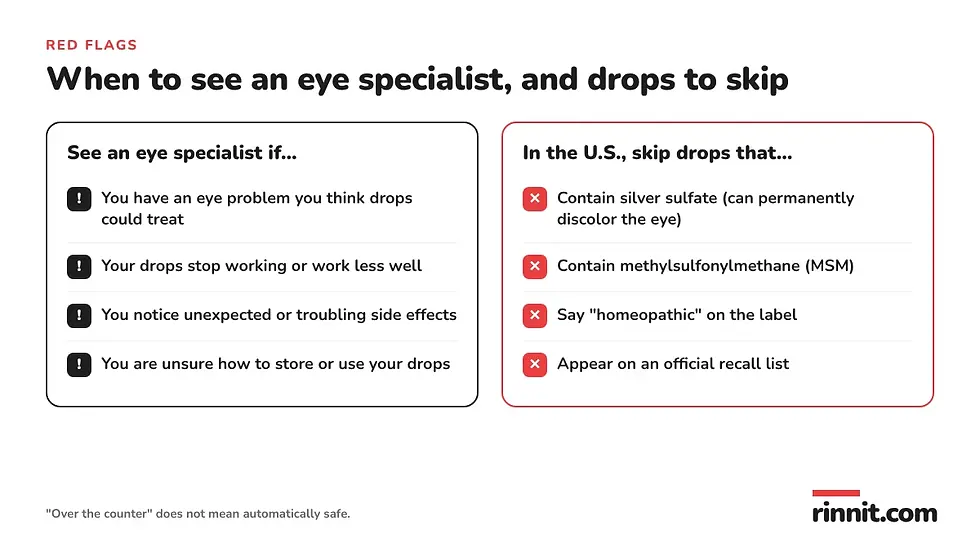
In the United States, avoid eye drops that:
Contain silver sulfate, which can permanently discolor the white of the eye.
Contain methylsulfonylmethane (MSM).
Carry the word "homeopathic" on the label.
Before you buy, check the FDA's eye drop safety guidance and current recall notices. Buy only from reputable sellers, especially online. [1][3]
How do you use eye drops safely?
Using eye drops safely means clean hands, the right bottle and a dropper tip that never touches your eye. [1]
Wash your hands before every dose.
Use only drops prescribed for you, exactly as instructed.
Read the label. Eye drop and ear drop bottles can look alike. Never put ear drops in your eyes, or eye drops in your ears.
Keep the tip clean. Don't let it touch your eye, and keep the cap closed.
Throw away expired drops.
Practice if blinking gets in the way. Ask your eye specialist or pharmacist to show you.

When should you see an eye specialist about eye drops?
You should see an eye specialist about eye drops if you have an eye problem you think drops could treat, or if your drops stop helping. Get emergency care for sudden vision loss, severe eye pain, or a chemical splash in the eye. [1]
Contact an eye specialist when:
You have an eye problem you think eye drops might treat.
Your drops stop working or seem less effective.
You notice troubling or unexpected side effects.
You have questions about how to store or use your drops.
Dry, tired eyes from screens? Our guide to eyestrain covers what helps. Irritated, crusty eyelids may point to blepharitis.
Conclusion
Eye drops are simple to use but not always simple to choose. OTC drops can ease dryness, discharge and mild redness. Infections, allergies, inflammation and glaucoma need prescription drops and a proper diagnosis.
"Over the counter" does not mean automatically safe. Match the drop to the problem, keep the bottle clean, and get help when drops stop working.
Not sure which eye drop is right for you? Bring this guide to your next eye appointment, explore more eye health guides on Rinnit, and follow us on Instagram and YouTube for weekly doctor-reviewed health tips.
FAQ
What are eye drops used for?
Eye drops are used to lubricate dry eyes, ease redness, reduce discharge and rinse the eye. Prescription eye drops also treat infections, allergies, inflammation and glaucoma.
What is the difference between OTC and prescription eye drops?
Over-the-counter eye drops ease mild symptoms like dryness and redness without a prescription. Prescription eye drops treat diseases such as infections and glaucoma and face stricter regulatory review.
Are redness-relief eye drops safe to use every day?
Redness-relief eye drops can hide an underlying problem, and redness may return, sometimes worse. See an eye specialist if you keep needing them.
Can eye drops treat glaucoma or cataracts?
Prescription glaucoma drops lower eye pressure, but over-the-counter drops cannot treat glaucoma. No OTC drop treats cataracts, macular degeneration or diabetes-related eye disease.
Which eye drops should I avoid buying?
In the U.S., avoid eye drops containing silver sulfate or methylsulfonylmethane (MSM), and drops labeled "homeopathic." Check recall notices and buy only from reputable sellers.
Can I use eye drops after they expire?
No, you should not use expired eye drops. Throw them away and get a new bottle.
Can eye drops get contaminated?
Yes, eye drops can get contaminated, which is risky because drops bypass the eye's natural defenses. Wash your hands, keep the cap closed and never let the tip touch your eye.
When should I see a doctor about my eye drops?
See an eye specialist if your drops stop working, cause unexpected side effects, or if you have an eye problem you think drops could treat.
How do I put in eye drops correctly?
Wash your hands, tilt your head back and gently pull down your lower eyelid to make a small pocket. Squeeze one drop into the pocket without letting the tip touch your eye, then close your eye gently for a minute or two.
How long should I wait between different eye drops?
Wait about 5 minutes between different eye drops so the first one is not washed out. Ask your eye doctor or pharmacist if you use several drops and are unsure of the order.
Related Reading
Artificial Tears: Types, Uses and How to Use Them explains artificial tears for dry eyes.
References
Cleveland Clinic. Eye Drops: Types, Uses, Potential Risks & Benefits. Cleveland Clinic. Last updated July 19, 2024. https://my.clevelandclinic.org/health/treatments/eye-drops
Al-Taie A. A systematic review of improper eye drop application and role of pharmacists for patient education. Clin Exp Optom. 2025;108(7):760-770. PMID 39933700. https://doi.org/10.1080/08164622.2025.2457431
U.S. Food and Drug Administration. What You Should Know about Eye Drops. FDA.gov. Content current as of October 16, 2026. https://www.fda.gov/drugs/buying-using-medicine-safely/what-you-should-know-about-eye-drops
Faruk Yilmaz O, Sarmis A, Ali Mutlu M, et al. Bacterial contamination of multi-use tear drops, gels, and ointments. Cont Lens Anterior Eye. 2023;46(6):102064. PMID 37806847. https://doi.org/10.1016/j.clae.2023.102064
Pucker AD, Ng SM, Nichols JJ. Over the counter (OTC) artificial tear drops for dry eye syndrome. Cochrane Database Syst Rev. 2016;2(2):CD009729. PMID 26905373. https://doi.org/10.1002/14651858.CD009729.pub2
Younessi DN, Lin JC, Janetos TM. Regulatory and informational gaps in the over-the-counter eye care product industry — over the counter, under the radar. JAMA Ophthalmol. 2023;141(12):1105-1106. PMID 37917092. https://doi.org/10.1001/jamaophthalmol.2023.4961
Medical disclaimer
This article is for general education and does not replace advice from your doctor or eye specialist. Always talk to a qualified healthcare professional about your symptoms and before starting, stopping or changing any eye drops.



Comments