What Is Open-Angle Glaucoma? Symptoms, Causes, and Treatment

Updated: 3 days ago
Medically reviewed by Dr. Baraa Alnahhal, MD · Last reviewed: October 2026
Quick Answer: What Is Open-Angle Glaucoma?
Open-angle glaucoma is the most common form of glaucoma, caused by a slow backup in the eye's drainage system that raises pressure inside the eye and eventually damages the optic nerve. It typically begins with loss of side vision that gradually narrows toward the center. Specialized eye tests diagnose it, and treatment lowers eye pressure to save remaining vision.
What the research says
Glaucoma is common and the numbers are rising. A meta-analysis of 50 population-based studies estimated that 3.54% of adults aged 40-80 have glaucoma, about 64.3 million people in 2013, rising to a projected 111.8 million by 2040; people of African ancestry had about 2.8 times the odds of primary open-angle glaucoma compared with people of European ancestry (Tham et al., Ophthalmology, 2014). [2]
Lowering eye pressure delays the onset of glaucoma. In a randomized trial of 1,636 people with elevated eye pressure, pressure-lowering eye drops reduced pressure by about 22.5% and cut the 5-year chance of developing open-angle glaucoma from 9.5% to 4.4% (hazard ratio 0.40) (Kass et al., Archives of Ophthalmology, 2002). [3]
Treatment protects vision but does not restore it. Among 255 people with newly diagnosed glaucoma in the Early Manifest Glaucoma Trial, treatment lowered eye pressure by an average of 24%, yet visual field scores at 3 months were not significantly different from those of untreated patients (Bengtsson & Heijl, Investigative Ophthalmology & Visual Science, 2016). [4]
Key Takeaways: Open-Angle Glaucoma at a Glance
Feature | Details |
Definition | Optic nerve damage caused by fluid buildup and high eye pressure. |
Prevalence | The most common type of glaucoma; often related to aging. |
Common Signs | Loss of peripheral vision, tunnel vision, and difficulty with contrast. |
Diagnosis | Regular eye exams using tonometry, OCT, and visual field tests. |
Main Risks | Irreversible vision loss and blindness if left untreated. |
Primary Care | Pressure-lowering eye drops and surgical procedures. |
What is open-angle glaucoma?
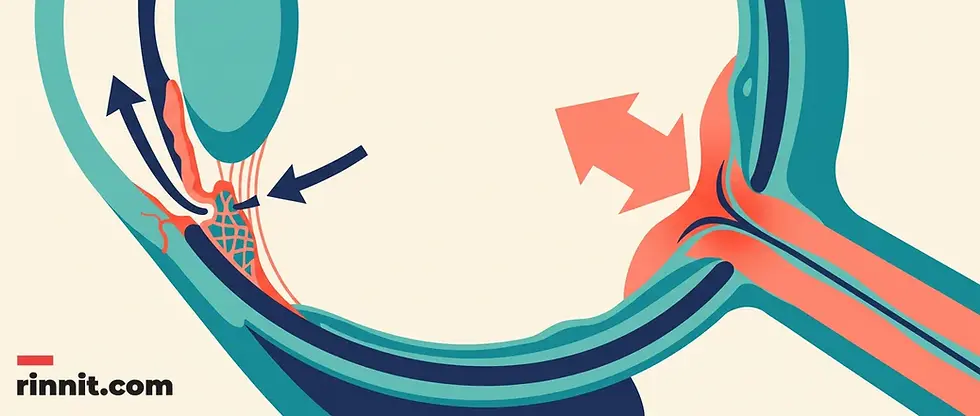
Open-angle glaucoma (OAG) is a chronic eye condition that affects the drainage system of the eye. In a healthy eye, fluid called aqueous humor flows in and out to maintain steady pressure. In OAG, the drainage angle, where the fluid exits, remains open, but the spongy tissue known as the trabecular meshwork becomes resistant to flow. This causes fluid to back up slowly, raising the intraocular pressure (IOP) and putting dangerous stress on the optic nerve. [1]
Because this pressure buildup happens so gradually, the condition is usually painless and lacks early warning signs. By the time a person notices a change in their vision, significant and permanent damage to the optic nerve has often already occurred. This makes regular eye examinations the only reliable way to catch the disease in its early, treatable stages.
What symptoms and vision changes does open-angle glaucoma cause?
The most characteristic symptom of open-angle glaucoma is the gradual loss of peripheral (side) vision. Because the stronger eye often compensates for the weaker one, many people do not realize their visual field is narrowing until it becomes "tunnel vision."
Peripheral Loss: Missing steps while walking or having trouble seeing objects to the side.
Reading Difficulties: Missing letters in words or struggling to read road signs while driving.
Contrast and Light: Difficulty seeing in low light or distinguishing between different shades of color.
Visual Field Defects: Specific blind spots, such as a "nasal step" near the nose or arc-shaped dark areas in the upper or lower field of vision.
What causes open-angle glaucoma, and who is at risk?
OAG can be classified as either primary or secondary, depending on whether an underlying condition is present.
Type | Description |
Primary OAG | The most common form; no obvious cause other than aging or genetic factors. |
Secondary OAG | Caused by other conditions like swelling, protein deposits, or debris clogging the drainage system. |
While anyone can develop glaucoma, certain factors significantly increase the risk. Older age is a primary contributor, as the trabecular meshwork naturally becomes less functional over time. Additionally, individuals with a family history of glaucoma or those of African racial heritage are at a higher risk and should seek regular screenings.
How is open-angle glaucoma diagnosed and tested?
Open-angle glaucoma has no early symptoms, so eye specialists use tests such as tonometry, visual field testing, OCT and gonioscopy to find it before vision is lost.
Tonometry: Measures the internal pressure of the eye.
Visual Field Test: Maps the peripheral vision to check for blind spots or narrowing.
OCT (Optical Coherence Tomography): A non-invasive scan that provides a detailed image of the optic nerve to check for damage.
Gonioscopy: A test used to examine the drainage angle of the eye to confirm it is open.

How is open-angle glaucoma treated and managed?
The primary goal of treating open-angle glaucoma is to lower intraocular pressure to a level that stops further damage to the optic nerve. Even if the pressure does not seem exceptionally high, lowering it has been proven to slow the disease's progression.
Eye Drop Medications: Most patients begin with topical drops that either increase fluid outflow (like prostaglandins) or decrease fluid production (like beta-blockers). Other options include Rho-kinase inhibitors, which help the drainage meshwork relax.
Surgical Procedures: If medications are not effective or cause significant side effects, laser treatments or minimally invasive surgeries may be recommended to create new drainage pathways for eye fluid.
Ongoing Monitoring: Because OAG is a lifelong condition, regular follow-up appointments are necessary to ensure the treatment is working and to adjust medications as needed.
What is the outlook for open-angle glaucoma, and can it be prevented?
Vision lost to open-angle glaucoma cannot be restored, but the outlook with early treatment is generally positive, and prevention relies on early detection through eye exams. With consistent care, most people can maintain their remaining vision for the rest of their lives. Prevention focuses entirely on early detection; if you are over 40 or have other risk factors, scheduling a comprehensive eye exam is the most important step you can take.
Conclusion
Open-angle glaucoma is a serious but manageable condition that requires proactive care. By understanding the "sneaky" nature of the disease and prioritizing regular eye health check-ups, you can protect your vision from permanent damage. Modern treatments are highly effective at controlling eye pressure and preserving the quality of life for those affected.
For more helpful tools and resources to track your health journey, visit Rinnit.com Infographic Templates.

Frequently Asked Questions
What is open-angle glaucoma?
It is an eye disease where fluid buildup increases pressure and damages the optic nerve.
Why is it called "open-angle"?
Because the drainage angle between the iris and cornea stays open, but the fluid still doesn't drain well.
Is it the most common type of glaucoma?
Yes, it is the most frequent form of the disease.
Does it cause pain?
No, open-angle glaucoma is typically painless and has no early symptoms.
What is the main symptom?
Gradual loss of peripheral or side vision.
What is "tunnel vision"?
A condition where you can only see things directly in front of you, as if looking through a tube.
Can I get my vision back?
No, vision loss from glaucoma is permanent and irreversible.
What causes the pressure to rise?
A backup in the eye's drainage system, specifically the trabecular meshwork.
What is the optic nerve?
The nerve that carries visual information from the eye to the brain.
Who is at risk?
People over 60, those with a family history, and those of African heritage.
How is it diagnosed?
Through a comprehensive eye exam including pressure tests and nerve scans.
What is tonometry?
A test that measures the pressure inside your eye.
What is a visual field test?
A test that checks for blind spots in your peripheral vision.
What is an OCT scan?
A detailed imaging test that looks at the health of the optic nerve.
What is the "nasal step"?
A blind spot that appears on the side of your vision closest to your nose.
Can I drive with glaucoma?
It depends on the extent of your vision loss; your eye doctor will advise you.
How do eye drops help?
They either reduce the amount of fluid produced or help it drain better.
Are there side effects to the drops?
Some people experience redness, stinging, or changes in eyelash growth.
What are prostaglandins?
A type of eye drop that helps fluid exit the eye more easily.
What are beta-blockers for eyes?
Drops that reduce the amount of fluid the eye produces.
Is surgery an option?
Yes, if medications don't lower pressure enough, laser or traditional surgery may be needed.
What is laser trabeculoplasty?
A laser treatment used to help the eye's drainage system work better.
Is the surgery painful?
Most procedures are done with local anesthesia and cause minimal discomfort.
Can I prevent glaucoma?
You can't prevent the disease itself, but you can prevent vision loss through early detection.
How often should I get checked?
If you are at risk, you should have a comprehensive exam every 1-2 years.
What is ocular hypertension?
A condition where eye pressure is high but the optic nerve isn't damaged yet.
Can normal pressure glaucoma happen?
Yes, some people have optic nerve damage even with "normal" eye pressure.
Is it the same as a cataract?
No, cataracts are a clouding of the eye's lens, while glaucoma affects the nerve.
Can exercise help?
Regular moderate exercise may help lower eye pressure in some people.
Does diet affect glaucoma?
A healthy diet supports overall eye health but isn't a direct cure for glaucoma.
What is secondary glaucoma?
Glaucoma caused by another medical condition, like an injury or inflammation.
Can eye injuries cause it?
Yes, a blow to the eye can damage the drainage system and lead to glaucoma later.
What is aqueous humor?
The clear fluid that fills the front part of the eye.
Does stress increase eye pressure?
Extreme stress can sometimes cause temporary spikes, but it's not a primary cause of OAG.
Can I wear contact lenses?
Usually, yes, but you may need to wait after applying certain eye drops.
Is it hereditary?
Yes, having a close relative with glaucoma significantly increases your risk.
What is an arcuate scotoma?
An arc-shaped blind spot in the field of vision.
Can children get it?
It is rare, but a form called juvenile open-angle glaucoma can affect younger people.
Does it affect both eyes?
Usually, yes, but one eye is often worse than the other.
What is a gonioscopy?
A test using a special lens to look at the drainage angle of the eye.
What is retinal venous occlusion?
A complication where a vein in the retina gets blocked, sometimes linked to glaucoma.
Can high blood pressure cause it?
There is a link between systemic high blood pressure and increased eye pressure.
Is it a life-long condition?
Yes, once diagnosed, you will need to manage it for the rest of your life.
Will I go blind?
Most people who follow their treatment plan do not go completely blind.
What is minimally invasive glaucoma surgery (MIGS)?
A newer type of surgery that is less risky than traditional methods.
Can I use over-the-counter drops?
No, you must use prescription drops specifically for glaucoma.
What if I forget my drops?
Try to stay consistent; missing doses can cause pressure spikes.
Does it cause headaches?
Usually no; headaches are more common in a different type called angle-closure glaucoma.
Can I travel with my meds?
Yes, always keep your eye drops with you when traveling.
Where can I find tracking tools?
Visit Rinnit.com for resources to help manage your eye health.
Related Reading
Learn more in our guide to Glaucoma Tests: Types, What to Expect and What Results Mean.
Learn more in our guide to Tonometry (Eye Pressure Test): Types, What to Expect and Normal Eye Pressure.
Visual Field Test: Types, What to Expect and What Results Mean explains the test that maps your side vision.
Gonioscopy: What It Is, What to Expect and What Open or Closed Angles Mean explains the lens exam that shows whether the eye's drainage angle is open or closed.
Sources
Mayo Clinic Staff. Glaucoma: Symptoms and causes. Mayo Clinic. November 5, 2024. https://www.mayoclinic.org/diseases-conditions/glaucoma/symptoms-causes/syc-20372839
Tham YC, Li X, Wong TY, et al. Global prevalence of glaucoma and projections of glaucoma burden through 2040: a systematic review and meta-analysis. Ophthalmology. 2014;121(11):2081-2090. PMID 24974815. https://doi.org/10.1016/j.ophtha.2014.05.013
Kass MA, Heuer DK, Higginbotham EJ, et al. The Ocular Hypertension Treatment Study: a randomized trial determines that topical ocular hypotensive medication delays or prevents the onset of primary open-angle glaucoma. Archives of Ophthalmology. 2002;120(6):701-713. PMID 12049574. https://doi.org/10.1001/archopht.120.6.701
Bengtsson B, Heijl A. Lack of visual field improvement after initiation of intraocular pressure reducing treatment in the Early Manifest Glaucoma Trial. Investigative Ophthalmology & Visual Science. 2016;57(13):5611-5615. PMID 27768797. https://doi.org/10.1167/iovs.16-19389
Disclaimer
This article is for informational purposes only and does not constitute medical advice. Always consult with a qualified healthcare professional regarding any eye concerns or medical conditions.



Comments