Enlarged Spleen: Symptoms, Causes, and Treatment

Updated: 3 days ago
Medically reviewed by Dr. Baraa Alnahhal, MD. Last reviewed October 13, 2026. This content is for educational purposes and is not medical advice.
Quick Answer: What is an enlarged spleen, or splenomegaly?
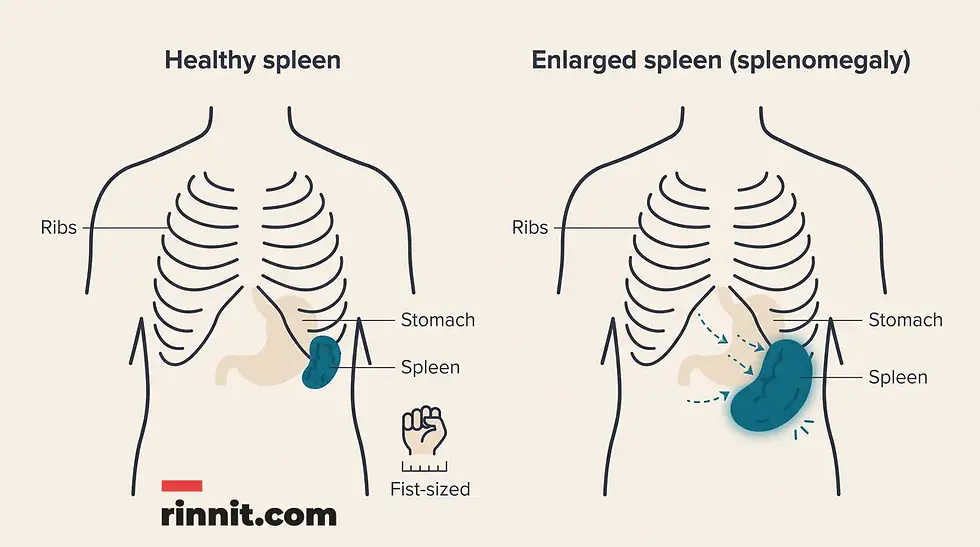
An enlarged spleen, or splenomegaly, is a spleen that has grown larger than its typical fist size. It often causes no symptoms, but may cause left upper belly pain or fullness, feeling full quickly, anemia, frequent infections and easy bleeding. Causes include infections, liver disease, blood cancers and autoimmune conditions. Treatment addresses the underlying cause.
What the research says
Some drugs can shrink a very large spleen. In a double-blind trial of 309 people with myelofibrosis (COMFORT-I), 41.9% of those taking ruxolitinib had a spleen volume reduction of 35% or more at 24 weeks, compared with 0.7% on placebo (Verstovsek et al., New England Journal of Medicine, 2012).
Pneumococcal vaccines appear to work in people without a spleen. A systematic review of 21 studies found that splenectomized adults seem to have adequate antibody responses to pneumococcal vaccines, with no difference from healthy controls except in one study, though the authors note that the evidence on best timing is limited (Lenzing et al., Expert Review of Vaccines, 2022).
Vaccination gaps are common after spleen removal. A meta-analysis of 24 studies found that only 55.1% (95% CI 41.0% to 69.2%) of splenectomized patients had received pneumococcal vaccination and 33.7% (95% CI 23.6% to 43.9%) the meningococcal C/ACYW135 vaccine, despite a 10- to 50-fold higher risk of overwhelming post-splenectomy infection (Bianchi et al., Expert Review of Vaccines, 2021).
Key Facts at a Glance
Fact | Detail |
What it is | A spleen larger than its typical fist size; medical term is splenomegaly (spleh-no-MEG-uh-lee) [1] |
Where it sits | Just below the left rib cage next to the stomach on the left side of the belly [1] |
Size relation | Generally relates to height, weight, and sex [1] |
Symptoms | Usually none; found during a routine physical exam [1] |
Nature of enlargement | Might be temporary, depending on treatment [1] |
How it is found | Physical exam, blood tests, ultrasound or CT, MRI, and sometimes bone marrow biopsy [2] |
Treatment principle | Focuses on what is causing the enlargement; removal rarely needed [1] [2] |
What the Spleen Does
Before understanding what goes wrong, it helps to know what the organ does. This soft, spongy organ performs several critical jobs [1]:
Job | What it means |
Filters the blood | Destroys old and damaged red blood cells [1] |
Fights infection | Produces white blood cells (lymphocytes) and acts as a first line of defense against disease-causing organisms [1] |
Stores blood components | Holds red blood cells and platelets, which help blood clot [1] |
An enlarged spleen affects each of these jobs. When it is enlarged, the spleen may not function as usual, and that disruption is what drives many of the symptoms and complications [1].
Symptoms: Warning Signs of an Enlarged Spleen
An enlarged spleen typically causes no signs or symptoms at all. It is often discovered during a routine physical exam [1].
Sometimes, however, it does cause symptoms [1]:
Symptom | What it looks like |
Pain or fullness in the left upper belly | Can spread to the left shoulder [1] |
Feeling full quickly | Fullness without eating or after a small amount, because the spleen presses on the stomach [1] |
Anemia | Low red blood cells [1] |
Frequent infections | Weakened blood defenses [1] |
Bleeding easily | Low platelets [1] |

When to See a Doctor
See a healthcare professional promptly if you have pain in your left upper belly, especially if it is severe or the pain gets worse when you take a deep breath [1].
Causes: What Makes the Spleen Enlarge
A number of infections and diseases can cause an enlarged spleen. The enlargement might be temporary, depending on treatment [1].
Cause group | Conditions |
Viral infections | Mononucleosis and other viral infections [1] |
Bacterial infections | Syphilis; endocarditis, an infection of the heart's inner lining [1] |
Parasitic infections | Malaria [1] |
Liver disease | Cirrhosis and other diseases affecting the liver [1] |
Hemolytic anemias | Conditions in which red blood cells are destroyed early [1] |
Blood cancers | Leukemia; myeloproliferative neoplasms; lymphomas such as Hodgkin's disease [1] |
Metabolic disorders | Gaucher disease; Niemann-Pick disease [1] |
Vein problems | Pressure on the veins in the spleen or liver, or a blood clot in these veins [1] |
Autoimmune conditions | Lupus; sarcoidosis [1] |
Risk Factors
Anyone can develop an enlarged spleen at any age, but certain groups are at higher risk [1]:
Risk group | Why |
Children and young adults | Infections such as mononucleosis are more common [1] |
People with inherited metabolic disorders | Gaucher disease, Niemann-Pick disease, and related disorders affect the liver and spleen [1] |
Travelers and residents of malaria areas | Malaria is a parasitic infection that can enlarge the spleen [1] |
Complications
An enlarged spleen can lead to two serious complications [1]:
Infection. An enlarged spleen can reduce the number of healthy red blood cells, platelets, and white cells in the bloodstream, leading to more frequent infections. Anemia and increased bleeding also are possible [1].
Ruptured spleen. Even healthy spleens are soft and easily damaged, especially in car crashes. The possibility of rupture is much greater when the spleen is enlarged, and a ruptured spleen can cause life-threatening bleeding in the belly [1].
How an Enlarged Spleen Is Diagnosed
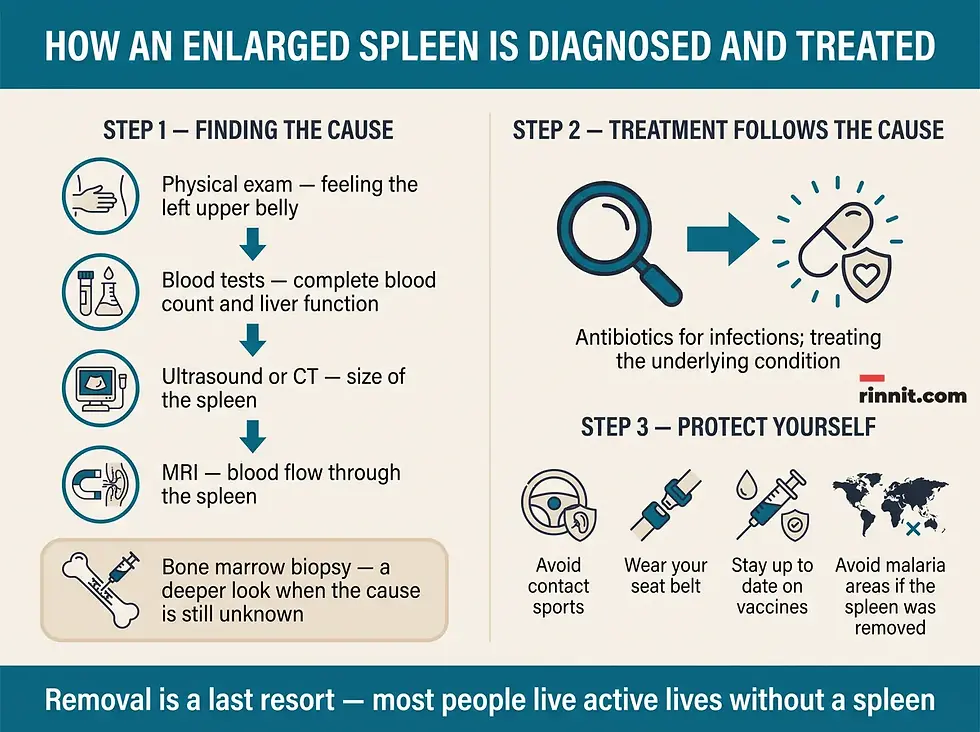
An enlarged spleen is usually detected during a physical exam. A healthcare professional can often feel the spleen by gently examining the left upper belly. In some people, especially those who are slender, a healthy, normal-sized spleen can sometimes be felt during an exam [2].
Test | What it involves |
Physical exam | Feeling the left upper belly [2] |
Blood tests | Complete blood count to check red blood cells, white blood cells, and platelets, plus liver function [2] |
Ultrasound or CT scan | Determines the size of the spleen and whether it is crowding other organs [2] |
MRI | Traces blood flow through the spleen [2] |
Bone marrow biopsy or aspiration | Samples solid or liquid bone marrow, usually from the pelvis through an incision under anesthetic; both may be done at the same time [2] |
Finding the cause sometimes requires this deeper testing. A needle biopsy of the spleen itself is rare because of the risk of bleeding. When no identifiable cause is found, a healthcare professional might even recommend surgical removal for diagnostic purposes, though more often the spleen is removed as treatment, and afterward it is examined under a microscope to check for possible lymphoma [2].
Treatment Options
Treatment for an enlarged spleen focuses on what is causing it. For example, if the cause is a bacterial infection, treatment will include antibiotics [2].
Watchful Waiting
If you have an enlarged spleen but no symptoms and the cause cannot be found, watchful waiting might be the plan. You see your doctor for reevaluation in 6 to 12 months, or sooner if symptoms develop [2].
Spleen Removal Surgery
If an enlarged spleen causes serious complications, or the cause cannot be identified or treated, surgery to remove the spleen (splenectomy) might be an option. In chronic or critical cases, surgery might offer the best hope for recovery [2].
Elective spleen removal requires careful consideration. You can live an active life without a spleen, but you are more likely to get serious or even life-threatening infections after spleen removal [2].
Protecting Yourself After Spleen Removal
After spleen removal, certain steps can help reduce the risk of infection [2]:
Vaccinations. A series of vaccines, ideally at least 2 weeks before a planned surgery (or about 2 weeks after an emergency one), including pneumococcal (such as PCV20 or PCV21), meningococcal ACWY and B, and haemophilus influenzae type b (Hib) vaccines. These protect against pneumonia, meningitis, and infections of the blood, bones, and joints. Ask your doctor which boosters you need; for example, the meningococcal ACWY vaccine is repeated every 5 years, while extra pneumococcal doses depend on which vaccine you received [2].
Antibiotics. Taking penicillin or another antibiotic after surgery, and anytime you or your doctor suspect an infection [2].
Fever protocol. Calling your doctor at the first sign of a fever, which could indicate an infection [2].
Travel caution. Avoiding travel to parts of the world where malaria and certain other diseases are common [2].
Lifestyle and Home Remedies
Everyday habits can protect an enlarged spleen from rupture [2]:
Avoid contact sports such as soccer, football, and hockey, and limit other activities as recommended to reduce the risk of a ruptured spleen.
Wear a seat belt. In a car accident, it can help protect your spleen.
Keep vaccinations up to date because your infection risk is increased: at least an annual flu shot and a tetanus, diphtheria, and pertussis booster every 10 years. Ask your doctor whether other vaccines are needed [2].
Coping and Support
An enlarged spleen finding often arrives quietly, at a routine exam, with no symptoms to explain it. That quiet discovery can still feel unsettling. The reassuring facts: the enlargement often is temporary and treatable once the cause is known, most people do not need surgery, and those who do can still live active lives with the right precautions [1] [2].
Preparing for the Appointment
You are likely to start by seeing your primary healthcare professional. Write down your symptoms, including ones that seem unrelated, and when they began. Bring a list of all medicines, vitamins, and supplements with doses, your medical history (infections, liver problems, blood conditions), and any travel history, especially to areas where malaria is common. Taking a family member or friend along helps you remember the information you are given [2].
Conclusion and Next Steps
The spleen works silently, filtering blood, fighting infection, and storing the components that help blood clot. When it enlarges, it usually says nothing at all, which is exactly why routine checkups matter. The path from discovery to answers is straightforward: a physical exam, blood tests, imaging, and when needed a bone marrow sample. Treatment then follows the cause: antibiotics for infections, careful waiting when the cause is unknown, and surgery reserved for the cases that truly need it. And whether the spleen stays or is removed, smart everyday protection (no contact sports, a fastened seat belt, and current vaccines) keeps you safe.
Take action. If you have pain in your left upper belly, especially pain that is severe or worsens with a deep breath, see a healthcare professional promptly. Keep up with routine exams, keep vaccinations current, and protect your abdomen from impact.
Frequently Asked Questions
Is an enlarged spleen serious? It depends on the cause. The enlargement itself is usually a sign of another condition (an infection, liver disease, or a blood disorder), and some causes resolve with treatment. But it deserves medical attention because of the risks of anemia, infection, and spleen rupture [1] [2].
Can you live without a spleen? Yes. You can live an active life without a spleen, but you are more likely to get serious or even life-threatening infections after removal, which is why vaccinations and antibiotics are essential afterward [2].
What is the most common cause of an enlarged spleen? Infections are among the most common causes, including viral infections such as mononucleosis, bacterial infections such as syphilis and endocarditis, and parasitic infections such as malaria. Liver disease, blood cancers, and metabolic disorders also enlarge the spleen [1].
How is an enlarged spleen diagnosed? Usually during a physical exam, when a doctor feels the spleen in the left upper belly. Blood tests, ultrasound or CT, and MRI confirm the size and look for causes; a bone marrow biopsy may be needed to find the underlying condition [2].
What is splenomegaly? Splenomegaly (spleh-no-MEG-uh-lee) is the medical term for an enlarged spleen, the fist-sized organ that sits just below the left rib cage next to the stomach [1].
What are the symptoms of an enlarged spleen? Many people have no symptoms. When they occur, they can include pain or fullness in the left upper belly that may spread to the left shoulder, feeling full after eating only a little, anemia, frequent infections and easy bleeding.
How is an enlarged spleen treated? Treatment focuses on the cause, such as antibiotics for a bacterial infection. Surgery to remove the spleen is only considered when serious problems occur or the cause cannot be found or treated.
Can an enlarged spleen go back to normal size? Often, yes. The enlargement may be temporary and can improve once the underlying cause is treated.
Can I play sports with an enlarged spleen? Avoid contact sports such as football, soccer and hockey until your provider says it is safe, because an enlarged spleen can rupture more easily. Always wear a seat belt in the car.
What are the signs of a ruptured spleen? Warning signs include sudden, severe pain in the left upper belly, pain in the left shoulder, dizziness or confusion. A ruptured spleen can cause life-threatening bleeding, so call 911 right away.
Related Reading on Rinnit
Abdominal Ultrasound: Why It's Done, How to Prepare, What to Expect and Results explains how this painless, radiation-free scan checks the liver, gallbladder, kidneys, pancreas and other belly organs, and what the results mean.
Trusted External Resources
Merck Manual Professional Version: Splenomegaly
Centers for Disease Control and Prevention: Adult Immunization Schedule by Medical Condition and Other Indication
Testing.com (formerly Lab Tests Online): Bone Marrow Aspiration and Biopsy
References
Cleveland Clinic. Enlarged Spleen (Splenomegaly): Symptoms, Causes & Treatment. Cleveland Clinic. Last updated August 27, 2022. https://my.clevelandclinic.org/health/diseases/17829-enlarged-spleen
Jacob HS. Splenomegaly. Merck Manual Professional Edition. Last updated December 2024. https://www.merckmanuals.com/professional/hematology-and-oncology/spleen-disorders/splenomegaly
Centers for Disease Control and Prevention. Adult Immunization Schedule by Medical Condition and Other Indication (Addendum updated July 2, 2025). CDC. Last reviewed July 2, 2025. https://www.cdc.gov/vaccines/hcp/imz-schedules/adult-medical-condition.html
Testing.com. Bone Marrow Aspiration and Biopsy. Testing.com. Updated January 28, 2021. https://www.testing.com/tests/bone-marrow-aspiration-and-biopsy/
Verstovsek S, Mesa RA, Gotlib J, et al. A double-blind, placebo-controlled trial of ruxolitinib for myelofibrosis. N Engl J Med. 2012;366(9):799-807. PMID 22375971. https://doi.org/10.1056/NEJMoa1110557
Lenzing E, Rezahosseini O, Burgdorf SK, et al. Efficacy, immunogenicity, and evidence for best-timing of pneumococcal vaccination in splenectomized adults: a systematic review. Expert Rev Vaccines. 2022;21(5):723-733. PMID 35236233. https://doi.org/10.1080/14760584.2022.2049250
Bianchi FP, Stefanizzi P, Spinelli G, et al. Immunization coverage among asplenic patients and strategies to increase vaccination compliance: a systematic review and meta-analysis. Expert Rev Vaccines. 2021;20(3):297-308. PMID 33538617. https://doi.org/10.1080/14760584.2021.1886085
Medical disclaimer
The information provided in this article is for educational purposes only and should not be used as a substitute for professional medical advice, diagnosis, or treatment. Always seek the advice of your physician or other qualified health provider with any questions you may have regarding a medical condition.



Comments