Chronotropic Incompetence: What It Is, Symptoms, Causes, and Treatment

Updated: 2 days ago
Medically reviewed by Dr. Baraa Alnahhal, MD · Last reviewed: October 2026
Quick Answer: What is chronotropic incompetence?
Chronotropic incompetence is a condition in which your heart rate fails to increase enough during physical activity, causing fatigue and shortness of breath with exertion. [1] It is diagnosed through exercise testing, such as an exercise EKG or metabolic stress test, and can be treated with more physical activity, medication adjustments, or a pacemaker. [1]
Key takeaways
Chronotropic incompetence means your heart rate cannot speed up enough during physical activity, so your body gets less oxygen than it needs. [1]
The two main symptoms are fatigue during physical activity and shortness of breath during physical activity. [1]
Beta-blocker medications, sinus node dysfunction, conduction problems, left ventricular dysfunction, ischemic heart disease, heart failure, and congenital heart disease can all cause CI. [1]
There is no single universal standard for diagnosis, but most providers look at whether your heart rate reaches roughly 70% to 85% of the age-predicted maximum during peak activity, measured with an exercise EKG or metabolic stress test. [1]
More physical activity, medication changes, and pacemakers (including biventricular pacemakers) are the main treatment paths. [1]
What the research says
A low heart rate response during exercise testing predicted later atrial fibrillation. In 57,402 people free of atrial fibrillation who underwent treadmill stress testing, 3,395 (5.9%) developed it over a median follow-up of 5.0 years. After adjustment, a peak heart rate below 85% of predicted carried a hazard ratio of 1.33 (95% CI 1.22 to 1.44) and a chronotropic index below 80% carried a hazard ratio of 1.28 (95% CI 1.19 to 1.38). This was an observational study, so it shows an association rather than proof that CI causes atrial fibrillation (O'Neal et al., JACC Clin Electrophysiol, 2016). [3]
CI was common in heart failure with preserved ejection fraction and linked to worse outcomes. Among 246 patients tested with exercise stress echocardiography, 112 (41%) had CI, defined as a heart rate reserve below 0.80. They had a smaller rise in cardiac output, poorer exercise capacity, and a higher rate of death or worsening heart failure (hazard ratio 2.66, 95% CI 1.16 to 6.09). This was a single-center study of a modest size (Yuasa et al., J Cardiol, 2024). [4]
CI can start early in life. CI was found in 32 of 69 obese adolescents (46%) compared with 3 of 29 lean adolescents (10%). Among the obese adolescents, those with CI had higher C-reactive protein and lower peak oxygen uptake and peak cycling power than those without. The cohort was small and measured at a single point in time, so it cannot show which came first (Franssen et al., J Sport Health Sci, 2023). [5]
What Is Chronotropic Incompetence?
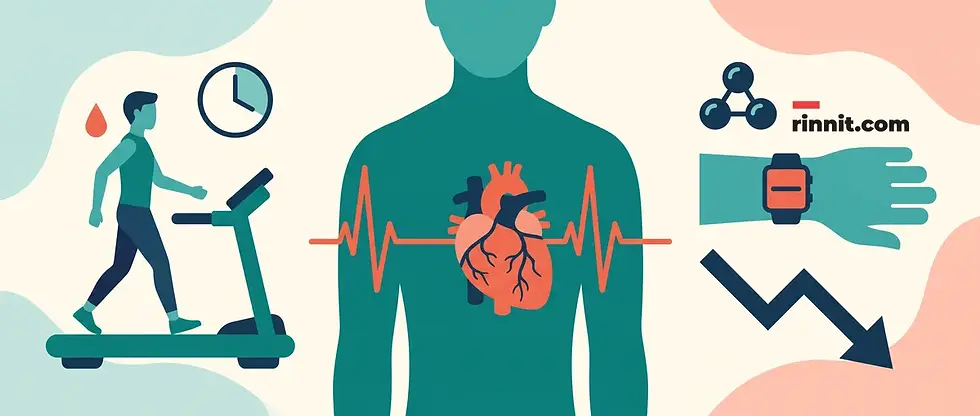
Your heart rate is supposed to rise when your body moves. Walk up a flight of stairs, carry groceries, or go for a run, and your heart beats faster to pump more oxygen-rich blood to your muscles. Chronotropic incompetence is what happens when that response breaks down. Your heart rate stays too low for what your body is doing, and your body does not get the oxygen-carrying blood it needs. [1]
The result is exercise intolerance: you cannot do as much physical activity as someone your age can. [1] Even short walks may leave you reaching for a place to catch your breath. It is important to understand that CI is not a disease by itself. It is a sign that something is limiting how your heart responds, and finding that something is the real work of diagnosis. You can read more in our guide to exercise intolerance.
What are the symptoms of chronotropic incompetence?
Chronotropic incompetence shows up whenever your body asks your heart for more than it can deliver. The two main symptoms are straightforward, but they appear in everyday moments.
Symptom | What It Feels Like in Daily Life |
Fatigue during physical activity | Feeling drained or exhausted sooner than expected when walking, climbing, or moving |
Shortness of breath (dyspnea) | Needing to stop and catch your breath during activity that used to be easy |
Beyond those two core symptoms, the condition can make itself felt in several practical ways. You may find yourself unable to walk as far as you used to. Carrying laundry around the house can feel harder than it should. [1] In rare cases, if your heart rate cannot get fast enough to supply your brain with blood, you may even faint. [1]

What Causes Chronotropic Incompetence?
Many different things can keep your heart rate from climbing. The table below summarizes the causes identified by Cleveland Clinic medical reviewers.
Cause | What Is Happening |
Certain medications | Beta-blockers and similar drugs slow the heart rate as part of how they work |
Sinus node dysfunction | A problem with the area where each heartbeat starts, sometimes called sick sinus syndrome |
Conduction issues | The heartbeat signal does not move through the heart the way it should |
Left ventricular dysfunction | The heart's main pumping chamber is not pushing blood out effectively |
Ischemic heart disease | Blood flow to the heart muscle itself is too low (myocardial ischemia) |
Heart failure | Fluid buildup and reduced pumping ability limit the heart's response; see our heart failure guide |
Congenital heart disease | A heart structure present from birth affects how the heart responds to activity |
Notice that some causes come from outside the heart, such as medications, while others come from inside the heart's own wiring or structure.
Chronotropic Incompetence Risk Factors
Several conditions are associated with a higher likelihood of developing chronotropic incompetence.
Risk Factor | How It Relates to CI |
Heart failure | Reduced pumping function limits the heart's ability to respond |
Obesity | Extra body weight increases the heart's workload and is linked to exercise intolerance |
Diabetes | Metabolic strain on the heart and blood vessels |
COPD | Lung disease limits oxygen delivery and exercise capacity |
High blood pressure (hypertension) | Long-term strain on the heart; see our guide to high blood pressure |
HIV | Viral and systemic effects on the heart |
Epstein-Barr virus | Viral infection linked to systemic effects |
Long COVID | Persistent cardiopulmonary effects after infection |
Research shows that CI is more common in obese adolescents and relates to systemic inflammation and exercise intolerance in that group. [5]
How is chronotropic incompetence diagnosed?
The core diagnostic idea is simple: your heart rate should reach a certain level during peak activity, and in CI it does not. The exact cutoff varies. Some providers consider CI present when the heart rate fails to reach 70% to 85% of your age-predicted maximal heart rate (APMHR), most often calculated as 220 minus your age. [1] Others use a cutoff of 80% of your heart rate reserve (HRR). There is no standard that providers agree on. [1] [2]
Testing typically involves one or more of the following.
Test | What Happens |
Ambulatory heart rhythm monitor | A continuous monitor worn during your usual daily activities records how your heart rate behaves in real life |
Exercise EKG | Electrodes record your heart rhythm while you exercise, usually on a treadmill |
Metabolic exercise stress test (CPET) | You walk on a treadmill or pedal a stationary bike while wearing a mask that measures how much oxygen your body uses (VO2), showing how your heart rate compares with your goal |
The metabolic exercise stress test is especially useful because it measures oxygen usage directly, connecting the heart rate finding to what your body actually needs. [1]
How is chronotropic incompetence treated?
Treatment depends on the underlying cause, but Cleveland Clinic identifies three main paths.
Treatment | What It Does |
Physical activity | Gradually increasing activity can improve your ability to move more |
Pacemaker | A small implanted device ensures your heart rate increases enough when you exert yourself. Learn more in our pacemaker guide. |
Biventricular pacemaker (cardiac resynchronization therapy) | Coordinates the two lower chambers of the heart so they beat together; used for specific heart conditions |
Medication changes are also part of the picture. If a beta-blocker or another drug is suppressing your heart rate response, your provider may discuss adjusting or changing it. [1]

How can people live well with chronotropic incompetence?
Learning you have CI can be frustrating. Even small tasks, like walking while carrying laundry, may feel harder than they used to. It is important to give yourself time and patience as your body adjusts to its limits, and to remember that you do not have to manage this alone. Your healthcare team is there to help you find what you can still do.
Living well with CI generally involves following an activity-building plan from your provider, discussing possible medication changes, and, if you have a pacemaker, understanding how the device works and keeping every follow-up appointment to confirm it is functioning properly. [1]
Good questions to ask your provider include:
What caused my chronotropic incompetence?
What can I do to be at my best?
What can I expect from the pacemaker you put in?
Are there any programs that can help me do more physical activity?
What is the outlook for chronotropic incompetence?
The long-term outlook for chronotropic incompetence (CI) depends heavily on why CI developed. Research cited by Cleveland Clinic shows that CI matters:
Adults with obesity and CI have a higher risk of heart attack or heart failure. [1]
Studies suggest people with CI have a higher risk of developing atrial fibrillation (Afib). [1] [3]
In people with heart failure, CI is related to poorer overall survival [1]. A clinical review describes CI in heart failure as associated with reduced functional capacity and poor survival (Zweerink et al., Circ Heart Fail, 2018). [2]
Studies show an association between CI and decreased longevity. [1]
These associations make finding and treating the underlying cause a priority rather than a formality.
Can Chronotropic Incompetence Be Prevented?
Not every cause of CI can be controlled, and some causes come from medications your doctor prescribed for good reasons. What you can control includes getting treatment for any heart or lung condition you have, staying at a weight that is healthy for you, and managing conditions like diabetes and high blood pressure. [1]
When should you see a healthcare provider about chronotropic incompetence?
See a provider if you consistently feel unusually tired or short of breath during physical activity, if you cannot do activities you used to manage easily, or if you faint during exertion. These are the exact moments CI tends to reveal itself. [1]
Conclusion
Chronotropic incompetence is the experience of a heart that cannot speed up when your body needs it to. It turns ordinary activities into exhausting ones, but it is also a condition with clear diagnostic paths and real treatments. From increased physical activity and medication review to pacemakers that restore the heart's ability to respond, there are options for regaining ground.
If you or someone you love notices that everyday movement has become disproportionately tiring, bring it up with a healthcare provider. Exercise testing can identify what is happening, and treatment can make everyday life easier again.
Frequently Asked Questions
What is chronotropic incompetence in simple terms?
Chronotropic incompetence means your heart rate cannot rise enough during physical activity, so your body does not get the oxygen-carrying blood it needs.
What does "chronotropic" mean?
"Chronotropic" refers to the rate or rhythm of the heart. Chronotropic incompetence literally means the heart cannot control its rate appropriately during activity.
What is the abbreviation CI?
CI is the common abbreviation for chronotropic incompetence, used in cardiology literature and test results.
Is chronotropic incompetence a disease?
No. It is a condition or sign that something, often a heart problem or a medication, is limiting how your heart rate responds to activity.
Is chronotropic incompetence the same as exercise intolerance?
They are closely linked but not identical. CI is one cause of exercise intolerance, which is the broader experience of not being able to do as much physical activity as someone your age can.
How does chronotropic incompetence affect oxygen delivery?
Blood carries oxygen. When your heart rate cannot rise during activity, the heart pumps less oxygen-rich blood to your muscles than your body demands.
Does chronotropic incompetence mean my heart is damaged?
Not necessarily. It can come from medications, electrical signaling problems, or pump weakness, and only testing can determine the specific cause.
Can young people have chronotropic incompetence?
Yes. In one study, CI was found in 46% of obese adolescents compared with 10% of lean adolescents, and it was related to systemic inflammation and exercise intolerance.
Is chronotropic incompetence permanent?
It depends on the cause. Medication-related CI often improves when the medication is adjusted, while CI from heart disease may be long-term and managed with treatment.
What is the difference between chronotropic incompetence and bradycardia?
Bradycardia is a low resting heart rate. CI specifically describes a heart rate that fails to rise appropriately during physical activity.
What is the difference between chronotropic incompetence and arrhythmia?
Arrhythmia means an irregular heart rhythm. CI is about the heart's inability to speed up, not necessarily about irregularity.
What are the symptoms of chronotropic incompetence?
The two main symptoms are fatigue during physical activity and shortness of breath during physical activity. Rarely, fainting can occur.
Why does chronotropic incompetence cause shortness of breath?
Your muscles demand more oxygen during activity, but a heart rate that cannot rise limits oxygen delivery, making you feel out of breath.
Why does chronotropic incompetence cause fatigue?
Muscles work harder with less oxygen reaching them, so they tire out faster than expected.
Can chronotropic incompetence cause dizziness?
Dizziness is not a listed symptom, but in rare cases, if the heart rate cannot get fast enough to supply the brain with blood, fainting can occur.
Can chronotropic incompetence cause fainting?
In rare cases, yes. Fainting happens when the heart rate is not fast enough to supply blood to the brain during activity.
Can chronotropic incompetence cause chest pain?
The condition itself is defined by fatigue and breathlessness, but if ischemic heart disease is the underlying cause, chest pain may occur during exertion.
Why is carrying laundry so hard with chronotropic incompetence?
Even light continuous activity requires a higher heart rate than a CI-affected heart can deliver, so simple tasks feel exhausting.
Can chronotropic incompetence get worse over time?
It can, particularly if the underlying heart condition progresses or if contributing factors like heart failure are not treated.
Does chronotropic incompetence show up at rest?
Usually not. The problem appears when the body demands more, which is why it is diagnosed with exercise testing rather than a resting EKG.
What causes chronotropic incompetence?
Causes include certain medications, sinus node dysfunction, conduction issues, left ventricular dysfunction, ischemic heart disease, heart failure, and congenital heart disease.
Can beta-blockers cause chronotropic incompetence?
Yes. Beta-blockers slow the heart rate as part of how they work, and in some people they suppress the heart's ability to speed up during activity.
What is sick sinus syndrome?
Sick sinus syndrome is a problem with the sinus node, the area of the heart where each heartbeat starts, and it is one of the causes of CI.
What are conduction issues in the heart?
Conduction issues mean the electrical signal that coordinates each heartbeat does not move through the heart the way it should.
Can heart failure cause chronotropic incompetence?
Yes. Heart failure, which involves fluid buildup and reduced pumping ability, is an established cause and risk factor for CI.
Can ischemic heart disease cause chronotropic incompetence?
Yes. When blood flow to the heart muscle is too low, the heart's ability to respond to activity is impaired.
Can congenital heart disease cause chronotropic incompetence?
Yes. Heart structures present from birth can affect how the heart responds to physical activity.
Is obesity a risk factor for chronotropic incompetence?
Yes. Obesity is a recognized risk factor, and research shows CI is more frequent in obese adolescents.
Is diabetes a risk factor for chronotropic incompetence?
Yes. Diabetes is listed among the risk factors for developing CI.
Is high blood pressure a risk factor?
Yes. High blood pressure is a listed risk factor for chronotropic incompetence.
Can COPD cause chronotropic incompetence?
COPD is listed as a risk factor. Lung disease limits oxygen delivery and contributes to exercise intolerance.
Can long COVID cause chronotropic incompetence?
Yes. Long COVID is listed as a risk factor. In a study of 60 adults more than a year after infection, reduced exercise capacity was found in 18 of 37 people (49%) with symptoms versus 3 of 19 (16%) without, and chronotropic incompetence was common.
Can HIV cause chronotropic incompetence?
Yes. HIV is listed among the risk factors for the condition.
Can Epstein-Barr virus cause chronotropic incompetence?
Epstein-Barr virus infection is listed as a risk factor for CI.
How is chronotropic incompetence diagnosed?
It is diagnosed when testing shows your heart rate cannot reach the expected level during peak activity, using tests like an exercise EKG or metabolic stress test.
What is age-predicted maximal heart rate?
It is the highest heart rate expected for your age, most often calculated as 220 minus your age. Failing to reach roughly 70% to 85% of that number during peak activity suggests CI.
What is heart rate reserve?
Heart rate reserve (HRR) is the difference between your maximum and resting heart rates. Some providers diagnose CI when your exercise heart rate stays below 80% of HRR.
Is there a universal standard for diagnosing chronotropic incompetence?
No. Cleveland Clinic notes there is no standard that providers agree on; different providers use different thresholds.
What is a metabolic exercise stress test?
A cardiopulmonary exercise test (CPET) measures your heart rate, oxygen use, and breathing while you exercise on a treadmill or stationary bike, often while wearing a mask that measures oxygen consumption.
What is an exercise EKG?
An EKG recorded while you exercise, usually on a treadmill, that shows how your heart rhythm and rate respond to physical activity.
What is an ambulatory heart rhythm monitor?
A continuous monitor worn during your usual daily activities that records how your heart rate behaves in real life rather than just during a test.
What does VO2 measure in stress testing?
VO2 is the amount of oxygen your body uses during exercise, connecting the heart rate finding to how much oxygen your body actually needs.
Does chronotropic incompetence show up on a regular EKG?
A resting EKG usually cannot show CI, because the problem appears during activity, not at rest.
How is chronotropic incompetence treated?
Treatment includes increasing physical activity, changing or adjusting medications, and in some cases implanting a pacemaker.
Can exercise help chronotropic incompetence?
Yes. Physical activity is a treatment option because it can improve your ability to move more.
Can medication changes treat chronotropic incompetence?
If a medication such as a beta-blocker is suppressing your heart rate response, your provider may discuss adjusting or changing it.
When is a pacemaker used for chronotropic incompetence?
A pacemaker is used when it can ensure your heart rate increases enough with exertion, particularly when the cause is electrical, such as sinus node dysfunction.
What is a biventricular pacemaker?
A biventricular pacemaker, also called cardiac resynchronization therapy, coordinates the heart's two lower chambers so they beat together. It is used for specific heart conditions.
What does a pacemaker do for chronotropic incompetence?
It senses when you are active and helps raise your heart rate to a level that matches your body's demand.
What should I ask my doctor about chronotropic incompetence?
Good questions include: Do you know what caused my CI? What can I do to be at my best? What can I expect from the pacemaker you put in? Are there any programs that can help me do more physical activity?
What is the prognosis for chronotropic incompetence?
Outlook depends on the cause. CI is associated with a higher risk of heart attack or heart failure in adults with obesity, a higher risk of atrial fibrillation, poorer survival in people with heart failure, and decreased longevity.
Does chronotropic incompetence increase the risk of heart attack?
Studies show adults with obesity and CI have a higher risk of heart attack or heart failure.
Is chronotropic incompetence linked to atrial fibrillation?
Yes. In a study of 57,402 people who had exercise stress tests, a low heart rate response was linked to a higher risk of developing atrial fibrillation (hazard ratio 1.33 for peak heart rate below 85% of predicted).
Is chronotropic incompetence linked to survival?
Yes. In people with heart failure, CI is related to poorer overall survival, and studies associate CI with decreased longevity.
Can chronotropic incompetence be prevented?
Not every cause can be controlled, but treating heart and lung conditions, maintaining a healthy weight, and managing diabetes and high blood pressure help reduce risk.
Can weight loss help chronotropic incompetence?
Since obesity is a risk factor, staying at a healthy weight is one of the recommended steps for reducing CI risk.
Does treating high blood pressure help?
Yes. Managing conditions like high blood pressure and diabetes is part of the recommended approach to preventing and managing CI.
What should I do if I have a pacemaker for CI?
Understand how the device works and keep all follow-up appointments so your provider can confirm the device is working properly.
Can I live a normal life with chronotropic incompetence?
With proper diagnosis and treatment, many people regain significant activity capacity. Time and patience are needed as your body adjusts to its limits.
When should I see a doctor about chronotropic incompetence?
See a provider if you feel unusually tired or short of breath during physical activity, cannot do activities you used to manage, or faint with exertion.
Related Reading
Exercise Intolerance: What It Is, Symptoms, and How It's Treated
Bradycardia: Slow Heart Rate, Symptoms, Causes, and Treatment
Permanent Pacemakers: A Complete Guide to Heart Rhythm Management
Atrial Fibrillation (AFib): Symptoms, Causes & Treatment Guide
Diabetes: Symptoms, Types, Causes, Diagnosis & Treatment — Complete Guide
High Blood Pressure: Silent Symptoms, Serious Risks, and Proven Ways to Lower It
References
Cleveland Clinic. Chronotropic Incompetence. Medically reviewed; last updated November 1, 2024. Cleveland Clinic health library. Accessed October 15, 2026. https://my.clevelandclinic.org/health/diseases/chronotropic-incompetence
Zweerink A, van der Lingen ACJ, Handoko ML, et al. Chronotropic incompetence in chronic heart failure. Circ Heart Fail. 2018;11(8):e004969. PMID: 30354566. https://doi.org/10.1161/CIRCHEARTFAILURE.118.004969
O'Neal WT, Qureshi WT, Blaha MJ, et al. Chronotropic incompetence and risk of atrial fibrillation: the Henry Ford ExercIse Testing (FIT) Project. JACC Clin Electrophysiol. 2016;2(6):645-652. PMID: 28451646. https://doi.org/10.1016/j.jacep.2016.03.013
Yuasa N, Obokata M, Harada T, et al. Characterization and prognostic importance of chronotropic incompetence in heart failure with preserved ejection fraction. J Cardiol. 2024;83(2):113-120. PMID: 37419310. https://doi.org/10.1016/j.jjcc.2023.06.014
Franssen WMA, Keytsman C, Marinus N, et al. Chronotropic incompetence is more frequent in obese adolescents and relates to systemic inflammation and exercise intolerance. J Sport Health Sci. 2023;12(2):194-201. PMID: 33529767. https://doi.org/10.1016/j.jshs.2021.01.010
Durstenfeld MS, Peluso MJ, Kaveti P, et al. Reduced exercise capacity, chronotropic incompetence, and early systemic inflammation in cardiopulmonary phenotype long coronavirus disease 2019. J Infect Dis. 2023;228(5):542-554. PMID: 37166076. https://doi.org/10.1093/infdis/jiad131
Medical disclaimer
This article is for informational purposes only and is not a substitute for professional medical advice, diagnosis, or treatment. Always seek the advice of a qualified healthcare provider with any questions about a medical condition or before making decisions about treatment. Never disregard professional medical advice or delay seeking it because of something you have read here.



Comments