Chiropractic Adjustment: What to Expect, Benefits, and Risks

Updated: 6 days ago
Written and medically reviewed by Dr. Baraa Alnahhal, MD · Last reviewed: October 2026 · How we review
Quick Answer: What is a chiropractic adjustment?
A chiropractic adjustment is a hands-on treatment where a licensed chiropractor uses hands or small instruments to apply quick, controlled pressure to a joint, often in the spine. It mainly treats lower back pain, neck pain, headaches and joint stiffness. Mild soreness usually fades within 24 hours; new weakness, numbness or worsening pain needs prompt care. [1]
What the research says
Spinal manipulation may ease chronic low back pain more than no treatment, but about as much as other conservative care. A 2026 review of 76 randomized trials with 11,866 adults found a medium drop in pain versus no treatment (about 14 points on a 100-point scale) and little to no difference in pain versus other conservative treatments. The evidence was rated low to very low certainty. Side effects were limited to muscle soreness, stiffness or a short-lived rise in pain. (de Zoete et al., Cochrane Database of Systematic Reviews, 2026) [2]
For new (acute) low back pain, the benefit is modest. Pooling 15 trials with 1,711 patients, spinal manipulation was linked to about a 10-point improvement on a 100-point pain scale and better function for up to 6 weeks. No trial reported a serious adverse event, but minor, temporary effects such as more pain, stiffness or headache were reported in 50% to 67% of patients in large case series. (Paige et al., JAMA, 2017) [3]
Neck manipulation did not raise the rate of mild side effects in trials. A review of 14 randomized trials of quick, low-force neck manipulation found no significant difference in side effects compared with control treatments, and every reported side effect was mild. The authors note that trials are too small to detect rare serious events. (Pankrath et al., Pain Physician, 2024) [4]
Key takeaways
A chiropractic adjustment is also called spinal manipulation or joint manipulation.
It is used for musculoskeletal problems such as lower back pain, neck pain, muscle pain and headaches.
It works alongside your regular medical care, not instead of it.
Mild soreness, tiredness or a mild headache afterwards is common and temporary.
Serious complications are rare but possible, so only a trained, licensed chiropractor should treat you.
New weakness, numbness or worsening pain after an adjustment needs prompt medical attention.
Chiropractic adjustment at a glance
Question | Short answer |
Other names | Spinal manipulation, joint manipulation |
Who performs it | A licensed chiropractor |
Main uses | Lower back pain, neck pain, muscle pain, headaches |
Does it hurt? | Little to no pain; you will not feel severe pain |
Common after-effects | Mild soreness, tiredness, mild headache |
Typical recovery | Soreness usually gone within 24 hours |
Most common age group | 45 to 64 years |
Rare serious risks | Herniated disk, cauda equina syndrome, stroke |
What does a chiropractor do during treatment?
A chiropractor treats problems of the muscles, bones, joints and nervous system without prescribing medicine. You can think of a chiropractor as a provider who cares for any kind of muscle, bone or joint pain or dysfunction. [1]
Adjustments are only one part of what a chiropractor may offer:
Treatment | What it aims to do |
Adjustments | Gently realign joints to reduce pain and increase range of motion |
Soft-tissue therapy | Relax tight muscles, relieve spasms and release tension in the fascia (the connective tissue around each muscle) |
Exercises and stretches | Restore and maintain joint stability and mobility |
Joint bracing or Kinesio taping | Support sprained joints or muscles while they heal |
Referrals to integrative medicine experts | Diet and nutrition advice to reduce inflammation or help manage weight |
What conditions can a chiropractic adjustment treat?
A chiropractic adjustment treats conditions of the musculoskeletal system. The most common reasons people book one are lower back pain, neck pain, muscle pain and headaches. [1]
People also seek an adjustment for:
Chiropractors can also treat pain in the head and jaw, shoulders, elbows, wrists, hips, pelvis, knees and ankles. Their goal is to make sure both your joints and the muscles around them are working properly.
Some people choose an adjustment because they want a treatment option that does not involve taking prescription medicine.

Who can get a chiropractic adjustment?
A chiropractic adjustment can be an option for people of all ages, including children and adults. People aged 45 to 64 seek chiropractic care most often, and women visit chiropractors more often than men. [1]
Chiropractic adjustments are the most common alternative treatment in the United States.
You should be screened before your first adjustment to make sure it suits your condition. Adjustments are generally avoided if you have severe osteoporosis, cancer in the spine, a bone problem in the upper neck, new numbness or weakness in an arm or leg, or a higher risk of stroke. If chiropractic care is not right for you, the chiropractor should refer you to another healthcare provider.
What happens before a chiropractic adjustment?
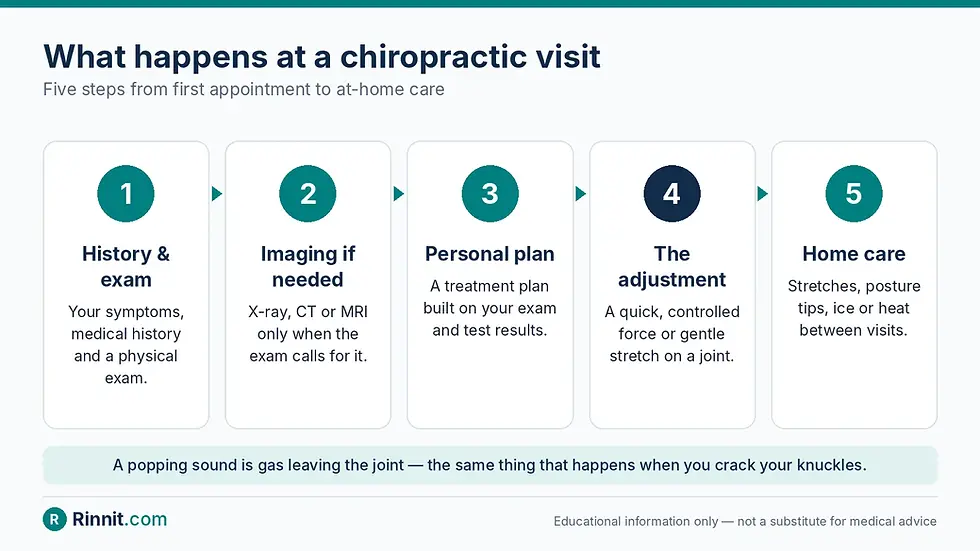
Before a chiropractic adjustment, the chiropractor reviews your medical history and does a physical exam. If needed, they may order imaging tests: [1]
X-rays
Computed tomography (CT) scan
Magnetic resonance imaging (MRI) scan
Based on your symptoms, exam findings and test results, the chiropractor builds a treatment plan for you.
What happens during a chiropractic adjustment?
During a chiropractic adjustment, you usually lie face down on a special chiropractic table. Parts of the table can lift slightly higher than the rest, which helps the chiropractor apply pressure to one specific area. [1]
The chiropractor then uses their hands or small instruments in one of two ways:
A quick, controlled force applied to a joint
A gentle stretch that moves a joint beyond its normal range of motion
This helps align vertebrae (spine bones) that are slightly off-center and releases gas trapped inside the joints.
What is the popping sound during a chiropractic adjustment?
The popping or cracking sound during a chiropractic adjustment is gas — such as oxygen, nitrogen and carbon dioxide — being released from your joints. Gas collects in small spaces inside the joints as you move and stretch. It is the same kind of sound you hear when you crack your knuckles. [1]
Does a chiropractic adjustment hurt?
A chiropractic adjustment causes little to no pain, similar to how you might feel after a workout. You should not feel severe pain. The pop may sound painful, but it does not feel painful. [1]
What happens after a chiropractic adjustment?
After a chiropractic adjustment, you may have mild soreness or minor aches where you were treated. This usually goes away within 24 hours and rarely affects people who see a chiropractor regularly. [1]
Your chiropractor may also give you "homework" to extend the benefit between visits:
Exercises and stretches
Ergonomics tips to improve your posture
Ice or heat therapy, or pain-relief creams and gels (topical analgesics)
Advice on nutrition, diet, weight or general health
Ways to manage stress and relax your muscles
Electrical muscle stimulation with a TENS (transcutaneous electrical nerve stimulation) unit
What are the benefits of a chiropractic adjustment?
The benefits of a chiropractic adjustment include less pain and better movement in the spine and other joints. Other benefits include: [1]
Fewer migraines and neck-related headaches
Better posture
Less pain and improved range of motion in the spine and other joints
Fewer symptoms of long-term conditions such as osteoarthritis
Treatment of minor neck or spine injuries, especially whiplash
Many people feel relief almost right away after an adjustment.
What are the side effects and risks of a chiropractic adjustment?
The most common side effects of a chiropractic adjustment are feeling tired or sore, and some people get a mild headache. These effects are temporary. [1]
In rare cases, chiropractic care can cause serious complications:
Pinched nerves in the lower spine (cauda equina syndrome)
Your risk of side effects and complications is higher if the adjustment is done by someone who is not trained and licensed. Only a licensed, professional chiropractor should treat you.
What you notice | What it usually means | What to do |
Mild soreness or minor aches | Expected, temporary | Rest; it usually fades within 24 hours |
Feeling tired | Expected, temporary | Rest |
Mild headache | Can happen, temporary | Monitor; it should pass |
New weakness | Not expected | Contact your healthcare provider immediately |
Numbness | Not expected | Contact your healthcare provider immediately |
Pain getting worse | Not expected | Contact your healthcare provider immediately |

How long does recovery from a chiropractic adjustment take?
Recovery from a chiropractic adjustment is usually quick: many people feel relief almost immediately, and any soreness typically lasts up to 24 hours. [1]
The bigger goal is long-term health rather than short-term symptom relief. Your chiropractor may teach you better ways to position your body:
At your desk
When standing and moving
In bed
They may also suggest adding stretches to your daily routine. These habits can help prevent future problems.
Tell your primary care doctor about any pain you have, whether it is new or chronic (lasting more than three months). Your doctor can rule out serious problems that need treatment beyond an adjustment.
When should you call a doctor after a chiropractic adjustment?
You should contact your healthcare provider immediately if you notice unusual symptoms after a chiropractic adjustment, such as weakness, numbness or worsening pain. Call 911 for sudden dizziness, trouble speaking or seeing, face drooping, a sudden severe headache or neck pain, or new loss of bladder or bowel control or numbness in the groin. These are not expected after treatment and need a prompt evaluation. [1]
Conclusion
A chiropractic adjustment is a hands-on, medicine-free treatment for muscle, bone and joint pain — most often lower back pain, neck pain and headaches. Most people feel little to no pain during the visit and only mild, short-lived soreness afterwards. Serious complications are rare, and choosing a licensed chiropractor lowers your risk. Keep your primary care doctor informed, especially if pain has lasted more than three months or you notice weakness, numbness or worsening pain.
Next step: Not sure what is behind your pain? Read our guides to back pain, sciatica and spinal stenosis, then bring this article to your next doctor's appointment to talk through whether chiropractic care fits your plan.
FAQ
Is a chiropractic adjustment painful?
No. Most people feel little to no pain, similar to how they feel after a workout. You should not feel severe pain during an adjustment.
What causes the cracking sound during an adjustment?
The sound comes from gases such as oxygen, nitrogen and carbon dioxide being released from small spaces inside your joints — the same thing that happens when you crack your knuckles.
How long will I be sore after a chiropractic adjustment?
Mild soreness usually goes away within 24 hours. It rarely affects people who see a chiropractor regularly.
Can children get chiropractic adjustments?
Yes. Chiropractic adjustments can be an option for all ages, including children and adults, after a screening to confirm they suit the person's condition.
Will I need an X-ray or MRI before my first adjustment?
Not always. Imaging such as X-ray, CT or MRI is ordered only if the chiropractor needs more information after your history and physical exam.
Is a chiropractic adjustment safe?
Side effects are usually mild and temporary, such as soreness, tiredness or a mild headache. Serious complications — herniated disks, cauda equina syndrome and stroke — are rare, and the risk is higher with someone who is not trained and licensed.
Does a chiropractic adjustment replace seeing my doctor?
No. It complements traditional medical care. Tell your primary care doctor about any pain, especially pain lasting more than three months.
How many chiropractic visits will I need?
It depends on your problem and how you respond. Your chiropractor should explain the plan and check your progress, and you can ask what to do if you are not improving.
Who should avoid a chiropractic adjustment?
Adjustments are generally avoided if you have severe osteoporosis, cancer in the spine, a bone problem in the upper neck, or new numbness or weakness in an arm or leg. You should be screened before your first adjustment.
Can a neck adjustment cause a stroke?
Stroke after a neck adjustment is rare. Call 911 right away for sudden dizziness, a severe headache, trouble speaking, vision changes or weakness on one side after an adjustment.
Further reading
Related Reading
Understanding Lower Back Pain: Causes, Symptoms, and Solutions covers common causes of low back pain and proven treatments.
Neck Pain: Symptoms, Causes, Diagnosis, and Treatment explains common causes of neck pain and when to see a doctor.
Sciatica: Complete Guide to Symptoms, Causes, Diagnosis, and Treatment explains nerve pain running down the leg and how it is treated.
Physical Therapy: Enhancing Mobility, Strength, and Recovery describes how physical therapy restores movement and strength.
References
Cleveland Clinic. Chiropractic Adjustment Care, Treatment & Benefits. Cleveland Clinic. Last updated April 25, 2022. https://my.clevelandclinic.org/health/treatments/21033-chiropractic-adjustment
de Zoete A, Innocenti T, Petrozzi MJ, et al. Spinal manipulative therapy for adults with chronic low back pain. Cochrane Database of Systematic Reviews. 2026;1(1):CD008112. PMID 41494147. https://doi.org/10.1002/14651858.CD008112.pub3
Paige NM, Miake-Lye IM, Booth MS, et al. Association of spinal manipulative therapy with clinical benefit and harm for acute low back pain: systematic review and meta-analysis. JAMA. 2017;317(14):1451-1460. PMID 28399251. https://doi.org/10.1001/jama.2017.3086
Pankrath N, Nilsson S, Ballenberger N. Adverse events after cervical spinal manipulation — a systematic review and meta-analysis of randomized clinical trials. Pain Physician. 2024;27(4):185-201. PMID 38805524. https://pubmed.ncbi.nlm.nih.gov/38805524/
Disclaimer
This article is for educational purposes only and is not a substitute for professional medical advice, diagnosis or treatment. Always talk with your doctor or another qualified healthcare provider about your symptoms and treatment options.



Comments