Blast Cells: Understanding Immature Blood Cells and Their Clinical Significance

Updated: 2 days ago
Medically reviewed by Dr. Baraa Alnahhal, MD · Last reviewed: October 2026
Quick Answer: What are blast cells?
Blast cells are immature blood cells made in the bone marrow that develop into red cells, white cells and platelets. [1] Normally they make up less than 5% of bone marrow cells and are not seen in the bloodstream. [1] Levels of 20% or more are a key indicator of acute leukemia, and persistent elevations need testing to rule out blood cancers. [1]
What the research says
Blast percentage is a core part of how myelodysplastic syndrome (MDS) is risk-scored. The Revised International Prognostic Scoring System, built from a database of 7,012 patients, uses bone marrow blast percentage together with cytogenetics and the depth of low blood counts to sort untreated MDS into five prognostic categories (PubMed: Greenberg et al., Blood, 2012) [2].
The 20% line is a guide, not an absolute rule. A 2023 review explains that MDS and many forms of acute myeloid leukemia (AML) form a biological continuum. Some AML-defining genetic changes (NPM1 mutations and KMT2A rearrangements) can lead to rapid progression even when blasts are under 20%, and the authors expect treatment decisions to rely more on genetics than on an arbitrary blast percentage (PubMed: Kwon & Weinberg, Clin Lab Med, 2023) [3].
What role do blast cells play in blood cell formation (hematopoiesis)?

Figure 1: Blood cell development (hematopoiesis), from stem cells to mature blood cells.
The production of blood cells, known as hematopoiesis, primarily occurs within the bone marrow. [1] During this process, hematopoietic stem cells (HSCs) develop into two main types of blast cells. [1]
Under normal physiological conditions, blast cells remain in the bone marrow until they reach full maturity. [1] Once mature, they enter the bloodstream to perform their specific functions. [1]
What do blast cell levels mean clinically?
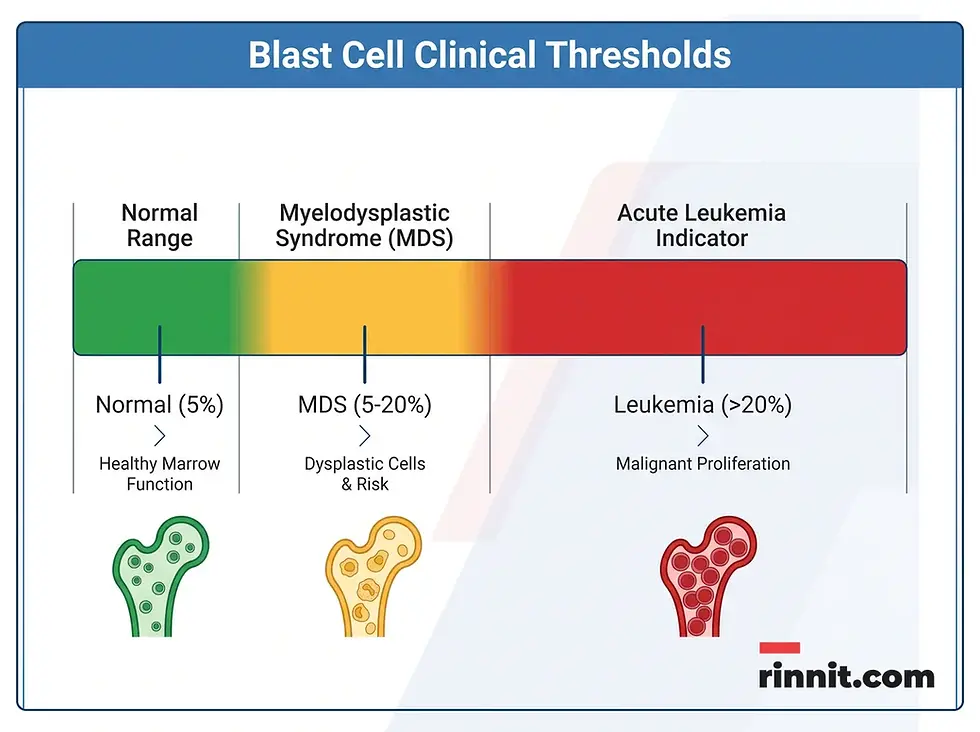
Figure 2: Blast cell percentages and their clinical significance across normal, MDS and leukemia ranges.
Monitoring the percentage of blast cells is a critical diagnostic tool for identifying blood disorders and cancers. [1]
Condition | Typical Blast Cell Percentage | Clinical Context |
|---|---|---|
Normal Bone Marrow | Less than 5% | Blasts are immature and remain in the marrow. |
Normal Bloodstream | 0% | Blasts should not circulate in healthy blood. |
Myelodysplastic Syndrome (MDS) | 5% to 20% (in marrow) | Blasts fail to mature, leading to low healthy cell counts. |
Acute Leukemia (AML/ALL) | 20% or more (in marrow or blood) | Aggressive cancer where abnormal blasts crowd out healthy cells. |
Blast Crisis (CML) | More than 20% | The most advanced phase of chronic myeloid leukemia. |
These thresholds are general guides. Some leukemias can be diagnosed at lower blast percentages when specific genetic changes are present, so your hematologist interprets blast counts together with other test results. [3] [1]
What causes elevated blast cell counts?

Figure 3: Bone marrow crowding, comparing healthy marrow with leukemic marrow.
While high blast levels are often associated with cancer, they can also be triggered by noncancerous factors. [1]
Blood Cancers: Acute myeloid leukemia (AML) and acute lymphoblastic leukemia (ALL) cause rapid division of abnormal blasts that occupy space in the bone marrow, preventing the production of healthy blood cells. [1]
Serious Infections: Severe illnesses, such as sepsis, can cause the body to release immature blasts into the bloodstream prematurely. [1]
Medical Treatments: Shots of granulocyte-colony stimulating factor (G-CSF) used to boost white blood cell counts can temporarily increase circulating blasts. [1]
Stem Cell Transplants: Patients who have recently undergone a transplant may show elevated blast levels as their body begins to produce new cells. [1]
How are blast cells tested and monitored?
If a lab report indicates the presence of blasts, healthcare providers use several specialized tests to determine the cause.
Peripheral Blood Smear (PBS): A pathologist examines a blood sample under a microscope to identify the presence and appearance of blasts. [1]
Bone Marrow Biopsy and Aspiration: These procedures allow for a direct examination of the cells within the bone marrow to calculate the blast percentage. [1]
Complete Blood Count (CBC) with Differential: This test measures the levels of mature red cells, white cells, and platelets, which often decrease when blast levels are high. [1]
Specialized Lab Tests: Tools such as flow cytometry and immunohistochemistry help differentiate between types of blasts and identify specific genetic changes. [1]
Conclusion
Blast cells are essential building blocks of the circulatory system, but their presence outside the bone marrow or in excessive quantities serves as a vital health indicator. While elevated levels can be a temporary response to infection or treatment, they are frequently the first sign of serious hematologic conditions. Timely diagnostic testing and professional consultation are necessary to understand the implications of blast cell counts and to develop an appropriate management plan.
Concerned about "blasts" on your recent lab report? While these results require professional interpretation, understanding the basics is the first step toward effective care. Speak with your hematologist today to discuss what your blast levels mean for your long-term health.
Frequently Asked Questions
1. What are blast cells?
Blast cells are immature precursor cells that eventually develop into mature blood cells like red cells, white cells, and platelets.
2. Where are blast cells normally found?
Blast cells are normally found in the bone marrow and should not be present in the bloodstream of a healthy individual.
3. What is a normal blast cell count in bone marrow?
In a healthy person, blast cells typically make up less than 5% of the total cells in the bone marrow.
4. What does it mean if blasts are in the blood?
The presence of blasts in the blood can be a sign of serious conditions like leukemia, but it can also result from severe infections or recent medical treatments.
5. What is the difference between a myeloblast and a lymphoblast?
Myeloid blasts become red cells, platelets, monocytes and granulocytes, while lymphoblasts become lymphocytes.
6. How do high blast levels affect the body?
High blast levels can crowd out healthy cells in the bone marrow, leading to anemia, frequent infections, and excessive bleeding or bruising.
7. What blast percentage indicates acute leukemia?
A blast count of 20% or more in the bone marrow or blood is generally used to diagnose acute leukemia, although some leukemias with specific genetic changes can be diagnosed at lower percentages.
8. What is myelodysplastic syndrome (MDS)?
MDS is a group of blood cancers where blast cells fail to mature into normal blood cells, often leading to low blood counts.
9. Can infections cause high blast counts?
Yes, serious infections like sepsis can cause a temporary increase in blast cells in the blood.
10. What tests are used to check blast levels?
Common tests include a peripheral blood smear, bone marrow biopsy, and complete blood count (CBC) with differential.
Related Reading
Acute Myeloid Leukemia (AML): What It Is, Who Gets It, and How It Is Treated explains a blood cancer marked by too many myeloid blasts.
Acute Lymphocytic Leukemia: Symptoms, Diagnosis, Treatment and Support covers a leukemia caused by abnormal lymphoid blast cells.
Bone Marrow Biopsy: Why It's Done, What to Expect, Pain and Recovery explains how a marrow sample is taken to count blast cells.
Flow Cytometry: What It Is, Why It's Done, How It Works and Results describes the lab test that identifies the type of blast cells.
References
Cleveland Clinic. Blast Cells: Purpose, Tests & Related Conditions. Cleveland Clinic. Nov. 21, 2024. https://my.clevelandclinic.org/health/body/blast-cells
Greenberg PL, Tuechler H, Schanz J, et al. Revised international prognostic scoring system for myelodysplastic syndromes. Blood. 2012;120(12):2454-2465. PMID 22740453. https://doi.org/10.1182/blood-2012-03-420489
Kwon A, Weinberg OK. Acute myeloid leukemia arising from myelodysplastic syndromes. Clin Lab Med. 2023;43(4):657-667. PMID 37865509. https://doi.org/10.1016/j.cll.2023.07.001
Medical Disclaimer
This article is for informational purposes only and does not constitute medical advice. Always seek the advice of your physician or other qualified health provider with any questions you may have regarding a medical condition. Never disregard professional medical advice or delay in seeking it because of something you have read here.



Comments