Acute Lymphocytic Leukemia: Symptoms, Diagnosis, Treatment and Support

Updated: 3 days ago
Medically reviewed by Dr. Baraa Alnahhal, MD · Last reviewed: October 19, 2026
Quick Answer: What is acute lymphocytic leukemia?
Acute lymphocytic leukemia, also called acute lymphoblastic leukemia or ALL, is a rapidly progressing cancer of the blood and bone marrow. It affects immature lymphocytes and can crowd out healthy blood cells. Symptoms may include fever, infections, bleeding, bone pain, swollen lymph nodes, pale skin, shortness of breath and fatigue; diagnosis requires professional testing. [4]
What the research says
Outcomes differ sharply by age. A 2025 review reports about 6,500 new US cases in 2024 and notes that multiagent chemotherapy over 2–3 years results in long-term survival of 80%–90% in pediatric patients compared with 40%–50% in adult patients (Kantarjian & Jabbour, Am J Hematol, 2025). [1]
CAR-T cell therapy can induce remission in relapsed disease. In a global phase 2 study of 75 children and young adults with relapsed or refractory B-cell ALL, tisagenlecleucel produced an 81% overall remission rate within 3 months; overall survival was 76% at 12 months. Cytokine release syndrome occurred in 77% of patients and neurologic events in 40% (Maude et al., N Engl J Med, 2018). [2]
Newer therapies are changing the traditional approach. A Lancet review reports that more potent BCR::ABL1 inhibitors and antibodies targeting CD19 and CD22 have delivered unprecedented outcomes in BCR::ABL1-positive ALL, and that new therapies overall have improved survival in B-cell ALL to approximately 80–90%, even in adult and infant populations, challenging the traditional 2.5–3 years of intensive chemotherapy (Kantarjian et al., Lancet, 2025). [3]

What is acute lymphocytic leukemia?
Acute lymphocytic leukemia is a type of cancer that affects the blood and bone marrow. Bone marrow is the soft, spongy tissue inside bones where blood cells are made. [4]
The word acute refers to the disease’s rapid progression and the production of immature blood cells. Lymphocytic refers to lymphocytes, a type of white blood cell affected by the disease. [4]
The condition is also known as acute lymphoblastic leukemia. It can occur in children and adults. It is the most common type of cancer in children, while adults can also develop it and may have different treatment outcomes. [4]
What symptoms can it cause?
Acute lymphocytic leukemia can cause bleeding gums, bone pain, fever, frequent infections, nosebleeds, swollen lymph nodes, pale skin, shortness of breath and fatigue. [4]
These symptoms are not enough to diagnose ALL. Several conditions can cause similar changes, so a symptom list cannot replace a clinical assessment.
When should you see a healthcare professional?
Make an appointment with a doctor if you or your child has persistent signs or symptoms that concern you.
Some signs of ALL may resemble the flu. Flu symptoms generally improve over time. If symptoms do not improve as expected, contact a healthcare professional for assessment.
If a doctor suspects ALL, you or your child may be referred to a hematologist, a doctor who specializes in diseases of the blood and bone marrow.
What causes acute lymphocytic leukemia?
ALL begins when a bone-marrow cell develops changes, or mutations, in its genetic material. DNA contains instructions that help a cell grow at a set rate and die at a set time. [4]
In ALL, mutations can tell a bone-marrow cell to keep growing and dividing. The bone marrow then produces immature white blood cells called lymphoblasts. [4]
Lymphoblasts do not function properly. They can build up in the bone marrow and crowd out healthy blood cells. The specific cause of the DNA mutations is not clear. [4]
What are the risk factors?
Acute lymphocytic leukemia (ALL) risk may be increased by a number of different factors.
Risk factor | What to know |
Previous cancer treatment | Certain chemotherapy or radiation treatments for another cancer may increase risk. |
Very high radiation exposure | Exposure to very high radiation levels, such as after a nuclear reactor accident, may increase risk. |
Certain genetic disorders | Some genetic disorders, including Down syndrome, are associated with increased risk. |
A risk factor does not prove that someone has ALL. The cause of the mutations that lead to the disease is often not known.
How is acute lymphocytic leukemia diagnosed?
Diagnosis may involve several tests. The combination used depends on symptoms, examination findings and what the healthcare team needs to learn.
Test or procedure | What it may show |
Blood tests | Too many or too few white blood cells, too few red blood cells or platelets, and blast cells. |
Bone-marrow aspiration and biopsy | Whether leukemia cells are present and how the cells can be classified. |
Imaging tests | Whether cancer may have spread to the brain, spinal cord or other parts of the body. Possible tests include X-ray, CT or ultrasound. |
Lumbar puncture | Whether cancer cells are present in the spinal fluid around the brain and spinal cord. |
Bone-marrow testing
During a bone-marrow aspiration and biopsy, a needle removes a sample from the hipbone or breastbone. The sample is sent to a laboratory for testing. [5]
Laboratory teams may classify the blood cells by their size, shape and genetic or molecular features. They also determine whether the leukemia cells began from B lymphocytes or T lymphocytes. This information helps guide treatment planning. [5]
Spinal-fluid testing
A lumbar puncture, also called a spinal tap, collects a sample of spinal fluid. The fluid surrounds the brain and spinal cord and can be tested for leukemia cells. [5]
The healthcare team can explain what each test is intended to find and how to prepare for it.
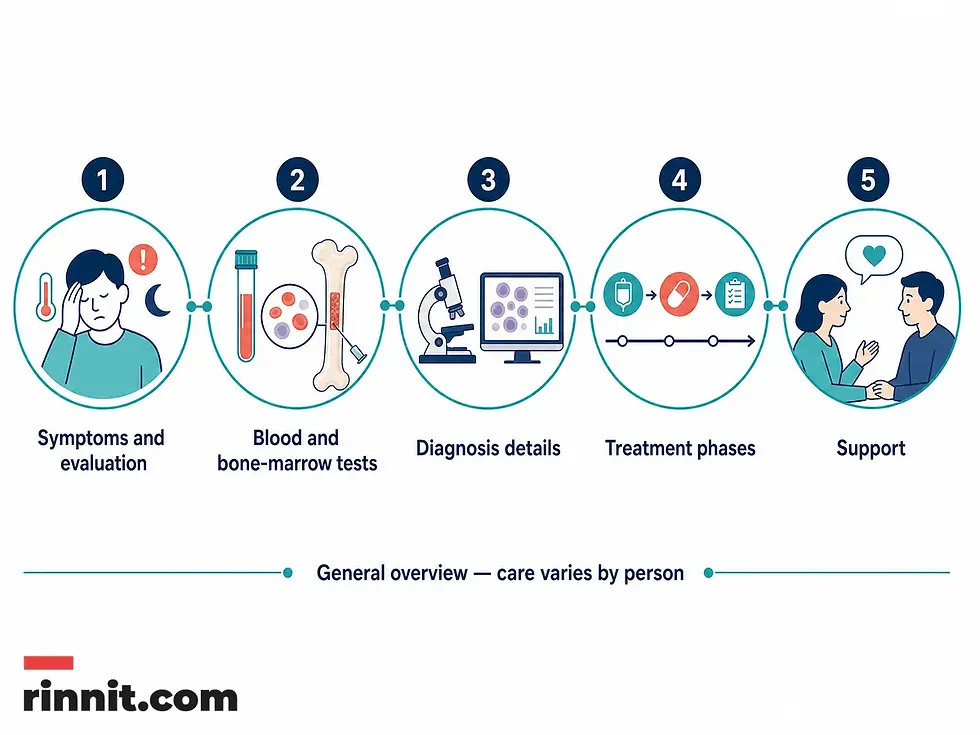
Does acute lymphocytic leukemia have stages?
Acute lymphocytic leukemia (ALL) is not staged with numbers the way some other cancers are. Instead, the seriousness of the condition and treatment options are considered using information such as:
These factors help a doctor assess the condition and discuss treatment options. They cannot be used by a general article to predict an individual outcome.
How is acute lymphocytic leukemia treated?
Treatment may include chemotherapy, targeted therapy, radiation therapy, bone-marrow or stem-cell transplant, CAR-T cell therapy and clinical trials. [5]
The treatment plan depends on the disease findings, age, overall health, previous treatment and other clinical considerations. A healthcare professional should explain why a particular option is being considered and what benefits and risks may apply.
Chemotherapy
Chemotherapy uses medicines to kill leukemia cells. It is commonly used during induction therapy and may also be used during consolidation and maintenance phases. [5]
Targeted therapy
Targeted medicines focus on specific abnormalities in cancer cells. Leukemia cells may be tested to see whether targeted therapy could be helpful. It may be used alone or with chemotherapy in different treatment phases. [5]
Radiation therapy
Radiation therapy uses high-powered beams, such as X-rays or protons, to kill cancer cells. It may be recommended if cancer cells have spread to the central nervous system. [5]
Bone-marrow or stem-cell transplant
A transplant may be used as consolidation therapy or when leukemia returns. It can replace leukemia-producing bone marrow with leukemia-free marrow from a compatible donor. [5]
A transplant begins with high-dose chemotherapy or radiation to destroy leukemia-producing bone marrow. The marrow is then replaced with marrow from a donor. [5]
CAR-T cell therapy
CAR-T cell therapy is a specialized treatment that uses a person’s own T cells. The cells are engineered to fight cancer and then infused back into the body. [5]
It may be an option for some children and adults with B-cell ALL, including in certain consolidation or relapse situations. Eligibility and suitability require specialist assessment. [5]
Clinical trials
Clinical trials test new cancer treatments or new ways of using existing treatments. They may offer access to an investigational approach, but the benefits and risks can be uncertain. [5]
Discuss the possible advantages and risks of a clinical trial with the treating doctor.
What are the treatment phases?
Treatment for acute lymphocytic leukemia generally follows several phases, which can span two to three years depending on the situation. [5]
Phase | General purpose |
Induction | Kill most leukemia cells in the blood and bone marrow and restore normal blood-cell production. |
Consolidation | Also called post-remission therapy, this phase aims to destroy leukemia that may remain in the body. |
Maintenance | Uses usually lower treatment doses over a longer period to help prevent leukemia cells from growing again. |
Preventive treatment for the spinal cord | May be given during each phase to kill leukemia cells in the central nervous system. |
Depending on the situation, treatment phases can span two to three years. This is a general description, not a personal treatment timeline.
What about treatment for older adults?
Older adults, including people older than 65, may experience more complications from treatment. Older adults also generally have a worse prognosis than children treated for ALL. [5]
Treatment decisions should consider overall health, goals and preferences. Some people may choose to focus on symptom improvement rather than cancer treatment.
These decisions are personal and should be discussed with a healthcare team that understands the person’s complete medical situation.
What about alternative treatments?
No alternative treatments have been proved to cure acute lymphocytic leukemia. [5]
Some approaches may help ease treatment side effects or improve comfort. However, they can interfere with cancer treatments such as chemotherapy. Discuss any complementary or alternative approach with the treating doctor before using it. [5]
How can patients and families cope with acute lymphocytic leukemia?
Coping with acute lymphocytic leukemia, whose treatment can be long, is easier with support such as learning about the disease, writing down questions and relying on the wider healthcare team. Support can help patients and families manage medical, emotional and practical challenges. Helpful steps may include:
Learn enough about the specific leukemia to participate in treatment decisions.
Write down questions before appointments.
Rely on the wider healthcare team, including social workers, psychologists, dietitians, teachers or other specialists when available.
Ask about support programs for children, siblings and families.
Help trusted family members and friends understand what is happening.
A healthcare team can also help identify practical support, including services related to housing, finances, school or work.
How can you prepare for an appointment?
To prepare for an acute lymphocytic leukemia appointment, ask whether anything is needed beforehand, such as fasting, and bring notes on symptoms, medicines and your questions. Bring or write down:
Symptoms, including symptoms that may seem unrelated.
Major stresses or recent life changes.
Medicines, vitamins and supplements.
Your questions, listed from most important to least important.
A trusted family member or friend, if helpful.
Useful questions may include:
What is likely causing these symptoms?
What other causes are possible?
What tests are needed?
What is the best course of action?
What alternatives are available?
How can other health conditions be managed alongside ALL?
Should a specialist be involved?
What follow-up will be needed?
Ask for explanations in plain language and take notes if the appointment includes complex information.
Conclusion
Acute lymphocytic leukemia is a rapidly progressing blood and bone-marrow cancer that affects immature lymphocytes. Symptoms can include fever, infections, bleeding, bone pain, swollen lymph nodes, pale skin, shortness of breath and fatigue, but symptoms alone cannot diagnose the condition.
Professional testing may include blood tests, bone-marrow testing, imaging and spinal-fluid analysis. Treatment is often organized in phases, and options may include chemotherapy, targeted therapy, radiation, transplant, CAR-T cell therapy or clinical trials.
If you or your child has persistent or concerning symptoms, arrange an appointment with a healthcare professional.
Frequently Asked Questions
What is acute lymphocytic leukemia?
Acute lymphocytic leukemia is a rapidly progressing cancer of the blood and bone marrow that affects immature lymphocytes. It is also called acute lymphoblastic leukemia or ALL.
What are the symptoms of acute lymphocytic leukemia?
Possible symptoms include fever, frequent infections, bleeding, nosebleeds, bone pain, swollen lymph nodes, pale skin, shortness of breath and fatigue. These symptoms are not enough to confirm the diagnosis.
How is acute lymphocytic leukemia diagnosed?
Diagnosis may involve blood tests, bone-marrow aspiration and biopsy, imaging and a lumbar puncture to test spinal fluid. Laboratory testing can examine cell type and genetic or molecular features.
Does acute lymphocytic leukemia have stages?
ALL does not use numerical stages. Doctors consider factors such as B-cell or T-cell type, genetic changes, age and laboratory results when assessing seriousness and treatment options.
What treatments are used for acute lymphocytic leukemia?
Treatment may include chemotherapy, targeted therapy, radiation therapy, bone-marrow or stem-cell transplant, CAR-T cell therapy and clinical trials. The appropriate plan depends on professional assessment.
How long can treatment take?
Treatment phases can span two to three years depending on the situation. The length and intensity of care vary, so this general range should not be treated as an individual timeline.
Can adults get acute lymphocytic leukemia?
Yes. ALL can occur in adults as well as children. Treatment decisions and expected outcomes depend on factors such as age, health, leukemia features and test results.
When should you see a doctor about possible symptoms?
Make an appointment if you or your child has persistent signs or symptoms that concern you. If symptoms resemble the flu but do not improve as expected, contact a healthcare professional.
Is acute lymphocytic leukemia curable?
Many people, especially children, can be cured with treatment. Outlook depends on age, the type of leukemia cells and how well the leukemia responds to treatment, so your care team can best explain your situation.
What is the difference between ALL and AML?
ALL starts in immature lymphocytes, a type of white blood cell. AML starts in immature myeloid cells, which normally become other types of blood cells, and the two are treated differently.
Related Reading
BiTE Therapy (Bispecific T-Cell Engagers): How It Works and Side Effects explains BiTE immunotherapy.
References
Kantarjian H, Jabbour E. Adult Acute Lymphoblastic Leukemia: 2025 Update on Diagnosis, Therapy, and Monitoring. Am J Hematol. 2025;100(7):1205-1231. PMID: 40377367. https://doi.org/10.1002/ajh.27708
Maude SL, Laetsch TW, Buechner J, et al. Tisagenlecleucel in Children and Young Adults with B-Cell Lymphoblastic Leukemia. N Engl J Med. 2018;378(5):439-448. PMID: 29385370. https://doi.org/10.1056/NEJMoa1709866
Kantarjian H, Pui CH, Jabbour E. Acute lymphocytic leukaemia. Lancet. 2025;406(10506):950-962. PMID: 40759141. https://doi.org/10.1016/S0140-6736(25)00864-5
Mayo Clinic Staff. Acute lymphocytic leukemia: Symptoms and causes. Mayo Clinic. December 20, 2024. https://www.mayoclinic.org/diseases-conditions/acute-lymphocytic-leukemia/symptoms-causes/syc-20369077
Mayo Clinic Staff. Acute lymphocytic leukemia: Diagnosis and treatment. Mayo Clinic. December 20, 2024. https://www.mayoclinic.org/diseases-conditions/acute-lymphocytic-leukemia/diagnosis-treatment/drc-20369083
Disclaimer
This article is for general educational purposes and is not a substitute for professional medical advice, diagnosis or treatment. Always seek the advice of a qualified health provider with any questions you may have regarding a medical condition.
It explains what acute lymphocytic leukemia is, its symptoms, causes, risk factors, diagnosis, treatment options and support. It does not diagnose leukemia, estimate an individual prognosis or recommend a personal treatment plan. Persistent or concerning symptoms require assessment by a qualified healthcare professional.



Comments