Adrenalectomy: Understanding Adrenal Gland Removal

Updated: 3 days ago
Medically reviewed by Dr. Baraa Alnahhal, MD · Last reviewed: October 17, 2026
Quick Answer
An adrenalectomy is a surgical procedure to remove one or both adrenal glands when they are cancerous or overproducing hormones. Surgeons mainly use laparoscopic or robotic methods with small incisions for quicker recovery, while open surgery may be needed for larger tumors. Recovery generally takes one to two weeks, though long-term hormone monitoring or replacement may be required.
What the research says
Minimally invasive surgery shortened hospital stay for large adrenal tumors. In a meta-analysis of 10 studies and 898 patients with tumors of 5 cm or larger, minimally invasive adrenalectomy cut hospital stay by 3.52 days (95% CI −4.61 to −2.43) and reduced blood loss compared with open surgery, with no significant difference in operative time or complications. (Gan et al., International Journal of Surgery, 2022)
Laparoscopic surgery performed well for pheochromocytoma. Across 14 studies and 743 patients, laparoscopic adrenalectomy was linked to fewer postoperative complications (OR 0.55; 95% CI 0.34–0.89) and a hospital stay shorter by 1.76 days than open surgery. (Li et al., European Journal of Surgical Oncology, 2020)
Robotic and laparoscopic adrenalectomy had comparable safety. In 28 studies, rates of complications, 30-day mortality and operating time did not differ significantly, while the overall cost of hospitalization was higher with the robotic approach (mean difference USD 4,101.32). (Esposito et al., Cancers, 2025)
What is an adrenalectomy?
Adrenalectomy is a critical surgical intervention used when the adrenal glands — small organs located atop the kidneys — become a health risk. This procedure is indicated when a gland develops a cancerous tumor or when it produces excessive amounts of hormones, leading to systemic conditions like hyperaldosteronism or Cushing disease. Depending on the patient's needs, surgeons may perform a unilateral adrenalectomy (removing one gland) or a bilateral adrenalectomy (removing both) [1].
“Adrenalectomy is the surgical removal of one or both adrenal glands because of cancer or because they’re producing too many hormones. In most cases, surgeons can do laparoscopic adrenalectomy, which requires fewer incisions and sutures for a quicker recovery.” [1]
What surgical methods are used for adrenalectomy, and how do you prepare?
Preparation for an adrenalectomy involves imaging tests and sometimes dietary or medication adjustments. Because the procedure is performed under general anesthesia, patients must arrange for transportation and post-operative support. The surgery typically lasts two to three hours, with the choice of method depending on the size and nature of the tumor [1].
Method | Description | Best For |
Laparoscopic | 1-4 small incisions using tiny instruments and a camera. | Minimally invasive, standard for most cases. |
Robotic | Similar to laparoscopic but uses a 3D camera and computer console. | Enhanced precision for complex removals. |
Open Surgery | A single traditional long incision across the abdomen. | Large tumors or adrenocortical carcinoma. |
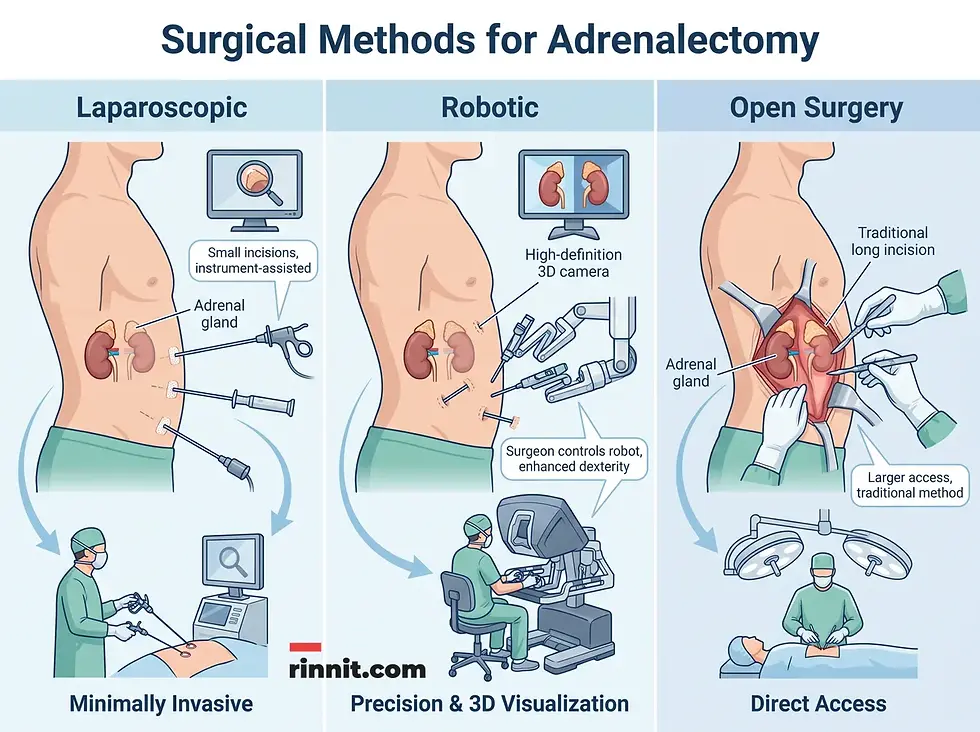
Figure 1: Comparison of laparoscopic, robotic, and open surgical approaches for adrenal gland removal.
What are the potential complications of adrenalectomy?
As with any major surgery, adrenalectomy carries inherent risks. Complications are generally more common in traditional open procedures than in minimally invasive ones. Surgeons monitor patients closely for several key risks during and after the operation [1].
Surgical Risks: Bleeding, blood clots, and damage to nearby organs.
Wound Issues: Infection at incision sites, hernias, or poor wound healing.
Systemic Reactions: Adverse reactions to general anesthesia.
What is recovery and post-operative care like after adrenalectomy?
Recovery times vary based on the surgical approach used. Patients who undergo laparoscopic or robotic surgery often return home the same day, while those who have open surgery may require a hospital stay of up to five days. Full recovery typically occurs within two to three weeks [1].
Immediate Post-Op Guidelines
During the first few weeks, patients should prioritize rest and hydration. Managing pain with nonsteroidal anti-inflammatory drugs (NSAIDs) like ibuprofen or naproxen is common. It is also recommended to hold a pillow over the incisions when coughing or taking deep breaths to reduce strain on the surgical site [1].
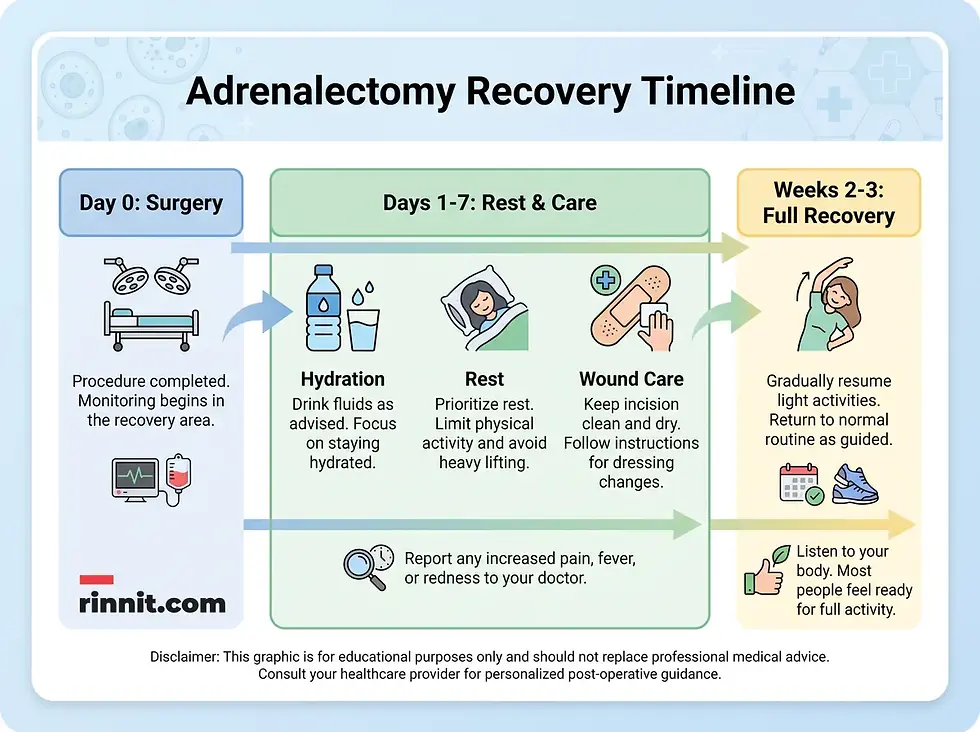
Figure 2: The typical recovery timeline and essential post-operative care steps for patients.
When to Seek Medical Attention
Patients must monitor their recovery closely and contact their healthcare provider if they experience signs of infection, such as fever, warmth at the incision site, or leaking pus. Emergency care (911) is required for severe symptoms like chest pain, passing out, or coughing up blood [1].
Conclusion
Adrenalectomy is a highly effective treatment for resolving severe adrenal disorders and removing cancerous growths. While the prospect of surgery can be daunting, modern minimally invasive techniques have significantly reduced recovery times and improved patient outcomes. Consultation with a specialist is necessary to determine the best surgical approach and to discuss potential long-term hormone management needs.

Figure 3: Summary of health tips for managing adrenal conditions and preparing for surgery.
Frequently Asked Questions
Why would I need an adrenalectomy?
You may need this procedure if your adrenal glands are cancerous or if they are overproducing hormones that cause conditions like Cushing disease or hyperaldosteronism. [1]
Is one adrenal gland enough to live on?
Yes, if one adrenal gland is removed, the remaining gland can usually produce enough hormones to support the body's needs. If both are removed, lifelong hormone replacement therapy is required. [1]
How long does the surgery take?
On average, an adrenalectomy takes between two and three hours to complete, depending on the complexity and surgical method used. [1]
What is the recovery time for laparoscopic adrenalectomy?
Most patients recover within one to two weeks after a laparoscopic procedure, with full recovery typically achieved in two to three weeks. [1]
Will my symptoms go away immediately?
In many cases, symptoms caused by excessive hormone production begin to improve almost immediately after the offending gland is removed. [1]
What are the signs of an infected incision?
Signs of infection include fever, warmth around the wound, redness, bleeding, or the presence of pus. [1]
Can I eat a normal diet after surgery?
Most patients can return to their usual diet, although starting with bland foods is recommended if the stomach feels upset initially. [1]
What pain medications are recommended?
Over-the-counter NSAIDs like ibuprofen (Advil) or naproxen (Aleve) are commonly used to manage post-operative pain. [1]
Is robotic surgery better than laparoscopic?
Robotic surgery offers enhanced precision and a 3D view for the surgeon, but both robotic and laparoscopic methods are considered minimally invasive and effective. [1]
What happens if I have adrenal cancer?
If a cancerous tumor is removed, your healthcare provider will schedule regular follow-up visits to monitor for any signs of the cancer returning. [1]
How do I prepare for an adrenalectomy?
Your provider may order extra imaging tests, medication changes or dietary guidelines before surgery, and you will have a full physical exam and possibly other tests to confirm you are healthy enough for an operation [1][2]. Ask the surgeon about stopping blood thinners, supplements and medicines that affect the immune system, and note that some tumors need special preparation: blood pressure and heart-rate medication for pheochromocytoma, possible potassium for an aldosteronoma, and extra cortisone on surgery day, continued for months, for Cushing syndrome [2]. Stop eating and drinking at the time you are given, take only approved morning medications with a sip of water, shower the night before or morning of surgery, possibly with antibiotic soap, and arrange for someone to drive you to and from the hospital because of the general anesthesia [1][2].
Does an adrenalectomy hurt, and what anesthesia is used?
The operation is done under general anesthesia and typically takes about two to three hours [1]. Pain around the incisions afterward is normal and usually mild to moderate; acetaminophen or NSAIDs such as ibuprofen or naproxen and ice on the incisions help, and your surgeon may prescribe a small amount of narcotic that many people use for only a few days or not at all [1][2]. Nausea or vomiting can occur but should improve within a day or two, and minimally invasive surgery causes less pain than open surgery, with most laparoscopic or robotic patients going home the same day or after one night [1][2].
When should I call my doctor after an adrenalectomy?
Call your surgeon for a fever of 101 F or higher or chills, bleeding, or an incision that is warm, bleeds, leaks pus or creamy drainage, has spreading redness, or has loose stitches or opens up [1][2]. Also call for pain that does not improve with medication, increasing belly swelling, nausea or vomiting, especially if you cannot eat or drink, difficulty breathing or a cough that will not go away, severe weakness or tiredness that keeps you in bed, or not having regular bowel movements [1][2]. Call 911 or go to the emergency room for passing out, severe trouble breathing, chest pain or coughing up blood [1].
Related Reading
References
Cleveland Clinic. Adrenalectomy (Adrenal Gland Removal). Cleveland Clinic. Last updated February 26, 2025. https://my.clevelandclinic.org/health/procedures/adrenalectomy-adrenal-gland-removal
Society of American Gastrointestinal and Endoscopic Surgeons (SAGES). Adrenal Gland Removal (Adrenalectomy). SAGES. Revised May 6, 2026. https://www.sages.org/publications/patient-information/adrenal-gland-removal-adrenalectomy-patient-information-from-sages/
National Cancer Institute. Adrenocortical Carcinoma Treatment. National Cancer Institute. Updated February 14, 2025. https://www.cancer.gov/types/adrenocortical/treatment
Mayo Clinic Staff. Adrenalectomy. Mayo Clinic. Dec. 23, 2025. https://www.mayoclinic.org/tests-procedures/adrenalectomy/about/pac-20385243
Gan L, Meng C, Li K, et al. Safety and effectiveness of minimally invasive adrenalectomy versus open adrenalectomy in patients with large adrenal tumors (≥5 cm): A meta-analysis and systematic review. International Journal of Surgery. 2022;104:106779. PMID: 35870758. https://doi.org/10.1016/j.ijsu.2022.106779
Li J, Wang Y, Chang X, Han Z. Laparoscopic adrenalectomy (LA) vs open adrenalectomy (OA) for pheochromocytoma (PHEO): A systematic review and meta-analysis. European Journal of Surgical Oncology. 2020;46(6):991-998. PMID: 32102743. https://doi.org/10.1016/j.ejso.2020.02.009
Esposito G, Mullineris B, Colli G, Curia S, Piccoli M. Robotic Versus Laparoscopic Adrenalectomy for Adrenal Tumors: An Up-to-Date Meta-Analysis on Perioperative Outcomes. Cancers. 2025;17(1):150. PMID: 39796777. https://doi.org/10.3390/cancers17010150
Medical disclaimer
The information provided in this article is for educational purposes only and should not be used as a substitute for professional medical advice, diagnosis, or treatment. Always seek the advice of your physician or other qualified health provider with any questions you may have regarding a medical condition.



Comments