Primary Aldosteronism (Conn’s Syndrome): Causes, Symptoms, and Management

Updated: 2 days ago
Medically reviewed by Dr. Baraa Alnahhal, MD · Last reviewed: September 2026
TL;DR
Primary aldosteronism, or Conn’s syndrome, occurs when the adrenal glands produce excessive aldosterone, leading to high blood pressure and low potassium. While it can cause serious complications like heart attack or kidney failure, it is manageable through medication or surgery. Early diagnosis is critical for an excellent long-term outlook.
Quick Answer Primary aldosteronism is a condition where the adrenal glands overproduce aldosterone, a hormone regulating sodium and potassium. This imbalance typically results in resistant high blood pressure and low potassium levels. Common symptoms include fatigue, muscle cramps, and excessive thirst. Treatment focuses on blocking hormone effects with medication or surgically removing affected adrenal tissue. Most individuals achieve an excellent prognosis with prompt medical intervention and consistent monitoring of blood pressure and electrolyte levels.
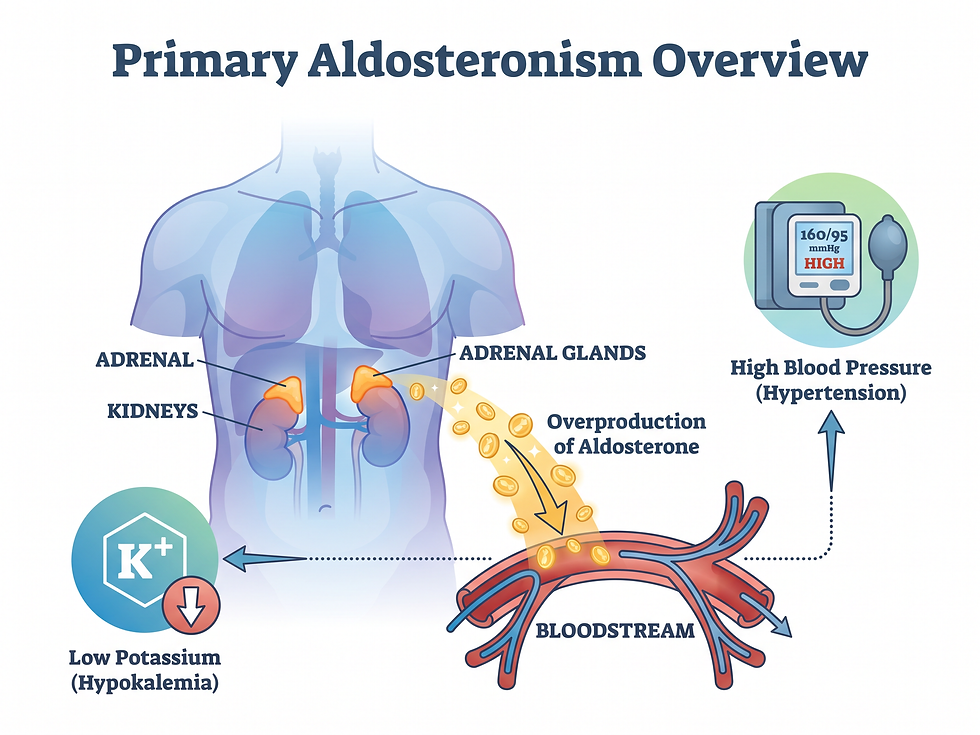
Primary aldosteronism, frequently referred to as Conn’s syndrome, is a hormonal disorder originating in the adrenal glands. These small glands, situated atop the kidneys, are responsible for producing aldosterone, a steroid hormone essential for maintaining the body’s balance of water, sodium, and potassium. When these glands become overactive, they release an excessive amount of aldosterone into the bloodstream, which directly impacts blood volume and pressure regulation. It is one of several adrenal gland disorders that can disrupt hormone balance.
While once considered a rare ailment, modern clinical data suggests that primary aldosteronism affects approximately 5% to 10% of adults diagnosed with hypertension. The condition is notably more prevalent in women and is most commonly identified in individuals during their 30s or 40s. Understanding the mechanism of this overproduction is vital, as untreated hormonal imbalances can lead to severe cardiovascular and renal complications.
Recognizing the Symptoms
The hallmark indicators of Conn’s syndrome are persistent high blood pressure and abnormally low potassium levels, known as hypokalemia. High blood pressure associated with this condition is often resistant to standard treatments, sometimes requiring three or more medications to manage effectively. Low potassium can be particularly dangerous, as it may lead to heart rhythm irregularities or arrhythmias.
Beyond these primary indicators, individuals may experience a range of systemic symptoms. These include chronic fatigue, excessive thirst, and frequent urination. Neuromuscular issues such as muscle cramps, weakness, and even temporary paralysis can occur due to electrolyte disruptions. Some patients also report persistent headaches and blurred vision as their blood pressure fluctuates.
Symptom Category | Common Clinical Signs |
Cardiovascular | Resistant hypertension, irregular heart rhythm (arrhythmia) |
Neuromuscular | Muscle cramps, muscle weakness, temporary paralysis |
Systemic | Chronic fatigue, excessive thirst, frequent urination |
Neurological | Persistent headaches, blurred vision |
Understanding the Causes
Primary aldosteronism occurs when the adrenal glands themselves are the source of the problem. The most common cause is the development of benign, noncancerous tumors in one or both glands. In some instances, the condition may be linked to inherited genetic disorders, such as congenital adrenal hyperplasia. While adrenal cancer can cause aldosterone overproduction, it remains an extremely rare occurrence.
It is important to distinguish this from secondary aldosteronism, where the adrenal glands are healthy but react to issues elsewhere in the body. Triggers for secondary overproduction include liver disease, narrowing of the renal arteries, heart failure, and certain types of kidney cancer. Pregnancy can also temporarily induce secondary hormonal shifts. Primary aldosteronism is also an important cause of secondary hypertension, where high blood pressure stems from an identifiable underlying condition.
Diagnostic Procedures
Healthcare providers typically begin the diagnostic process with specialized blood tests. These tests measure the levels of aldosterone and renin (an enzyme that interacts with aldosterone) in the blood. Because many common blood pressure medications can interfere with these readings, providers may temporarily adjust a patient’s medication regimen to ensure the accuracy of the results.
If blood tests confirm an imbalance, imaging studies are often the next step. Computed tomography (CT) scans and magnetic resonance imaging (MRI) are utilized to visualize the adrenal glands and identify any potential tumors. These detailed images help specialists determine if the issue is localized to a single gland or affects both, which significantly influences the chosen treatment strategy. When imaging alone cannot settle the question, specialists may use adrenal venous sampling to find out which gland is overproducing aldosterone.
Diagnostic Tool | Purpose in Clinical Evaluation |
Blood Hormone Test | Measures aldosterone and renin levels to confirm overproduction |
Electrolyte Panel | Evaluates sodium and potassium levels in the bloodstream |
CT Scan | Uses X-rays to identify benign tumors or structural abnormalities |
MRI | Provides high-resolution images to rule out adrenal malignancies |

Treatment and Management
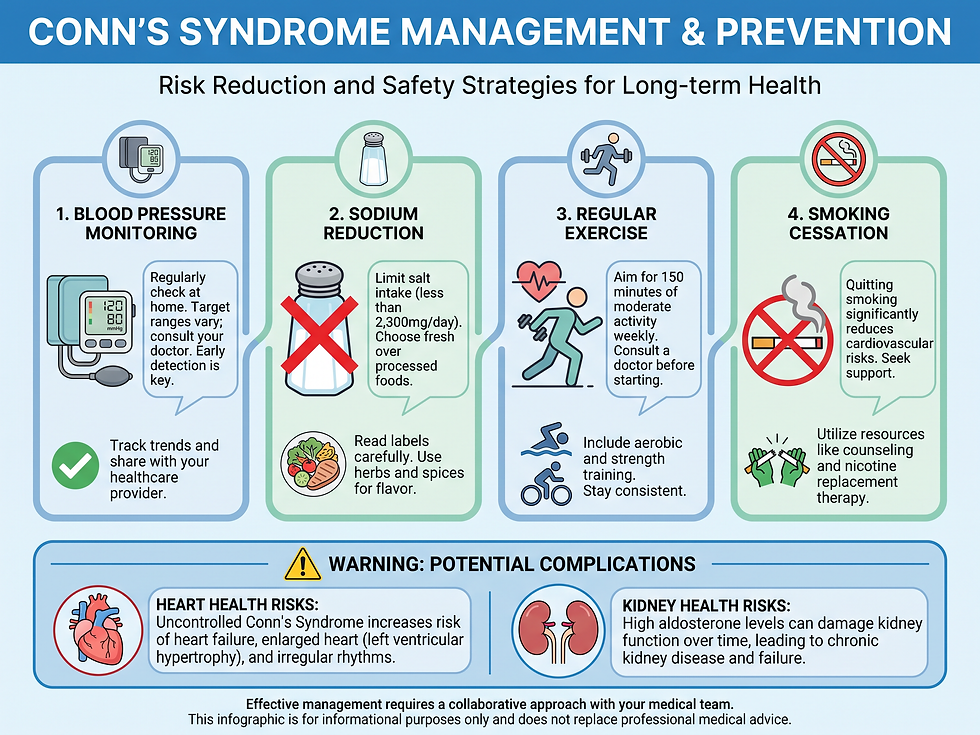
The primary goal of treatment is to normalize blood pressure and restore electrolyte balance. If both adrenal glands are overproducing hormones, medication is the standard approach. Drugs such as spironolactone or eplerenone are used to block the physiological effects of aldosterone. Patients may also be advised to adopt lifestyle changes, such as reducing sodium intake and increasing physical activity, to support cardiovascular health.
When the overproduction is traced to a tumor in a single adrenal gland, surgical removal of that gland (a procedure known as an adrenalectomy) is often recommended. This surgery can frequently resolve the hormonal imbalance entirely, though some patients may still require temporary medication as their body adjusts. With appropriate intervention, the long-term outlook for individuals with Conn’s syndrome is considered excellent.
Conclusion
Primary aldosteronism is a significant but treatable cause of secondary hypertension. By identifying the hormonal root of high blood pressure and low potassium, healthcare providers can implement targeted strategies to prevent long-term damage to the heart and kidneys. Awareness of the symptoms and proactive diagnostic testing are the most effective ways to manage the condition and ensure a healthy, active life.
Next Steps for Your Health
If you are struggling with high blood pressure that does not respond to standard medications, or if you experience unexplained muscle weakness and fatigue, consult a healthcare provider for a specialized hormonal evaluation. Early detection of adrenal imbalances can prevent serious complications and provide a clear path to effective management.
Frequently Asked Questions
What is the difference between Conn’s syndrome and primary aldosteronism?
Primary aldosteronism is the broad medical term for aldosterone overproduction. Conn’s syndrome specifically refers to cases caused by a benign tumor in one adrenal gland.
Can Conn’s syndrome be cured?
Yes, many cases caused by a single adrenal tumor can be cured through surgical removal of the affected gland. Cases involving both glands are managed effectively with lifelong medication.
Is high blood pressure always present in this condition?
Yes, hypertension is a defining feature of the condition and is often the first sign that leads to a diagnosis.
Why does low potassium occur?
Excessive aldosterone causes the kidneys to retain too much sodium and water while excreting too much potassium into the urine.
Are adrenal tumors in Conn’s syndrome cancerous?
The vast majority of adrenal tumors associated with this condition are benign and noncancerous. Adrenal cancer is a very rare cause.
Who is most at risk for developing this condition?
It is most common in women and individuals aged 30 to 40, especially those with resistant hypertension or low potassium levels.
Can lifestyle changes replace medication?
Lifestyle changes like reducing salt and exercising are supportive but usually cannot replace the need for hormone-blocking medications or surgery.
What happens if the condition is left untreated?
Untreated primary aldosteronism significantly increases the risk of heart attack, stroke, heart failure, and kidney failure.
How do doctors test for Conn’s syndrome?
Diagnosis involves blood tests to check hormone and electrolyte levels, followed by imaging like CT or MRI scans.
Do I need to stop my blood pressure meds before testing?
Some medications interfere with results. Your provider may switch your prescriptions temporarily to ensure the blood tests are accurate.
Is surgery the only treatment option?
No, medication is the primary treatment when both glands are overactive. Surgery is typically reserved for single-gland tumors.
Can primary aldosteronism be inherited?
Some forms, such as congenital adrenal hyperplasia, are inherited genetic disorders that cause hormonal imbalances.
What are the signs of low potassium?
Common signs include muscle cramps, weakness, fatigue, and heart palpitations or irregular rhythms.
Does primary aldosteronism affect thirst?
Yes, the electrolyte imbalance often leads to excessive thirst and a corresponding increase in the frequency of urination.
What is the long-term outlook with treatment?
The outlook is excellent. Most patients see a significant reduction in symptoms and a lower risk of complications with proper management.
Medical Disclaimer: The information provided in this article is for educational purposes only and should not be used as a substitute for professional medical advice, diagnosis, or treatment. Always seek the advice of your physician or other qualified health provider with any questions you may have regarding a medical condition.
Comments