Adolescent Bariatric Surgery: Types, Benefits and Recovery

Updated: 2 days ago
Written and medically reviewed by Dr. Baraa Alnahhal, MD · Last reviewed: November 2026 · How we review
Quick Answer
Adolescent bariatric surgery, or pediatric weight-loss surgery, is an option for teens and young adults with severe obesity that makes the stomach smaller. The two recommended procedures are the gastric sleeve and Roux-en-Y gastric bypass. It can help treat or prevent type 2 diabetes, high blood pressure and sleep apnea. The hospital stay is one or two days.
What the research says
Teens lost weight and improved their health: in the Teen-LABS study of 242 adolescents, weight fell 27% on average at 3 years; type 2 diabetes went into remission in 95% and high blood pressure in 74%, though 57% had low iron stores and 13% needed more belly procedures (Inge TH et al., New England Journal of Medicine, 2016) [2]
Teens had more diabetes remission than adults: comparing 161 adolescents and 396 adults after gastric bypass, weight loss at 5 years was similar (26% vs. 29%), but teens more often had remission of type 2 diabetes (86% vs. 53%) and high blood pressure (68% vs. 41%) (Inge TH et al., New England Journal of Medicine, 2019) [3]
Key takeaways
Adolescent bariatric surgery treats severe obesity in teens.
The two main types are gastric sleeve and gastric bypass.
It can improve diabetes, blood pressure and other conditions.
Teens prepare with a care team for at least six months.
It works best with lifelong healthy habits.
What is adolescent bariatric surgery?
It's bariatric surgery for teens. It leads to faster weight loss than diet and exercise alone. About 14.7 million U.S. adolescents have obesity, but fewer than 1 in 5,000 teens have weight-loss surgery each year. Learn about childhood obesity. Sources: [1]
Health conditions it can help
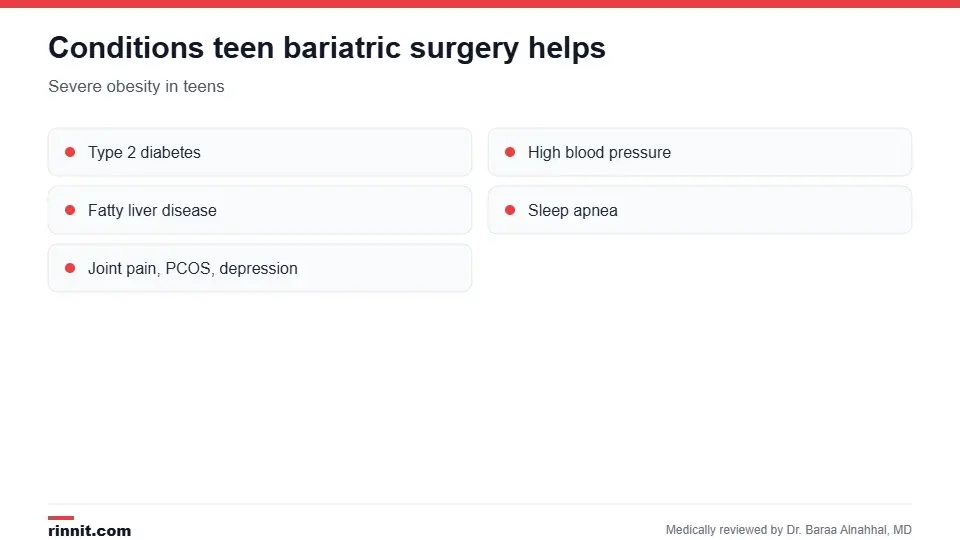
It's for teens whose weight threatens their health.
Type 2 diabetes.
High blood pressure and high cholesterol.
Liver disease.
Sleep apnea.
Polycystic ovary syndrome (PCOS).
Bone and joint pain.
Depression and social anxiety. Sources: [1, 2]
Types of surgery
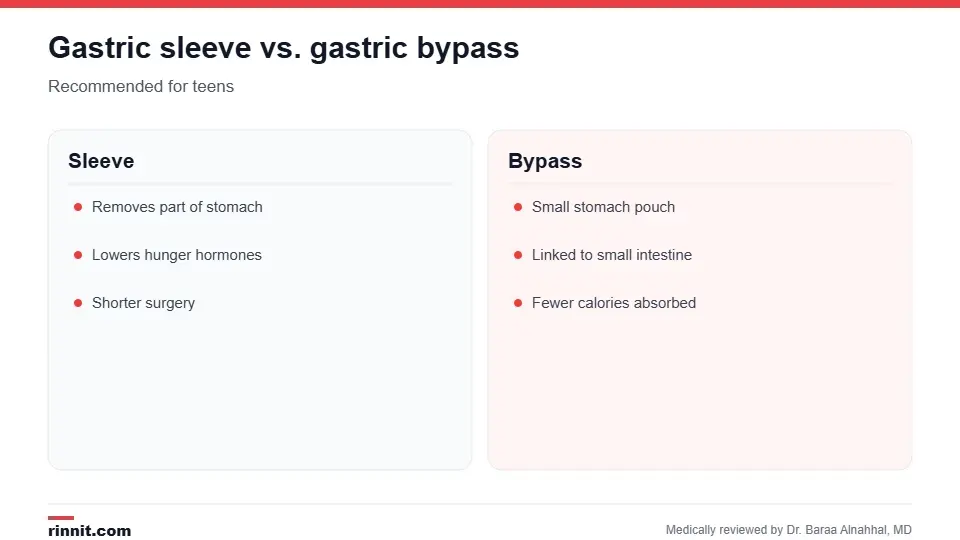
Both are done under general anesthesia.
Surgery | How it works |
Removes part of the stomach, leaving a narrow sleeve; lowers hunger hormones | |
Connects a small stomach pouch to the small intestine; reduces calorie and nutrient absorption |
The sleeve takes less time than the bypass; both usually take a couple of hours. Sources: [1, 3]
How teens prepare

Insurance may require this preparation.
Blood tests, including blood sugar, A1C, cholesterol, liver, thyroid and nutrient levels.
A sleep study if needed.
An X-ray or bone density test to confirm growth is complete.
Counseling and visits with a dietitian and exercise specialist.
Monthly team meetings for at least six months. Sources: [1]
Risks
Infection, bleeding or blood clots.
Allergy to anesthesia.
Dehydration and hunger headaches.
Heartburn, nausea or vomiting.
Nutrient deficiencies and low bone density.
Low blood sugar. Sources: [1, 2]
Recovery
The hospital stay is one or two days.
Diet moves from liquids to purees to solids over up to six weeks.
Most teens return to school in about two weeks.
No gym, sports or heavy lifting until fully healed, about a month.
Avoid pregnancy for at least 18 months.
Ongoing follow-up with a doctor, nutritionist and counselor. Sources: [1]
Outlook
In studies, 60% of teens lost 20% or more of their weight and kept it off for at least five years, with benefits seen for up to nine years. Surgery isn't a guarantee and works best with healthy eating and exercise for life. Sources: [1, 2, 3]
Conclusion
Adolescent bariatric surgery can help teens with severe obesity lose weight and reverse serious health problems early. A dedicated team supports families before and after surgery.
Keep learning: read about the gastric sleeve and obesity.
Frequently asked questions
What is adolescent bariatric surgery?
Weight-loss surgery for teens with severe obesity.
Is it safe for teens?
It's considered a safe and effective option for severe obesity.
What surgeries are used?
Gastric sleeve and Roux-en-Y gastric bypass.
How do teens prepare?
With tests and monthly team visits for at least six months.
How long is the hospital stay?
One or two days.
When can my teen return to school?
In about two weeks.
How much weight do teens lose?
Many lose 20% or more of their body weight.
Does it help diabetes?
Yes. Studies show high rates of diabetes remission.
Will they need vitamins?
Often, to prevent nutrient deficiencies.
Is the result permanent?
It lasts best with lifelong healthy habits.
Related Reading
Bariatric Surgery: Types, Requirements, Risks, and Recovery an overview of weight-loss surgery.
Gastric Sleeve Surgery: Requirements, Procedure and Results the sleeve procedure.
Gastric Bypass Surgery: A Comprehensive Guide to Weight Loss and Recovery the bypass procedure.
Childhood Obesity: Causes, Symptoms, Diagnosis, and How Families Can Help (2026 Guide) obesity in children.
Obesity: Symptoms, Causes, Complications and Treatment — A Complete Guide an overview of obesity.
References
Cleveland Clinic. Adolescent Weight Loss Surgery: Pediatric Bariatric Surgery. Cleveland Clinic. Last updated August 3, 2023. https://my.clevelandclinic.org/health/treatments/17859-weight-loss-surgery-for-adolescents-with-severe-obesity
Inge TH, Courcoulas AP, Jenkins TM, et al. Weight loss and health status 3 years after bariatric surgery in adolescents. New England Journal of Medicine. 2016;374(2):113-123. PMID 26544725. https://doi.org/10.1056/NEJMoa1506699
Inge TH, Courcoulas AP, Jenkins TM, et al. Five-year outcomes of gastric bypass in adolescents as compared with adults. New England Journal of Medicine. 2019;380(22):2136-2145. PMID 31116917. https://doi.org/10.1056/NEJMoa1813909
Medical disclaimer
This article is for general education only and does not replace advice from a qualified healthcare professional. Talk to your doctor about your own diagnosis and treatment, and seek emergency care right away for severe or sudden symptoms.



Comments