What Is Nasal Valve Collapse? Symptoms, Causes, and Treatment

Updated: 3 days ago
Medically reviewed by Dr. Baraa Alnahhal, MD · Last reviewed: October 2026
Quick Answer: What Is Nasal Valve Collapse?
Nasal valve collapse is a condition in which the nose's internal or external structures lose support, so the airway narrows or pinches shut when you breathe in. [1] It can result from previous nasal surgery, trauma or aging and is often associated with a deviated septum. [1] Breathing strips give temporary relief, while surgery with grafts or implants corrects it. [1] [3]

What the research says
Nasal valve collapse is found in most people evaluated for nasal obstruction. In a survey of 1,906 patients with sinonasal complaints examined by 50 U.S. otolaryngologists, collapse (identified with the modified Cottle maneuver) was present in 67%, septal deviation in 76%, and inferior turbinate hypertrophy in 72%. Among 236 patients with severe obstruction scores who had already had septoplasty and/or turbinate reduction, 82% had nasal valve collapse (Clark et al., Ear Nose Throat J, 2018 [2]).
Some over-the-counter dilators have evidence behind them. A systematic review of 33 available nasal dilators found 5 studies supporting external nasal strips and 4 supporting nasal clips for relieving internal nasal valve obstruction, suggesting they may be an alternative to surgery in some patients (Kiyohara et al., JAMA Facial Plast Surg, 2016 [3]).
A newer office-based option is being studied. A meta-analysis of 4 studies (218 patients) of a bipolar radiofrequency device (Vivaer) found that obstruction scores (NOSE) improved at 3 months, with only minor adverse events and no change in the nose's outward appearance. The authors note that larger studies are still needed (Casale et al., J Otolaryngol Head Neck Surg, 2023 [4]).
Key Takeaways: Nasal Valve Collapse Facts
Feature | Details |
Primary Symptom | Chronic nasal congestion and difficulty breathing through the nose [1] |
Structural Cause | Weakened nasal cartilage allowing the airway to narrow or collapse [1] |
Common Triggers | Physical activity, lying down, or deep inhalation [1] |
Risk Factors | Deviated septum, aging, nasal trauma, or previous rhinoplasty [1] |
Diagnostic Test | Cottle maneuver (pulling the cheek to widen the nasal valve) [1] |
Treatment Focus | Reinforcing the airway with grafts, implants, or specialized sutures [1] |
What is nasal valve collapse?
The nasal valve is the narrowest part of the nasal airway, [1] [3] and it filters and regulates the air you breathe in through your nose. When the cartilage and supporting tissues of this valve weaken, the passage can no longer withstand the pressure of inhalation, leading to a collapse. [1] This condition is one of the most common causes of chronic nasal obstruction, [1] [2] significantly affecting a person's ability to breathe comfortably, exercise, and sleep.
There are two distinct types of this condition based on the location of the narrowing. Internal nasal valve collapse occurs in the middle section of the nose and is the most common form. [1] External nasal valve collapse affects the area near the nostrils and is often visible, as the nostril may pinch shut when the person breathes in. [1]
What are the symptoms and clinical signs of nasal valve collapse?
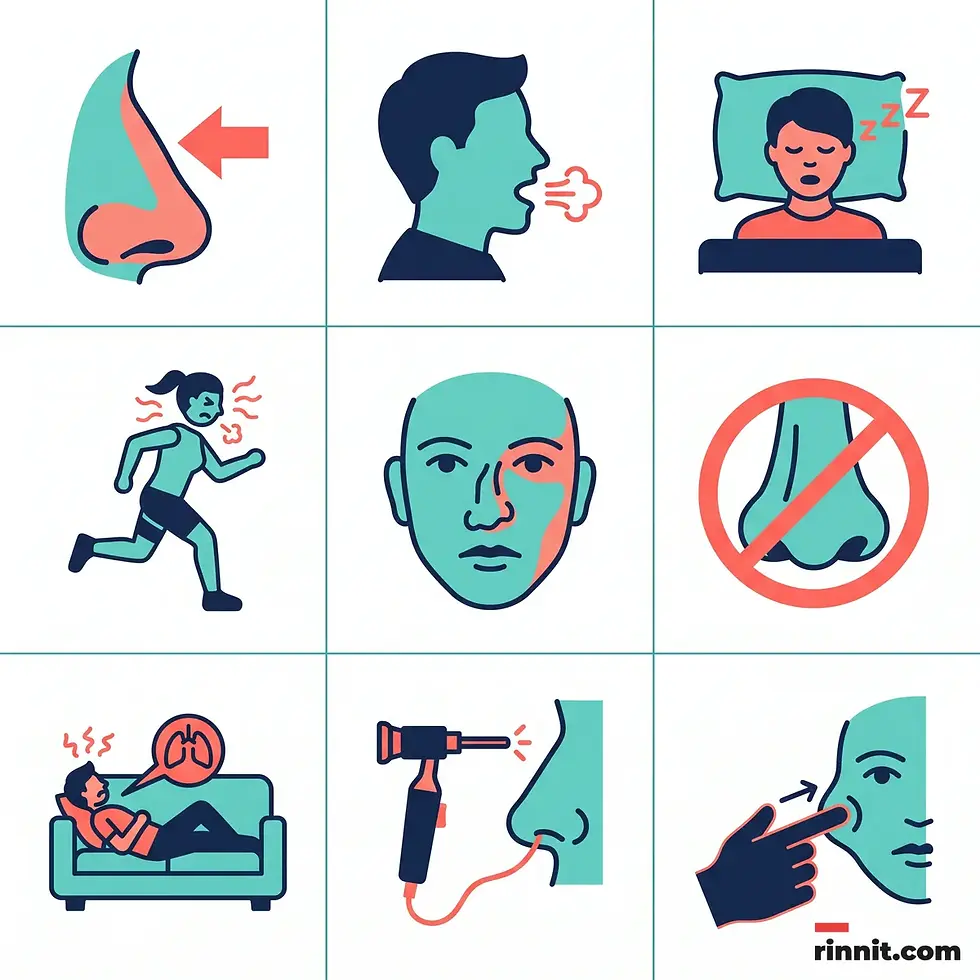
The most prominent symptom of nasal valve collapse is a persistent feeling of nasal stuffiness that does not improve with typical allergy or cold medications. Breathing difficulties often worsen during exercise or while lying flat at night, which can lead to snoring and mouth breathing. [1]
Symptom Category | Common Manifestations |
Respiratory | Labored nasal breathing, increased resistance during inhalation [1] |
Sleep Impact | Snoring, dry mouth from mouth breathing, disrupted sleep [1] |
Physical Appearance | Thinner nasal bridge, asymmetrical nostrils, or a sunken look [1] |
Functional | Nasal congestion that worsens with deep breaths or physical exertion [1] |
What causes nasal valve collapse, and who is at risk?
The weakening of the nasal structures is rarely due to a single factor. Most people with this condition also have a deviated septum, where the wall between the nostrils is crooked, creating uneven airflow that contributes to valve failure. [1]
Aging is another contributor, as the tissue that supports the nasal valve can lose strength over time. [1] Trauma or injury to the face can also damage the structural integrity of the nose. [1] Collapse can also follow rhinoplasty (nose surgery), although slight narrowing is much more common than severe collapse. [1] Some people are also born with features that raise the risk, such as narrow nostrils or a nose that projects far from the face. [1]
How is nasal valve collapse diagnosed and evaluated?
Healthcare providers typically diagnose nasal valve collapse through a medical history, a physical examination, and a simple test known as the Cottle maneuver. [1] [2] During this test, the provider gently pulls the cheek to the side to widen the nasal valve. If breathing improves, it helps show where the collapse is. [1] Providers may also ask you to complete the NOSE questionnaire, which scores how much nasal obstruction affects your life. [1] [2]
In some cases, a nasal endoscopy is performed. This uses a thin, flexible tube with a camera to look inside the nasal cavity [1] and rule out other causes of obstruction, such as polyps or severe inflammation.
What are the treatment options for nasal valve collapse?
Treatment strategies for nasal valve collapse range from simple external supports to reconstructive surgery, depending on the severity of the obstruction.
Non-Surgical Management
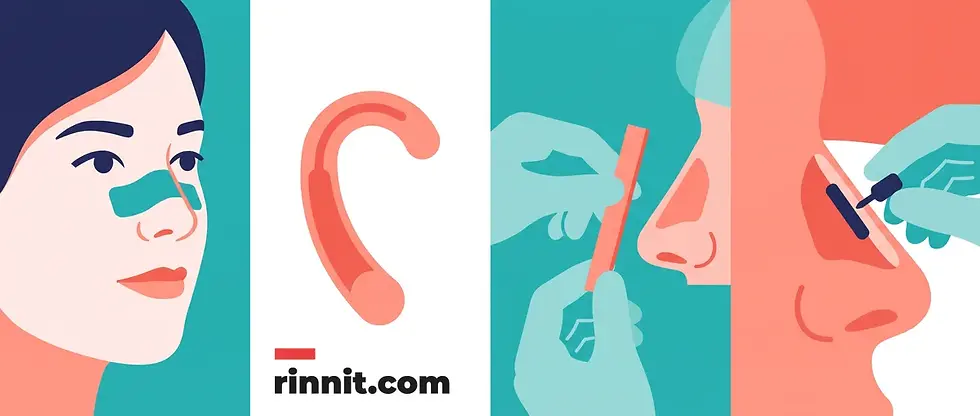
For people with mild symptoms, or those who are not candidates for surgery, mechanical dilators can provide relief. Breathing strips are adhesive strips applied to the bridge of the nose to lift the skin and open the nostrils from the outside. [1] [3] Internal nasal dilators are small devices placed inside the nostrils to press the cartilage outward. [1]
Surgical Correction
Surgery is often the best way to achieve a lasting solution for a structural collapse. The goal of these procedures is to reinforce the weakened areas and widen the airway.
Cartilage Grafting: Surgeons take small pieces of cartilage from the ear or rib and place them in the nose, for example as spreader grafts or alar batten grafts that act as structural supports to keep the valve open. [1]
Implants: Options include the titanium butterfly implant and an injectable implant called Latera®, which supports the weakened cartilage of the nasal wall. [1]
Suture Suspension: This technique uses sutures to connect tissue from the nasal valve to tissue beneath the eye, lifting the valve upward and outward. [1]
Combined Procedures: Many patients also have a septoplasty to straighten a deviated septum or a turbinate reduction to further clear the nasal passage. [1]
Conclusion
Nasal valve collapse is a significant structural issue that can limit quality of life by obstructing the most basic function of breathing. While temporary aids like breathing strips can help, many people find lasting relief through surgery that restores the integrity of the nasal airway. If you are struggling with chronic nasal congestion that does not improve with medication, a structural evaluation by an ear, nose, and throat specialist may be the first step toward breathing freely again.
For more helpful health resources and visual guides, explore our infographic templates.
Frequently Asked Questions
What exactly is a nasal valve?
The nasal valve is the narrowest part of your nasal airway. It extends from the middle of your nose down toward the nostrils. [1]
Is nasal valve collapse the same as a deviated septum?
No, but they often occur together. A deviated septum is a crooked wall between the nostrils, while a collapse is the weakening of the structures that support the side walls of the nose. [1]
Can I see a nasal valve collapse in the mirror?
Sometimes. If you breathe in deeply and your nostrils pinch shut, that is a sign of external nasal valve collapse. Internal collapse is not always visible. [1]
Why does my nose feel stuffy even when I don't have a cold?
A stuffy nose that does not improve with usual treatments can point to a structural obstruction such as nasal valve collapse rather than inflammation from a cold.
Does insurance cover nasal valve collapse surgery?
Coverage varies by insurer and country. Surgery done to restore breathing is sometimes treated as medically necessary, so check with your insurer and your surgeon's office.
What is the Cottle maneuver?
It is an exam in which the provider gently pulls your cheek to the side to widen the nasal valve. It helps identify where the collapse is. [1]
How long does it take to recover from nasal valve surgery?
Recovery depends on the procedure. Most surgeries are outpatient, so you can go home the same day, [1] and your surgeon will tell you when to resume normal activities.
Can aging cause my nose to collapse?
Yes, as we age, the tissue that supports the nasal valve can lose strength, which can narrow the airway. [1]
Are there non-surgical ways to fix this permanently?
No. Breathing strips and dilators can manage symptoms, but they do not permanently repair the structure.
What is an alar batten graft?
It is a piece of cartilage placed in the side wall of the nose to support it and help prevent collapse during inhalation. It is the most common grafting technique. [1]
Can a previous nose job cause this?
Yes. Collapse can follow rhinoplasty, although slight narrowing is much more common than severe collapse. [1]
What is the Latera implant?
It is an injectable implant that supports the side wall of the nose to help keep the airway open. [1]
Will my nose look different after surgery?
Surgeons aim to improve breathing while preserving or improving appearance. Ask your surgeon what changes to expect with your specific procedure.
Why is my breathing worse when I exercise?
Faster, deeper breathing creates more suction on the weakened valve, which can make it narrow further.
Can children have nasal valve collapse?
It is uncommon in children and is more often seen in adults because of aging, injury, or previous surgery.
What is the internal nasal valve?
It is the passageway in the middle of your nose, between the septum and the cartilage of the side wall.
What is the external nasal valve?
It is the area at the bottom of the nose, around the nostril opening. Collapse here is rarer but easier to see. [1]
Does a nasal endoscopy hurt?
It is generally not painful, though it may feel uncomfortable or tickle as the thin camera is passed into the nose.
Can allergies make a nasal valve collapse worse?
Inflammation from allergies can further narrow an already compromised airway.
Is the surgery performed under general anesthesia?
Many nasal reconstructive procedures are, but some minimally invasive options can be done with local anesthesia. Your surgeon will explain the plan for you.
Can I use breathing strips every night?
They are generally considered safe for regular use, though the adhesive can sometimes irritate the skin on the nose.
What is a spreader graft?
It is a strip of cartilage placed between the septum and the side wall of the nose to widen the internal nasal valve. [6]
Can trauma to the face cause this condition?
Yes, an injury to the nose can weaken the supporting bone and cartilage. [1]
How do I know if my nasal congestion is structural?
If decongestants and allergy sprays do not help, a structural cause is more likely. An ear, nose, and throat specialist can examine you to find out.
What is a turbinate reduction?
It is a procedure to reduce the size of the turbinates, the bony structures inside the nose that can block airflow. [1]
Is nasal valve collapse dangerous?
It is not typically life-threatening, but chronic obstruction can disturb sleep, make exercise harder, and reduce quality of life.
Can I blow my nose after surgery?
Follow your surgeon's instructions. Surgeons usually ask patients to avoid forceful nose blowing for a period of time to protect the repair.
What is the success rate of the surgery?
Most people report that their symptoms improve after surgery. [1] Results depend on the technique used and your anatomy, so ask your surgeon what to expect.
Does the cartilage for the graft come from my own body?
What is the NOSE questionnaire?
The Nasal Obstruction Symptom Evaluation (NOSE) is a standard questionnaire doctors use to measure how much nasal obstruction affects your life. [1] [2]
Can a collapsed nasal valve cause snoring?
Yes, restricted airflow often leads to mouth breathing and snoring. [1]
What is suture suspension?
It is a technique that uses sutures to connect tissue from the nasal valve to tissue beneath the eye, lifting the valve upward and outward. [1]
Is the Latera implant permanent?
The implant is designed to be absorbed gradually over time. [5] Ask your surgeon how long its support is expected to last and how healing contributes to the result.
Can I wear glasses after nasal valve surgery?
Ask your surgeon. Many are asked to avoid resting weight on the bridge of the nose for a period while it heals.
Does smoking affect recovery?
Smoking slows healing in general and can raise the risk of complications after surgery.
What is the difference between a septoplasty and a rhinoplasty?
A septoplasty straightens the internal wall (septum), while a rhinoplasty changes the shape or structure of the outer nose.
Can I fly after nasal valve surgery?
Ask your surgeon. Timing depends on the procedure and how you are healing.
Will I have scars after the surgery?
Some techniques use incisions inside the nose, while others may use a small incision at the base of the nose. Ask your surgeon what to expect.
Can a nasal valve collapse happen on only one side?
Yes, it can affect one side or both sides of the nose. [1]
What is the columella?
It is the strip of tissue at the bottom of your nose that separates your nostrils. [1]
How does a deviated septum contribute to collapse?
It divides the nasal valve into unequal parts, and the narrower side is more prone to collapsing. [1]
Can nasal valve collapse cause headaches?
The chronic struggle to breathe and poor sleep may contribute to headaches in some people.
Is there an age limit for the surgery?
There is no fixed age limit. Suitability depends on your overall health and your surgeon's assessment.
What is an injectable implant?
It is a minimally invasive way to support the nasal wall, using an implant placed through a small opening rather than a full surgical incision.
Can I use a CPAP machine with nasal valve collapse?
It can be harder to tolerate, because a collapsing valve can make it difficult for air to pass. Treating the obstruction may make CPAP easier to use.
What happens if I don't treat it?
It does not always get worse, but the supporting structures can continue to weaken without treatment, so symptoms may progress over time. [1]
Is the surgery painful?
There is usually some discomfort and pressure afterward, which is typically managed with pain medication.
Will I have packing in my nose after surgery?
Some surgeons use packing or splints for a few days to support the new structure.
Can I exercise after the procedure?
Avoid strenuous exercise until your surgeon says it is safe, usually to reduce the risk of bleeding and protect the repair.
Who is the best doctor to see for this?
A board-certified otolaryngologist (ear, nose, and throat specialist) or a facial plastic surgeon with experience in functional nasal surgery.
Related Reading
References
Cleveland Clinic. Nasal Valve Collapse: Symptoms, Causes, Test & Treatment. Cleveland Clinic. Last updated May 10, 2023. https://my.clevelandclinic.org/health/diseases/24977-nasal-valve-collapse
Clark DW, Del Signore AG, Raithatha R, et al. Nasal airway obstruction: prevalence and anatomic contributors. Ear Nose Throat J. 2018;97(6):173-176. PMID 30036414. https://doi.org/10.1177/014556131809700615
Kiyohara N, Badger C, Tjoa T, et al. A comparison of over-the-counter mechanical nasal dilators: a systematic review. JAMA Facial Plast Surg. 2016;18(5):385-389. PMID 27367589. https://doi.org/10.1001/jamafacial.2016.0291
Casale M, Moffa A, Giorgi L, et al. Could the use of a new novel bipolar radiofrequency device (Aerin) improve nasal valve collapse? A systematic review and meta-analysis. J Otolaryngol Head Neck Surg. 2023;52(1):42. PMID 37349806. https://doi.org/10.1186/s40463-023-00644-7
Sanan A, Most SP. A bioabsorbable lateral nasal wall stent for dynamic nasal valve collapse: a review. Facial Plast Surg Clin North Am. 2019;27(3):367-371. PMID 31280850. https://doi.org/10.1016/j.fsc.2019.04.001
Phillips SJ, Carney MJ, Jazayeri HE, et al. Dorsal augmentation with the dorsal extension spreader graft. J Craniofac Surg. 2023;34(2):715-717. PMID 35984040. https://doi.org/10.1097/SCS.0000000000008924
Disclaimer
This information is for educational purposes only and does not constitute medical advice. Always seek the counsel of a qualified healthcare professional regarding any medical condition or emergency. If you are experiencing a life-threatening emergency, call 911 or your local emergency services immediately.



Comments