Rhinoplasty: Reshaping and Restoring Nasal Function

Updated: 3 days ago
Medically reviewed by Dr. Baraa Alnahhal, MD · Last reviewed: October 2026
Quick Answer: What is rhinoplasty?
Rhinoplasty is a plastic surgery procedure that modifies the bone, cartilage and skin of the nose to enhance appearance or restore breathing. [1] It treats problems like a deviated septum, fractures or congenital abnormalities. [1] It is performed as outpatient surgery using an open or closed approach, and most people return to work or school within one to two weeks. [1]

What the research says
Functional rhinoplasty improves breathing. A meta-analysis of 16 studies of functional (nasal valve) rhinoplasty found that nasal obstruction scores on the NOSE questionnaire (out of 100 points) fell by 43 to 50 points over 12 months, although results varied widely between studies (Floyd et al., Otolaryngol Head Neck Surg, 2017) [4].
Septoplasty, often done together with rhinoplasty, also relieves blockage. In a meta-analysis of 2,577 patients, the average NOSE score fell by 48.8 points at 6 months (from a baseline of 68.1) after septoplasty with or without turbinate surgery (Alessandri-Bonetti et al., Laryngoscope, 2023) [5].
Open and closed rhinoplasty work about equally well. A review of 20 studies (12 in the meta-analysis, covering 1,067 patients: 539 open and 528 closed) found no significant differences in nasal function scores, satisfaction, swelling, bruising, operating time, or complication rates, so the choice depends on the patient’s needs and the surgeon’s expertise (Abi Zeid Daou et al., Plast Reconstr Surg Glob Open, 2025) [6].
What Is Rhinoplasty?
Rhinoplasty is a versatile surgical procedure designed to modify the shape, size, and function of the nose. [1] [3] Whether performed for cosmetic enhancement or to resolve medical issues, it aims to create facial balance and improve breathing. [3]
Rhinoplasty is not solely about appearance; it also serves important reconstructive purposes. People may seek the procedure to correct a birth defect [1] [2], repair a broken nose or other facial fracture (see our guide to facial fractures), open blocked nasal passages, or restore breathing function after disease, cancer treatment, traumatic injury, or burns.
Who is a candidate for rhinoplasty, and why is it done?
A suitable candidate is typically someone who has finished growing, is in good physical health, and has realistic expectations for the outcome. [1]
Requirement | Description |
Physical Growth | Facial bones must be fully developed before surgery. |
Health Status | Candidates should be in good physical health and should not smoke. |
Motivation | The decision should be personal, with clear, reasonable goals. |
Recovery Support | Patients need a driver and someone to stay with them overnight after surgery. |
What surgical approaches and techniques are used in rhinoplasty?
Surgeons use two primary methods depending on how much reshaping is needed. Open rhinoplasty involves an incision across the base of the nose (the columella), which allows the surgeon to lift the skin fully for major structural changes. [1] Closed rhinoplasty uses incisions made inside the nostrils for minor adjustments, so no external scar is left. [1]
Procedure Type | Primary Use | Technique Detail |
Open Rhinoplasty | Major reshaping and complex repairs. | Incision across the columella to lift the skin. |
Closed Rhinoplasty | Minor adjustments and refinements. | All incisions are made inside the nostrils. |
Functional Rhinoplasty | Restoring nasal form and breathing. | Focuses on structural defects, injury repair, or a deviated septum. |
Secondary Rhinoplasty | Correcting problems from a previous surgery. | Often more complex to repair than a first surgery. |
Rhinoplasty is typically an outpatient procedure, and the surgery usually takes between one and three hours. [1] [2] It is done under general anesthesia (you are asleep) or under local anesthesia with intravenous sedation (you are relaxed but not quite asleep). [1] You can read more in our guide to anesthesia types, safety, and recovery.
What is recovery like after rhinoplasty?
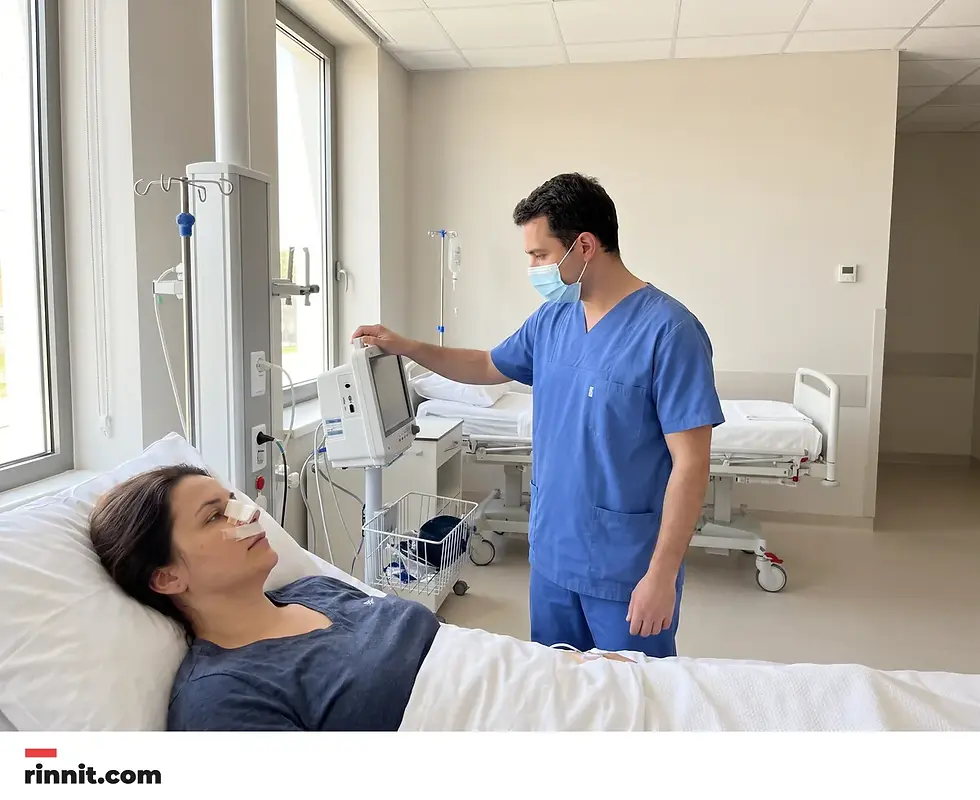
Healing after rhinoplasty is gradual and takes patience. Right after the procedure, a small splint is usually applied to maintain the new shape, and cotton gauze packing may be placed inside the nose. [1] Bruising and swelling around the nose and eyes are common [1], and most people see clear improvement within the first few weeks.
First days to two weeks: Packing, if used, is usually removed within 24 to 48 hours. [1] The splint stays on for one to two weeks [1], and bruising begins to fade.
One to three months: Swelling decreases slowly, and about 90% of it has resolved by three months. [1]
About one year: A small amount of swelling can remain for up to a year. [1] The final shape becomes clear as the last of the swelling disappears.

Conclusion
Rhinoplasty is a well-established way to harmonize facial features while also addressing breathing problems. By combining cosmetic goals with structural repair, surgeons can help patients feel more confident and breathe more easily. Understanding the recovery timeline and the surgical options is key to a satisfying outcome.
What are the next steps if you are considering rhinoplasty?
Considering rhinoplasty starts with consulting a board-certified surgeon, defining your goals, reviewing medications, planning recovery support and following post-op care instructions.
Consult a specialist: Schedule a meeting with a board-certified plastic or facial plastic surgeon.
Define your goals: Prepare a list of what you hope to achieve, both for appearance and for breathing.
Review your medications: Discuss all current supplements and medications with your healthcare provider.
Plan your recovery: Arrange for a driver and a support person for the first night after surgery.
Follow post-op care: Follow your surgeon’s instructions on the splint, packing, and activity levels.
Trusted resources: American Society of Plastic Surgeons, MedlinePlus (National Library of Medicine), Cleveland Clinic.
Frequently Asked Questions
What is the difference between rhinoplasty and septoplasty?
Rhinoplasty improves the appearance and structure of the nose, while septoplasty repairs the internal nasal septum, which can affect breathing. Both can be done at the same time to improve how the nose looks and works.
Is rhinoplasty an outpatient procedure?
Yes. Most patients go home the same day, but someone needs to drive them home and stay with them overnight.
How long does the surgery take?
The procedure usually takes between one and three hours, depending on its complexity.
Will I be asleep during the surgery?
Surgeons use either general anesthesia or local anesthesia with intravenous sedation.
How long do I need to wear a splint?
A nasal splint is usually worn for one to two weeks to protect the nose as it heals.
When will the swelling go away?
Most swelling (about 90%) resolves by three months, but minimal swelling can remain for up to a year.
What is asymmetrical healing?
It is common for one side of the nose to swell more than the other during healing, which can temporarily make the nose look crooked. This is a normal part of recovery, not a mistake, and it usually shows up within the first few weeks.
Is the procedure painful?
Most patients have only mild to moderate pain or discomfort, which usually eases within a few days to a week and can be managed with pain relievers as directed by your provider.
Can men get rhinoplasty?
Yes. Men account for nearly 20% of all rhinoplasty procedures performed in the United States each year.
How many rhinoplasty procedures are done each year?
More than 350,000 are performed each year in the United States.
What can rhinoplasty correct?
Rhinoplasty can correct a bulbous, upturned, hooked, or droopy nose; a deviated septum; nostrils that are too wide, too small, or too large; and bumps or dips on the bridge of the nose.
Can it help with breathing problems?
Yes. Functional rhinoplasty is designed to open blocked nasal passages. Most people who have it to fix a deviated septum notice improvement within about six weeks.
What is nonsurgical rhinoplasty?
Nonsurgical rhinoplasty uses dermal fillers to temporarily fill dips and irregularities in the nose, lift a droopy tip, or correct a small bump, without surgery.
When can I see the final results?
You will notice a difference about a week after the splint comes off, but the final shape usually becomes apparent after about one year.
What is secondary rhinoplasty?
Secondary rhinoplasty is a revision surgery that corrects or improves problems after a first nose surgery. About 15% of people need a follow-up surgery to make small changes.
Related Reading
Nonsurgical Rhinoplasty (Liquid Nose Job): Uses, Results and Risks explains nonsurgical rhinoplasty with fillers.
References
Cleveland Clinic. Rhinoplasty (Nose Job). Cleveland Clinic. November 3, 2022. https://my.clevelandclinic.org/health/procedures/11011-rhinoplasty
MedlinePlus. Rhinoplasty. National Library of Medicine. February 5, 2025. https://medlineplus.gov/ency/article/002983.htm
American Society of Plastic Surgeons. Rhinoplasty. American Society of Plastic Surgeons. Accessed October 7, 2026. https://www.plasticsurgery.org/cosmetic-procedures/rhinoplasty
Floyd EM, Ho S, Patel P, et al. Systematic review and meta-analysis of studies evaluating functional rhinoplasty outcomes with the NOSE score. Otolaryngol Head Neck Surg. 2017;156(5):809-815. PMID 28168892. https://doi.org/10.1177/0194599817691272
Alessandri-Bonetti M, Costantino A, Cottone G, et al. Efficacy of septoplasty in patients with nasal obstruction: a systematic review and meta-analysis. Laryngoscope. 2023;133(12):3237-3246. PMID 37017244. https://doi.org/10.1002/lary.30684
Abi Zeid Daou C, Jalkh RM, Semaan ZM, et al. Outcomes of open versus closed rhinoplasty, a systematic review and meta-analysis. Plast Reconstr Surg Glob Open. 2025;13(8):e7047. PMID 40771258. https://doi.org/10.1097/GOX.0000000000007047
Medical Disclaimer
This article is for informational purposes only and does not constitute medical advice. Always seek the advice of your physician or other qualified health provider with any questions you may have regarding a medical condition. Never disregard professional medical advice or delay in seeking it because of something you have read in this article.



Comments