Nasal Congestion: Causes, Symptoms, and Effective Relief Strategies

Updated: 3 days ago
Medically reviewed by Dr. Baraa Alnahhal, MD · Last reviewed: October 17, 2026
Quick Answer: Key Facts About Nasal Congestion
Nasal congestion, commonly called a stuffy nose, is mainly caused by allergic rhinitis, infections such as colds or flu, and environmental triggers, affecting roughly 12% of the U.S. population at any given time. [1] It usually lasts a few days; see a provider if it lasts more than 10 days. [1] Treatments include saline rinses, antihistamines and temporary decongestants. [1]
Feature | Details |
Common name | Stuffy nose. |
Primary causes | Allergic rhinitis, infections (cold/flu), and environmental triggers. [1] |
Prevalence | Affects roughly 12% of the U.S. population at any given time. [1] |
Typical duration | A few days; see a provider if it lasts more than 10 days. [1] |
Major risks | Sinusitis, nasal polyps, and middle ear infections. [1] |
Main treatments | Saline rinses, antihistamines, and temporary decongestants. |
What the research says
Saline rinses may help, but the evidence is modest. A Cochrane review of 5 trials (544 children and 205 adults) with acute upper respiratory infections found that most results showed no difference from usual care. The largest children's trial found a small reduction in nasal obstruction (mean difference −0.33 on a 4-point scale; 95% CI −0.47 to −0.19) and less decongestant use, with only minor nasal irritation reported. (King et al., Cochrane Database Syst Rev, 2015) [2]
In children, saline irrigation helped nasal symptoms specifically. A meta-analysis of 4 trials (569 infants and children) found a benefit for nasal symptoms (standardized mean difference −0.29; 95% CI −0.45 to −0.13) but not for respiratory symptoms or overall health status. (Cabaillot et al., Paediatr Respir Rev, 2020) [3]
Overusing decongestant sprays can backfire, and the best fix is unclear. A systematic review of 350 articles on rhinitis medicamentosa (rebound congestion from overusing topical decongestants) found only 9 that qualified, and concluded there is not enough evidence to set a standard treatment protocol. (Zucker et al., Otolaryngol Head Neck Surg, 2019) [4]
What Is Nasal Congestion?
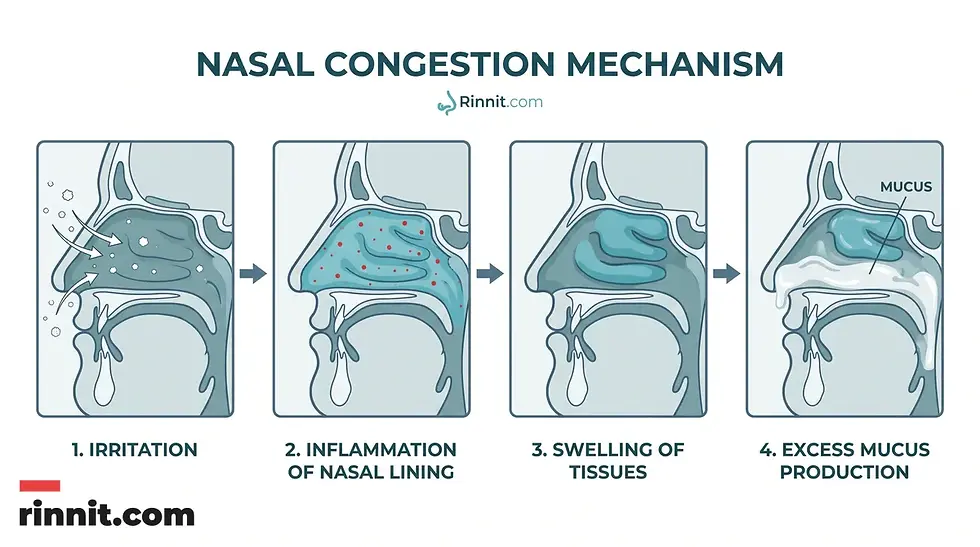
Nasal congestion is a common condition that occurs when the delicate tissues lining the inside of the nose become irritated. [1] This irritation sets off a biological chain reaction involving inflammation, swelling, and the production of excess mucus. [1] The combined effect of swollen tissues and thick mucus narrows the nasal passages, making it difficult to breathe comfortably through the nose.
While many people associate a stuffy nose with a simple cold, it is a widespread issue that affects approximately 12% of the U.S. population at any given moment. [1] Although it typically resolves on its own within a few days, untreated or chronic nasal congestion can lead to secondary complications such as sinusitis (sinus infection), nasal polyps, or infections of the middle ear. [1]
What are the symptoms of nasal congestion?
The most obvious sign of nasal congestion is difficulty breathing through the nose, which often leads to mouth breathing. [1] However, the condition can show up through several other symptoms:
Common Signs
Runny nose: Also known as rhinorrhea, this involves the flow of mucus from the nostrils.
Facial discomfort: Swelling and inflammation can lead to headaches or a feeling of pressure in the face and sinuses.
Respiratory effects: Sneezing and coughing are common as the body attempts to clear the nasal passages.
Special Considerations for Infants
In newborns and infants, nasal congestion is particularly significant because it can interfere with their ability to nurse or take a bottle. [1] Since babies are primarily nose-breathers, a stuffy nose can cause distress during feeding.
What Triggers a Stuffy Nose?
The nose serves as the body's first line of defense against airborne intruders. When particles like dust or pollen bypass the protective cilia (tiny hairs), the immune system responds with inflammation and mucus to wash the intruders away. [1]
Allergic vs. Nonallergic Rhinitis
Allergic rhinitis (hay fever): Triggered by airborne allergens such as pollen from trees and plants, dust mites, mold spores, and pet dander. [1]
Nonallergic rhinitis: This form of congestion is not caused by allergens. Instead, it can be triggered by environmental factors like smoke, paint fumes, or spicy foods. [1] Other causes include hormonal changes during puberty or pregnancy, certain medications for blood pressure or pain, and viral or bacterial infections like the common cold or sinusitis. [1]

How is nasal congestion diagnosed and evaluated?
Most people manage nasal congestion at home without ever needing a formal diagnosis. However, if symptoms persist or are severe, a healthcare provider may perform an evaluation:
Physical examination: A provider will check the nose, ears, and throat for signs of inflammation or infection. [1]
Nasal endoscopy: Using a small camera, a specialist can look deep inside the nasal passages to identify structural issues like polyps or tumors.
Imaging and cultures: In some cases, a CT scan may be ordered to look for obstructions, or a throat culture may be taken to check for specific bacterial infections. [1]
How is nasal congestion managed and treated?
Treatment for nasal congestion depends on the underlying cause. The goal is to reduce inflammation and clear the nasal passages to restore normal breathing.
Medical Treatments
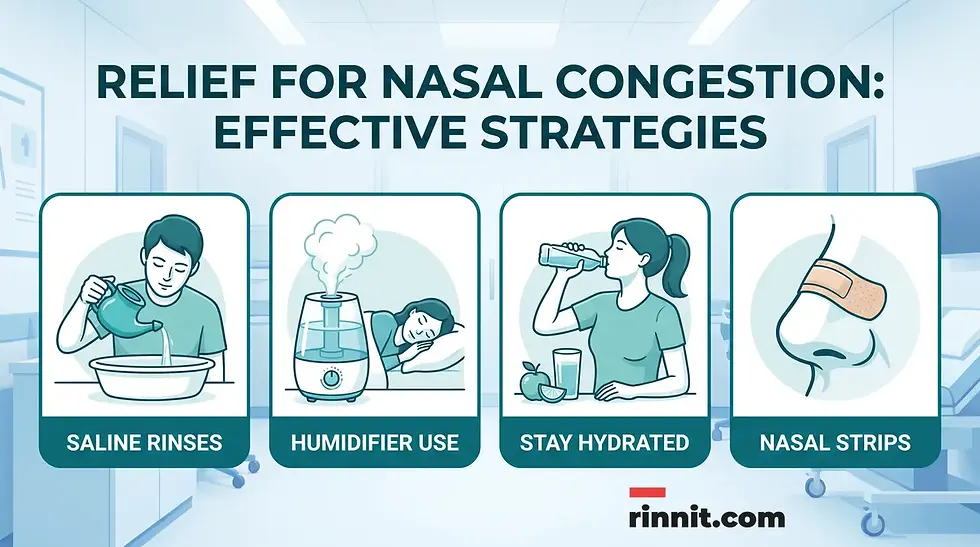
Saline solutions: Sprays or rinses help moisturize the nasal lining and wash away excess mucus. [1]
Medications: Antihistamines are effective for allergic triggers, while corticosteroid sprays help reduce long-term inflammation.
Decongestants: Nasal decongestant sprays can provide rapid relief but should generally not be used for more than three consecutive days, as this can lead to "rebound" congestion. [1]
Home Remedies and Daily Care
Hydration: Drinking plenty of water and clear fluids helps thin mucus, making it easier to clear. [1]
Environmental control: Using a humidifier adds moisture to the air, preventing the nasal passages from drying out. [1]
Nasal strips: Adhesive strips can help physically open the nasal passages for easier breathing, especially at night.
Conclusion
Nasal congestion is a nearly universal experience that, while often temporary and minor, can significantly impact daily comfort. By identifying personal triggers — whether they are seasonal allergens or environmental irritants — and using simple home care strategies, most people can find effective relief. However, staying vigilant for signs of infection is crucial for preventing more serious respiratory complications.
Take the next step. If your nose has stayed stuffy for more than 10 days, or congestion comes with a fever, talk to your health care provider. For more expert resources on managing respiratory health and allergies, keep exploring Rinnit.com.
Frequently Asked Questions
How long does a stuffy nose usually last?
Most cases caused by a cold or minor irritation clear up within a few days. If it lasts more than 10 days, you should consult a doctor.
Can stress cause nasal congestion?
Stress is recognized as an environmental trigger that can contribute to nonallergic rhinitis and nasal stuffiness.
Is a runny nose the same as congestion?
Not exactly. Congestion refers to the swelling and blockage of the nasal passages, while a runny nose (rhinorrhea) is the actual flow of mucus.
Why is my nose stuffy only at night?
Lying down can cause blood to pool in the nasal tissues, increasing swelling. Using a humidifier or nasal strips can help.
Can spicy food help clear my nose?
While spicy food may cause a temporary runny nose, it is actually considered a trigger for nonallergic rhinitis in some people.
Are nasal decongestant sprays safe?
Nasal decongestant sprays are generally safe for short-term use, but using them for more than about three consecutive days can cause your congestion to become worse when you stop (rebound congestion).
What color should mucus be?
Clear mucus is normal. Thick, discolored, or bloody mucus — especially with fever, facial pain, or symptoms lasting more than 10 days — is worth discussing with a provider, since it can signal an infection.
Can pregnancy cause a stuffy nose?
Yes. Hormonal changes during pregnancy can lead to nasal inflammation, a condition sometimes called pregnancy rhinitis.
How do I clear a baby's stuffy nose?
Since babies cannot blow their own noses, a nasal bulb syringe is often recommended to gently clear mucus before feeding.
Does drinking water really help?
Staying well-hydrated helps keep mucus thin, which makes it easier to clear from the nasal passages.
Can a stuffy nose cause an ear infection?
Yes. Untreated nasal congestion can block the tubes connecting the nose and ears, leading to middle ear infections.
What are nasal polyps?
Nasal polyps are noncancerous growths on the lining of the nasal passages or sinuses that can cause chronic congestion.
Should I use a humidifier or a vaporizer?
Both can help by adding moisture to the air, which soothes irritated nasal tissues and thins mucus. If you use a steam vaporizer, take care to avoid burns, especially around children.
Can allergies develop later in life?
Yes. It is possible to develop allergic rhinitis at any age, even if you have never had allergies before.
When is a fever a concern with congestion?
Nasal congestion with a fever often indicates that your body is fighting a bacterial or viral infection. Contact a provider if the fever is high or persists.
Related Reading
Read next on Rinnit.com:
References
Cleveland Clinic. Nasal Congestion (Stuffy Nose): What It Is, Causes & Treatment. Cleveland Clinic. July 1, 2022. https://my.clevelandclinic.org/health/diseases/17980-nasal-congestion
King D, et al. Saline nasal irrigation for acute upper respiratory tract infections. Cochrane Database Syst Rev. 2015;2015(4):CD006821. PMID 25892369. https://doi.org/10.1002/14651858.CD006821.pub3
Cabaillot A, et al. Saline nasal irrigation for acute upper respiratory tract infections in infants and children: A systematic review and meta-analysis. Paediatr Respir Rev. 2020;36:151-158. PMID 32312677. https://doi.org/10.1016/j.prrv.2019.11.003
Zucker SM, et al. Management of Rhinitis Medicamentosa: A Systematic Review. Otolaryngol Head Neck Surg. 2019;160(3):429-438. PMID 30325708. https://doi.org/10.1177/0194599818807891
Medical disclaimer
This article is for general informational purposes only and should not be used as a substitute for professional medical advice, diagnosis, or treatment. Always seek the advice of your physician or other qualified health provider with any questions you may have regarding a medical condition.



Comments