What Is Intermittent Explosive Disorder? A Plain-Language Guide to the Condition Behind Repeated Angry Outbursts

Updated: 2 days ago
Medically reviewed by Dr. Baraa Alnahhal, MD · Last reviewed: October 2026
Quick Answer
Intermittent explosive disorder is a mental health condition marked by repeated, sudden outbursts of impulsive, aggressive or violent anger that are too extreme for the situation, usually lasting less than 30 minutes. Its exact cause is unknown. Talk therapy, especially cognitive behavioral therapy, combined with medicine such as an SSRI helps people control aggressive impulses. [1] [2]
What the research says
IED is more common than once thought, and few people get treatment for their anger. In a nationally representative US survey of 9,282 adults, the lifetime prevalence of IED by criteria in the Diagnostic and Statistical Manual of Mental Disorders (DSM-IV) was 7.3% and the 12-month prevalence was 3.9%, with a mean age at onset of 14. Although 60.3% of people with IED had received professional treatment for emotional or substance problems, only 28.8% had ever been treated for their anger. (Kessler et al., Arch Gen Psychiatry, 2006)
Cognitive behavioral therapy reduces aggression. In a randomized trial of 44 adults with IED, 12 individual sessions of a multicomponent cognitive behavioral intervention (n = 19) reduced aggressive behavior and relational aggression more than time-matched supportive psychotherapy (n = 25). (McCloskey et al., Behav Ther, 2022) An earlier pilot trial of 45 adults found that 12 weeks of group or individual cognitive behavioral therapy reduced aggression, anger, and hostile thinking compared with a wait list, with large effects that held at 3 months. (McCloskey et al., J Consult Clin Psychol, 2008)
Fluoxetine helps, but it does not work for everyone. In a double-blind trial of 100 people with IED, the antidepressant fluoxetine produced a sustained reduction in aggression and irritability scores compared with placebo, and full or partial remission of impulsive aggressive behavior occurred in 46% of those treated, so less than half had full or partial remission. (Coccaro et al., J Clin Psychiatry, 2009)
What Is Intermittent Explosive Disorder, in Plain Language?
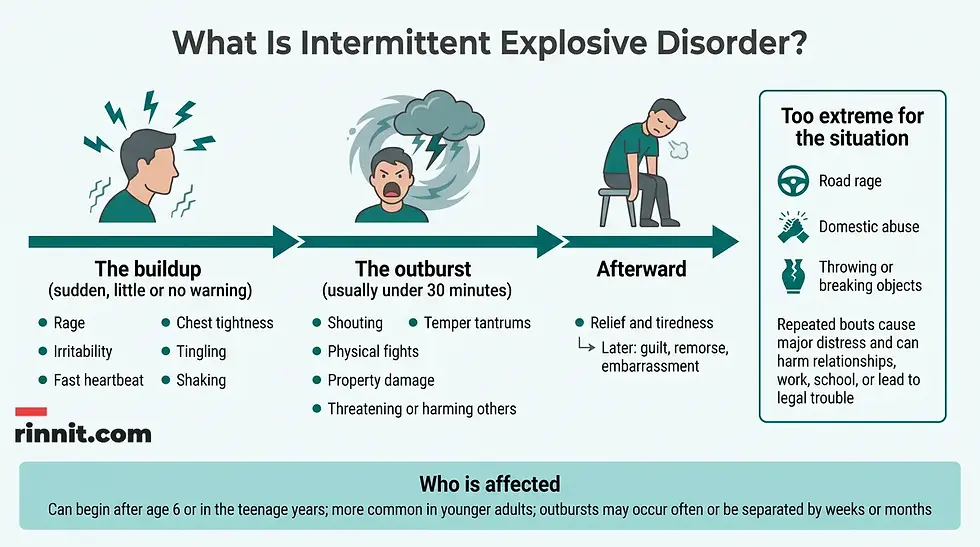
Intermittent explosive disorder involves repeated, sudden episodes of impulsive, aggressive, violent behavior or angry verbal outbursts. Known as IED, it is one of the impulse control disorders. The key feature is that the reactions are too extreme for the situation. Road rage, domestic abuse, throwing or breaking objects, or other temper tantrums may all be symptoms. [1]
These explosive outbursts occur off and on and cause major distress. They can harm relationships and cause problems at work or school, and they can lead to problems with the law. IED is a long-term condition that can go on for years, but the severity of outbursts may lessen with age. [1]
What Does an IED Outburst Feel Like?
Impulsive attacks and angry outbursts occur suddenly, with little or no warning, and usually last less than 30 minutes. These bouts may occur often or be separated by weeks or months. Verbal outbursts or less severe physical aggression may still occur in between, and you may be irritable, impulsive, aggressive, or angry most of the time. [1]
Before an aggressive bout, you may notice a sign of intermittent explosive disorder such as these:
Warning sign | What it feels like |
Rage | An intense, rising anger |
Irritability | Feeling annoyed or on edge |
Tension and energy | More tension and energy than usual |
Racing thoughts | Thoughts moving too fast to control |
Tingling | A tingling sensation in the body |
Shaking | Physical trembling |
Fast or pounding heartbeat | A racing or pounding pulse |
Chest tightness | Pressure or tightness in the chest |
The outbursts are much too intense for the situation, with no thought about what might happen as a result. They can include temper tantrums, long angry speeches, heated arguments, shouting, slapping, shoving or pushing, physical fights, property damage, and threatening or harming people or animals. After an outburst, you may feel relief and tiredness, and later guilt, sorrow for your actions, or embarrassment. [1]
What Causes Intermittent Explosive Disorder?
IED can begin in childhood, after the age of 6, or during the teenage years, and it is more common in younger adults than in older adults. The exact cause is not known. It may be caused by the living environment and learned behaviors, genetics, or differences in the brain. [1]
Possible cause | What it involves |
Living environment | Most people with this condition grew up in families where explosive behavior and verbal and physical abuse were common. Children who see or go through this type of violence early are more likely to have these same traits as they grow up. |
Genetics | Genetics may play a role. There could be a gene related to reacting more easily to stress, which may be passed from parents to children. |
Differences in how the brain works | There may be differences in the structure, function, and chemistry of the brain in people with IED compared with people who do not have the disorder. |
Who Is at Higher Risk?
Two factors raise the risk of developing IED: [1]
Risk factor | Why it matters |
History of physical abuse | Being abused as a child, being bullied, or going through other disturbing, shocking, or painful events can raise the risk. |
History of other mental health conditions | Antisocial personality disorder or borderline personality disorder may raise the risk. So can other disorders with disruptive behaviors, such as attention-deficit/hyperactivity disorder (ADHD). Problems with alcohol and drugs can also be a risk factor. |
Can Intermittent Explosive Disorder Cause Complications?
People with IED have a higher risk of several serious complications: [1]
Complication | How it shows up |
Problems with relationships | Others often think that people with IED are always angry. Verbal fights or physical abuse can happen often, which can lead to relationship problems, divorce, and family stress. |
Trouble at work, home, or school | Job loss, school suspension, car accidents, money problems, or trouble with the law. |
Problems with mood | Mood disorders such as depression and anxiety often occur with IED. |
Problems with alcohol and drug use | Problems with alcohol or drugs often occur along with IED. |
Physical health problems | Medical conditions are more common, including high blood pressure, diabetes, heart disease and stroke, ulcers, and ongoing pain. |
Self-harm | Self-injury or suicide attempts sometimes occur. |
If you are having thoughts of harming yourself or someone else, call your local emergency number right away. In the United States, you can also call or text 988 to reach the Suicide & Crisis Lifeline.
When Should You See a Doctor?
If you recognize a sign of intermittent explosive disorder in your own behavior, talk with your doctor or another health care professional about treatment options. You can also ask for a referral to a mental health professional. [1]
How Is Intermittent Explosive Disorder Diagnosed?

To diagnose IED and rule out other conditions that could be causing your symptoms, your health care professional will likely do two things. First, a physical exam, which may include lab tests, to try to rule out physical problems or alcohol or drug use that could be adding to or causing your symptoms. Second, a mental health evaluation, in which you talk with the professional about your symptoms, thoughts, feelings, and behavior. [2]
How Is Intermittent Explosive Disorder Treated?
No single treatment is best for everyone with intermittent explosive disorder (IED), though talk therapy such as cognitive behavioral therapy and certain medicines may help. Treatment usually includes talk therapy, also called psychotherapy, and medicine. [2]
How does talk therapy help?
Individual or group therapy sessions that focus on building skills can be helpful. A commonly used type, cognitive behavioral therapy (CBT), helps people with IED in five specific ways: [2]
CBT skill | What you learn |
Identify triggers | Learn which situations or behaviors may trigger an aggressive response. |
Practice relaxation techniques | Regular use of deep breathing, relaxing imagery, or yoga may help you stay calm. |
Develop new ways of thinking | Also called cognitive restructuring: think about a frustrating situation in new ways by spotting unreasonable thoughts and expectations and changing them to be more realistic. |
Use problem-solving | Plan ways to solve a frustrating problem by being assertive rather than aggressive. Even if you cannot fix the problem right away, having a plan can refocus your energy. |
Learn ways to improve communication | Listen to the message the other person is trying to share, then think about your best response rather than saying the first thing that comes to mind. |
Between therapy sessions, regularly practice the skills you have learned. [2]
What medicines are used?
Different types of medicine may help in the treatment of IED. These may include certain antidepressants, usually selective serotonin reuptake inhibitors (SSRIs). Anticonvulsant mood stabilizers or other medicines may be used if needed. Some people need to take medicine for a long time to help prevent explosive outbursts. SSRIs carry an FDA boxed warning about increased suicidal thoughts in children, teens and young adults under 25, especially in the first weeks or after dose changes, so report any worsening mood right away. [2]

How Can You Control Anger Between Treatments?
Coping well with anger is a learned behavior. Practice the skills you learn in therapy to help you recognize what triggers your outbursts and how to respond in ways that work for you instead of against you. [2]
Create a plan. Work with your doctor or mental health professional on a plan of action for when you feel yourself getting angry. For example, if you think you might lose control, try to remove yourself from that situation. Go for a walk or call a trusted friend to try to calm down.
Improve self-care. Getting a good night's sleep, exercising, and practicing stress management each day can help improve your frustration tolerance.
Avoid alcohol and street drugs. These can make you more aggressive and raise the risk of explosive outbursts.
Can Intermittent Explosive Disorder Be Prevented?
If you have IED, prevention is likely beyond your control unless you get treatment from a mental health professional. After you start treatment, follow the plan and practice the skills you learn. If medicine is prescribed, be sure to take it, and do not use alcohol or drugs. When possible, leave or avoid situations that upset you, and schedule personal time to lower stress so you can better handle an upcoming stressful or frustrating situation. [1]
What If a Loved One Won't Get Help?
Unfortunately, some people with IED do not seek treatment. If you are in a relationship with someone who has IED, take steps to protect yourself, your children, and your pets. The abuse is not your fault. No one deserves to be abused. [2]
How can you create a safety plan?
If a situation is getting worse and you suspect a loved one may be on the verge of an explosive episode, try to safely remove yourself and your children from the scene. But leaving someone with an explosive temper can be dangerous, so it is a good idea to make a plan ahead of time: [2]
Safety step | What to do |
Contact a domestic violence hotline or shelter | Do this either when the abuser is not home or from a friend's house. |
Secure firearms | Keep all firearms locked away or hidden. Do not give the abuser the key or combination to the lock. |
Pack an emergency bag | Include extra clothes, keys, personal papers, medicines, and money. Hide it or leave the bag with a trusted friend or neighbor. |
Tell someone you trust | Tell a trusted neighbor or friend about the violence so that person can call for help if concerned. |
Know where you will go | Know where you will go and how you will get there if you feel threatened, even if it means leaving in the middle of the night. You may want to practice getting out of your home safely. |
Create a code word or signal | Create a code word or visual signal that means you need the police. Share it with friends, family, and your children. |
Where can you get help to stay safe?
Resource | What it offers |
Police | In an emergency, call your local emergency number or your local law enforcement agency (911 in the United States). |
Your health care team or hospital emergency department | If you are injured, health care professionals can treat and document your injuries and tell you what local resources can help keep you safe. |
National Domestic Violence Hotline (United States) | 1-800-799-SAFE (1-800-799-7233). Available for crisis intervention and referrals to resources such as shelters, counseling, and support groups. |
Local domestic violence shelter or crisis center | Shelters and crisis centers generally provide 24-hour emergency shelter, plus staff who can offer advice on legal matters, advocacy, and support services. |
Counseling or mental health center | Many communities offer counseling and support groups for people in abusive relationships. |
Local court | Can help you get a restraining order that legally orders the abuser to stay away or face arrest. Local advocates may guide you through the process. You can also file assault or other charges when needed. |
How Should You Prepare for Your Appointment?
If you are concerned because you are having repeated emotional outbursts, talk with your doctor or another health care professional, or make an appointment with a mental health professional who specializes in emotional disorders, such as a psychiatrist, psychologist, or social worker. [2]
What can you do before your appointment?
Make a list of the symptoms you are having, including any that may not seem related; key personal information, including major stresses, recent life changes, and triggers for your outbursts; all medicines, vitamins, herbs, and supplements you take, including doses; and questions to ask. Some basic questions to ask include: [2]
Why am I having these angry outbursts?
Do I need any tests?
Is this condition temporary or long lasting?
What treatments are available, and which do you recommend?
Are there any side effects from treatment?
Are there any options other than the main approach you are suggesting?
I have other health conditions. How can I best manage these conditions together?
Is there a generic option to the medicine you are prescribing?
How long does therapy take to work?
What will your doctor ask?
Your health care or mental health professional is likely to ask questions such as: [2]
How often do you have angry outbursts, and what triggers them?
Have you injured or verbally abused others, or damaged property when angry?
Have you ever tried to hurt yourself?
Have your outbursts caused problems with your family, or at school or work?
Does anything seem to make these bouts occur more or less often?
Is there anything that helps calm you down?
Has anyone else in your family ever been diagnosed with a mental health condition?
Have you ever had a head injury?
Are you currently using alcohol, drugs, or other substances?
What is the bottom line on intermittent explosive disorder?
Intermittent explosive disorder is far more than "having a bad temper." It is a recognized mental health condition defined by repeated, sudden outbursts that are too extreme for the situation, usually lasting under 30 minutes but capable of damaging relationships, careers, finances, and freedom. [1] It is treatable: cognitive behavioral therapy teaches trigger identification, relaxation, new ways of thinking, problem-solving, and communication skills, while medicines such as SSRIs can help steady impulses, and some people need long-term medication. Severity often lessens with age, and treatment, along with avoiding alcohol and drugs, gives the best chance of regaining control. [2]
If you recognize this pattern in your own behavior, talk with your doctor or another health care professional about treatment, and ask for a referral to a mental health professional if you want one. If you are on the receiving end of someone else's explosive behavior, remember that the abuse is not your fault, and resources such as the National Domestic Violence Hotline in the United States (1-800-799-7233) and local shelters can help you plan a safe way forward. [2]
Learn more. For more evidence-based health guides, visit Rinnit.com.
Frequently Asked Questions
What exactly is intermittent explosive disorder?
IED involves repeated, sudden bouts of impulsive, aggressive, violent behavior or angry verbal outbursts that are too extreme for the situation. It is a long-term condition that can go on for years, but the severity of outbursts may lessen with age. [1]
How long do the outbursts last?
Outbursts occur suddenly, with little or no warning, and usually last less than 30 minutes. They may occur often or be separated by weeks or months, and verbal outbursts or less severe physical attacks may still occur in between. [1]
What does it feel like before an outburst?
Before an aggressive bout, you may feel rage, irritability, more tension and energy, racing thoughts, tingling, shaking, a fast or pounding heartbeat, and chest tightness. Afterward, you may feel relief and tiredness, and later guilt, sorrow, or embarrassment. [1]
Who gets intermittent explosive disorder?
It can begin in childhood, after age 6, or in the teenage years, and it is more common in younger adults than in older adults. [1]
What causes it?
The exact cause is not known. It may be caused by the living environment and learned behaviors, genetics, or differences in the structure, function, and chemistry of the brain. [1]
What are the risk factors?
A history of physical abuse, such as being abused as a child or bullied, raises the risk. So does a history of other mental health conditions, including antisocial personality disorder, borderline personality disorder, ADHD, and problems with alcohol and drugs. [1]
What complications can it cause?
People with IED have a higher risk of relationship problems, trouble at work, home, or school, mood disorders such as depression and anxiety, alcohol and drug problems, physical health conditions such as high blood pressure and heart disease, and self-injury or suicide attempts. [1]
How is it diagnosed?
Your health care professional will likely do a physical exam (which may include lab tests) to rule out physical problems or alcohol or drug use contributing to your symptoms, and a mental health evaluation about your symptoms, thoughts, feelings, and behavior. [2]
How is it treated?
There is no single best treatment for everyone, but treatment usually includes talk therapy and medicine. Cognitive behavioral therapy is commonly used, and medicines may include SSRI antidepressants and sometimes anticonvulsant mood stabilizers. Some people need medicine for a long time. [2]
Can I help control my anger between treatments?
Yes. Practice the skills you learn in therapy, make a plan for when you feel anger rising (such as removing yourself from the situation, going for a walk, or calling a trusted friend), improve self-care with sleep, exercise, and stress management, and avoid alcohol and street drugs. [2]
What if a loved one has IED but won't get help?
Protect yourself, your children, and your pets. The abuse is not your fault. Make a safety plan ahead of time, and contact a domestic violence hotline, shelter, or your local emergency number for help. In the United States, the National Domestic Violence Hotline is 1-800-799-7233. [2]
Can intermittent explosive disorder be prevented?
If you have IED, prevention is likely beyond your control unless you get treatment from a mental health professional. After you start treatment, follow the plan and practice your skills. [1]
Related Reading
Anger Management: Techniques for Emotional and Physical Health shares practical techniques for calming anger before it escalates.
Cognitive Behavioral Therapy (CBT): What It Is, What It Treats and What to Expect explains the talk therapy often used to treat anger outbursts.
Beyond Normal Moodiness: Understanding Disruptive Mood Dysregulation Disorder (DMDD) in Children explains a childhood condition with severe, frequent temper outbursts.
ADHD: Complete Guide to Symptoms, Causes, Diagnosis & Treatment explains a condition that often occurs alongside impulsive anger problems.
References
Mayo Clinic Staff. Intermittent explosive disorder: Symptoms and causes. Mayo Clinic. Updated January 6, 2024. https://www.mayoclinic.org/diseases-conditions/intermittent-explosive-disorder/symptoms-causes/syc-20373921
Mayo Clinic Staff. Intermittent explosive disorder: Diagnosis and treatment. Mayo Clinic. Updated January 6, 2024. https://www.mayoclinic.org/diseases-conditions/intermittent-explosive-disorder/diagnosis-treatment/drc-20373926
Kessler RC, Coccaro EF, Fava M, et al. The prevalence and correlates of DSM-IV intermittent explosive disorder in the National Comorbidity Survey Replication. Arch Gen Psychiatry. 2006;63(6):669-678. PMID 16754840. https://doi.org/10.1001/archpsyc.63.6.669
McCloskey MS, Chen EY, Olino TM, et al. Cognitive-behavioral versus supportive psychotherapy for intermittent explosive disorder: a randomized controlled trial. Behav Ther. 2022;53(6):1133-1146. PMID 36229112. https://doi.org/10.1016/j.beth.2022.05.001
McCloskey MS, Noblett KL, Deffenbacher JL, et al. Cognitive-behavioral therapy for intermittent explosive disorder: a pilot randomized clinical trial. J Consult Clin Psychol. 2008;76(5):876-886. PMID 18837604. https://doi.org/10.1037/0022-006X.76.5.876
Coccaro EF, Lee RJ, Kavoussi RJ. A double-blind, randomized, placebo-controlled trial of fluoxetine in patients with intermittent explosive disorder. J Clin Psychiatry. 2009;70(5):653-662. PMID 19389333. https://doi.org/10.4088/JCP.08m04150
Medical disclaimer
This article is for general educational purposes only and is not a substitute for professional medical advice, diagnosis, or treatment. Always seek the advice of a physician or other qualified health provider with any questions about a medical condition. Never disregard professional medical advice or delay seeking it because of something you have read here.



Comments