Beyond Normal Moodiness: Understanding Disruptive Mood Dysregulation Disorder (DMDD) in Children

Updated: 2 days ago
Medically reviewed by Dr. Baraa Alnahhal, MD · Last reviewed: October 2026
Quick Answer
Disruptive mood dysregulation disorder (DMDD) is a childhood condition causing chronic, intense irritability and frequent anger outbursts out of proportion to the situation. [4] It is treated with psychotherapy and/or medication. [4] Unlike bipolar disorder, its symptoms are ongoing rather than episodic, and it is more likely to change into depression or anxiety later in life than to persist lifelong. [4] [6]
What the research says
DMDD is common in clinics but much rarer when every diagnostic criterion is applied. A systematic review and meta-analysis of 14 studies in youths under 18 found a prevalence of 3.3% (95% CI 1.4 to 6.0) in community samples and 21.9% (95% CI 15.5 to 29.0) in clinical populations. When all diagnostic criteria were applied, community prevalence fell to 0.82% (95% CI 0.11 to 2.13), and anxiety, depressive disorders and ADHD were the most frequent co-occurring conditions. The authors cautioned that study quality and heterogeneity limit the findings (PubMed: Benarous et al., Eur Psychiatry, 2025 [1]).
Treatments for persistent irritability show medium to large average effects. A meta-analysis of 101 studies (80 pharmacological, 13 nonpharmacological, 8 combined) found a large pooled effect on irritability (Hedges' g = 1.62), with g = 1.85 for pharmacological and g = 1.11 for nonpharmacological interventions. For youth with ADHD, DMDD, disruptive behavior disorders or severe mood dysregulation the effect was medium (g = 0.64), and heterogeneity was very high (I² = 94.3%) (PubMed: Breaux et al., J Am Acad Child Adolesc Psychiatry, 2023 [2]).
Evidence from DMDD-specific studies is still small. A meta-analysis of 11 studies (6 pharmacological, 5 nonpharmacological) found statistically significant improvements in irritability after treatment, with high heterogeneity (I² = 85%). Drug interventions improved irritability more than non-drug interventions, open trials showed larger gains than randomized controlled trials, and the authors called for larger randomized trials (PubMed: Zhang et al., J Child Adolesc Psychopharmacol, 2024 [3]).
What Is Disruptive Mood Dysregulation Disorder (DMDD)?
Disruptive mood dysregulation disorder (DMDD) is a mental health condition that causes chronic, intense irritability and frequent anger outbursts in children. [4]
While every child goes through periods of moodiness, DMDD is more severe and longer lasting. The temper outbursts are greatly out of proportion in intensity and/or duration to the situation, and the condition disrupts a child's daily life. [4]

One important boundary: to meet the diagnostic criteria, symptoms must begin before the age of 10. [4]
Quick Facts | Detail |
What it is | A childhood condition causing chronic irritability and frequent anger outbursts |
When symptoms must begin | Before age 10 |
When it is diagnosed | Only in children ages 6 to 18 (not under 6, not over 18) [4] |
How common it is | Estimated 2% to 5% of children in the U.S. [4] |
Official diagnosis year | 2013 |
Treatment first line | Psychotherapy (talk therapy), before trying medication [4] |
How Common Is DMDD?
DMDD is a relatively new diagnosis, so research is limited on exactly how common it is. Early research shows it may affect around 2% to 5% of children in the U.S. [4]
DMDD vs. Oppositional Defiant Disorder (ODD) vs. Bipolar Disorder
Parents often wonder how DMDD differs from two conditions with overlapping features. Understanding the distinction matters, because it shapes diagnosis and treatment.
Oppositional defiant disorder (ODD) is a behavioral condition in which a child displays a continuing pattern of uncooperative, defiant and sometimes hostile behavior toward people in authority. [4] DMDD shares some overlap but is considered a more severe condition with a significant mood component. If a child meets the criteria for both ODD and DMDD, they are only diagnosed with DMDD. [4]
Bipolar disorder (BD) is a lifelong mood disorder that causes intense shifts in mood, energy levels, thinking patterns and behavior. These shifts can last for days, weeks or months. [4] The key difference is pattern: bipolar symptoms are contained within episodes, while DMDD symptoms are ongoing. Bipolar disorder is also less common in children and adolescents. [4]
Feature | DMDD | Oppositional Defiant Disorder (ODD) | Bipolar Disorder (BD) |
Core pattern | Chronic irritability + frequent outbursts | Defiant, uncooperative behavior toward authority | Intense mood/energy shifts in episodes |
Mood component | Significant and constant | Behavioral | Episodic |
Symptom pattern | Ongoing | Ongoing | Contained within episodes lasting days to months |
Severity relative to DMDD | — | DMDD is more severe | Lifelong condition; less common in children and adolescents |
If criteria for both are met | Diagnosed with DMDD | — | — |
Typical outcome over time | More likely to “change” into major depressive disorder or generalized anxiety disorder later in life | — | Usually lifelong |
Why the distinction took time. Before DMDD became an official diagnosis in 2013, most children with DMDD were misdiagnosed with bipolar disorder. [4] [6] The new diagnosis gives clinicians a more accurate framework for treating chronic childhood irritability.
What are the signs and symptoms of DMDD?
DMDD symptoms usually begin before the age of 10. [4] A child with DMDD experiences a recognizable pattern: a baseline of irritability punctuated by outsized outbursts, repeated across more than one setting.
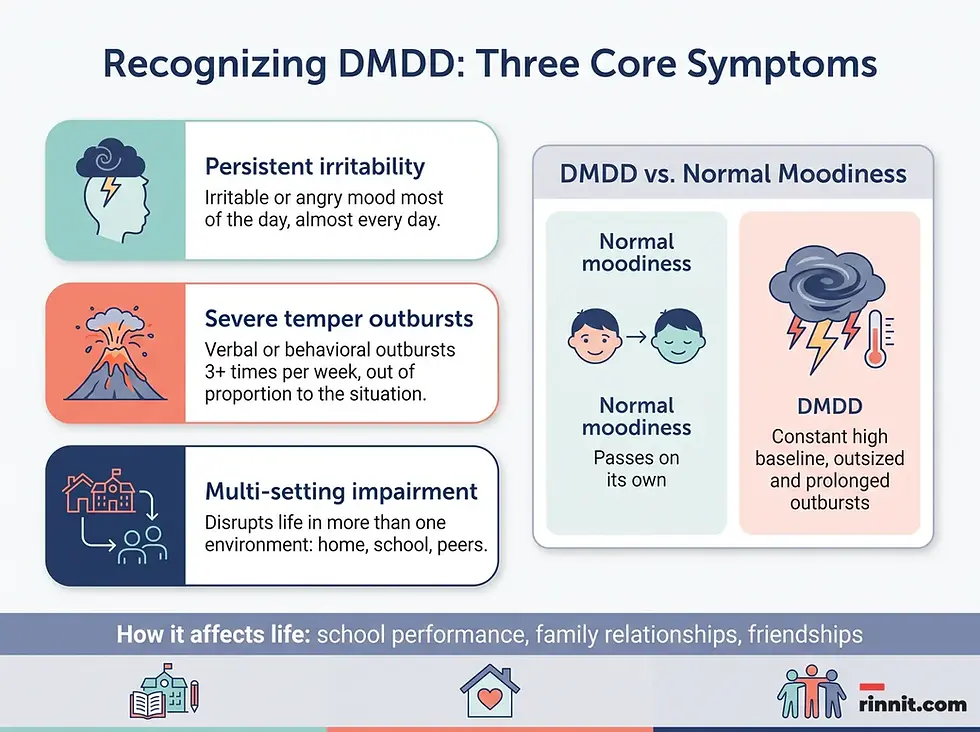
The three defining features are:
Symptom | What It Looks Like |
Persistent irritability | An irritable or angry mood most of the day, almost every day [4] |
Severe temper outbursts | Verbal or behavioral outbursts that are out of proportion to the situation, usually happening three or more times per week [4] |
Multi-setting impairment | Issues with daily functioning due to irritability in more than one environment, such as at home, in school or with peers [4] |
DMDD vs. Normal Childhood Moodiness
All children get moody sometimes. The difference is intensity, frequency and persistence. Normal moodiness passes. DMDD irritability sits at a high baseline most of the day, nearly every day, and the outbursts are far stronger or longer than the situation calls for.
How DMDD Affects a Child's Life
DMDD is not just an emotional pattern — it carries real consequences. The condition can impair a child's quality of life and school performance, and it can negatively affect relationships with family members and friends. [4]
What Causes DMDD?
Because DMDD is a relatively new diagnosis, researchers don't have much insight into what causes it. Like oppositional defiant disorder and bipolar disorder, DMDD likely develops from a complex combination of biological, genetic and environmental factors. [4]
How is DMDD diagnosed?
Diagnosis is a careful, structured process — not a quick label. Mental health professionals diagnose DMDD if a child meets the condition's criteria as described in the Diagnostic and Statistical Manual of Mental Disorders (DSM-5) for at least 12 months. [4] The DSM-5, published by the American Psychiatric Association, is the standard reference book for recognized mental illnesses. [7]

A child showing signs of DMDD will likely need to see a child and adolescent psychologist or psychiatrist. These mental health professionals use specially designed interview and assessment tools to evaluate the child for a mental health condition. [4]
Psychiatrists and psychologists often rely on reports from the child's parents, siblings, friends and teachers to get a full understanding of their behavior. [4]
Diagnostic Requirement | DSM-5 Criterion |
Mood pattern | Irritable or angry mood most of the day, almost every day |
Outbursts | Severe verbal or behavioral outbursts out of proportion to the situation, three or more times per week |
Duration | Criteria met for at least 12 months |
Settings | Impairment in more than one environment (home, school, peers) |
Age of onset | Symptoms begin before age 10 |
Age at diagnosis | Not diagnosed under 6 or over 18 |
Conditions That Can Look Similar
DMDD can occur at the same time as other conditions associated with irritability, such as attention-deficit/hyperactivity disorder (ADHD) or anxiety disorders. [4] [6] A child's psychologist or psychiatrist will carefully assess the child to develop an accurate diagnosis.
What are the treatment options for DMDD?
Because DMDD is a newly recognized condition, there haven't been many research studies on its treatment. [4] [5] Current treatments are mainly based on research focused on other childhood conditions associated with irritability, such as anxiety and ADHD. The good news is that many of these treatments also work for DMDD.
The two main treatment options are psychotherapy (talk therapy) and medications. In many cases, healthcare providers recommend psychotherapy first before trying medications. [4]
Psychotherapy for DMDD
Psychotherapy, also called talk therapy, is a term for a variety of treatment techniques that aim to help a person identify and change unhealthy emotions, thoughts and behaviors. It takes place with a trained, licensed mental health professional, such as a psychologist or psychiatrist, and can provide support, education and guidance to the child and/or the family.
Therapy Type | How It Helps With DMDD |
Cognitive behavioral therapy (CBT) | The most common form of psychotherapy. Helps the child examine their thoughts and emotions, understand how thoughts affect actions, unlearn negative thoughts and behaviors, and increase the ability to tolerate frustration without having an outburst [4] |
Dialectical behavior therapy (DBT) | Based on CBT but specially adapted for people who experience emotions very intensely. Helps the child regulate emotions and avoid extreme or prolonged outbursts [4] |
Parent training | Often combined with child therapy. Teaches parents and caregivers more effective ways to respond to irritable behavior, including anticipating outburst triggers and attempting to prevent them, being consistent, and using positive reinforcement to decrease unwanted behaviors and promote healthy behaviors [4] |
Medication for DMDD
Currently, the U.S. Food and Drug Administration (FDA) hasn't approved any medications specifically for treating DMDD. [4] However, healthcare providers may prescribe certain medications to help manage symptoms.
Medication Category | Role in DMDD Treatment |
Stimulants | Traditionally prescribed for ADHD. Research suggests they may also decrease irritability in children with DMDD [4] |
Antidepressants | Sometimes prescribed for irritability and mood issues. One study suggests citalopram, when combined with methylphenidate (a stimulant), can decrease irritability in children with DMDD [4] |
Atypical antipsychotic (neuroleptic) medications | Sometimes prescribed for irritability, severe outbursts or aggression. Typically only used if all other treatment approaches have been unsuccessful [4] |
All medications have side effects. It's important to monitor a child for any side effects and talk to their provider if side effects develop. [4]
What is the outlook for children with DMDD?
Children with DMDD can experience significant issues in school, at home and in social relationships. [4]
If left untreated, children with DMDD are at high risk of developing depression and/or anxiety disorders in adulthood. [4] Because of this, it's important to seek help for a child as soon as possible if they're showing signs of DMDD.
The long-term picture has an encouraging element, however: DMDD is more likely to “change” into major depressive disorder or generalized anxiety disorder later in life, rather than persisting as a lifelong condition the way bipolar disorder typically does. [4] [6]
Can DMDD Be Prevented?
Although it might not be possible to prevent DMDD, recognizing and acting on symptoms when they first appear can minimize distress to the child and family. It can also help prevent many of the problems associated with the condition. [4]
How can parents help a child live with DMDD?
If your child has DMDD, aside from getting them professional care, there are practical steps that help both the child and the parents.
Strategy | What It Involves |
Learn about DMDD | Talk to the healthcare provider or mental health professional. Ask questions about treatment options and new research [4] |
Stay in regular contact with the provider | Work closely with the provider to make treatment decisions that are best for the child [4] |
Partner with the school | Work with the child's teacher or school counselor to develop strategies and accommodations that help the child thrive [4] |
Use time-outs strategically | If a conflict with the child is escalating, take a break and step away. This models healthy behavior for the child; support the child if they take a break to prevent escalation [4] |
Take care of yourself | Maintain interests and hobbies, manage stress, and gain support from the other adults interacting with the child [4] |
When to contact the provider: If a diagnosed child's behavior becomes more severe or further disrupts family or school life, talk to their provider. [4]
What is the bottom line on DMDD in children?
Constantly irritable children and teens can be very challenging for parents. While some moodiness is normal at any age, frequent, disruptive, disproportionate behavior that spans more than one setting and persists for months may indicate disruptive mood dysregulation disorder.
The most important step is timing. Starting treatment early matters, and untreated DMDD raises the risk of depression and anxiety in adulthood. If your child's irritability and outbursts fit this pattern, the first step is to talk with a healthcare or mental health provider — and to remember that effective help exists.
Next step: If these signs sound familiar, book an evaluation with a child psychologist or psychiatrist. Ask specifically whether DMDD criteria are being considered, and discuss starting with evidence-based psychotherapy.
Frequently Asked Questions
1. What is disruptive mood dysregulation disorder (DMDD)?
DMDD is a childhood mental health condition that causes chronic, intense irritability and frequent anger outbursts that are out of proportion to the situation. It is treatable with psychotherapy and/or medication, and symptoms must begin before age 10 to meet the diagnosis.
2. How is DMDD different from normal childhood moodiness?
Normal moodiness passes. In DMDD, the irritability is present most of the day almost every day, outbursts happen three or more times per week, and the symptoms impair daily functioning in more than one environment, such as home and school.
3. What are the main symptoms of DMDD?
The three defining symptoms are an irritable or angry mood most of the day almost every day, severe verbal or behavioral outbursts three or more times per week that are out of proportion to the situation, and impairment in more than one setting.
4. At what age does DMDD start?
Symptoms must begin before age 10. Healthcare providers don't diagnose DMDD in children under 6 or in adolescents and adults over 18.
5. How common is DMDD?
Early research suggests DMDD may affect around 2% to 5% of children in the U.S. It is a relatively new diagnosis (added in 2013), so research on its true prevalence is still limited.
6. Is DMDD the same as bipolar disorder?
No. Bipolar symptoms come in episodes that can last days to months, while DMDD symptoms are ongoing and constant. Bipolar disorder is less common in children and usually lifelong, whereas DMDD is more likely to change into depression or anxiety disorders later in life.
7. Can a child have both DMDD and oppositional defiant disorder (ODD)?
ODD and DMDD can overlap, but DMDD is considered the more severe condition with a significant mood component. If a child meets criteria for both, they are only diagnosed with DMDD.
8. How is DMDD diagnosed?
A child and adolescent psychologist or psychiatrist diagnoses DMDD when DSM-5 criteria are met for at least 12 months. They use interviews, assessment tools and reports from parents, siblings, friends and teachers, and check for co-occurring conditions like ADHD or anxiety.
9. What is the first-line treatment for DMDD?
Psychotherapy (talk therapy) is recommended first in many cases. Options include cognitive behavioral therapy (CBT), dialectical behavior therapy (DBT) and parent training. Medication may be added if therapy alone isn't enough.
10. Are there medications approved specifically for DMDD?
No. The FDA hasn't approved any medication specifically for DMDD. Providers sometimes prescribe stimulants, antidepressants or atypical antipsychotics off-label to manage symptoms, and all medications carry side effects that should be monitored.
11. What happens if DMDD goes untreated?
Children with untreated DMDD are at high risk of developing depression and/or anxiety disorders in adulthood. The condition also causes significant problems at school, at home and in relationships, so early treatment is important.
12. Can DMDD be prevented?
DMDD might not be preventable, since its exact causes are unknown. But recognizing and acting on symptoms when they first appear can minimize distress and help prevent many associated problems.
References
Benarous X, Lahaye H, Consoli A, et al. Prevalence and comorbidity rates of disruptive mood dysregulation disorder in epidemiological and clinical samples: systematic review and meta-analysis. Eur Psychiatry. 2025;68(1):e11. PMID 39809705. https://doi.org/10.1192/j.eurpsy.2024.1813
Breaux R, Baweja R, Eadeh HM, et al. Systematic review and meta-analysis: pharmacological and nonpharmacological interventions for persistent nonepisodic irritability. J Am Acad Child Adolesc Psychiatry. 2023;62(3):318-334. PMID 35714838. https://doi.org/10.1016/j.jaac.2022.05.012
Zhang Y, Zhang W, Yu E. Systematic review and meta-analysis: pharmacological and nonpharmacological interventions for disruptive mood dysregulation disorder. J Child Adolesc Psychopharmacol. 2024;34(5):217-225. PMID 38683583. https://doi.org/10.1089/cap.2024.0013
Cleveland Clinic. Disruptive Mood Dysregulation Disorder (DMDD). Cleveland Clinic. Oct. 31, 2022. https://my.clevelandclinic.org/health/diseases/24394-disruptive-mood-dysregulation-disorder-dmdd
National Institute of Mental Health. Disruptive Mood Dysregulation Disorder (DMDD). NIMH. Last reviewed Dec. 2024. https://www.nimh.nih.gov/health/topics/disruptive-mood-dysregulation-disorder-dmdd
American Academy of Child and Adolescent Psychiatry. Disruptive Mood Dysregulation Disorder (DMDD). Facts for Families No. 110. AACAP. May 2019. https://www.aacap.org/AACAP/Families_and_Youth/Facts_for_Families/FFF-Guide/Disruptive-Mood-Dysregulation-Disorder-_DMDD_-110.aspx
American Psychiatric Association. Diagnostic and Statistical Manual of Mental Disorders (DSM-5-TR). Psychiatry.org. Accessed Oct. 8, 2026. https://www.psychiatry.org/psychiatrists/practice/dsm
Medical Disclaimer
This article is for informational purposes only and does not constitute medical advice. Always seek the advice of your physician or other qualified health provider with any questions you may have regarding a medical condition. Never disregard professional medical advice or delay in seeking it because of something you have read here.



Comments