What Is Gluteal Tendinopathy?

Updated: 2 days ago
Medically reviewed by Dr. Baraa Alnahhal, MD · Last reviewed: October 2026
Quick Answer
Gluteal tendinopathy is a disorder in which the tendons connecting the gluteal muscles to the hipbone break down or deteriorate [1]. It causes moderate to severe pain on the outside of the hip that often worsens with activity, sitting cross-legged or lying on the painful side [1] [3]. Diagnosis involves an exam and sometimes imaging [1], and specialized physical therapy is the main treatment [2].
Key takeaways
Primary symptom: Chronic, often severe pain on the outside (lateral) of the hip [3].
Commonly affected: Women over 40, runners and other active people, and people with lower back pain [1].
Underlying cause: Tendon tissue breakdown from overuse, underuse, or compression [1].
Primary treatment: Targeted physical therapy and strengthening exercises [2].
Recovery time: About 7 in 10 people see significant improvement after eight weeks of physical therapy exercises [1] [2].
What the research says
Education plus exercise beat an injection and doing nothing. In a randomized trial of 204 adults (167 women, mean age 54.8) with MRI-confirmed gluteal tendinopathy, a physiotherapist-led education and exercise program (14 sessions over 8 weeks) was compared with one corticosteroid injection and a wait-and-see approach. At 8 weeks, global improvement was reported by 51 of 66 people in the exercise group, 38 of 65 in the injection group, and 20 of 68 in the wait-and-see group, with average pain scores (0 to 10) of 1.5, 2.7, and 3.8. At 52 weeks, improvement was reported by 51 of 65, 36 of 63, and 31 of 60, with pain scores of 2.1, 2.3, and 3.2 (Mellor et al., BMJ, 2018) [5].
Pooled data support exercise as first-line care. A meta-analysis of 6 randomized trials with 733 people with greater trochanteric pain syndrome found that, in the long term, exercise slightly reduced hip pain and disease severity and slightly improved physical function compared with a control condition. Compared with corticosteroid injection, exercise improved long-term global rating of change, and no serious adverse events were reported. The authors note the results rest on few trials and a moderate number of patients (Kjeldsen et al., Physiotherapy, 2024) [6].
Injections help briefly, and the effects of any one treatment are modest. A systematic review of higher-quality randomized trials found moderate-strength evidence that exercise and education has a medium effect on pain (SMD 0.95) and function (SMD 0.91) in the short term, with small effects in the medium and long term. Corticosteroid injection had moderate-strength evidence of a small effect on pain in the short term (SMD 0.51). The authors cautiously recommend exercise and education as the core approach (Bremer et al., Clin Rehabil, 2025) [7].
What is gluteal tendinopathy?

Gluteal tendinopathy is a type of musculoskeletal disorder that affects the tendons in the hip and buttock region. These tendons anchor the gluteus medius and gluteus minimus muscles to the greater trochanter, the bony ridge at the top of the thighbone (femur), and most cases involve these two tendons [3]. When the tendons are exposed to repetitive stress, sudden injury, or even long periods of inactivity, they can start to deteriorate, which leads to the chronic pain that defines the condition [1]. It was once called trochanteric bursitis, but tendon problems are now believed to be the main source of this kind of outer-hip pain (Grimaldi and Fearon, JOSPT, 2015) [4].
Anatomy of the Gluteal Region
The gluteal muscles stabilize the pelvis and make walking, running, and standing possible. Their tendons have to be both strong and flexible to handle the forces of daily activity.
Muscle group | Primary function | Attachment point |
Gluteus maximus | Hip extension and external rotation | Pelvis to femur |
Gluteus medius | Hip abduction and pelvic stabilization | Pelvis to greater trochanter |
Gluteus minimus | Hip abduction and internal rotation | Pelvis to greater trochanter |
What are the symptoms and warning signs of gluteal tendinopathy?
The hallmark of gluteal tendinopathy is pain on the outer hip that may extend down the outside of the thigh toward the knee or lower leg [1] [3]. You may also feel it in the groin, lower back, or buttock [1] [2], and the area over the greater trochanter is often tender to the touch [1]. The pain is often a deep ache that becomes sharper with certain movements.

Common Pain Triggers
Symptoms often flare during activities that put pressure or tension on the gluteal tendons:
Activity | Why it causes pain |
Places a higher load on the gluteal tendons with each step. | |
Directly compresses the tendon against the bone. | |
Getting out of bed or standing after sitting [1] | Stiffness and pain in the first few steps [2]. |
A bent hip tilted inward compresses the tendons. | |
Demands intense stabilization from the gluteus medius. | |
Crossing your legs | Pulls the hip inward and compresses the tendons [2]. |
What causes gluteal tendinopathy, and who is at risk?
Gluteal tendinopathy often develops from a mix of factors, including overuse, compression, underuse, hip anatomy, hormonal changes after menopause and conditions such as diabetes [1] [2]. It often develops from a combination of mechanical and physiological factors:
Overuse: Putting excessive force on the tendons through high-impact activity such as running, skiing, or dancing without enough recovery [1] [3].
Compression: Direct trauma from a fall, or repeated pressure from weight gain or obesity [1].
Underuse: A sedentary lifestyle can weaken the tendons [1], making them easier to injure when activity picks up.
Anatomy: A wider pelvis or general hip instability [1] can increase the load on the gluteal tendons.
Hormonal changes: Women over 40, particularly after menopause, are at higher risk [1] [2], which suggests that hormonal shifts may affect tendon health.
Other risk factors: Diabetes, obesity or high cholesterol, use of systemic corticosteroids (such as steroid tablets), and lifestyle factors such as stress and poor sleep [2].
How is gluteal tendinopathy diagnosed?
An accurate diagnosis matters because the symptoms overlap with other hip problems such as tendinitis, bursitis, and hip arthritis [3]. A healthcare provider will review your symptoms and examine the hip, and tenderness over the greater trochanter is a key finding [1] [3]. An MRI or ultrasound may be used to look at the tendon and to rule out other causes of hip pain [1] [3].
Differential Diagnosis
Condition | Primary characteristic | Treatment focus |
Gluteal tendinitis | Inflammation and tiny tears from repetitive movement [1] | Rest, ice, compression, and elevation [1] |
Gluteal tendinopathy | Chronic tissue breakdown or deterioration [1] | Strengthening and physical therapy |
Trochanteric bursitis | Inflammation of a fluid-filled sac (bursa) that cushions the hip [1] | NSAIDs, cortisone injections, and splinting; surgery as a last resort [1] |
How is gluteal tendinopathy managed and treated?
Unlike simple inflammation, gluteal tendinopathy rarely improves with rest alone [1] [2]. Active treatment helps the tendon rebuild and strengthens the muscles that support it. About half of people get better without treatment, but it can take up to a year [1] [2].
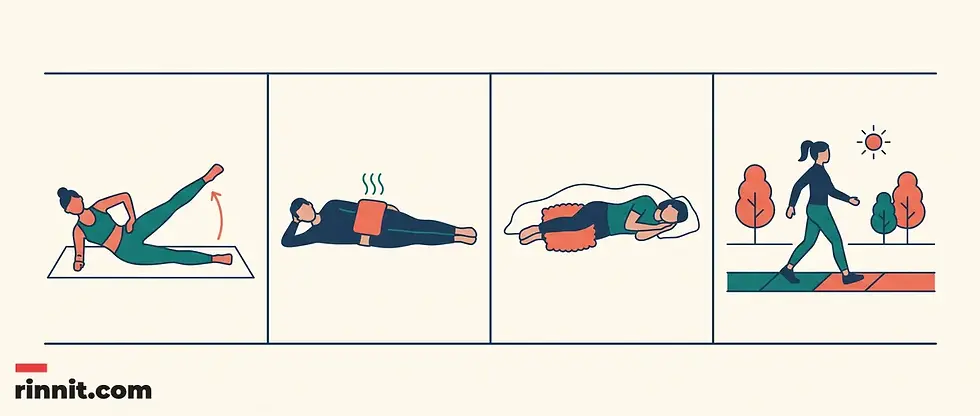
The Role of Physical Therapy
About 7 in 10 people see significant improvement after eight weeks of targeted physical therapy exercises [1] [2]. These exercises focus on load management and gradual strengthening of the gluteal muscles to take pressure off the damaged tendons [2]. In a randomized trial, an education and exercise program also did better than a corticosteroid injection or no treatment [5], as summarized in the research section above.
Daily Management Strategies
Sleep modification: Avoid lying on the painful side. When you lie on the other side, put a pillow between your knees [1] [2] to keep the painful hip from dropping inward.
Activity adjustment: Keep walking, but make walks slower, shorter, and flatter [2]. Limit stair climbing and avoid low chairs [1] [2].
Posture: Avoid crossing your legs and avoid standing with your weight shifted onto one hip [2].
Heat therapy: Applying heat to the painful area can ease discomfort [1] [2].
Weight management: A healthy weight reduces the load on the hip tendons [2].
Call your healthcare provider if hip pain is severe, interferes with daily activities or sleep, or if you can't climb a flight of stairs without pain [1].
Conclusion
Gluteal tendinopathy is a challenging condition that can significantly affect daily life, but it is manageable with the right approach. By shifting the focus from passive rest to active strengthening and lifestyle adjustments, most people can regain their mobility and find lasting relief from hip pain.
Frequently Asked Questions
What is the main cause of gluteal tendinopathy?
It is caused by the breakdown or deterioration of tendon tissue, often from overuse, compression, or underuse.
Is it the same as hip bursitis?
No. They can cause similar pain, but tendinopathy involves the tendon itself, while bursitis involves the fluid-filled cushions (bursae) around the hip.
Who is most at risk?
Women over 40, especially after menopause, and active people such as runners, skiers, and dancers.
Does rest help gluteal tendinopathy?
Generally not. Unlike tendinitis, tendinopathy rarely improves with rest alone and needs active, gradual strengthening to heal.
How long does recovery take?
About half of people get better without treatment, but it can take up to a year. About 7 in 10 people see significant improvement after eight weeks of targeted physical therapy exercises.
Can I sleep on my side?
Avoid lying on the painful side. If you sleep on the other side, place a pillow between your knees so the painful hip doesn't drop inward.
Is walking good for this condition?
Yes. Keep walking, but make walks slower, shorter, and flatter, and avoid hills and stairs when you can.
Should I use ice or heat?
Heat is generally recommended for gluteal tendinopathy and can ease discomfort.
Can weight loss help?
Yes. A healthy weight reduces the load on the hip tendons.
What exercises are best?
Exercises that gradually strengthen the gluteal muscles, especially the gluteus medius and minimus, are most effective. A physical therapist can tailor and progress a program for you.
Can younger people get it?
Yes, especially people who run, ski, or dance and put repeated stress on the hip.
Is surgery necessary?
Surgery is usually a last resort, considered for people who have not improved with other treatment or who have a torn tendon.
What does the pain feel like?
It is usually a moderate to severe ache on the outside of the hip that can feel sharper with certain movements.
Does the pain go down the leg?
Yes. It can travel down the outside of the thigh toward the knee or lower leg.
Can it cause lower back pain?
Yes. As many as 1 in 3 people with lower back pain also develop hip pain from gluteal tendinopathy.
How is it diagnosed?
Through a physical exam and sometimes an MRI or ultrasound to look at the tendon tissue and rule out other causes.
What is the "greater trochanter"?
It is the bony ridge at the top of the thighbone where the gluteal tendons attach.
Can I cross my legs?
It is best to avoid crossing your legs, because it pulls the hip inward and compresses the affected tendons.
Are low chairs bad?
Yes. Sitting in low chairs bends the hip further and can compress the tendons.
Is it permanent?
No. With proper physical therapy and load management, most people improve, although it can take weeks to months.
Can yoga help?
Gentle yoga may be fine, but avoid poses that pull the knee across the body or that cause pain, and check with your physical therapist first.
What are the gluteal muscles?
They include the gluteus maximus, medius, and minimus.
Why does it affect post-menopausal women more?
Hormonal changes may affect the health of tendon tissue, although the exact reason is not fully understood.
Can I keep running?
You may need to modify or pause running if it irritates your hip. Complete rest isn't helpful, so a gradual, symptom-guided return is best.
Is it inflammatory?
Gluteal tendinopathy is mainly a degenerative condition rather than an inflammatory one, though some irritation may be present early on.
What is "tendon compression"?
It is when the tendon is squeezed against the bone, for example after a fall or in certain sitting, standing, and sleeping positions.
Can I use a standing desk?
Yes, but avoid standing with your weight on one hip or one leg, and shift your weight evenly between both legs.
Does stretching help?
Stretches that pull the leg across the body, such as a cross-body or figure-four glute stretch, can compress the tendons and may make pain worse. Focus on strengthening, and ask a physical therapist which stretches are safe for you.
What is GTPS?
Greater trochanteric pain syndrome, an umbrella term for outer-hip pain that includes gluteal tendinopathy.
How do I know if it's getting better?
You may notice less pain when climbing stairs, better sleep, and less stiffness in the morning.
Can I take NSAIDs?
NSAIDs may ease pain for a short time, but they do not treat the underlying tendon changes. Ask your provider before using them regularly.
What is a bursa sac?
A fluid-filled sac that cushions the space between bones and tendons.
Is the pain worse in the morning?
Many people notice stiffness and pain in the first steps after getting out of bed or standing up after sitting.
Can I use a foam roller?
Be careful. Direct pressure on the outside of the hip can compress the tendons and aggravate the condition, so avoid rolling directly on the tender spot.
Does it affect both hips?
It can, but it often starts in one hip depending on activity and sleeping habits.
What is "tendon underuse"?
When tendons become weak because of a lack of physical activity.
Can I do squats?
Squats can be part of a strengthening program when done with good form at a level that doesn't increase your pain, ideally guided by a physical therapist.
Is it a sports injury?
It can be, but it is also common in non-athletes because of age and lifestyle factors.
What is an ultrasound used for?
It lets doctors see the structure of the tendon and signs of degeneration or tears.
Can it cause groin pain?
Yes. While the main pain is on the outer hip, it can sometimes be felt in the groin.
What is "hip instability"?
When the hip doesn't have proper support, leading to extra strain on the tendons.
How does physical therapy help?
It uses gradually increasing loads to encourage the tendon tissue to rebuild and the supporting muscles to become stronger.
Is it related to arthritis?
No. It is a tendon problem rather than a joint cartilage problem, although both can cause hip pain and are sometimes confused.
Can I use a heating pad?
Yes. Heat is generally beneficial for this condition.
What happens if I don't treat it?
The pain can become long-lasting and limit your ability to walk, exercise, and sleep.
Is it a common condition?
Yes. It is one of the most frequent causes of outer-hip pain.
Can I drive with it?
Yes, but adjust your seat to a comfortable height to avoid bending the hip too far.
Does posture matter?
Yes. Avoid crossing your legs or standing with your weight on one hip, and keep your weight even to reduce strain on the hips.
What is the "gluteal region"?
It is the area commonly known as the buttocks.
Can I get a cortisone shot?
A corticosteroid injection can relieve pain in the short term, but in a randomized trial an education and exercise program did better overall. Talk with your provider about whether an injection is right for you.
Related Reading
Tendinopathy: Symptoms, Causes, Diagnosis and Treatment — What You Need to Know explains how tendons become painful with overuse and how they heal.
Hip Arthritis: Understanding Symptoms, Causes, and Modern Treatments explains hip arthritis, a common cause of hip pain to rule out.
Piriformis Syndrome: Symptoms, Causes, and Recovery Roadmap explains buttock pain from a tight piriformis muscle pressing on a nerve.
Bursa Injection: What It Treats, How It's Done and What Recovery Looks Like explains steroid shots for hip and other bursa pain.
References
Cleveland Clinic. Gluteal tendinopathy. Cleveland Clinic. Medically reviewed; last updated May 3, 2022. https://my.clevelandclinic.org/health/diseases/22960-gluteal-tendinopathy
East Sussex Healthcare NHS Trust. Gluteal tendinopathy. Patient information leaflet 0746, version 2.3. NHS. February 2026. https://www.esht.nhs.uk/wp-content/uploads/2019/07/0746.pdf
Physiopedia. Gluteal tendinopathy. Physiopedia. Accessed October 15, 2026. https://www.physio-pedia.com/Gluteal_Tendinopathy
Grimaldi A, Fearon A. Gluteal tendinopathy: integrating pathomechanics and clinical features in its management. J Orthop Sports Phys Ther. 2015;45(11):910-922. PMID: 26381486. https://doi.org/10.2519/jospt.2015.5829
Mellor R, Bennell K, Grimaldi A, et al. Education plus exercise versus corticosteroid injection use versus a wait and see approach on global outcome and pain from gluteal tendinopathy: prospective, single blinded, randomised clinical trial. BMJ. 2018;361:k1662. PMID: 29720374. https://doi.org/10.1136/bmj.k1662
Kjeldsen T, Hvidt KJ, Bohn MB, et al. Exercise compared to a control condition or other conservative treatment options in patients with Greater Trochanteric Pain Syndrome: a systematic review and meta-analysis of randomized controlled trials. Physiotherapy. 2024;123:69-80. PMID: 38295551. https://doi.org/10.1016/j.physio.2024.01.001
Bremer T, Nicklen P, Fearon A, et al. The efficacy of gluteal tendinopathy treatments: a systematic review. Clin Rehabil. 2025;39(5):600-617. PMID: 40223303. https://doi.org/10.1177/02692155251327298
Medical disclaimer
This article is for informational purposes only and is not a substitute for professional medical advice, diagnosis, or treatment. Always seek the advice of a qualified healthcare provider with any questions about a medical condition or before making decisions about treatment. Never disregard professional medical advice or delay seeking it because of something you have read here.



Comments