What Is Cohen Syndrome? Symptoms, Causes, Diagnosis and Treatment

Updated: 2 days ago
Medically reviewed by Dr. Baraa Alnahhal, MD · Last reviewed: October 2026
Quick Answer
Cohen syndrome is a rare, autosomal recessive genetic condition, most often caused by a VPS13B gene mutation, that affects cognitive function, vision, growth and muscle tone. Symptoms include developmental delays, weak muscle tone, worsening nearsightedness and frequent infections. There is no cure, but therapies and support help, and most people have a normal life expectancy with lifelong assistance. [1]
What the research says
Neutropenia is common in Cohen syndrome, but its frequency varies by ancestry. According to PubMed, a literature review of 54 reports found neutropenia in 226 of 293 patients (77.1%), with reduced neutrophil levels in 90.6% of Caucasians, 58.7% of Arabs and 47.1% of Asians. Few serious infections were reported, but oral mucosal involvement and its complications were common. (Rotulo et al., Pediatr Neonatol, 2026)
Eye findings can differ from the textbook picture. A 2026 case series notes that over 150 VPS13B mutations have been reported in more than 200 patients with Cohen syndrome, and describes two siblings who had farsightedness (prescriptions of +3.00 to +5.00) instead of the usual nearsightedness. The authors conclude that the range of eye findings needs to be re-evaluated. (Alzahrani et al., Case Rep Ophthalmol, 2026)
Eye problems can hide behind a developmental disability. A 12-year-old boy with Cohen syndrome who could not report eye symptoms had peripheral retinal degeneration and cystoid macular edema in both eyes found on examination, and the authors stress regular ophthalmologic exams for patients like him. (Kim & Kim, Medicine, 2023)
Key Takeaways
Root cause: A mutation in the VPS13B (COH1) gene disrupts protein packaging inside cells.[1]
How rare it is: Fewer than 1,000 people are diagnosed worldwide, and many cases go undetected.[1]
Inheritance: Autosomal recessive, meaning a child must inherit two copies of the variant.[1]
Main features: Cognitive delays, weak muscle tone, vision problems, short stature, and distinctive facial features.[1]
Newborn warning: Trouble breathing in a newborn is an emergency, so call 911 or your local emergency number immediately.[1]
Treatment: No cure; therapies, educational programs, vision care, and G-CSF for neutropenia.[1]
Outlook: Most people have a normal life expectancy, with lifelong support.[1]
What Is Cohen Syndrome?
Cohen syndrome is a genetic condition that affects many parts of the body, including vision, growth, muscle tone, and cognitive function. It can also contribute to distinctive physical characteristics such as a small head size, thick hair, and short stature.[1]
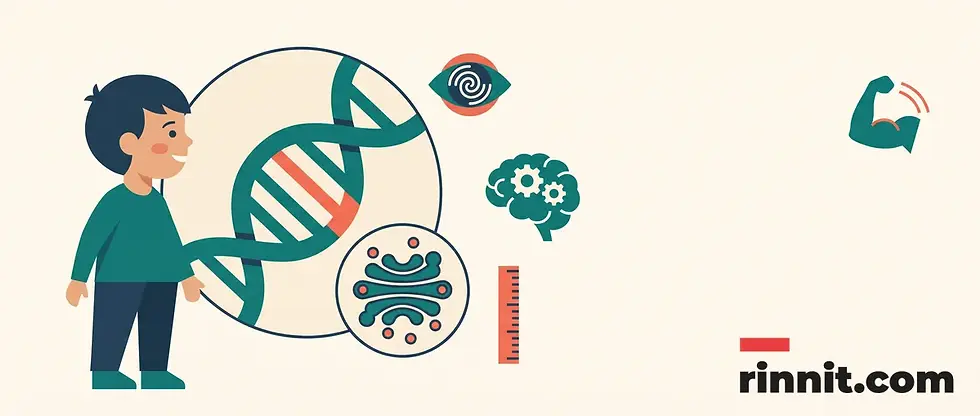
Children diagnosed with this condition experience developmental delays. Skills like rolling over, walking, and speaking may happen later than expected. Despite these delays, children with Cohen syndrome are often expressive, cheerful, and sociable, a trait that families frequently describe as one of the condition's defining characteristics.[1]
The condition stems from a genetic change, and there is currently no cure. However, treatment is available to help manage symptoms. Most people diagnosed with Cohen syndrome have a normal life expectancy, though they typically need some level of assistance throughout their lifetime.[1]
How common is Cohen syndrome?
Cohen syndrome is rare. Some studies report that fewer than 1,000 people are diagnosed with this condition worldwide. This estimate is likely lower than the true number, because many cases go undiagnosed.[1]
Cohen Syndrome Symptoms
Signs and symptoms of Cohen syndrome vary from person to person, and many children do not experience all of them. The core features affect development, muscle tone, flexibility, and vision.[1]
Cognitive development problems: Learning and thinking skills develop more slowly than typical.[1]
Weak muscle tone (hypotonia): Limp, "floppy" muscles that make movement and posture harder.[1]
Hypermobility: Unusually flexible joints and very bendable limbs.[1]
Nearsightedness (myopia): Difficulty seeing distant objects, and the condition worsens with age.[1]
Retinal damage: Retinal dystrophy or chorioretinitis.[1]
Signs in newborns
Some signs appear immediately at birth or in the earliest weeks of life. These include feeding difficulty, a weak or high-pitched cry, trouble breathing, and difficulty gaining weight.[1]
Emergency warning: Contact 911 or your local emergency services number immediately if your child has trouble breathing.[1]
Developmental delays
Developmental delay can begin during infancy with early signs such as taking longer to roll over or sit upright independently. Your child might not start walking until after age 2, though walking typically begins before age 5. While the condition may cause behavioral challenges, most children with Cohen syndrome are sociable and expressively cheerful.[1]
Facial features and physical characteristics
Certain facial features and physical traits are common with Cohen syndrome. Some of these become more apparent as a child ages, usually after age 5.[1]
Head and hair: Small head (microcephaly); thick hair and eyebrows; long eyelashes.[1]
Eyes: Down-slanting eyes, described as wave-shaped palpebral fissures.[1]
Nose and mouth: Round nasal tip; short distance between the nose and upper lip (philtrum); projecting top teeth.[1]
Ears: Large ears.[1]
Characteristics that develop later
Additional physical characteristics usually develop during childhood and later:[1]
Fat distribution: Abnormal distribution of fat in the trunk with slender arms and legs.
Stature: Short stature relative to peers.
Puberty: Delayed onset of puberty.
Reproductive: Undescended testicles in males.
Spine: Curvature of the spine, such as scoliosis or kyphosis.
Co-occurring conditions
Children diagnosed with Cohen syndrome may be at higher risk for other conditions that affect the immune system. These include neutropenia (low levels of neutrophils, a type of white blood cell) and autoimmune conditions such as diabetes mellitus, thyroid disease, and celiac disease.[1]

What Causes Cohen Syndrome?
A genetic change (mutation) of the VPS13B gene, also called the COH1 gene, causes Cohen syndrome.[1]
The Golgi apparatus connection
The VPS13B gene is part of the Golgi apparatus, which works like a protein packaging factory inside your cells. When the body produces a new protein, it sends that raw material to the Golgi apparatus to receive updates or modifications and to be sorted with other similar proteins. After modification, the Golgi apparatus packages proteins with their instruction manuals before they are shipped out to a specific location in the body.[1]
The VPS13B gene works specifically with proteins by attaching sugar molecules to them, a process called glycosylation. It also helps organize and send out nerve cells (neurons) and fat cells (adipocytes). A genetic change of the VPS13B gene affects the factory's ability to produce quality products, which leads to the symptoms of Cohen syndrome.[1]
Is Cohen syndrome inherited?
Yes. The condition passes in an autosomal recessive pattern. This happens when a child receives two copies of the genetic variant that causes the condition. Biological parents may be carriers without having the condition themselves, because they carry only one genetic variant.[1]
What are the risk factors for Cohen syndrome?
Cohen syndrome can affect anyone. However, the condition is more common among people with certain ancestries, including Amish, Finnish, Greek (Mediterranean), and Irish.[1]
What Are the Complications of Cohen Syndrome?
Cohen syndrome can lead to several complications over time. The most common relate to infections, dental health, vision, and learning:[1]
Common infections: Middle ear infection (otitis media).
Dental and oral problems: Gingivitis and canker sores.
Vision issues: Worsening nearsightedness and retinal damage.
Learning: Intellectual disability.
How Is Cohen Syndrome Diagnosed?
A healthcare provider diagnoses Cohen syndrome after a physical exam and testing. As a parent or caregiver, you might reach out to your child's provider if they are not meeting developmental milestones for their age, since this is an early sign of the condition.[1]
Getting a Cohen syndrome diagnosis can be difficult, because the symptoms can look similar to many other conditions. Testing helps providers rule those alternatives out. A genetic blood test can identify the specific gene change responsible for the symptoms.[1]
Physical exam: The provider assesses facial features, muscle tone, growth, and development.
Milestone review: Parents report delays in rolling, sitting, walking, and speaking.
Ruling out other conditions: Similar conditions are tested for and eliminated.
Genetic blood test: Identifies the VPS13B gene change responsible for the symptoms.
How Is Cohen Syndrome Treated?
There is no cure for Cohen syndrome. Treatment focuses on managing symptoms and could include the options below, among others:[1]
Early intervention educational programs: Help children meet developmental milestones with structured support.
Occupational therapy: Builds daily-living skills and hand coordination.
Physical therapy: Strengthens muscles and improves balance, posture, and movement.
Speech therapy: Supports communication and language development.
Eyeglasses or low-vision training: Corrects nearsightedness and teaches strategies for vision loss.
G-CSF injections: Stimulate the bone marrow to produce more white blood cells for neutropenia.
Antibiotics: Treat frequent infections as needed.
Treating neutropenia
Neutropenia associated with Cohen syndrome is usually treated with injections under the skin of granulocyte-colony stimulating factor (G-CSF). This stimulates the bone marrow so it produces more white blood cells, helping the immune system fight off infections.[1]

What Is the Outlook for Cohen Syndrome?
Life expectancy
Because Cohen syndrome is so rare, there is not enough evidence to determine precisely how it affects life expectancy. Many people diagnosed with the condition experience a normal life expectancy, but not all do, especially if a child has a related condition that affects the immune system.[1]
Prognosis
Cohen syndrome can affect many aspects of a child's life, but children generally have a good prognosis with treatment. A healthcare provider recommends individualized treatment options to address each child's specific symptoms.[1]
Treatment usually includes therapies and educational programs that help a child meet developmental milestones for their age. Vision symptoms and dental complications typically begin around school age, so regular appointments with an eye care specialist, a dentist, and other recommended providers are important for monitoring symptoms as the child grows.[1]
Can Cohen syndrome be prevented?
There is no way to prevent Cohen syndrome. If you are planning to expand your family and want to learn more about your risk of having a child with an inherited condition like Cohen syndrome, talk to your pregnancy care provider or healthcare provider about genetic testing.[1]
Living With Cohen Syndrome
When should I see a healthcare provider?
As your child's caregiver, you know them best. If anything about their growth or development seems off, contact their provider. Pay close attention to developmental milestones, since it is common for children with Cohen syndrome to need extra time to meet them, such as rolling over or speaking their first words. A healthcare provider can offer guidance on how to help your child during this time.[1]
Emergency guidance: If your child has trouble breathing or a pale or bluish tone to their skin and nails, contact emergency services immediately.[1]
What questions should I ask my healthcare provider?
What should I do if my child misses developmental milestones?
What symptoms should I look out for?
What type of treatment do you recommend?
Are there side effects of treatment?
How do I help my child succeed in school?
Is Cohen syndrome autism?
No. Autism spectrum disorder (ASD) is a neurodevelopmental condition, while Cohen syndrome is a genetic condition. They are not the same. However, many children diagnosed with Cohen syndrome experience symptoms similar to ASD, and ASD can occur alongside Cohen syndrome.[1]
Conclusion
Cohen syndrome is a rare genetic condition rooted in the VPS13B gene, and its effects ripple through a child's development, vision, growth, and immune health. While the diagnosis is serious and the condition demands lifelong support in most cases, most people with Cohen syndrome live a full life span, and many are known for their cheerful, sociable spirits. Early recognition of missed milestones, a confirmed genetic diagnosis, and a coordinated care team give families the strongest foundation.
If you noticed your child is reaching milestones more slowly than expected, or if they show signs of frequent infections or vision problems, talk to a pediatrician about whether genetic testing is appropriate. For families and educators working with children who have rare conditions like Cohen syndrome, visual learning tools make a real difference in how care plans and daily routines are understood. Explore Rinnit's infographic templates to create clear, engaging visuals that support therapy sessions, school planning, and family communication.
Frequently Asked Questions
What is Cohen syndrome?
Cohen syndrome is a rare genetic condition present from birth that affects cognitive function, vision, growth, muscle tone, and physical development, caused in most cases by a mutation in the VPS13B (COH1) gene.[1]
Is Cohen syndrome hereditary?
Yes. It is inherited in an autosomal recessive pattern, meaning a child must inherit two copies of the gene variant, one from each parent, to have the condition.[1]
What gene causes Cohen syndrome?
A mutation of the VPS13B gene, also called the COH1 gene, causes Cohen syndrome.[1]
What does the VPS13B gene do?
It works in the Golgi apparatus, attaching sugar molecules to proteins (glycosylation) and helping organize nerve cells and fat cells.[1]
How rare is Cohen syndrome?
Fewer than 1,000 people are diagnosed worldwide, though the true number is likely higher because many cases go undiagnosed.[1]
Who is most likely to get Cohen syndrome?
It can affect anyone, but it is more common among people with Amish, Finnish, Greek (Mediterranean), or Irish ancestry.[1]
What are the first signs of Cohen syndrome?
Missed developmental milestones in early childhood, such as taking longer to roll over, sit upright, or walk.[1]
Do babies with Cohen syndrome have symptoms at birth?
Some do, including feeding difficulty, a weak or high-pitched cry, trouble breathing, and difficulty gaining weight.[1]
Is trouble breathing in a newborn with Cohen syndrome an emergency?
Yes. Contact 911 or local emergency services immediately if a child has trouble breathing.[1]
What causes the developmental delays in Cohen syndrome?
The VPS13B mutation affects how cells package proteins and helps organize nerve cells, but the exact link between the gene change and developmental delay is not fully explained.[1]
When do children with Cohen syndrome start walking?
Walking often starts after age 2, though typically before age 5.[1]
Are children with Cohen syndrome cheerful?
Most are described as expressive, sociable, and cheerfully engaged, despite developmental challenges.[1]
What is hypotonia in Cohen syndrome?
It is weak muscle tone, which can make movement, posture, and physical milestones harder to achieve.[1]
What is hypermobility in this condition?
Children are unusually flexible, with very bendable joints and limbs.[1]
Does Cohen syndrome affect vision?
Yes. Nearsightedness (myopia) that worsens with age and retinal damage (retinal dystrophy or chorioretinitis) are common.[1] Eye findings can vary, so regular eye exams matter.[3][4]
What are the distinctive facial features of Cohen syndrome?
A small head, thick hair and eyebrows, long eyelashes, down-slanting eyes, a round nasal tip, a short philtrum, projecting top teeth, and large ears.[1]
Do the facial features appear right away?
Some do, but many become more apparent as the child ages, usually after age 5.[1]
What physical traits develop during childhood?
Abnormal trunk fat distribution with slender limbs, short stature, delayed puberty, undescended testicles in males, and spine curvature.[1]
Does Cohen syndrome cause short stature?
Yes, short stature is a common characteristic.[1]
Does Cohen syndrome affect the spine?
Some children develop scoliosis or kyphosis, which are curvatures of the spine.[1]
What is neutropenia and why does it matter?
Neutropenia is a low count of neutrophil white blood cells, which can increase the risk of infections in people with Cohen syndrome.[1] In one literature review, 77.1% of patients had neutropenia.[2]
What autoimmune conditions are linked to Cohen syndrome?
Diabetes mellitus, thyroid disease, and celiac disease can occur more often in people with the condition.[1]
How is Cohen syndrome diagnosed?
Through a physical exam, review of developmental milestones, ruling out similar conditions, and a genetic blood test that identifies the VPS13B gene change.[1]
Is a Cohen syndrome diagnosis easy to obtain?
No. Symptoms resemble many other conditions, so testing is needed to rule them out before confirming.[1]
Can a blood test confirm Cohen syndrome?
Yes. A genetic blood test can identify the gene change responsible for the symptoms.[1]
Is there a cure for Cohen syndrome?
No, there is no cure. Treatment focuses on managing symptoms.[1]
What therapies help children with Cohen syndrome?
Occupational, physical, and speech therapy, plus early intervention educational programs.[1]
What is G-CSF used for in Cohen syndrome?
Granulocyte-colony stimulating factor injections stimulate the bone marrow to produce more white blood cells, which treats neutropenia.[1]
Why do some children with Cohen syndrome need antibiotics?
Children with Cohen syndrome can have frequent infections, and a healthcare provider prescribes antibiotics to treat them as needed. Neutropenia can raise the risk of infection.[1]
Do children with Cohen syndrome need glasses?
Many do, because nearsightedness is common and worsens with age. Low-vision training may also help.[1]
What is the life expectancy for someone with Cohen syndrome?
There is not enough evidence to determine the precise effect, but many people have a normal life expectancy.[1]
Is life expectancy affected by immune complications?
It can be. Outcomes are less favorable in some people, especially when a child has a related condition that affects the immune system.[1]
What is the prognosis for a child with Cohen syndrome?
With treatment, children generally have a good prognosis, though they often need support throughout their lifetime.[1]
Can Cohen syndrome be prevented?
No. Families planning children can discuss genetic testing with a healthcare provider to understand their risk.[1]
What is the carrier risk for parents?
When both parents carry one copy of the variant, each pregnancy has a 25% chance of a child with the condition, a 50% chance of a carrier child, and a 25% chance of a child who does not inherit the variant. This is the standard pattern for autosomal recessive conditions, and a genetic counselor can explain it for your family.
Is Cohen syndrome autism?
No. Autism spectrum disorder is a neurodevelopmental condition, while Cohen syndrome is genetic, though the two can occur together.[1]
Do children with Cohen syndrome have behavioral challenges?
Some do, but most are sociable and cheerful.[1]
At what age do vision problems usually appear?
Vision symptoms and dental complications typically begin around school age.[1]
What dental problems occur with Cohen syndrome?
Gingivitis and canker sores are common.[1]
What infections are common with Cohen syndrome?
Common infections such as middle ear infections (otitis media) can occur more often.[1]
When should I see a healthcare provider about my child's development?
Contact the provider if anything about your child's growth or development seems off, especially missed milestones.[1]
What questions should I ask my child's provider?
Ask about missed milestones, warning symptoms, recommended treatments, side effects, and strategies to help your child succeed in school.[1]
How can school support help a child with Cohen syndrome?
Early intervention educational programs are part of treatment and help children work toward developmental milestones. A provider can help you plan school support, and needs vary from child to child.[1]
What is early intervention for Cohen syndrome?
Structured educational programs that help children meet developmental milestones with tailored support.[1]
Does Cohen syndrome cause intellectual disability?
Yes. Intellectual disability is a recognized complication of the condition.[1]
Can someone with Cohen syndrome live independently?
Most people with Cohen syndrome need some level of assistance throughout their lifetime, though the level varies.[1]
Is genetic counseling recommended for families?
If you are planning a family and want to understand your risk of an inherited condition like Cohen syndrome, talk to your pregnancy care provider or healthcare provider about genetic testing.[1]
What is chorioretinitis in Cohen syndrome?
Chorioretinitis is inflammation of the choroid and retina in the eye. It is one of the forms of retinal damage that can occur.[1]
What is a philtrum?
The philtrum is the groove between the nose and upper lip. In Cohen syndrome, the distance between the nose and upper lip is shorter than typical.[1]
What are wave-shaped palpebral fissures?
It is a description of the down-slanting eye openings common in Cohen syndrome.[1]
What is microcephaly in this condition?
An abnormally small head, which is one of the characteristic features of Cohen syndrome.[1]
How does glycosylation relate to Cohen syndrome?
The VPS13B gene helps attach sugar molecules to proteins (glycosylation), and a change in the gene affects how well this cellular "packaging factory" works.[1]
What role does the Golgi apparatus play?
It modifies, sorts, and packages proteins for delivery to specific locations in the body.[1]
What is the long-term outlook for families?
With coordinated therapies, regular eye and dental care, and strong support, children with Cohen syndrome generally have a good prognosis and often a normal life expectancy.[1]
Related Reading
Genetic Disorders: Understanding Types, Causes, and Diagnosis — how inherited and genetic conditions arise and are diagnosed.
Developmental Delay in Children: Signs, Types, Causes, and What Early Intervention Can Do — signs, types and causes of developmental delay in children.
Hypotonia in Babies: Symptoms, Causes, and Management — what weak muscle tone means for babies.
What Is Microcephaly? A Plain-Language Guide for Parents — a closer look at a smaller-than-typical head size.
References
Cleveland Clinic. Cohen Syndrome. Cleveland Clinic. Medically reviewed; last updated August 16, 2024. https://my.clevelandclinic.org/health/diseases/cohen-syndrome
Rotulo GA, Sinibaldi L, Profeti E, et al. Cohen syndrome and neutropenia: unveiling a novel VPS13B variant and literature review. Pediatr Neonatol. 2026;67(3):240-247. PMID 41390316. https://doi.org/10.1016/j.pedneo.2025.08.010
Alzahrani SA, Alharbi KF, Babgi RI. Clinical insights and genetic implications: a comprehensive case series of two siblings with Cohen syndrome. Case Rep Ophthalmol. 2026;17(1):916-923. PMID 42761719. https://doi.org/10.1159/000553262
Kim DA, Kim J. Ophthalmic findings in Cohen syndrome patient without subjective ophthalmic complaints: a case report. Medicine (Baltimore). 2023;102(46):e35945. PMID 37986394. https://doi.org/10.1097/MD.0000000000035945
Medical disclaimer
This article is for general informational purposes only and does not constitute medical advice. Always consult a qualified healthcare provider for diagnosis, treatment decisions, and personalized medical guidance.



Comments