What Is Coffin-Lowry Syndrome? Symptoms, Causes, Diagnosis and Treatment

Updated: 2 days ago
Medically reviewed by Dr. Baraa Alnahhal, MD · Last reviewed: October 2026
Quick Answer
Coffin-Lowry syndrome (CLS) is a rare, mostly X-linked genetic condition usually caused by a mutation in the RPS6KA3 gene. Features include distinctive facial features, intellectual disability, a curved spine, short stature and sometimes drop attacks. Genetic testing confirms it. There is no cure; care involves specialists, therapies and medicines, and about 70–80% of cases occur with no family history. [1]
What the research says
Short stature, chest-wall differences and spine curves are very common. According to PubMed, a clinical and molecular review of CLS reported short stature (95%), a pectus (chest-wall) deformity (80%), and kyphosis and/or scoliosis (80%), and identified over 75 distinct pathogenic mutations among 250 unrelated patients. (Hanauer & Young, J Med Genet, 2002)
Spine curves can be significant and may progress. In a study of 10 patients with CLS, 8 had thoracolumbar kyphosis or kyphoscoliosis, with a mean Cobb angle of 45 degrees in the coronal plane and 31 degrees of thoracolumbar kyphosis. The authors recommend close follow-up because curves may progress and need early surgical treatment, and 60% of patients had flexible, painless planovalgus (flat-foot) deformities. (Herrera-Soto et al., J Pediatr Orthop, 2007)
Long-term outcome data are limited. A 20-year follow-up of six affected patients and one carrier mother from an original group of 12 patients found important complications, including premature death, loss of ambulation and quadriplegia. The author notes there are few data on patients over the age of 30. (Hunter, Am J Med Genet, 2002)
Key Takeaways
Root cause: A mutation in the RPS6KA3 gene reduces a protein that helps cells communicate.[1]
How rare it is: Estimated at about 1 in 50,000 to 1 in 100,000 people.[1]
Inheritance: Usually X-linked, but 70–80% of cases occur sporadically with no family history.[1][2]
Main features: Distinctive facial features, intellectual disability, curved spine, short stature and large tapered hands.[1]
Drop attacks: Sudden collapses triggered by unexpected sounds or emotions, while the person stays conscious.[1]
Treatment: No cure; specialist teams, therapies, medicines for drop attacks, and surgery when needed.[1]
Lifespan: Can be reduced; some studies report that about 13.5% of males and 4.5% of females died at an average age of 20.5 years.[1]
What Is Coffin-Lowry Syndrome?
Coffin-Lowry syndrome (CLS, sometimes called Coffin syndrome) is a rare condition present at birth, which means it is congenital. It can affect many different parts of the body at once. CLS often causes unusual facial features, intellectual disability, abnormal skeletal development, short stature, and weak muscle tone. People with the condition may also have large hands with short, thin fingers that taper toward the tips.[1]

One of the most unusual features of CLS is the stimulus-induced drop episode, sometimes called a drop attack. During these episodes, the person stays conscious but collapses suddenly in response to an unexpected noise, event, or emotion.[1]
CLS is a genetic condition, meaning it is passed down through families. It is most often inherited on the X chromosome. Even so, most people diagnosed with CLS have no family history of the condition, because 70–80% of cases occur sporadically.[1]
How Common Is Coffin-Lowry Syndrome?
CLS is rare. Cleveland Clinic reports that scientists estimate it affects roughly 1 in 50,000 to 1 in 100,000 people, and that approximately 70–80% of cases are sporadic, meaning the mutation appears without being inherited from a parent.[1] Estimates vary: MedlinePlus Genetics describes the true incidence as uncertain and gives an estimate of 1 in 40,000 to 50,000 people.[2]
Who Gets Coffin-Lowry Syndrome?
CLS occurs in both males and females, but symptoms are generally more severe in males.[1]
Coffin-Lowry Syndrome Symptoms
Symptoms vary widely from person to person and are usually more severe in males. They affect many different parts of the body and become more obvious as a person gets older.[1]
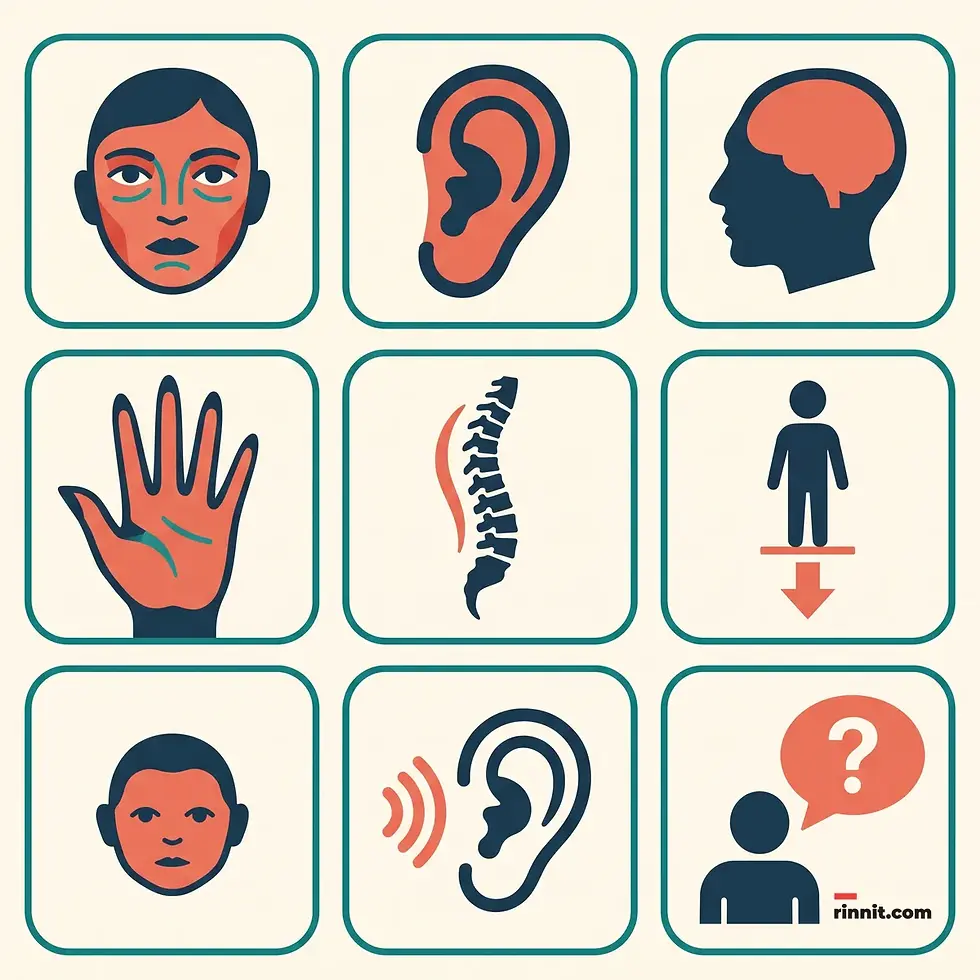
Facial Features
The facial features of CLS are often distinctive and become easier to recognize over time:
Distinctive Hands
People with CLS often have large, soft hands. The fingers are double-jointed, thick at the base, and then taper toward the tip.[1]
Skeletal Issues
The skeleton is heavily affected. The spine can curve (kyphosis or scoliosis), giving the appearance of a hunched back. Dental abnormalities such as a misshaped mouth or missing teeth can occur. The breastbone may be pointed or sunken, and the long bones, such as the thigh bone, shin bone, and upper arm, can be shorter than average. These skeletal effects combine with overall short stature and, in some cases, microcephaly (a smaller head than average).[1]
Other Symptoms
Beyond the face, hands, and skeleton, CLS can involve:
Brain and development: Developmental delays and intellectual disability.[1]
Drop attacks: Sudden collapses triggered by an unexpected noise, event, or emotion.[1]
Hearing: Hearing loss.[1]
Skin: Loose, stretchy skin.[1]
Internal organs: Problems with the heart, liver, or kidneys.[1]
Toes: Short big toes.[1]
Speech: Speech problems.[1]
Muscles: Weak muscle tone with muscle weakness.[1]
What Causes Coffin-Lowry Syndrome?
A mutation in a gene named RPS6KA3 is the usual cause of CLS. This gene is responsible for making a protein that helps cells communicate with each other. With the gene mutation, the body produces less of that protein. Scientists do not fully understand how the protein is linked to the symptoms of CLS.[1]
Some people have CLS without a detectable RPS6KA3 gene mutation. In those cases, the cause is not yet understood.[1]
How Is Coffin-Lowry Syndrome Diagnosed?
A healthcare professional can diagnose CLS based on a combination of observation and testing:[1]
Symptom observation: The clinician looks for the classic features of CLS.
Genetic testing: A blood test or cheek swab confirms a mutation in the RPS6KA3 gene.
X-rays: Imaging shows the effects on the spine, fingers, and long bones.
Neuroimaging: Studies of the brain may be performed, although they are not conclusive.
Is There a Cure for Coffin-Lowry Syndrome?
There is no cure for CLS, and there are no specific treatments that address the underlying cause. The goal of care is to manage the condition, reduce symptoms, and help the person live life as fully as possible.[1]

The Specialist Care Team
People with CLS may need regular visits with a variety of medical specialists:[1]
Audiologist: Hearing.
Cardiologist: Heart.
Neurologist: Nervous system.
Ophthalmologist: Vision.
Orthopedist: Joints, bones, and spine.
Dental specialist: Teeth and mouth.
Occupational therapist: Daily activities such as eating and writing.
Physical therapist: Strength and movement.
Speech therapist: Communication delays.
Medications for Drop Episodes
For drop episodes, a healthcare provider may prescribe anticonvulsant medications, which are normally used to control seizures, or anti-anxiety medications.[1]
Surgery and Genetic Counseling
Skeletal deformities may require surgery. A healthcare provider may also recommend genetic counseling for the individual and the family.[1]
What Is the Outlook?
The outlook for people with CLS varies widely. Prognosis depends on which parts of the body are affected and how severe those effects are.[1]
Is Coffin-Lowry Syndrome Fatal?
The condition can reduce lifespan. Some studies have reported that about 13.5% of males and 4.5% of females with CLS died at an average age of 20.5 years.[1] These figures come from earlier studies, and individual outcomes vary considerably. Long-term follow-up data remain limited, especially for people over 30.[6]
Can Coffin-Lowry Syndrome Be Prevented?
Scientists do not know what causes the genetic mutation or the sporadic cases, so there is no way to prevent CLS. A woman with the condition has a 50% chance of passing it on to her baby. Prenatal genetic testing can check for the gene mutation, and providers may recommend genetic counseling for close family members.[1]
Living With Coffin-Lowry Syndrome
If you or your child has CLS, consider asking your healthcare provider the following questions:[1]
What parts of the body are affected?
Are any of the effects life-threatening?
What specialists should I see, and how often?
Do you recommend medications or surgery?
Are there any support groups that can help us cope?
Do you recommend genetic counseling for our situation?
Should other people in our family get genetic testing?
Working with a coordinated team of specialists, keeping up with recommended therapies, and connecting with CLS support communities can all help families manage day-to-day life and plan for the future.
Conclusion
Coffin-Lowry syndrome is a rare genetic condition that touches the face, brain, skeleton, muscles, and sometimes the heart, liver, and kidneys. While there is no cure, careful observation, genetic testing, and a coordinated team of specialists can manage symptoms and support a fuller life. If you notice distinctive facial features, developmental delays, or sudden drop attacks in yourself or a child, talk to a healthcare provider about genetic testing and counseling.
Want to understand complex health topics at a glance? Rinnit's infographic templates turn dense medical information into clear, visual, easy-to-share designs, perfect for clinics, classrooms, and caregiving teams.
Frequently Asked Questions
What is Coffin-Lowry syndrome in simple terms?
Coffin-Lowry syndrome is a rare genetic condition present from birth that causes distinctive facial features, intellectual disability, skeletal problems such as a curved spine, short stature, and large hands with tapered fingers. Some people also experience sudden drop attacks.[1]
Is Coffin-Lowry syndrome inherited?
Yes, in many cases. CLS is most often inherited on the X chromosome. However, 70–80% of cases are sporadic, meaning they occur without any family history.[1]
What gene causes Coffin-Lowry syndrome?
A mutation in the RPS6KA3 gene is the usual cause. The gene normally makes a protein that helps cells communicate, and the mutation reduces the amount of that protein the body produces.[1]
Can you have Coffin-Lowry syndrome without an RPS6KA3 mutation?
Yes. Some people have CLS without a detectable RPS6KA3 gene mutation. In those cases, scientists do not yet understand what causes the condition.[1]
How common is Coffin-Lowry syndrome?
Cleveland Clinic reports that CLS affects roughly 1 in 50,000 to 1 in 100,000 people, making it a rare disorder. MedlinePlus Genetics gives a higher estimate of 1 in 40,000 to 50,000.[1][2]
Is Coffin-Lowry syndrome more common in males or females?
It occurs in both sexes, but symptoms are generally more severe in males. Males often have severe intellectual disability, while affected females range from average cognitive skills to mild, moderate, or severe disability.[1]
What are the facial features of Coffin-Lowry syndrome?
Typical features include wide-set eyes that slant downward, oversized ears set lower than usual, a prominent forehead, eyebrows, and chin, an upturned nose with a broad bridge and flared nostrils, and a wide mouth with thick lips.[1]
What do the hands look like in Coffin-Lowry syndrome?
Hands are large and soft, with double-jointed fingers that are thick at the base and taper toward the tips.[1]
What are stimulus-induced drop episodes?
Drop episodes (drop attacks) are sudden collapses triggered by an unexpected noise, event, or emotion. The person remains conscious during the episode.[1]
What skeletal problems occur in Coffin-Lowry syndrome?
The spine may curve (kyphosis or scoliosis), creating a hunched appearance. The breastbone may be pointed or sunken, the long bones may be shorter than average, and overall height is reduced (short stature).[1]
Does Coffin-Lowry syndrome cause intellectual disability?
Yes. Developmental delays and intellectual disability are common features, typically more severe in males.[1]
Can Coffin-Lowry syndrome cause hearing loss?
Yes. Hearing loss is among the possible symptoms, which is why audiology care is part of the management plan.[1]
Does Coffin-Lowry syndrome affect the skin?
Yes. People with CLS can have loose, stretchy skin.[1]
Can Coffin-Lowry syndrome affect the heart, liver, or kidneys?
Yes. Problems with the heart, liver, or kidneys are possible symptoms.[1]
What is microcephaly in Coffin-Lowry syndrome?
Microcephaly means the head is smaller than typical for the person's age and sex. It can occur in CLS.[1]
Do people with Coffin-Lowry syndrome have dental problems?
Yes. Dental abnormalities such as a misshaped mouth or missing teeth can occur.[1]
Are big toes affected in Coffin-Lowry syndrome?
Yes. Short big toes are among the possible features.[1]
How is Coffin-Lowry syndrome diagnosed?
Diagnosis combines observation of classic symptoms with a blood test or cheek swab to confirm the RPS6KA3 mutation, X-rays of the spine, fingers, and long bones, and sometimes neuroimaging, which is not conclusive.[1]
What does genetic testing for CLS involve?
A blood test or cheek swab is used to confirm a mutation in the RPS6KA3 gene.[1]
Do X-rays help diagnose Coffin-Lowry syndrome?
Yes. X-rays show the effects of CLS on the spine, fingers, and long bones.[1]
Is there a cure for Coffin-Lowry syndrome?
No. There is no cure and no specific treatment for the underlying cause. Care focuses on managing symptoms.[1]
How are drop attacks treated?
A provider may prescribe anticonvulsant medications (normally used to control seizures) or anti-anxiety medications for drop episodes.[1]
Do people with CLS need physical therapy?
Physical therapy is one of the therapies a care team may use to improve strength and movement.[1]
Does occupational therapy help in CLS?
Occupational therapists can help improve performance in daily activities such as eating and writing.[1]
Is speech therapy recommended for Coffin-Lowry syndrome?
Speech therapists help address communication delays, which are common in CLS.[1]
Which specialists manage Coffin-Lowry syndrome?
Care may involve audiologists, cardiologists, neurologists, ophthalmologists, orthopedists, dental specialists, and occupational, physical, and speech therapists.[1]
Can surgery help in Coffin-Lowry syndrome?
Skeletal deformities may require surgery.[1]
Is genetic counseling recommended for CLS?
Yes. Providers may recommend genetic counseling for the individual and close family members.[1]
What is the life expectancy for Coffin-Lowry syndrome?
The outlook varies widely depending on which body systems are affected. Some studies report that about 13.5% of males and 4.5% of females died at an average age of 20.5 years, but individual outcomes differ considerably.[1]
Can Coffin-Lowry syndrome reduce lifespan?
Yes. The condition can reduce lifespan, although severity varies widely between individuals.[1]
Can Coffin-Lowry syndrome be prevented?
No. Scientists do not know what causes the mutation or sporadic cases, so prevention is not possible.[1]
What is the chance of passing CLS to a child?
Can CLS be detected before birth?
Yes. Prenatal genetic testing can check for the RPS6KA3 gene mutation.[1]
Do symptoms of CLS get more obvious with age?
Yes. Symptoms affect many parts of the body and usually become more obvious as a person gets older.[1]
Why do females with CLS tend to have milder symptoms?
Females range from average cognitive skills to varying degrees of intellectual disability, whereas males typically have more severe disability. MedlinePlus Genetics explains that males have one X chromosome in each cell while females have two, which is why males generally experience more severe signs and symptoms.[1][2]
What does the RPS6KA3 protein do?
The protein produced by the RPS6KA3 gene helps cells communicate with each other. With the mutation, the body makes less of it, though the exact link to CLS symptoms is not fully understood.[1]
What questions should I ask about CLS?
Useful questions include which body parts are affected, whether any effects are life-threatening, which specialists to see and how often, whether medications or surgery are recommended, whether support groups exist, and whether genetic counseling or family genetic testing is advised.[1]
What is another name for Coffin-Lowry syndrome?
It is also called CLS or Coffin syndrome.[1]
Are drop attacks the same as seizures?
Drop attacks are brief collapses set off by a sudden noise, event, or emotion, and the person stays conscious. Because anticonvulsant medicines may be used to manage them, a neurologist can help work out the best approach for each person.[1]
What does short stature mean in CLS?
Short stature means a height well below average. In CLS it often appears together with shorter long bones, such as the thigh bone, shin bone, and upper arm bone.[1] One review reported short stature in 95% of patients.[4]
Does CLS affect vision?
Ophthalmologists are among the specialists who may follow people with CLS, so vision checks can be part of a care plan.[1]
Is CLS the same as Coffin-Siris syndrome?
No. They are different conditions. This article covers Coffin-Lowry syndrome specifically.
Do all people with CLS have every symptom?
No. Symptoms vary widely from person to person, and not everyone has all the features described.[1]
How do families cope with CLS?
Families benefit from a coordinated specialist team, regular therapies, support groups, and genetic counseling to understand risks and plan care.[1]
Should siblings be tested if one child has CLS?
A provider may recommend genetic testing for other family members, especially when a parent carries the mutation.[1]
Does CLS cause muscle weakness?
Yes. Weak muscle tone (hypotonia) with muscle weakness is a common feature.[1]
What triggers a drop attack in CLS?
Unexpected noises, events, or emotions can trigger a sudden collapse while the person remains conscious.[1]
Can adults have Coffin-Lowry syndrome?
Yes. CLS is lifelong and present from birth. Adults continue to live with its effects, with severity varying widely.[1]
Where can I learn more about CLS?
Reputable resources include the Genetic and Rare Diseases Information Center, MedlinePlus Genetics, and the Coffin-Lowry Syndrome Foundation.
Related Reading
Kyphosis: Symptoms, Causes & Treatment — A Complete Guide — a closer look at the spine curvature seen in CLS.
Scoliosis Guide: Symptoms, Causes, Diagnosis, and Treatment — an overview of sideways spine curves and their treatment.
Hearing Loss: Symptoms, Causes, and Treatment Options — hearing loss is one of the possible features of CLS.
Dwarfism (Short Stature): Definition, Causes, Diagnosis and Treatment — background on short stature and skeletal growth conditions.
References
Cleveland Clinic. Coffin-Lowry Syndrome. Cleveland Clinic. Last updated September 6, 2022. https://my.clevelandclinic.org/health/diseases/24114-coffin-lowry-syndrome
National Library of Medicine (U.S.). Coffin-Lowry syndrome. MedlinePlus Genetics. Last updated February 1, 2016. https://medlineplus.gov/genetics/condition/coffin-lowry-syndrome/
Genetic and Rare Diseases Information Center. Coffin-Lowry syndrome. GARD, NCATS/NIH. Last updated June 2026. https://rarediseases.info.nih.gov/diseases/6123/coffin-lowry-syndrome
Hanauer A, Young ID. Coffin-Lowry syndrome: clinical and molecular features. J Med Genet. 2002;39(10):705-713. PMID 12362025. https://doi.org/10.1136/jmg.39.10.705
Herrera-Soto JA, Santiago-Cornier A, Segal LS, et al. The musculoskeletal manifestations of the Coffin-Lowry syndrome. J Pediatr Orthop. 2007;27(1):85-89. PMID 17195803. https://doi.org/10.1097/01.bpo.0000187994.94515.9d
Hunter AG. Coffin-Lowry syndrome: a 20-year follow-up and review of long-term outcomes. Am J Med Genet. 2002;111(4):345-355. PMID 12210291. https://doi.org/10.1002/ajmg.10574
Medical disclaimer
This article is for general informational purposes only and is not a substitute for professional medical advice, diagnosis, or treatment. Always consult a qualified healthcare provider about any medical condition or treatment decisions.



Comments