What Is Chionophobia (Fear of Snow)? Symptoms, Causes, Diagnosis and Treatment

Updated: 2 days ago
Medically reviewed by Dr. Baraa Alnahhal, MD · Last reviewed: October 17, 2026
Quick Answer
Chionophobia is an extreme fear of snow and wintry weather, a specific phobia in which even thinking about light snowfall can trigger severe anxiety and panic attacks. [4] It likely stems from genetics, environment and personal history, often after a traumatic snow-related event. [4] There is no cure, but therapies such as CBT and exposure therapy help most people manage it. [4]
Key takeaways
Chionophobia is an intense fear of snow; even the thought of a light snowfall can cause severe anxiety. [4]
It is a specific phobia disorder, a type of anxiety disorder and a natural-environment phobia. [4]
It can drive major life changes: moving to warm climates, avoiding travel, or staying indoors all winter. [4]
About 1 in 10 American adults and 1 in 5 teenagers will deal with a specific phobia at some point. [4]
Risk factors include panic attack history, anxiety disorders, OCD, depression, other phobias, and substance abuse. [4]
A traumatic snow experience (blizzard, loss in a snowy accident) can trigger it, similar to PTSD. [4]
Physical symptoms include chills, dizziness, sweating, palpitations, nausea, shortness of breath, shaking, and indigestion. [4]
Diagnosis involves a mental health evaluation and symptoms lasting at least six months with significant life impact. [4]
Treatment centers on therapy: CBT, exposure therapy, hypnotherapy, psychotherapy, plus medications for panic. [4]
There is no cure, but with treatment many people manage symptoms. Long-term therapy may be needed in snowy climates. [4]
What the research says
Specific phobias are among the most common mental health conditions. A World Mental Health survey analysis of 156,331 adults from 29 countries found that major depressive disorder and specific phobia were the two most prevalent disorders among women. Mental disorders typically first emerge in childhood, adolescence, or young adulthood, with a median age of onset of 19 years for men and 20 years for women. The lifetime prevalence of any mental disorder was 28.6% in men and 29.8% in women (McGrath et al., Lancet Psychiatry, 2023). [1]
Exposure-based therapy works, including in virtual form. A meta-analysis of 30 randomized trials with 1,057 participants (14 of them for specific phobias) found that virtual reality exposure therapy had a large effect compared with a waitlist (g = 0.90) and a medium to large effect compared with psychological placebo (g = 0.78). Its effect did not differ significantly from in-person exposure (g = -0.07). The trials covered several anxiety-related disorders, not only phobias (Carl et al., J Anxiety Disord, 2018). [2]
Anxiety disorders are common, chronic, and often go untreated. A review of population surveys reported that up to 33.7% of people are affected by an anxiety disorder during their lifetime, with substantial under-recognition and undertreatment. These disorders follow a chronic course, become less frequent with older age, and are highly comorbid with other anxiety and mental disorders. This is a narrative review of survey data (Bandelow and Michaelis, Dialogues Clin Neurosci, 2015). [3]
What Is Chionophobia?

Chionophobia is an intense fear of snow. People with chionophobia have an extreme reaction to snow or wintry weather. Even the thought of a light snowfall can cause severe anxiety. [4] The word chionophobia comes from the Greek word for snow (chióni). [4]
People with this disorder have severe anxiety and panic attacks when they think about or see snow. To avoid snow, they may live in warmer climates or stay indoors during winter. [4]
Chionophobia is a specific phobia disorder, a type of anxiety disorder. [4] Phobias cause people to have an extreme reaction to, or unusual fear of, something that isn't actually dangerous, often with severe anxiety or panic attacks in triggering situations. People with specific phobias avoid the situations or things that cause them fear. Chionophobia is a natural-environment phobia. Environmental phobias are common and also include lilapsophobia (fear of tornadoes and hurricanes) and nyctophobia (fear of the dark). [4]
How Common Is Chionophobia?
It's hard knowing exactly how many people have a specific phobia like chionophobia. Many people may keep this fear to themselves or may not recognize they have it. What is known is that about 1 in 10 American adults and 1 in 5 teenagers will deal with a specific phobia disorder at some point in their lives. [4]
Symptoms of Chionophobia
Children and adults with a fear of snow have extreme anxiety when hearing a weather report with snow in the forecast, seeing snow (either in person or in a movie or a photograph), or thinking about snow. They may lose sleep over predicted wintry weather. They may also become obsessed with stockpiling groceries before the first snowflake falls. Sometimes, these people make major life decisions to avoid snow. They may even move to warmer climates where wintry weather is rare. [4]
This phobia can have a significant impact on everyday life. People may choose to move to a warm climate, avoid traveling to colder areas, or avoid leaving the house during winter if they live where snow is common. Chionophobia can damage relationships and cause financial problems if the person is unable to go to work.
Anxiety from chionophobia can cause physical symptoms:

Physical Symptom | What It Feels Like |
Chills | Cold shivering sensation during anxiety |
Dizziness and lightheadedness | Unsteady, faint feeling |
Excessive sweating (hyperhidrosis) | Sweating beyond what the situation calls for |
Heart palpitations | Heart racing or pounding |
Nausea | Queasy stomach, feeling sick |
Shortness of breath (dyspnea) | Difficulty breathing or catching breath |
Trembling or shaking | Shaky hands, legs, or whole body |
Upset stomach or indigestion (dyspepsia) | Digestive discomfort |
What Causes Chionophobia?
Healthcare providers haven't identified the exact cause of chionophobia. But they believe it results from a combination of genetics, environmental factors and a person's history. [4]
People with this disorder may have had a negative or traumatic experience with snow in the past. They may have been stuck in a blizzard when they were young or lost a loved one in a snowy car accident. A snow-related traumatic event can trigger chionophobia in people who are already at an increased risk of an anxiety disorder. These scary events can cause the disorder to develop, similar to post-traumatic stress disorder (PTSD). [4]
Who Is at Risk of Chionophobia?
People who have mental illness or other types of anxiety disorders, such as generalized anxiety disorder (GAD), are more likely to develop phobias. You have an increased risk of a phobia if you have:
Risk Factor | How It Raises Risk |
History of panic attacks or panic disorder | Prior panic makes severe anxiety responses more likely |
Mental illness, including obsessive-compulsive disorder (OCD) | Existing mental illness increases phobia risk |
Mood disorders such as depression | Depression raises the odds of developing a phobia |
Other phobias | Existing phobias make new ones more likely |
Substance abuse disorder | Substance abuse increases phobia risk |
How Is Chionophobia Diagnosed?
Healthcare providers diagnose chionophobia and other specific anxiety disorders with a mental health evaluation. Your healthcare provider may recommend seeing a mental health professional like a psychologist for a more complete evaluation. You might have chionophobia if you have extreme anxiety when thinking about, talking about, or seeing snow; panic attacks or anxiety that lasts for at least six months; severe worries, concerns, or the inability to leave the house (agoraphobia) if it's cold or snow is in the forecast; and symptoms that have a significant impact on relationships or quality of life. [4]
Diagnostic Criterion | What Providers Look For |
Anxiety trigger | Extreme anxiety when thinking about, talking about, or seeing snow |
Duration | Panic attacks or anxiety lasting at least six months |
Severe worry | Concerns or inability to leave the house (agoraphobia) if it's cold or snow is forecast |
Life impact | Symptoms significantly affecting relationships or quality of life |
Evaluation | Mental health evaluation, possibly with a psychologist |
How Is Chionophobia Treated?
There isn't a set treatment plan for chionophobia. But some types of therapy can help people with chionophobia and other specific phobias.
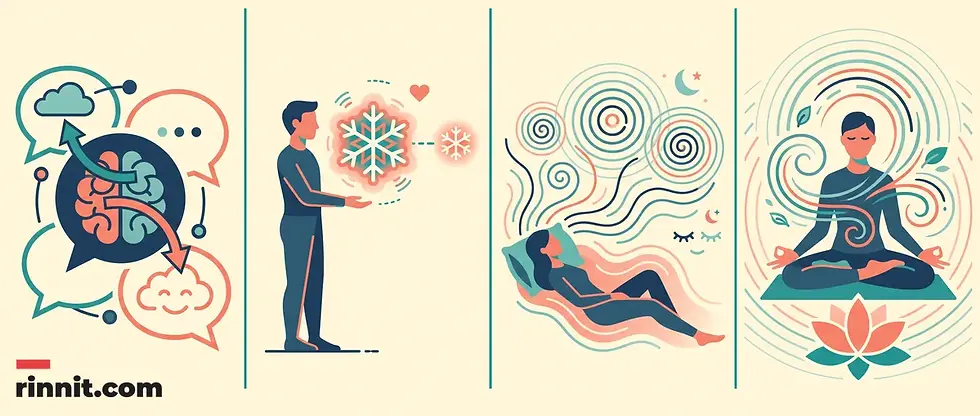
Treatment | How It Helps |
Cognitive behavioral therapy (CBT) | Helps you think about your fears in a different way and gain more control over how you respond to them |
Exposure therapy | Gradually increases your contact with snow (or pictures of snow) and decreases your sensitivity to it |
Hypnotherapy | Decreases fears through guided relaxation and intense concentration while your mind is in a hypnotic (relaxed and responsive) state |
Psychotherapy | Helps you talk through your fears, understand them better, and develop ways to cope |
Medications | Anti-anxiety medications can help manage panic attacks (though they don't treat the phobia itself); medications for other disorders like depression may also be recommended |
Your healthcare provider may also recommend breathing and relaxation exercises to help you stay calm. You can try yoga, meditation, and mindfulness techniques to relieve anxiety. [4]
What Are the Complications of Chionophobia?
Untreated, chionophobia can disrupt everyday activities and affect your quality of life. Extreme anxiety and panic attacks can cause serious physical symptoms and emotional problems.
Some people with chionophobia go to great lengths to avoid snow. People who live in cold climates may stay indoors for several weeks or months because they worry it might snow. They may lose friends, struggle with family or partners, and have a difficult time keeping a job. People with severe chionophobia may choose to move away from their support network to a place where it rarely snows. [4]
Outlook and Prognosis
With treatment, many people manage chionophobia symptoms. You may need long-term therapy to treat this phobia, especially if you live in an area where wintry weather is common. [4]
When Should I See My Healthcare Provider About Chionophobia?
Call your healthcare provider if you (or your child) have fear or anxiety when looking at or thinking about snow, especially if the anxiety doesn't go away. Make an appointment for an evaluation if your anxiety gets in the way of your everyday activities, or if you have trouble sleeping. Get help right away if you have panic attacks or severe signs of phobias.
What Questions Should I Ask My Doctor?
To gain a better understanding of this disorder, ask your healthcare provider what could be causing chionophobia, what type of therapy or treatment is right for you, what kind of experience they have with CBT, exposure therapy, and other types of treatment, and how you know if you'll need short-term or long-term therapy.
Living With Chionophobia
A severe fear of snow and wintry weather can significantly impact your quality of life. Extreme anxiety and panic attacks can affect your ability to form relationships, hold a job, and take part in your community. If you (or your child) have an illogical and intense fear of snow and ice, call your healthcare provider. Be honest with them about your symptoms. Be sure to share information about other anxiety disorders or phobias you have. Although there isn't a cure for the disorder, therapy can reduce symptoms and help you live with chionophobia.
Conclusion
Chionophobia, from the Greek word for snow, chióni, is an intense fear of snow and snowy weather that can trigger severe anxiety and panic attacks at the mere thought of a light snowfall. As a specific phobia disorder and natural-environment phobia, it sits alongside lilapsophobia (fear of tornadoes and hurricanes) and nyctophobia (fear of the dark). Its reach extends far beyond the moment of fear: people may move to warmer climates, avoid travel, or stay indoors for months, with real costs to relationships, work, and finances. While the exact cause isn't known, a blend of genetics, environment, and personal history, often a traumatic blizzard or a snowy-accident loss, usually lies behind it. Diagnosis comes through a mental health evaluation, looking for anxiety lasting at least six months with significant life impact. And while there is no cure, therapy is effective: cognitive behavioral therapy, exposure therapy, hypnotherapy, and psychotherapy, supported by anti-anxiety medication for panic attacks, plus breathing exercises, yoga, and mindfulness, help many people manage the fear.
Want to explain health topics like this one visually? Understanding how anxiety and phobias work is easier when it's presented visually. Rinnit's infographic templates can help you turn mental health topics like this one into clear, shareable explainers for yourself and your community.
Frequently Asked Questions
What is chionophobia?
Chionophobia is an intense fear of snow and snowy weather that can trigger severe anxiety and panic attacks.
What does "chionophobia" mean?
The word comes from the Greek word for snow (chióni), so chionophobia literally means fear of snow.
How do you pronounce chionophobia?
Pronounced roughly "kye-uh-NOH-foh-bee-uh."
Is chionophobia a mental illness?
Chionophobia is a specific phobia disorder, a type of anxiety disorder, which is a mental health condition involving extreme, unrealistic fear.
What is a phobia?
A phobia is a type of anxiety disorder where people have an extreme reaction to, or unusual fear of, something that isn't actually dangerous.
Is chionophobia a specific phobia?
Yes. It is a specific phobia disorder, and more specifically a natural-environment phobia.
What other natural-environment phobias exist?
Lilapsophobia (fear of tornadoes and hurricanes) and nyctophobia (fear of the dark) are other environmental phobias.
How common is chionophobia?
Exactly how many people have it is unknown, as many keep it to themselves, but about 1 in 10 American adults and 1 in 5 teenagers will deal with a specific phobia at some point.
Can fear of snow affect children?
Yes. Both children and adults can have extreme anxiety around snow.
What triggers chionophobia anxiety?
Hearing a weather report with snow in the forecast, seeing snow in person or in a movie or photograph, or even thinking about snow.
Can a picture of snow trigger a panic attack?
Yes. Seeing snow in a photograph can cause severe anxiety in someone with chionophobia.
Can a light snowfall cause anxiety?
Yes. Even the thought of a light snowfall can cause severe anxiety.
What are the physical symptoms of chionophobia?
Chills, dizziness, excessive sweating, heart palpitations, nausea, shortness of breath, trembling or shaking, and upset stomach or indigestion.
What is hyperhidrosis?
Excessive sweating, one of the physical anxiety symptoms chionophobia can cause.
What are heart palpitations?
A racing or pounding heart, a common physical symptom of the anxiety chionophobia causes.
What is dyspnea?
Shortness of breath, one of the physical symptoms of chionophobia anxiety.
What is dyspepsia?
Upset stomach or indigestion, another physical symptom.
Can chionophobia cause insomnia?
Yes. People may lose sleep over predicted wintry weather.
Why do people stockpile groceries with chionophobia?
Some become obsessed with stockpiling groceries before the first snowflake falls.
What causes chionophobia?
The exact cause isn't identified, but providers believe it results from a combination of genetics, environmental factors, and a person's history.
Can a traumatic event cause chionophobia?
Yes. Being stuck in a blizzard when young or losing a loved one in a snowy car accident can trigger it.
Is chionophobia like PTSD?
A snow-related traumatic event can cause the disorder to develop in a similar way to post-traumatic stress disorder (PTSD), especially in people already at increased risk of an anxiety disorder.
Is chionophobia genetic?
Genetics are believed to play a role, combined with environmental factors and personal history.
Who is at risk of chionophobia?
People with mental illness or anxiety disorders such as GAD are more likely to develop phobias, along with those who have a history of panic disorder, OCD, depression, other phobias, or substance abuse disorder.
Does having other phobias raise the risk?
Yes. Having other phobias increases your risk of developing a new one.
Does depression raise the risk?
Yes. Mood disorders such as depression increase the risk of phobias.
Does OCD raise the risk?
Yes. Mental illness, including obsessive-compulsive disorder (OCD), increases phobia risk.
Does substance abuse raise the risk?
Yes. Substance abuse disorder is listed as an increased-risk factor for phobias.
How is chionophobia diagnosed?
Through a mental health evaluation. Your provider may recommend a psychologist for a more complete evaluation.
How long must symptoms last for a diagnosis?
Panic attacks or anxiety lasting at least six months are one diagnostic criterion.
Can chionophobia lead to agoraphobia?
Severe worries or the inability to leave the house (agoraphobia) when it's cold or snow is forecast is one of the diagnostic signs.
What impact must symptoms have for a diagnosis?
Symptoms must have a significant impact on relationships or quality of life.
Is there a cure for chionophobia?
No. There isn't a cure, but therapy can reduce symptoms and help you live with chionophobia.
How is chionophobia treated?
With therapies including cognitive behavioral therapy (CBT), exposure therapy, hypnotherapy, and psychotherapy, sometimes alongside medications.
What is cognitive behavioral therapy (CBT)?
Therapy that helps you think about your fears in a different way and gain more control over how you respond to them.
What is exposure therapy for snow fear?
Therapy that gradually increases your contact with snow (or pictures of snow) and decreases your sensitivity to it.
What is hypnotherapy?
Treatment that decreases fears through guided relaxation and intense concentration while your mind is in a hypnotic (relaxed and responsive) state.
What does psychotherapy do?
Psychotherapy helps you talk through your fears, understand them better, and develop ways to cope.
Do medications treat the phobia itself?
No. Anti-anxiety medications can help manage panic attacks but don't treat the phobia itself.
Are medications used for other conditions?
If you have another mental health disorder, such as depression, your provider may recommend medications for it.
Can breathing exercises help?
Yes. Providers may recommend breathing and relaxation exercises to help you stay calm.
Does yoga help with chionophobia?
Yes. Yoga, meditation, and mindfulness techniques can relieve anxiety.
Does meditation help?
Yes. Meditation is one of the techniques that can relieve anxiety.
What happens if chionophobia goes untreated?
Untreated chionophobia can disrupt everyday activities and affect quality of life, with serious physical symptoms and emotional problems from extreme anxiety and panic attacks.
Can people stay indoors for months?
Yes. People in cold climates may stay indoors for several weeks or months because they worry it might snow.
Can chionophobia affect relationships?
Yes. It can damage relationships, cause people to lose friends, and strain family or partner dynamics.
Can chionophobia cause financial problems?
Yes. If the person is unable to go to work, it can cause financial problems and make keeping a job difficult.
Do people move away because of chionophobia?
Yes. Some move to warmer climates or away from their support network to places where it rarely snows.
What is the outlook with treatment?
With treatment, many people manage chionophobia symptoms successfully.
Will I need long-term therapy?
You may need long-term therapy, especially if you live in an area where wintry weather is common.
When should I call my healthcare provider?
If you (or your child) have fear or anxiety when looking at or thinking about snow, especially if the anxiety doesn't go away.
When should I get help right away?
If you have panic attacks or severe signs of phobias, get help right away.
What questions should I ask my doctor?
Ask what could be causing chionophobia, what therapy is right for you, what experience they have with CBT and exposure therapy, and whether you'll need short-term or long-term therapy.
Should I tell my doctor about other phobias?
Yes. Be honest about your symptoms and share information about other anxiety disorders or phobias you have.
Related Reading
Specific Phobias: Symptoms, Causes, and How Exposure Therapy Helps You Overcome Them
Anxiety Disorders: Symptoms, Types, Causes, Treatment & Complete Guide
Generalized Anxiety Disorder: Symptoms, Causes, Treatment & Complete Guide
Nyctophobia: Symptoms, Triggers, and Strategies to Manage Fear of the Dark
Astraphobia: A Plain-Language Guide to the Fear of Thunder and Lightning
What Are Mood Disorders? A Plain-Language Guide to Depression, Bipolar Disorder, and Getting Help
References
McGrath JJ, Al-Hamzawi A, Alonso J, et al. Age of onset and cumulative risk of mental disorders: a cross-national analysis of population surveys from 29 countries. Lancet Psychiatry. 2023;10(9):668-681. PMID: 37531964. https://doi.org/10.1016/S2215-0366(23)00193-1
Carl E, Stein AT, Levihn-Coon A, et al. Virtual reality exposure therapy for anxiety and related disorders: a meta-analysis of randomized controlled trials. J Anxiety Disord. Published online August 10, 2018;61:27-36. PMID: 30287083. https://doi.org/10.1016/j.janxdis.2018.08.003
Bandelow B, Michaelis S. Epidemiology of anxiety disorders in the 21st century. Dialogues Clin Neurosci. 2015;17(3):327-335. PMID: 26487813. https://doi.org/10.31887/DCNS.2015.17.3/bbandelow
Cleveland Clinic. Chionophobia (fear of snow): overview, causes & treatment. Cleveland Clinic Health Library. Last updated March 25, 2022. https://my.clevelandclinic.org/health/diseases/22592-chionophobia-fear-of-snow
Medical disclaimer
This article is for general informational purposes only and is not a substitute for professional medical advice, diagnosis, or treatment. Always consult a qualified healthcare provider with questions about a medical condition or before making decisions about treatment.



Comments