Nyctophobia: Symptoms, Triggers, and Strategies to Manage Fear of the Dark

Updated: 2 days ago
Medically reviewed by Dr. Baraa Alnahhal, MD · Last reviewed: October 2026
Quick Answer: Nyctophobia at a Glance
Nyctophobia is an extreme, irrational fear of the dark, also called scotophobia or lygophobia. [1] It can cause panic attacks, a racing heart, sweating, trouble sleeping and avoidance of dark places, often triggered by bedtime or sunset. [1] Fear of the dark is one of the most common fears in children aged 6 to 12. [1] Treatment includes CBT, exposure therapy and nightlights. [1]
Feature | Details |
Definition | An extreme, irrational fear of the dark. [1] |
Other names | Scotophobia or lygophobia. [1] |
Key symptoms | Panic attacks, racing heart, sweating, trouble sleeping, and avoiding dark places. [1] |
Main triggers | Getting ready for bed, turning out the lights, seeing the sun go down, and dark places such as movie theaters. [1] |
How common | |
Treatment | CBT, exposure therapy, hypnotherapy, mindfulness, and nightlights. [1] |
What the research says
Even a short cognitive session can reduce a child's fear of the dark. In a randomized study of 43 highly anxious children aged 8 to 12, a single 30-minute session of either cognitive restructuring (21 children) or cognitive defusion (22 children) significantly reduced fear of the dark. Cognitive restructuring worked better for how scared the children said they felt, and the two did not differ in how long children tolerated darkness. The sessions had no behavioral (exposure) elements. (Simon et al., Int J Psychol, 2019) [2]
Fear of the dark is one of the most common childhood worries. In a study of 677 Japanese parents and their children aged 9 to 12, the most common anxiety symptoms in parent reports were fear of the dark and fear of insects and spiders. Parent and child reports agreed poorly, so asking the child directly matters. (Ishikawa et al., Child Psychiatry Hum Dev, 2014) [3]
Exposure works well for specific phobias, but dropout and relapse are common. A systematic review of 36 studies of childhood specific phobia found that most phobias respond robustly to exposure to the feared situation, but this approach has high dropout rates and low acceptance. Relapse is common, medicine data show little promise, and long-term outcomes are poorly known. (Fond & Franc, Encephale, 2012) [4]
What Is Nyctophobia?
Nyctophobia is a specific phobia: an extreme fear of the dark. [1] The name comes from the Greek word for night. [1] Unlike the mild unease that nearly everyone feels in the dark from time to time, nyctophobia is more than an occasional fear. [1] It can cause severe anxiety and get in the way of sleep, work, and relationships. [1] Providers also call it scotophobia (fear of darkness) or lygophobia. [1]
A specific phobia is a type of anxiety disorder in which a person has an irrational, intense fear of something that is actually harmless. [1] People with nyctophobia are often afraid of what they can't see, such as ghosts, monsters, or robbers, and of unexplained noises, as much as they fear the darkness itself. [1]
What are the symptoms of nyctophobia?
People with an extreme fear of the dark have intense fear or anxiety when they are in the dark. [1] The symptoms can be physical and emotional, and they often look like a panic attack.

Physical Symptoms
Heart: Increased heart rate, heart palpitations, and non-cardiac chest pain. [1]
Breathing: Shortness of breath [1], difficulty breathing, or fast breathing. [1]
Stomach and mouth: Nausea and vomiting when thinking about the dark or nighttime, difficulty swallowing, and dry mouth. [1]
Head and body: Dizziness, headaches, and excessive sweating. [1]
Emotional and Behavioral Signs
Avoidance: Staying indoors after sundown and avoiding dark places or social events that go on after dark. [1]
Sleep problems: Refusing to turn the lights out, avoiding bedtime [1], or having trouble sleeping in a darkened room. [1]
Distress: Feelings of dread, catastrophic (terrifying) thoughts, panic attacks, and intense emotions, crying, and screaming in the dark, especially in children. [1]
What causes nyctophobia, and what are its common triggers?
Nyctophobia can be triggered by dark places, bedtime or sunset, and it is more likely after a traumatic experience in the dark or with other mental health conditions. [1]
Cause | Description |
Evolutionary | Some researchers believe the fear dates back to our ancestors, who lived and slept in the open, where predators roamed at night. [1] |
Trauma | |
Media influence | Watching a scary movie or hearing an upsetting story can leave frightening images that the mind replays in the dark. [1] |
Family history | Having other phobias, or a history of phobias in your family, raises the risk. [1] |
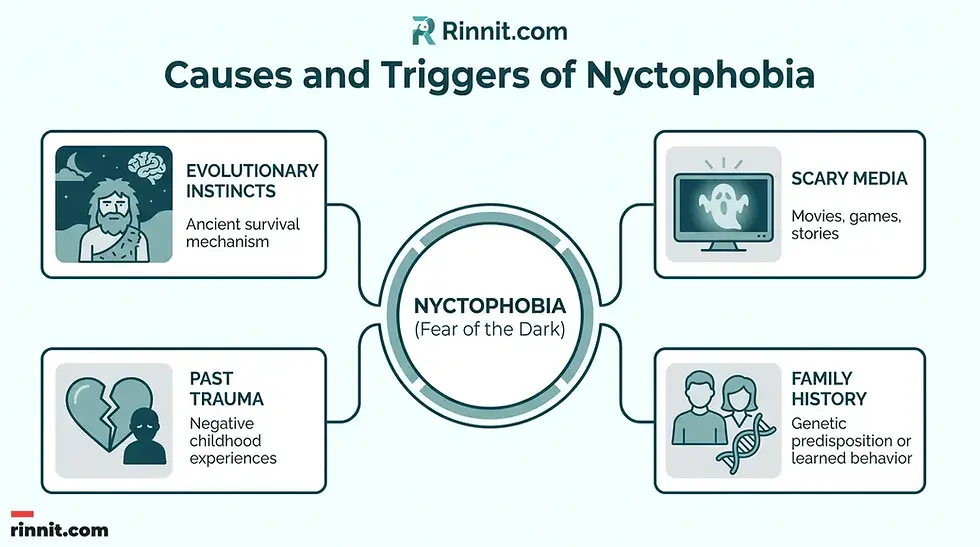
Common triggers include entering a dark place such as a movie theater, getting ready for bed, seeing the sun go down, thinking about being in the dark, trying to sleep, turning out the lights, and watching a show with nighttime scenes. [1]
Who Is at Higher Risk?
Nyctophobia is much more common in children, but people of all ages can have it. [1] The risk is higher for people who had a traumatic or troubling experience in the dark, and the phobia can develop as part of post-traumatic stress disorder (PTSD). [1] You also have a higher chance of developing a specific phobia if you have depression, substance use disorder, generalized anxiety disorder, obsessive-compulsive disorder, panic attacks or panic disorder, a history of mental illness, or other phobias. [1]
How is nyctophobia diagnosed?
To diagnose a phobia, a provider will ask about your symptoms, or your child's, including when they began and when they happen. [1] Tell your provider about any scary or traumatic experiences, even ones that happened in daylight. [1] They will also want to know whether the fear affects sleep and daily activities, whether you have other phobias, and whether phobias run in your family. [1] Your provider may refer you to a mental health professional who specializes in phobias. [1]
How is nyctophobia managed and treated?
Nyctophobia is treatable, and most people get better with therapy. [1] The outlook depends on how severe the phobia is, and people with severe nyctophobia or other anxiety disorders may need more than one type of therapy over a longer time. [1]
Therapeutic Approaches
Cognitive behavioral therapy (CBT): Helps you learn to change how you respond to your fear of the dark. [1]
Exposure therapy: Gradually exposes you to the dark so you become desensitized to it. It should be done under the supervision of your provider. [1]
Hypnotherapy: Uses guided relaxation to help you rethink your fear of the dark and the anxiety it causes. [1]
Psychotherapy (talk therapy): Helps you understand your fears and manage them. [1]
Mindfulness exercises: Yoga, breathing exercises, and meditation can help you control anxiety in the dark. [1]

Practical Home Solutions
Sleeping with a nightlight can help some children and adults feel more comfortable in a darkened room. [1] Sometimes just a little light is enough to help people with nyctophobia fall asleep and stay asleep. [1] If you have insomnia, your provider may recommend melatonin supplements or other medications to help you sleep. [1] If a traumatic experience is causing distress, your provider will recommend therapy or counseling, and you may also need medicines to treat depression or control panic attacks. [1]
What complications can nyctophobia cause?
Nyctophobia often goes hand in hand with insomnia. People who have trouble sleeping may develop a fear of the dark, and people who fear the dark often have trouble sleeping. Sleeping with the lights on to avoid the dark can make restful sleep difficult. [1] Too little sleep can cause extreme daytime fatigue, which can make it hard to hold down a job. [1] Untreated, nyctophobia can strain relationships, especially if you avoid leaving the house after dark. [1] In children, sleep problems can interfere with development and lead to behavioral or learning issues. [1]
When should you see a provider about nyctophobia?
Talk to a provider if you or your child has severe signs of nyctophobia, is having trouble sleeping, or is avoiding situations that involve being in the dark. Get help right away if you are having panic attacks or if anxiety is getting in the way of daily life. [1] Many young children are afraid of the dark, and most grow out of it, but you should call your child's provider if the fear is severe. [1]
What is the bottom line on nyctophobia?
A fear of the dark is a normal part of childhood for many people. Nyctophobia is more serious: it is an anxiety disorder that limits sleep, work, and social life. It is treatable, and therapy such as CBT and exposure therapy helps most people, along with simple tools like a nightlight and relaxation techniques.
Is fear of the dark disrupting your sleep or your child's? Talk with a healthcare professional. They can help find the cause and suggest therapy and sleep strategies that fit you.
Frequently Asked Questions
Is nyctophobia the same as being afraid of the dark?
They are related, but nyctophobia is an extreme, irrational fear that gets in the way of daily life. [1] Nearly everyone feels uneasy in the dark from time to time. [1]
At what age do kids usually outgrow a fear of the dark?
Fear of the dark is one of the most common fears in children aged 6 to 12. [1] Kids usually outgrow it by adolescence, but not always. [1]
Can a scary movie cause nyctophobia?
It can contribute. Watching a scary movie or hearing an upsetting story can leave frightening images that the mind replays, [1] and in the dark you may worry that the things you imagined are real. [1]
Is it okay to sleep with a nightlight as an adult?
Yes. A nightlight can help some children and adults feel more comfortable in a darkened room, and sometimes a little light is enough to help you fall asleep and stay asleep. [1]
Can nyctophobia cause heart palpitations?
Yes. The intense anxiety can cause an increased heart rate, heart palpitations, and non-cardiac chest pain. [1] If you are unsure what is causing chest symptoms, talk to a healthcare professional.
What is the difference between scotophobia and nyctophobia?
Providers use the terms for the same kind of fear. [1] Nyctophobia comes from the Greek word for night, [1] and scotophobia means fear of darkness. [1]
Does nyctophobia run in families?
Your risk of a specific phobia is higher if you have other phobias or a history of phobias in your family. [1]
How does exposure therapy work for fear of the dark?
It gradually exposes you to the dark so you become desensitized to it. It is important to do it under the supervision of your provider. [1]
Is nyctophobia linked to other mental health conditions?
It can be. Nyctophobia can develop as part of PTSD, and your risk of a specific phobia is higher if you have depression, generalized anxiety disorder, obsessive-compulsive disorder, panic disorder, or substance use disorder. [1]
Is nyctophobia more common in women?
In general, females are more likely to get specific phobic disorders, [1] [4] but anyone can get them.
Can I use melatonin for nyctophobia?
If you have insomnia, your provider may recommend melatonin supplements or other medicines to help you sleep. [1] These help with sleep, while therapy is used to treat the fear itself.
What is "catastrophic thinking" in nyctophobia?
It means having terrifying thoughts about what might happen in the dark, such as imagining that something dangerous is hiding there. [1]
Can a traumatic event in the daytime cause a fear of the dark?
Yes. A traumatic experience, even one that happened during the day, can lead to nyctophobia, [1] because the memory of the scary event can return when it is dark. [1]
Is nyctophobia a type of generalized anxiety disorder?
No. It is a specific phobia, [1] which is a separate type of anxiety disorder, although having generalized anxiety disorder can raise your risk of developing a specific phobia. [1]
How long does it take to treat nyctophobia?
It varies. Most people get better with therapy, but the outlook depends on how severe the phobia is, and people with severe nyctophobia or other anxiety disorders may need several types of therapy and long-term treatment. [1]
Related Reading
Specific Phobias: Symptoms, Causes, and How Exposure Therapy Helps You Overcome Them explains specific phobias and how exposure therapy helps.
Exposure Therapy: What It Is, How It Works, Types, and What to Expect describes the gradual therapy used to reduce intense fears.
Cognitive Behavioral Therapy (CBT): What It Is, What It Treats and What to Expect explains how CBT changes anxious thoughts and habits.
Overcoming Somniphobia: Causes, Symptoms, and Treatment for Fear of Sleep covers the fear of falling asleep and how it is treated.
References
Cleveland Clinic. Nyctophobia (Fear of the Dark): Symptoms & Causes. Cleveland Clinic. Updated March 28, 2022. https://my.clevelandclinic.org/health/diseases/22785-nyctophobia-fear-of-the-dark
Simon E, et al. Challenging anxious cognitions or accepting them? Exploring the efficacy of the cognitive elements of cognitive behaviour therapy and acceptance and commitment therapy in the reduction of children's fear of the dark. Int J Psychol. 2019;55(1):90-97. PMID 30690747. https://doi.org/10.1002/ijop.12540
Ishikawa S, et al. A parental report of children's anxiety symptoms in Japan. Child Psychiatry Hum Dev. 2014;45(3):306-317. PMID 24005443. https://doi.org/10.1007/s10578-013-0401-y
Fond G, et al. Treating specific childhood phobia in a single session? A systematic review of the literature [in French]. Encephale. 2012;39(2):109-114. PMID 23095586. https://doi.org/10.1016/j.encep.2012.04.002
Medical disclaimer
This article is for general informational purposes only and does not constitute medical advice. Always consult a qualified healthcare professional with any questions about a medical condition or anxiety disorder.



Comments