What Is Bladder Outlet Obstruction? Causes, Symptoms, and Treatment Explained

Updated: 3 days ago
Medically reviewed by Dr. Baraa Alnahhal, MD · Last reviewed: October 2026
Quick Answer: What is bladder outlet obstruction?
Bladder outlet obstruction is a blockage at the bladder neck, where the bladder connects to the urethra, the tube that carries urine out of the body. When this passage is narrowed or blocked, urine flows too slowly or stops entirely. The condition has many possible causes, from scar tissue to prostate cancer, but treatments are available for most cases. [1]
Key takeaways
Bladder outlet obstruction blocks pee at the bladder neck. The bladder neck is where the bladder connects to the urethra, and a blockage there slows or stops urine flow. [1]
It causes pain and incomplete emptying. Symptoms include lower abdominal or side pain, painful urination, a slow or stop-and-start stream, and a bladder that never feels fully empty. [1]
An enlarged prostate is a common cause. Other causes include bladder stones, urethral scar tissue, pelvic organ prolapse, severe constipation, harmless cysts, and certain cancers. [1]
Everyone can be affected, but it is most common in older males. Women with a prolapsed bladder, children, and even developing fetuses can develop BOO. [1]
Untreated blockage can harm the kidneys. Complications include urinary tract infections, kidney damage, loss of kidney function, and kidney stones. [1]
Treatment depends on the cause. [1] Medications, pelvic floor physical therapy, a pessary, catheter drainage, and minimally invasive surgeries can relieve the blockage, and prompt treatment protects bladder and kidney health.
What the research says
Adding dutasteride to tamsulosin lowers the risk of urinary retention and surgery in BPH. A meta-analysis of 8 studies (8,793 patients) found that combining tamsulosin (an alpha-blocker) with dutasteride, a drug that shrinks the prostate, improved symptoms, urine flow, and prostate volume compared with tamsulosin alone, and cut the odds of acute urinary retention or BPH-related surgery by about two-thirds (odds ratio 0.33, 95% CI 0.25–0.44). Drug-related side effects were more common with the combination (OR 2.13, 95% CI 1.67–2.73) (Yu et al., Arch Esp Urol, 2025). [3]
Surgery for a scarred membranous urethra works for most people. A systematic review and meta-analysis of 10 studies (930 patients) reported an overall success rate of 88.3% (95% CI 85–91%), defined as no restenosis, after urethroplasty for strictures and distraction defects of the membranous urethra. Success was 90–95% for traumatic strictures and 70–80% for radiation-induced ones (Vorobev et al., Urologiia, 2026). [4]
Draining the bladder before birth may improve survival in fetal obstruction. In a meta-analysis of 10 studies (355 fetuses) with severe lower urinary tract obstruction, survival was higher with vesico-amniotic shunting than with conservative management (OR 2.54, 95% CI 1.14–5.67; 57.1% vs 38.8%). Good postnatal kidney function also trended higher, but the difference was not statistically significant (OR 2.09, 95% CI 0.74–5.9) (Saccone et al., J Matern Fetal Neonatal Med, 2020). [5]
What Is Bladder Outlet Obstruction?
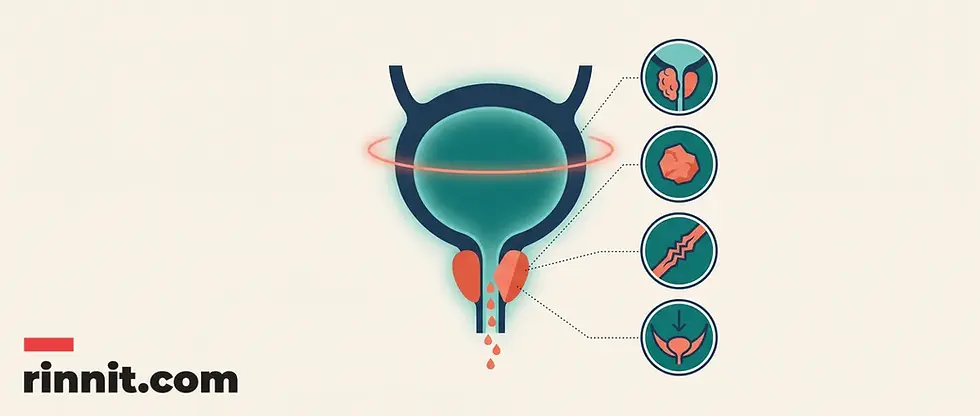
Bladder outlet obstruction (BOO) is a blockage in the neck at the very bottom of the bladder. The neck is where the bladder connects to the urethra, which carries urine (pee) out of the body. A urinary tract blockage stops or slows the flow of pee. [1]
This condition may cause pain in the abdomen, pain when you pee, or an inability to empty the bladder. It has many possible causes, ranging from scar tissue to prostate cancer, and treatments are available for most cases. [1]
BOO is most common in people over age 65 and in males. Women with cystocele (a prolapsed bladder) are more likely to develop bladder outlet obstruction than other women. Children and babies, including developing fetuses, can also get BOO. [1]
Rarely, a developing fetus can develop bladder outlet obstruction in utero. This is also called fetal bladder outlet obstruction or fetal lower urinary tract obstruction (LUTO). When a fetus's pee is blocked, the bladder grows larger, which can cause kidney problems and other complications. [1]
What Are the Symptoms of Bladder Outlet Obstruction?
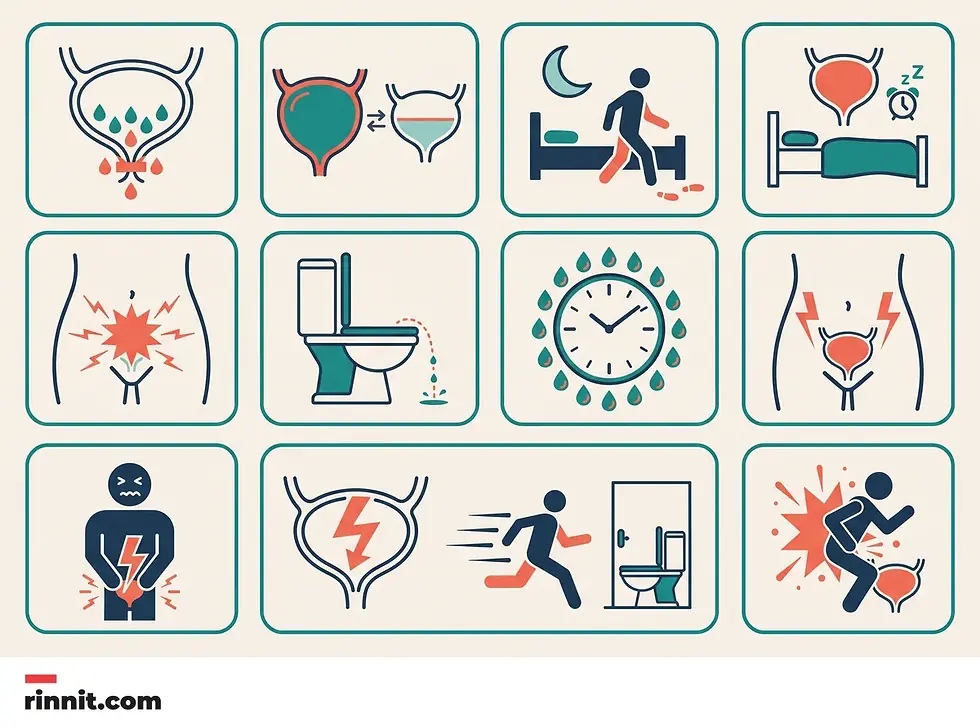
Bladder outlet obstruction can cause symptoms of urinary tract obstruction, known as lower urinary tract symptoms (LUTS). [1] You may have a urinary blockage if you experience any of the warning signs below.
Symptom | What It Feels Like |
Difficulty starting the stream | Trouble getting the urine flow to begin [1] |
Incomplete emptying | Feeling like the bladder is still full after peeing [1] |
Nighttime urination | Passing pee frequently during sleeping hours [1] |
Abdominal or side pain | Pain in the lower abdomen or side [1] |
Weak or interrupted stream | Pee flow that starts and stops or is very slow [1] |
Frequent small amounts | Using the bathroom often but passing very little pee [1] |
Painful urination | Feeling pain when passing pee [1] |
Urgency | Feeling an urgent need to empty the bladder [1] |
Trouble starting your urine stream, feeling a full bladder that will not empty completely, and passing pee frequently at night are common early signs. [1] A stream that starts and stops out of your control, or one that is very slow, also points to a possible blockage.
Pain in the lower abdomen or side, pain while passing pee, and using the bathroom frequently with only small amounts coming out round out the typical symptom picture. Feeling an urgent need to empty the bladder is another frequent complaint. [1]
What Causes a Bladder Outlet Obstruction?
An enlarged prostate gland (benign prostatic hyperplasia, or BPH) is a common cause of bladder outlet obstruction. [1] However, many different things can cause this condition, so the underlying reason varies from person to person.
Possible Cause | Description |
Enlarged prostate (BPH) | A common cause, especially in older males |
Urethral stricture | Scar tissue that narrows the urethra |
Bladder stones | Hardened minerals that block the outlet |
Procedures for stress incontinence | Prior surgeries or treatments can narrow the outlet |
Harmless lesions or cysts | Noncancerous growths that crowd the passage |
Cancers | Urethral, vaginal, uterine, bladder, rectal, prostate, or cervical cancer [1] |
Pelvic organ prolapse | The bladder or uterus falls down into the vaginal area [1] |
Severe constipation | Stool impaction that presses on the bladder outlet |
Scar tissue in the urethra, known as a urethral stricture, is another frequent culprit. Bladder stones, hardened minerals that form inside the bladder, can wedge into the outlet. Prior procedures for stress incontinence may also contribute. [1]
Noncancerous lesions or cysts, cancers of the urinary or pelvic organs, pelvic organ prolapse, and even severe constipation or stool impaction can all produce a blockage. [1]
Risk Factors
The risk of bladder outlet obstruction rises with certain urinary patterns and age. Known risk factors include a lower maximum flow rate of urine, a longer time for urine to flow out, less efficient bladder emptying, and older age. [1]
Can Bladder Outlet Obstruction Cause Complications?
It is important to treat a urinary tract blockage as soon as possible to prevent complications. Without prompt diagnosis and treatment, several serious problems can develop. [1]
Complication | What Happens |
Urinary tract infections | Stagnant urine raises infection risk |
Loss of kidney function | Backed-up urine can reduce kidney performance |
Kidney damage | Prolonged obstruction may permanently injure the kidneys |
Kidney stones | Changes in urine flow encourage stone formation |
Incomplete bladder emptying | The bladder cannot fully drain on its own |
Urinary tract infections, loss of some kidney function, kidney damage, kidney stones, and the inability to empty the bladder completely are all possible outcomes of leaving the blockage untreated. [1] Prompt care is the best protection.
How Is Bladder Outlet Obstruction Diagnosed?
A healthcare provider will perform a physical exam to diagnose bladder outlet obstruction. They will also ask about your medical history and what you have been experiencing. [1]
Expect questions such as whether you feel pain in your abdomen or when you pee, whether it takes a while for the stream to start, whether you ever pee in your sleep, and whether you feel like the bladder is still full when you finish. [1] Your provider will also ask if the stream starts and stops out of your control.
Test | What It Checks |
Blood tests | Kidney damage [1] |
Urinalysis | Blood or infection in the urine [1] |
Pelvic ultrasound | Kidneys and bladder to locate the blockage [1] |
Cystoscopy | Narrowing inside the urethra [1] |
Urodynamic testing | How the bladder and sphincter muscles function [1] |
Electromyography (EMG) | Muscle and nerve function [1] |
Post-void residual test | How much urine remains in the bladder after peeing [1] |
CT urogram | A series of X-rays of the urinary tract [1] |
MRI | Imaging that uses radio waves [1] |
Voiding cystourethrogram (VCUG) | A type of X-ray taken during urination |
A combination of these tests helps pinpoint where the blockage is and what is causing it. Imaging of the kidneys and bladder shows the location, while muscle and nerve studies reveal whether the bladder itself is working properly.
How Is Bladder Outlet Obstruction Treated?

The type of treatment you receive depends on what is causing the urinary blockage. A provider will use different treatments for bladder stones than for prostate cancer, so the cause always guides the plan. [1]
For some people, medications such as alpha-blockers or finasteride improve bladder outlet obstruction. For others, physical therapy or a pessary — a device that supports a woman's pelvic organs — may help with bladder obstruction. [1]
Treatment | Best For |
Alpha-blockers | Relaxing the bladder outlet and improving flow |
Finasteride | Shrinking an enlarged prostate |
Physical therapy | Strengthening pelvic floor support |
Pessary | Supporting pelvic organs in women with prolapse |
Foley catheter | Draining pee from the bladder [1] |
Obstruction removal surgery | Directly removing the blockage [1] |
Transurethral bladder neck incisions | Opening a narrowed bladder neck |
Sacrocolpopexy | Repairing pelvic organ prolapse [1] |
Laser lithotripsy | Breaking up bladder stones |
Urethroplasty | Rebuilding a urethra narrowed by scar tissue |
Many of these urological surgeries are minimally invasive, meaning a shorter hospital stay and a quicker recovery. Recovery time varies by procedure. [1]
Home Management While Awaiting Treatment
While waiting for treatment to fix bladder outlet obstruction, you may be able to unblock urine flow at home. You can learn to use a catheter to empty your bladder, a skill called self-catheterization. [1]
If you have a penis, sitting down to pee may give a better urine flow. You may also be able to pass more pee by leaning forward for 30 seconds before trying to pee again. [1]
When Should You Seek Care?
Go to the emergency department if the pain from a urinary tract blockage is unbearable, as this could signal complications. You should also seek immediate help if you cannot pass pee at all or if you develop a urinary tract infection. [1]
If you have had surgery, you will need follow-up appointments with your provider. After recovery, contact your provider if peeing problems return. [1]
Questions to Ask Your Provider
Useful questions include: What is the cause of bladder outlet obstruction in my case? Could it happen again? What is the best treatment option for me? [1]
Outlook: Living With Bladder Outlet Obstruction
What Can You Expect?
Unless the pain is unbearable, bladder outlet obstruction should not keep you from your normal daily activities. Healthcare providers can treat most cases, and BOO-related symptoms should go away with treatment. [1]
That said, bladder outlet obstruction can come back. In some cases, surgery may be needed. The cause of the obstruction affects your prognosis (outlook), and it is different for each case. [1]
It is frustrating to have a hard time emptying your bladder, but you do not have to accept it. Treatments can help many people with this condition. [1] If you have symptoms of bladder outlet obstruction, do not hesitate to see your healthcare provider. Prompt treatment can help avoid kidney and bladder complications. [1]
Conclusion
Bladder outlet obstruction is a blockage at the neck of the bladder that slows or stops urine flow. It brings symptoms such as abdominal pain, painful urination, a weak or stop-and-start stream, and a bladder that never fully empties. The causes are varied — an enlarged prostate, bladder stones, scar tissue, pelvic organ prolapse, constipation, harmless cysts, or certain cancers — and the condition is most common in males over 65, though women, children, and even fetuses can develop it.
Because an untreated blockage can lead to urinary tract infections, kidney damage, and kidney stones, timely diagnosis matters. Diagnosis combines a physical exam, symptom questions, and tests such as ultrasound, cystoscopy, urodynamic studies, and imaging. Treatment follows the cause, from medications and pelvic floor therapy to catheter drainage and minimally invasive surgery.
With the right care, most people find lasting relief — but the condition can return, so follow-up with your provider is essential.
Turn complex health topics into clear visuals. If you educate patients or audiences about bladder health, pelvic wellness, or urology topics, Rinnit's ready-made infographic templates help you present sensitive information simply and professionally, with no design experience required.
Frequently Asked Questions
What is bladder outlet obstruction?
Bladder outlet obstruction is a blockage in the neck at the very bottom of the bladder, where the bladder connects to the urethra. The blockage stops or slows the flow of pee out of the body. [1]
Who is most likely to get bladder outlet obstruction?
BOO is most common in people over age 65 and in males. Women with a prolapsed bladder (cystocele) are at higher risk than other women. [1]
Can children get bladder outlet obstruction?
Yes. Children and babies, including developing fetuses, can develop BOO. In rare cases, a fetus develops the condition in utero, a condition also called fetal lower urinary tract obstruction (LUTO). [1]
What happens when a fetus has bladder outlet obstruction?
When a fetus's pee is blocked, the bladder grows larger and kidney issues and other problems can develop. This is known as fetal bladder outlet obstruction or LUTO. [1]
What is the most common cause of bladder outlet obstruction?
An enlarged prostate gland (benign prostatic hyperplasia, or BPH) is a common cause of bladder outlet obstruction. [1]
What are the main symptoms of a bladder blockage?
Symptoms include trouble starting the urine stream, feeling a full bladder that will not empty, frequent nighttime urination, lower abdominal or side pain, a slow or stop-and-start stream, passing small amounts frequently, painful urination, and urgency. [1]
Can scar tissue cause bladder outlet obstruction?
Yes. Scar tissue in the urethra, known as a urethral stricture, is one of the possible causes of a bladder outlet obstruction. [1]
Can bladder stones cause a blockage?
Yes. Bladder stones, which are hardened minerals, can block the bladder outlet.
Can cancer cause bladder outlet obstruction?
Yes. Cancers of the urethra, vagina, uterus, bladder, rectum, prostate, or cervix can all cause a blockage at the bladder outlet. [1]
Can constipation cause bladder outlet obstruction?
Yes. Severe constipation or stool impaction can press on the bladder outlet and obstruct urine flow.
What complications can develop if bladder outlet obstruction is left untreated?
Without prompt diagnosis and treatment, complications can include urinary tract infections, loss of some kidney function, kidney damage, kidney stones, and the inability to empty the bladder completely. [1]
What tests diagnose bladder outlet obstruction?
Tests may include blood tests, urinalysis, pelvic ultrasound, cystoscopy, urodynamic testing, electromyography (EMG), a post-void residual urine test, a CT urogram, MRI, and a voiding cystourethrogram (VCUG). [1]
What medications help bladder outlet obstruction?
Medications such as alpha-blockers or finasteride can improve bladder outlet obstruction in some people. [1]
What is a pessary, and how does it help?
A pessary is a device that supports a woman's pelvic organs. [1] It may help relieve bladder obstruction caused by pelvic organ prolapse.
Is surgery for bladder outlet obstruction minimally invasive?
Many urological surgeries for BOO are minimally invasive, meaning a shorter hospital stay and quicker recovery. Options include obstruction removal, bladder neck incisions, sacrocolpopexy, laser lithotripsy for stones, and urethroplasty for strictures. [1]
Can I manage a blockage at home while waiting for treatment?
Yes. You can learn self-catheterization to empty your bladder at home. [1] Sitting down to pee may improve flow, and leaning forward for 30 seconds before trying again can help you pass more pee.
When is bladder outlet obstruction an emergency?
Go to the emergency department if the pain from a blockage is unbearable, if you cannot pass pee at all, or if you develop a urinary tract infection. [1]
Can bladder outlet obstruction come back after treatment?
Yes. BOO-related symptoms should go away with treatment, but the condition can come back, and some cases may eventually need surgery. [1]
What questions should I ask my healthcare provider?
Ask what is causing your bladder outlet obstruction, whether it could happen again, and what the best treatment option is for you. [1]
Will bladder outlet obstruction limit my daily activities?
Unless the pain is unbearable, BOO should not keep you from your normal daily activities. [1] Prompt treatment helps you stay active while protecting your kidneys and bladder.
Related Reading
Overactive Bladder: Symptoms, Causes, and Treatment Explained
Benign Prostatic Hyperplasia (BPH): Symptoms, Causes, and Treatment
Urinary Tract Infection (UTI): Symptoms, Causes, Treatment, and Prevention
Urinary Incontinence: Symptoms, Causes, and Treatment Options Explained
Cystocele (Prolapsed Bladder): Symptoms, Causes, and Treatment
References
Cleveland Clinic. Bladder Outlet Obstruction. Cleveland Clinic Health Library. Medically reviewed; last updated June 30, 2025. https://my.clevelandclinic.org/health/diseases/15181-bladder-outlet-obstruction
National Institute of Diabetes and Digestive and Kidney Diseases. Urinary Retention. NIDDK. Last reviewed December 2019. https://www.niddk.nih.gov/health-information/urologic-diseases/urinary-retention
Yu H, Chen H, Wang X, et al. Efficacy and safety of combination tamsulosin and dutasteride versus tamsulosin monotherapy for benign prostatic hyperplasia: a meta-analysis. Arch Esp Urol. 2025;78(7):866-876. PMID: 40922439. https://doi.org/10.56434/j.arch.esp.urol.20257807.115
Vorobev AV, Kogan MI, Prokopev EYu, et al. Effectiveness of urethroplasty in strictures and distraction defects of the membranous urethra: a systematic review and meta-analysis. Urologiia. 2026;(1):14-23. PMID: 42417346. https://pubmed.ncbi.nlm.nih.gov/42417346/
Saccone G, D'Alessandro P, Escolino M, et al. Antenatal intervention for congenital fetal lower urinary tract obstruction (LUTO): a systematic review and meta-analysis. J Matern Fetal Neonatal Med. 2020;33(15):2664-2670. PMID: 30501534. https://doi.org/10.1080/14767058.2018.1555704
Medical disclaimer
This content is for general informational purposes only and is not a substitute for professional medical advice, diagnosis, or treatment. Always seek the advice of a qualified healthcare provider with any questions about a medical condition. Never disregard professional medical advice or delay seeking care because of something you have read here.



Comments