What Is Biliary Dyskinesia? Symptoms, Causes, Diagnosis, and Treatment Explained

Updated: 3 days ago
Medically reviewed by Dr. Baraa Alnahhal, MD · Last reviewed: October 2026
Quick Answer: What is biliary dyskinesia?
Biliary dyskinesia is a functional disorder, mostly of the gallbladder, in which the gallbladder does not eject enough bile when it contracts. It differs from a mechanical blockage such as a gallstone. It is diagnosed when no other cause explains the symptoms, and the only known effective treatment is gallbladder removal. [1]
Key takeaways
It is a functional disorder, not a blockage. The problem is how the gallbladder or sphincter muscle works, not a physical obstruction like a gallstone. [1]
Bile backs up when the gallbladder can't empty. The backup makes the gallbladder fuller and swollen, causing infections, inflammation, and pain, similar to a gallstone blockage. [1]
Episodic pain is the signature symptom. Pain in the upper right abdomen builds steadily over the first 20 minutes, lasts up to several hours, and often follows fatty or rich meals. [1]
Diagnosis is a careful elimination process. Providers confirm biliary-type pain, rule out gallstones and other diseases, and measure the gallbladder's ejection fraction with a HIDA scan. [1] [3]
Surgery works for most. For people who meet all diagnostic criteria, gallbladder removal is 90% effective, and you can live well without a gallbladder. [1]
What the research says
Surgery helps some people with a low gallbladder ejection fraction, but the evidence is inconsistent. A meta-analysis of 29 studies with 2,891 patients found that people with a low gallbladder ejection fraction were more likely to improve after cholecystectomy than with medical management (RR 2.37), while those with a normal ejection fraction did not benefit. Improvement after surgery was similar in the low and normal groups (RR 1.09), and the authors concluded that the available studies were of poor quality and that the role of scintigraphy and surgery remains unclear (Gudsoorkar et al., Aliment Pharmacol Ther, 2019). [5]
In children, about 7 in 10 report symptom resolution after gallbladder removal. A systematic review of 40 studies with 3,348 children who had cholecystectomy for biliary dyskinesia found a pooled symptom resolution rate of 69% (34 studies, 2,609 patients). About 65% had chronic cholecystitis on histopathology, and 6% were readmitted. The authors note wide variability in outcomes and no standardized diagnostic criteria (Loor et al., J Pediatr Surg, 2026). [6]
Children with biliary dyskinesia use more health care after surgery than children with gallstones. In a review of 410 children at one hospital (213 with biliary dyskinesia, 197 with symptomatic gallstones), those with biliary dyskinesia had more gastroenterology clinic visits and more GI-related hospitalizations after cholecystectomy. Continuing pain after surgery was the best predictor of higher health care use (Srinath et al., Dig Dis Sci, 2014). [4]
What Is Biliary Dyskinesia?

Biliary dyskinesia is a functional disorder that mostly affects your gallbladder. Sometimes it affects the small muscle, called a sphincter, located where bile from your gallbladder empties into your small intestine. A functional disorder is a problem with the way the organ or muscle functions. It is different from a mechanical blockage, like a gallstone. [1]
The main function of your gallbladder is to store bile made by your liver and pass it on to your small intestine to help with digestion. When it is time to digest, your small intestine signals to your gallbladder through hormones. Your gallbladder contracts to push bile out into the bile ducts that deliver it to your small intestine. [1]
Biliary dyskinesia is a breakdown in these functions. Somewhere along the way, something is not working right. The problem might be related to the hormonal signaling, to the nerves that are supposed to receive the signal, or to the muscles that are supposed to react. It is difficult for healthcare providers to tell which it is at first, but they can tell that your gallbladder is not ejecting enough bile. [1]
How does biliary dyskinesia affect your body?
When your gallbladder cannot efficiently move bile out into your bile ducts, the backup of bile causes your gallbladder to become fuller or swollen, called distended. This is similar to when there is a blockage of your gallbladder by a gallstone. The swelling of your gallbladder and the retained bile within it can cause infections, inflammation (cholecystitis), and pain. [1]
You may feel intermittent upper abdominal pain that comes and goes, along with nausea, especially after eating when your gallbladder tries to contract. This is called biliary colic. In addition, not having enough bile in your intestine can cause abdominal bloating, nausea, vomiting, and improper digestion, especially after eating fatty foods. [1]
Conventional wisdom has been that biliary pain is almost always caused by gallstones. But healthcare providers are beginning to realize this may not be the case. Biliary dyskinesia is becoming increasingly recognized as a common cause of gallbladder disease, and it often affects older children as well as adults. [1]
Who gets biliary dyskinesia?
Functional gallbladder disorders have only recently become more recognized and reported, particularly in the U.S. It is not yet known if this trend is unique to the U.S., if biliary dyskinesia is actually becoming more common, or just more recognized. It is not clear if specific people are more likely than others to be affected, but having obesity and diabetes might be risk factors. [1]
Having obesity is known to affect your metabolism in a variety of ways. It can lead to fat storage in your organs and encourages chronic inflammation. Both of these factors affect gallbladder motility, which is how your gallbladder moves. Static bile can become condensed and sludgy, which leads to gallstones. Having obesity is a known risk factor for gallstones, but gallstones may be secondary to biliary dyskinesia. [1]
Symptoms of Biliary Dyskinesia
What does gallbladder dyskinesia feel like?
Most people feel gallbladder pain in the area where their gallbladder is, in the upper right quadrant of their abdomen, under their right rib cage. But some people feel it in the middle of their abdomen, and others feel it in their right shoulder or back. It occurs in episodes that last up to several hours. The pain builds steadily over the first 20 minutes and then gradually begins to decline. [1]
Episodes occur intermittently, but not every day. They are most common after eating, especially fatty or rich meals. This is when the gallbladder is supposed to contract to release the bile into your intestine. The pain is generally severe enough to interrupt your activities. It may wake you up in the middle of the night or send you to the emergency room. [3] Nausea and vomiting are also common. [1]
Typical symptoms
Typical symptoms of biliary dyskinesia include upper right quadrant abdominal pain, episodic pain that builds to a peak, a bloated stomach, nausea and vomiting, and unintended weight loss. Some people also report headaches, fatigue, chronic acid reflux, functional indigestion and/or irritable bowel syndrome (IBS), and anxiety and/or depression. [1]
Symptoms at a glance
Symptom | How it presents |
Upper right quadrant abdominal pain | Pain under the right rib cage; some feel it in the middle of the abdomen [1] |
Pain radiating to right shoulder or back | Some people feel the pain in the right shoulder or back [1] |
Episodic pain building to a peak | Builds steadily over the first 20 minutes, then gradually declines; episodes last up to several hours [1] |
Bloated stomach | Abdominal bloating from insufficient bile in the intestine [1] |
Nausea and vomiting | Common during pain episodes, especially after meals [1] |
Nighttime episodes | |
Unintended weight loss | Reported in typical cases [1] |
Headaches | Reported by some people [1] |
Fatigue | Reported by some people [1] |
Chronic acid reflux | Reported by some people [1] |
Functional indigestion and/or IBS | Reported by some people [1] |
Anxiety and/or depression | Reported by some people [1] |

What Causes Biliary Dyskinesia?
For the most part, healthcare providers do not know what causes motility disorders. Sometimes, specific nerves, like the vagus nerve, do not work as they should. But in most cases, it is impossible to know exactly where the problem is. Sometimes, a more generalized metabolic disorder or a motility disorder of the intestines can affect the specific motility of your gallbladder or biliary sphincter. [1]
Possible factor | Detail |
Nerve dysfunction | Sometimes specific nerves, like the vagus nerve, do not work as they should [1] |
Hormonal signaling | The hormone signal from the small intestine may not trigger proper contraction [1] |
Muscle dysfunction | The muscles that are supposed to react to the signal may not respond correctly [1] |
Metabolic or intestinal motility disorders | A generalized disorder can affect the specific motility of the gallbladder or biliary sphincter [1] |
How Is Biliary Dyskinesia Diagnosed?
Functional disorders like biliary dyskinesia are diagnosed in several steps. Healthcare providers must confirm that your symptoms indicate biliary pain, confirm that you do not have another more specific type of biliary disease such as gallstones, confirm that your gallbladder is not ejecting enough bile, confirm that your symptoms occur when your gallbladder contracts, and confirm that medications or other factors are not affecting your gallbladder motility. [1]
Step 1: Symptom check
Providers begin by asking about your symptoms and looking for the signature features of biliary colic. The pain should occur in your upper abdomen, usually on the right side, and recur intermittently in episodes that last at least 30 minutes. [1] [2] [3] The pain builds up to a steady level that is moderate to severe, and it is not relieved by vomiting, bowel movements, posture changes, or antacids. Episodes should have been occurring regularly for at least three months. [1]
Biliary colic criteria | What providers look for |
Location | Pain occurs in the upper abdomen, usually on the right side [1] |
Pattern | |
Intensity | |
What does not help | Pain is not relieved by vomiting, bowel movements, posture changes, or antacids [1] |
Duration of history | Episodes occurring regularly for at least three months [1] |
Step 2: Disease check
Once your healthcare provider has confirmed that your symptoms meet these criteria, they will look to exclude other common causes of biliary pain. They will take blood tests to check pancreatic enzyme and liver enzyme levels. [3] High enzyme levels could indicate a problem with one of these organs or a backup of bile, especially high bilirubin. [1]
They will also perform an abdominal ultrasound to look at your gallbladder and bile ducts. They will look for structural causes of biliary pain, like gallstones, gallbladder wall thickening, or bile duct dilation. [1]
Step 3: Gallbladder function check
If your blood tests and ultrasound come back normal, the next step is to test your gallbladder function. Healthcare providers do this with a type of nuclear medicine imaging test called a HIDA scan. [3] During the test, a technician injects a radioactive isotope, a tracer, into your vein. The tracer travels through your biliary system, and a computer scanner reads it and produces images on a screen. [1]
To check your gallbladder function, providers add another step to the test called a cholecystokinin check. Cholecystokinin is the hormone that tells your gallbladder to contract and eject bile into your bile ducts. Your technician will inject cholecystokinin into your vein and follow up with another series of images as your gallbladder contracts. They will observe and take measurements. [1]
Your healthcare provider will ask you to confirm that you feel biliary pain when your gallbladder contracts. They will also measure your gallbladder "ejection fraction," which is how much bile your gallbladder ejects when it contracts. If your ejection fraction is less than 40%, and no medications or hormone therapies can explain your reduced gallbladder motility, they will diagnose gallbladder biliary dyskinesia. [1]
Diagnostic element | What it measures |
Blood tests | |
Abdominal ultrasound | Structural causes like gallstones, gallbladder wall thickening, or bile duct dilation [1] |
HIDA scan | Gallbladder function using a radioactive tracer through the biliary system [1] |
Cholecystokinin check | How the gallbladder contracts when stimulated by its trigger hormone [1] |
Ejection fraction |
Testing the sphincter
In rare cases, your provider may run a very specialized test to measure how well the muscle at the junction between your bile duct and intestine opens in response to your body's signals. This test is only available in specific centers. Your provider inserts a special endoscope into your mouth under sedation, similar to an upper endoscopy. Then, they advance the endoscope into the first portion of your small intestine and measure the relaxation of your sphincter of Oddi. [1]
Often, providers can only diagnose malfunction of the sphincter of Oddi once all the other causes of motility disorders of the biliary tree are excluded. Sometimes, they even make the diagnosis after the gallbladder has been removed and the treated person had no resolution of their symptoms. [1]
Treatment
Does biliary dyskinesia go away?
There is not evidence that biliary dyskinesia can go away on its own. Generally, biliary dyskinesia is not diagnosed until you have had symptoms for at least three months. By this time, no one wants to continue to wait for it to go away by itself. If it does go away, it likely was not really a functional disorder but another type of motility disorder caused by temporary factors. [1]
How do you fix biliary dyskinesia?
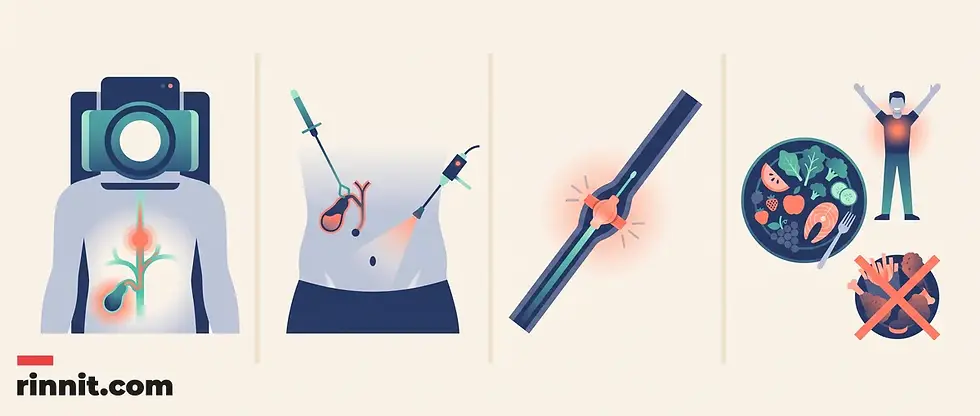
The only known effective treatment for gallbladder biliary dyskinesia is gallbladder removal, called cholecystectomy. This is usually a minimally invasive laparoscopic surgery, and you can usually go home the same day. Laparoscopic surgery uses small, keyhole incisions that heal quickly and leave less scarring and pain. You can live well without your gallbladder. Your liver will now send bile directly to your small intestine. [1]
If your healthcare provider determines that the motility disorder is in the sphincter muscle, this muscle can be widened or opened with an endoscopic procedure. This procedure is usually done after your gallbladder is removed and the symptoms persist. Not only is it difficult to diagnose the sphincter dysfunction, but it is also rare that the motility disorder is only in your sphincter. Often your gallbladder is affected as well. [1]
Treatment | How it works |
Gallbladder removal (cholecystectomy) | The only known effective treatment for gallbladder biliary dyskinesia; usually minimally invasive laparoscopic surgery with same-day discharge [1] |
Sphincter opening (endoscopic procedure) | Widens or opens the sphincter muscle when the motility disorder is located there; usually performed after gallbladder removal if symptoms persist [1] |
Side effects of cholecystectomy
Your digestive system will take a few weeks to adjust to the lack of a gallbladder. During this time, you may have difficulties digesting fats. Most healthcare providers recommend that you adjust your diet temporarily to prevent discomfort from indigestion. [1]
Avoid fried and fatty foods at first, and be careful with fiber. Reintroduce whole grains, vegetables, and legumes slowly to prevent gas and bloating. [1]
Outlook and Prognosis
For people who meet all of the criteria for diagnosis, cholecystectomy is 90% effective in treating biliary dyskinesia. [3] However, not everyone meets all of the outlined criteria. These people should have further testing before undergoing surgery, as they may have a different type of condition. If the diagnosis is not definitive, cholecystectomy will not necessarily improve symptoms. [1]
Gallbladder pain has distinctive features. When you recognize biliary colic, you and your healthcare provider are likely to suspect gallstones first. That is not wrong. But what happens when they cannot find any gallstones to explain your symptoms? You may have a functional gallbladder disorder. Diagnosing biliary dyskinesia is a process. But if the diagnosis fits, the treatment is likely to succeed.
Conclusion
Biliary dyskinesia is a functional gallbladder disorder that affects your gallbladder's motility, its ability to move bile out into your bile ducts. More rarely, it affects the small sphincter muscle where your bile conduit empties into your intestine. Reduced motility can cause bile to back up into your gallbladder, just as if it were obstructed by a gallstone, and it is diagnosed when no other cause can explain your symptoms.
Unlike a mechanical blockage, a functional disorder is a problem with the way the organ or muscle functions. The breakdown may involve hormonal signaling, the nerves that receive the signal, or the muscles that react to it, and in most cases it is impossible to know exactly where the problem lies. What is clear is the result: the gallbladder is not ejecting enough bile, the organ becomes distended, and the retained bile causes inflammation, infections, and pain.
The symptoms follow a distinctive pattern. Episodic pain in the upper right abdomen builds steadily over the first 20 minutes, lasts up to several hours, and tends to strike after fatty or rich meals. A bloated stomach, nausea, vomiting, and unintended weight loss round out the picture. Diagnosis is a careful elimination process involving symptom criteria, blood tests, ultrasound, and a HIDA scan that measures the gallbladder's ejection fraction.
The only known effective treatment for gallbladder biliary dyskinesia is gallbladder removal, and for people who meet all of the diagnostic criteria, surgery is 90% effective. You can live well without your gallbladder, with your liver sending bile directly to your small intestine. If you recognize the pattern of biliary colic but testing finds no gallstones, a functional gallbladder disorder may be the answer, and the right diagnosis sets up the right treatment.
Turn digestive health topics into clear visuals. If you explain gallbladder and biliary conditions to patients, teams, or audiences, Rinnit's ready-made infographic templates can help you present complex topics simply, no design experience required.
Frequently Asked Questions
What is biliary dyskinesia?
Biliary dyskinesia is a functional gallbladder disorder. It affects your gallbladder's motility, its ability to move bile out into your bile ducts. More rarely, the motility disorder affects the small muscle (sphincter) located where your bile conduit empties into your intestine. Reduced motility can cause bile to back up into your gallbladder, just as if it were obstructed by a gallstone. Biliary dyskinesia is diagnosed when no other cause can explain your symptoms. [1]
What is a functional disorder?
A functional disorder is a problem with the way the organ or muscle functions. It is different from a mechanical blockage, like a gallstone. [1]
How does biliary dyskinesia affect the body?
When your gallbladder cannot efficiently move bile out into your bile ducts, the backup of bile causes the gallbladder to become fuller or swollen (distended). This is similar to a gallstone blockage. The swelling and retained bile can cause infections, inflammation (cholecystitis), and pain. [1]
What does gallbladder dyskinesia feel like?
Most people feel gallbladder pain in the upper right quadrant of their abdomen, under their right rib cage, though some feel it in the middle of the abdomen or in their right shoulder or back. It occurs in episodes lasting up to several hours. The pain builds steadily over the first 20 minutes and then gradually begins to decline. [1]
When do the pain episodes happen?
Episodes occur intermittently but not every day. They are most common after eating, especially fatty or rich meals, when the gallbladder is supposed to contract to release bile. The pain is generally severe enough to interrupt your activities and may wake you in the middle of the night or send you to the emergency room. [1] [3]
What are the typical symptoms?
Typical symptoms include upper right quadrant abdominal pain, episodic pain that builds to a peak, a bloated stomach, nausea and vomiting, and unintended weight loss. Some people also report headaches, fatigue, chronic acid reflux, functional indigestion and/or IBS, and anxiety and/or depression. [1]
Why does insufficient bile cause bloating?
Not having enough bile in your intestine can cause abdominal bloating, nausea, vomiting, and improper digestion, especially after eating fatty foods. [1]
What causes biliary dyskinesia?
For the most part, healthcare providers do not know what causes motility disorders. Sometimes specific nerves, like the vagus nerve, do not work as they should. In most cases, it is impossible to know exactly where the problem is. Sometimes a more generalized metabolic disorder or intestinal motility disorder can affect the specific motility of the gallbladder or biliary sphincter. [1]
Who gets biliary dyskinesia?
It is not clear if specific people are more likely than others to be affected, but having obesity and diabetes might be risk factors. It often affects older children as well as adults. [1]
How is it diagnosed?
Diagnosis requires five confirmations: that symptoms indicate biliary pain, that no other biliary disease like gallstones explains them, that the gallbladder is not ejecting enough bile, that symptoms occur when the gallbladder contracts, and that medications or other factors are not affecting gallbladder motility. [1]
What are the biliary colic symptom criteria?
Pain occurs in the upper abdomen, usually on the right side; recurs intermittently in episodes lasting at least 30 minutes; builds to a steady moderate to severe level; is not relieved by vomiting, bowel movements, posture changes, or antacids; and has been occurring regularly for at least three months. [1]
What is a HIDA scan?
A HIDA scan is a nuclear medicine imaging test used to check gallbladder function. A technician injects a radioactive isotope (a tracer) into your vein. The tracer travels through your biliary system, and a computer scanner reads it and produces images on a screen. [1]
What is a cholecystokinin check?
Cholecystokinin is the hormone that tells your gallbladder to contract and eject bile. During the test, it is injected into your vein, and the technician follows up with another series of images as your gallbladder contracts, observing and taking measurements. [1]
What is ejection fraction?
Ejection fraction is how much bile your gallbladder ejects when it contracts. If your ejection fraction is less than 40%, and no medications or hormone therapies can explain your reduced gallbladder motility, providers will diagnose gallbladder biliary dyskinesia. [1]
What is the sphincter of Oddi?
The sphincter of Oddi is the small muscle at the junction between your bile duct and intestine. In rare cases, a specialized test with a special endoscope under sedation measures how well this muscle opens in response to your body's signals. This test is only available in specific centers. [1]
Does biliary dyskinesia go away on its own?
There is not evidence that biliary dyskinesia can go away on its own. Generally, it is not diagnosed until you have had symptoms for at least three months, and by then no one wants to continue to wait. [1]
How do you fix biliary dyskinesia?
The only known effective treatment for gallbladder biliary dyskinesia is gallbladder removal (cholecystectomy), usually minimally invasive laparoscopic surgery with same-day discharge. If the motility disorder is in the sphincter muscle, it can be widened or opened with an endoscopic procedure. [1]
What are the side effects of gallbladder removal?
Your digestive system takes a few weeks to adjust, during which you may have difficulties digesting fats. Providers recommend temporarily adjusting your diet: avoid fried and fatty foods at first, be careful with fiber, and reintroduce whole grains, vegetables, and legumes slowly to prevent gas and bloating. [1]
What is the prognosis after treatment?
For people who meet all of the criteria for diagnosis, cholecystectomy is 90% effective in treating biliary dyskinesia. [3] People who do not meet all criteria should have further testing before surgery, because if the diagnosis is not definitive, cholecystectomy will not necessarily improve symptoms. [1]
Can you live without a gallbladder?
Yes. After gallbladder removal, your liver sends bile directly to your small intestine, and you can live well without your gallbladder. [1]
Related Reading
HIDA Scan (Hepatobiliary Scan): Purpose, Preparation, Procedure and Results explains the nuclear scan that checks bile flow through the gallbladder and bile ducts.
References
Cleveland Clinic. Biliary Dyskinesia. Cleveland Clinic Health Library. Medically reviewed; last updated July 24, 2022. https://my.clevelandclinic.org/health/diseases/23932-biliary-dyskinesia
Behar J, Corazziari E, Guelrud M, Hogan W, Sherman S, Toouli J. Functional gallbladder and sphincter of Oddi disorders. Gastroenterology. 2006;130(5):1498-1509. PMID 16678563. https://doi.org/10.1053/j.gastro.2005.11.063
Croteau DI. Functional gallbladder disorder: an increasingly common diagnosis. Am Fam Physician. 2014;89(10):779-784. PMID 24866212. https://pubmed.ncbi.nlm.nih.gov/24866212/
Srinath AI, Youk AO, Bielefeldt K. Biliary dyskinesia and symptomatic gallstone disease in children: two sides of the same coin? Dig Dis Sci. 2014;59(6):1307-1315. PMID 24715545. https://doi.org/10.1007/s10620-014-3126-2
Gudsoorkar VS, Oglat A, Jain A, Raza A, Quigley EMM. Systematic review with meta-analysis: cholecystectomy for biliary dyskinesia-what can the gallbladder ejection fraction tell us? Aliment Pharmacol Ther. 2019;49(6):654-663. PMID 30706496. https://doi.org/10.1111/apt.15128
Loor CS, Grochowska A, de Paula AEC, et al. Unmasking biliary dyskinesia in children through systematic review and meta-analysis of 3,348 patients over the last two decades. J Pediatr Surg. 2026;61(3):162839. Epub 2025 Nov 25. PMID 41308824. https://doi.org/10.1016/j.jpedsurg.2025.162839
Medical disclaimer
This article is for general informational purposes only and is not a substitute for professional medical advice, diagnosis, or treatment. Always seek the advice of a qualified healthcare provider with any questions you may have about a medical condition. Never disregard professional medical advice or delay seeking care because of content you have read here.



Comments