What Are Back Strains and Sprains? Symptoms, Causes, and the Two-Phase Recovery

Updated: 2 days ago
Medically reviewed by Dr. Baraa Alnahhal, MD · Last reviewed: October 2026
Quick Answer
A back strain is an injury to a muscle or tendon, while a back sprain is an injury to a ligament, caused by repetitive motion, overuse or trauma. [1] Symptoms include pain that worsens with movement, spasms and reduced range of motion. [1] Rest, ice, compression and NSAIDs help in the first 48 hours, and most people recover fully within two weeks. [1]
Key takeaways
A strain injures a muscle or tendon; a sprain injures (stretches or tears) a ligament. [1] [7]
The lumbar lower back is the usual site because it bears much of your body weight during walking, running, and lifting. [1]
Typical symptoms: pain that worsens with movement, cramping/spasms, reduced range of motion, and sometimes a pop or tear at the moment of injury. [1]
Risk factors: excessive lower back curve, obesity, weak back or abdominal muscles, tight hamstrings, and push-pull sports. [1]
The first 48 hours matter most: rest, ice 20 minutes at a time, compression, and NSAIDs. [1]
After 24 to 48 hours, resume normal activity; extended bed rest or immobility delays recovery. [1] [2]
Most people fully recover in about two weeks [1]; see a provider if symptoms persist or red flags appear.
What the research says
Resuming activity is supported by trial evidence. A Cochrane review of ten randomized trials found moderate-quality evidence that people with acute low back pain may gain small benefits in pain relief and function from advice to stay active compared with advice to rest in bed. In two trials (401 participants), the standardized mean differences were 0.22 for pain (95% CI 0.02 to 0.41) and 0.29 for function (95% CI 0.09 to 0.49). (Dahm et al., Cochrane Database Syst Rev, 2010) [2]
Heat has more trial support than cold for low back pain, though the evidence base is limited. A Cochrane review of nine trials (1,117 participants) found that, in two trials of 258 people with acute and subacute low back pain, heat wrap therapy reduced pain after five days compared with oral placebo. The authors found insufficient evidence to judge cold therapy and conflicting evidence on differences between heat and cold, and called for higher-quality trials. (French et al., Cochrane Database Syst Rev, 2006) [3]
Excess weight raises the risk of low back pain. In a meta-analysis of 33 studies, obesity was linked to higher odds of low back pain in the past 12 months (pooled OR 1.33; 95% CI 1.14 to 1.54), of seeking care for low back pain (OR 1.56; 95% CI 1.46 to 1.67), and of chronic low back pain (OR 1.43; 95% CI 1.28 to 1.60). In cohort studies, obesity was associated with a higher incidence of low back pain (OR 1.53; 95% CI 1.22 to 1.92). (Shiri et al., Am J Epidemiol, 2010) [4]
What Are Back Strains and Sprains?
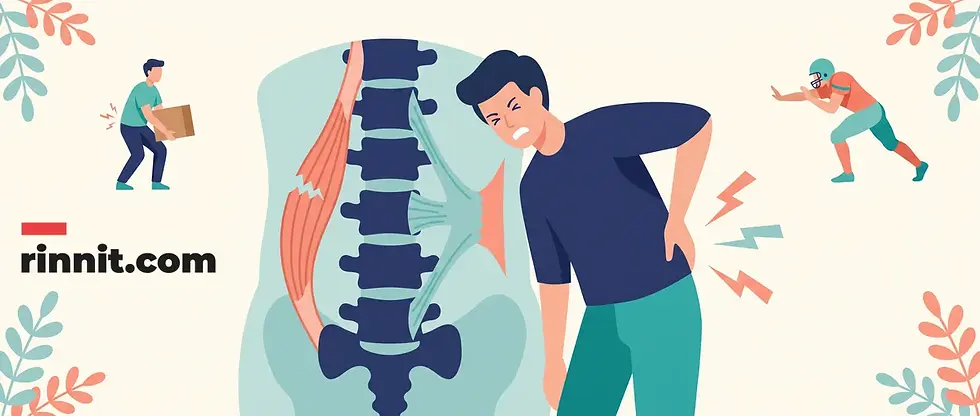
Back strains and sprains are common injuries that can occur following repetitive motions, overuse, or trauma. A strain is an injury to a muscle or tendon. A sprain is an injury to a ligament. [1] [7] Pulling, twisting, or tearing of these tissues in your back can cause sprains or strains. [1]
Your back, especially the lumbar section of your lower back, bears much of your body's weight during walking, running, lifting, and other activities. [1] There are many potential causes for back pain, and strains and sprains are common causes of temporary pain. [1]
Strain vs. Sprain: What's the Difference?
Feature | Back strain | Back sprain |
Tissue injured | Muscle or tendon | Ligament |
How it happens | Twisting or pulling the muscle/tendon; a single improper lift; prolonged repetitive movement | A fall, sudden twist, or blow that forces a joint out of its normal position |
Mechanism | Overstressed muscle fibers or tendon tear | Ligament stretched beyond its normal range of movement |
Chronic form | Yes: chronic strain results from prolonged, repetitive overuse | Less commonly described as chronic |
What Are the Symptoms of a Strained or Sprained Back?

Back strain or sprain symptoms may include:
Symptom | What it looks or feels like |
Pain that gets worse when you move | Discomfort that intensifies with activity |
Muscle cramping or spasms | Sudden, uncontrollable muscle contractions |
Decreased function or range of motion | Difficulty walking, bending forward or sideways, or standing straight |
A pop or tear at the time of injury | A sudden sensation felt in some cases at the moment the injury occurs |
What Causes Muscle Strains or Sprains in Your Back?
Twisting or pulling a muscle or tendon can result in a strain. It can also happen after a single instance of improper lifting or another activity that overstresses your back muscles. A chronic (long-term) strain usually results from overuse after prolonged, repetitive movement of your muscles and tendons. [1]
A sprain often occurs after a fall or sudden twist, or a blow to your body that forces a joint out of its normal position. All of these conditions stretch one or more ligaments beyond their normal range of movement, causing injury. [1]
What are the risk factors for back strains and sprains?
Several factors can put you at greater risk for sprains or muscle strain in your back:
Risk factor | Why it matters |
Curving your lower back excessively | Puts extra stress on lumbar tissues |
Having obesity | Excess weight is a common risk factor for lower back (lumbar) strain and injuries |
Having weak back or abdominal muscles | Less support for the spine during activity |
Having tight hamstrings | Tight thigh muscles alter how the back carries load |
Playing push-pull sports | Sports like weightlifting and football stress the back repeatedly |
How Are Back Strains and Sprains Diagnosed?
Healthcare providers can usually diagnose back strains and sprains based on a physical examination and your medical history, including a review of your symptoms and how the injury occurred. [1]
If you have severe symptoms like weakness or loss of function, your provider might take a spine X-ray or MRI. This imaging can help rule out a fractured (broken) or herniated (bulging) disk. [1]
Diagnostic step | Purpose |
Physical examination | Assesses the injured area and movement limits |
Medical history review | Covers symptoms and how the injury happened |
Spine X-ray | Rules out a fractured (broken) spine |
MRI | Rules out a herniated (bulging) disk and shows soft-tissue detail |
How Are Back Strains and Sprains Treated?
Back sprain and back strain treatments are essentially the same and often take place in two phases. [1]
Phase one: the first 48 hours
The first phase happens over the first 48 hours after your injury. The goal is to reduce pain, spasm, and swelling. [1] Phase one usually involves rest, ice packs, compression therapy, and NSAIDs. [1]

Phase one step | How to do it |
Rest | The less you use your injured muscles, tendons, or ligaments, the quicker you'll recover; resting gives your body adequate time to heal |
Ice packs | Place an ice pack wrapped in a towel on the affected area for 20 minutes at a time, several times a day |
Compression therapy (pressure) | Wrapping the injured area applies pressure that reduces swelling and pain; most important during the first 24 to 48 hours |
NSAIDs (nonsteroidal anti-inflammatory drugs) | Over-the-counter medications like ibuprofen (Advil® or Motrin®) or naproxen sodium (Aleve®, Anaprox®, Naprelan®, or Naprosyn®) help reduce pain and swelling |
Phase two: after 24 to 48 hours
After the first 24 to 48 hours, you should try to resume normal routines and activities. Extended bed rest or immobility (nonmovement) will prolong your symptoms and delay recovery. [1] [2] Most people with sprains or strained back muscles improve in about two weeks. [1] If symptoms persist, you might need additional treatment.
How Long Does a Back Strain Last?
Most people with a back strain make a full recovery within two weeks of starting treatment. [1] If your symptoms last longer, let a healthcare provider know.
What's the most common complication?
The most common complication of a back strain or sprain is being less active. That can lead to weight gain, loss of bone density, and loss of muscle strength and flexibility in other areas of your body [1], which is one reason resuming movement after the first 48 hours matters.
When Should I See My Healthcare Provider?
Call a healthcare provider if you have any of the following:
Warning sign | Detail |
Severe back pain | Pain so bad you can't walk more than a few steps |
Numbness | In the injured area or down your leg |
History of lower back problems | A history of lower back pain or lumbar spine injuries |
Unusual lump or shape | A lump or area with an unusual shape |
Sleep-disrupting pain | Pain that interferes with your sleep |
Obvious weakness | In an extremity (hands or feet) after an injury |
Intense or frequent back pain may mean you have a back injury that's more severe than a sprain or strain. [1] Reach out to a healthcare provider.
Can I Prevent Muscle Strains in My Back?
It's not possible to prevent all back injuries, but you can take steps to lower your risk:
Prevention step | How it helps |
Eat a healthy, well-balanced diet | Keeps your bones and muscles strong |
Maintain a healthy weight | Excess weight is a common risk factor for lower back strain |
Exercise regularly, including stretching | Keeps your joints flexible and your muscles in good condition |
Practice fall-prevention safety | Wear properly fitting shoes; keep stairs and walkways free of clutter |
Use good body mechanics | Keep your back straight and shoulders back; when sitting, keep knees bent and feet flat on the floor; don't over-reach, avoid twisting; when lifting, bend your knees and use your strong leg muscles |
Stop using tobacco | Nicotine interferes with blood flow to your muscles; this includes smokeless tobacco and vaping |
Conclusion
Back strains and sprains are among the most common causes of temporary back pain, and they come down to a simple distinction: a strain injures a muscle or tendon, while a sprain injures a ligament. [1] The lumbar lower back takes the brunt of these injuries because it carries much of your body weight through every walk, run, and lift. [1] A single improper lift, a sudden twist, a fall, or years of repetitive strain can all be the trigger, and risk climbs with obesity, weak core muscles, tight hamstrings, and an excessive lower back curve. [1]
The recovery playbook is straightforward. The first 48 hours are about controlling pain, spasm, and swelling with rest, towel-wrapped ice packs for 20 minutes at a time, compression, and over-the-counter NSAIDs. [1] Then, and this is the part people often get wrong, movement is the medicine: resuming normal routines after that initial window matters, because extended bed rest prolongs symptoms. [1] Most people make a full recovery within two weeks. [1] If your pain prevents you from walking more than a few steps, causes numbness down your leg, disrupts your sleep, or lingers beyond two weeks, it's time to talk to a healthcare provider. [1] And if you create health education materials, Rinnit's infographic templates can help you turn back-injury topics like this one into clear, visual guides for your audience.
Frequently Asked Questions
What is the difference between a back strain and a back sprain?
A strain is an injury to a muscle or tendon, while a sprain is an injury to a ligament. [1] Pulling, twisting, or tearing of these tissues in your back causes sprains or strains. [1]
What causes a back strain?
A strain happens from twisting or pulling a muscle or tendon. It can occur after a single instance of improper lifting or another activity that overstresses your back muscles. [1] A chronic strain usually results from overuse after prolonged, repetitive movement. [1]
What causes a back sprain?
A sprain often occurs after a fall or sudden twist, or a blow to your body that forces a joint out of its normal position. [1] These stretch one or more ligaments beyond their normal range of movement. [1]
What are the symptoms of a strained or sprained back?
Symptoms may include pain that gets worse when you move, muscle cramping or spasms (sudden uncontrollable muscle contractions), and decreased function or range of motion such as difficulty walking, bending forward or sideways, or standing straight. [1] In some cases, you might feel a pop or tear at the time of injury. [1]
Who is at risk for back strains and sprains?
Risk factors include curving your lower back excessively, having obesity, having weak back or abdominal muscles, having tight hamstrings (the muscles in the backs of your thighs), and playing sports that involve pushing and pulling, like weightlifting and football. [1]
How are back strains and sprains diagnosed?
Providers can usually diagnose them based on a physical examination and your medical history, including how the injury occurred. [1] If you have severe symptoms like weakness or loss of function, your provider might take a spine X-ray or MRI to rule out a fractured or herniated disk. [1]
How are back strains and sprains treated?
Treatment happens in two phases. [1] During the first 48 hours: rest, ice packs wrapped in a towel applied for 20 minutes at a time several times a day, compression wrapping (most important in the first 24 to 48 hours), and over-the-counter NSAIDs like ibuprofen or naproxen sodium to reduce pain and swelling. [1]
Why shouldn't I stay in bed?
After the first 24 to 48 hours, you should try to resume normal routines and activities. [1] Extended bed rest or immobility will prolong your symptoms and delay recovery. [1]
How long does a back strain last?
Most people with a back strain make a full recovery within two weeks of starting treatment. [1] If your symptoms last longer, let a healthcare provider know. [1]
What is the most common complication?
The most common complication is being less active, which can lead to weight gain, loss of bone density, and loss of muscle strength and flexibility in other areas of your body. [1]
When should I call my healthcare provider?
Call a provider if you have severe back pain and can't walk more than a few steps, numbness in the injured area or down your leg, a history of lower back pain or lumbar spine injuries, a lump or area with an unusual shape, pain that interferes with your sleep, or obvious weakness in an extremity (hands or feet) after an injury. [1]
Can back strains and sprains be prevented?
You can't prevent all back injuries, but you can lower your risk by eating a healthy, balanced diet, maintaining a healthy weight, exercising regularly with stretching, practicing fall prevention, using good body mechanics when sitting, standing, and lifting, and stopping tobacco use, since nicotine interferes with blood flow to your muscles. [1]
Why does the lower back get injured so often?
Your back, especially the lumbar section of your lower back, bears much of your body's weight during walking, running, lifting, and other activities [1], making it a common site for strain and sprain injuries.
Can lifting a box the wrong way cause a strain?
Yes. A strain can happen after a single instance of improper lifting or another activity that overstresses your back muscles. [1] When lifting, bend your knees and use your strong leg muscles to help balance the load [1], keeping your back straight and shoulders back. [1]
Related Reading
References
Cleveland Clinic. Back Strains and Sprains. Cleveland Clinic Health Library. Last updated July 28, 2026. Accessed October 15, 2026. https://my.clevelandclinic.org/health/diseases/10265-back-strains-and-sprains
Dahm KT, Brurberg KG, Jamtvedt G, et al. Advice to rest in bed versus advice to stay active for acute low-back pain and sciatica. Cochrane Database Syst Rev. 2010;(6):CD007612. PMID: 20556780. https://doi.org/10.1002/14651858.CD007612.pub2
French SD, Cameron M, Walker BF, et al. Superficial heat or cold for low back pain. Cochrane Database Syst Rev. 2006;(1):CD004750. PMID: 16437495. https://doi.org/10.1002/14651858.CD004750.pub2
Shiri R, Karppinen J, Leino-Arjas P, et al. The association between obesity and low back pain: a meta-analysis. Am J Epidemiol. 2010;171(2):135-154. PMID: 20007994. https://doi.org/10.1093/aje/kwp356
American Association of Neurological Surgeons. Low Back Strain and Sprain. AANS Patient Information. Published April 8, 2024. Accessed October 15, 2026. https://www.aans.org/patients/conditions-treatments/low-back-strain-and-sprain/
National Institute of Arthritis and Musculoskeletal and Skin Diseases. Sports Injuries. NIAMS Health Topics. Last reviewed September 2024. Accessed October 15, 2026. https://www.niams.nih.gov/health-topics/sports-injuries
National Library of Medicine. Sprains and Strains. MedlinePlus. Last updated September 22, 2025. Accessed October 15, 2026. https://medlineplus.gov/sprainsandstrains.html
American Academy of Physical Medicine and Rehabilitation. Pinched Nerves in the Neck and Back. AAPM&R Conditions & Treatments. Accessed October 15, 2026. https://www.aapmr.org/about-physiatry/conditions-treatments/medical-rehabilitation/back-and-neck-pain
Medical disclaimer
The information provided in this article is for educational purposes only and is not intended as medical advice. Always seek the advice of your physician or other qualified health provider with any questions you may have regarding a medical condition. If you have severe back pain and can't walk more than a few steps, numbness in the injured area or down your leg, obvious weakness in your hands or feet after an injury, or pain that disrupts your sleep or lasts longer than two weeks, contact a healthcare provider.



Comments