Vascular Surgery: Procedures, Benefits, and Conditions Treated

Updated: 3 days ago
Medically reviewed by Dr. Baraa Alnahhal, MD · Last reviewed: October 2026
TL;DR: Vascular surgery encompasses a range of open and minimally invasive procedures designed to treat blood vessel conditions such as aneurysms, blockages, and clots. These interventions aim to repair damage, restore proper blood flow, and prevent life-threatening complications like stroke or aneurysm rupture. While many conditions are manageable through lifestyle changes, surgical intervention becomes necessary when disease progression threatens long-term health.
Quick Answer: What is vascular surgery?
Vascular surgery is an umbrella term for procedures that treat diseases of the blood vessels, including arteries, veins and capillaries, ranging from minimally invasive endovascular repairs to open operations. [1] It treats conditions such as peripheral artery disease, carotid artery disease and aortic aneurysms [1], helping prevent severe complications like limb loss, stroke or internal bleeding.
What the research says
Endovascular repair lowers early risk but not long-term survival. A meta-analysis of endovascular (EVAR) versus open repair of non-complex abdominal aortic aneurysms found lower perioperative mortality with EVAR (OR 0.45, 95% CI 0.27–0.75), no significant difference in all-cause mortality at 6–15 years (OR 1.06, 95% CI 0.97–1.17), and more secondary interventions after EVAR (OR 2.27, 95% CI 1.32–3.93) (Lim and O'Brien, Ann Vasc Surg, 2026) [2].
For carotid disease, endarterectomy performed best overall. A network meta-analysis of 19 randomized trials found that carotid endarterectomy carried a lower risk of the composite of early stroke or death and later ipsilateral stroke than carotid stenting, in both symptomatic (RR 0.59, 95% CI 0.43–0.82) and asymptomatic patients (RR 0.72, 95% CI 0.54–0.96) (Hoyos et al., Cardiovasc Revasc Med, 2026) [3].
Modern stenting techniques narrow the gap. In a meta-analysis of 10 randomized comparisons (14,211 patients), 30-day stroke or death was 2.9% after stenting versus 3.1% after endarterectomy in contemporary trials using embolic protection (OR 1.29, 95% CI 0.98–1.70), compared with 6.8% versus 4.4% in early-device trials (Kemmling et al., Clin Neuroradiol, 2026) [4].
Overview of the Vascular System and Surgery
The human vascular system is an intricate network of vessels that carry blood throughout the body, nourishing organs and tissues while returning oxygen-poor blood to the heart. [1] When these vessels become damaged by disease, a vascular surgeon may intervene. Vascular surgery serves three primary goals: repairing damage caused by disease, lowering the risk of future complications, and creating access for other medical treatments, such as dialysis. [1]
Vascular surgeons perform more than 100,000 procedures each year in the United States, with treatments for peripheral artery disease being the most common. [1] Depending on the specific condition, a surgeon may choose between a traditional open surgery, which requires a larger incision, or a minimally invasive endovascular procedure, which uses small punctures in the skin. [1]

Common Conditions Treated by Vascular Surgery
Many different vascular diseases can damage blood vessels and increase the risk of serious health events. A vascular surgeon evaluates each patient to determine if surgery is necessary or if lifestyle modifications and medications can effectively manage the condition. The following table summarizes the primary conditions that often require surgical intervention.
Condition Category | Description and Surgical Goal |
Aortic Aneurysm | A weakened portion of the aorta that may require repair to prevent rupture or dissection. [1] |
Peripheral Artery Disease (PAD) | Plaque buildup in arteries supplying the limbs, treated to restore blood flow and prevent gangrene. |
Carotid Artery Disease | Plaque in the arteries supplying the brain, treated to reduce the risk of stroke or TIA. [1] |
Venous Diseases | Issues like chronic venous insufficiency or deep vein thrombosis that affect blood return to the heart. |
Other Conditions | Renal artery stenosis, blood clots, and various syndromes like thoracic outlet syndrome. [1] |
Specialized Vascular Procedures
The type of surgery performed depends entirely on the location and severity of the vascular issue.
Aortic Aneurysm Repair
Aortic aneurysms can be repaired through open surgery using a fabric graft or through minimally invasive techniques like EVAR and TEVAR [1], which utilize stent grafts. These procedures provide a new, reinforced path for blood flow, effectively bypassing the weakened area of the vessel.
Peripheral Artery Disease Procedures
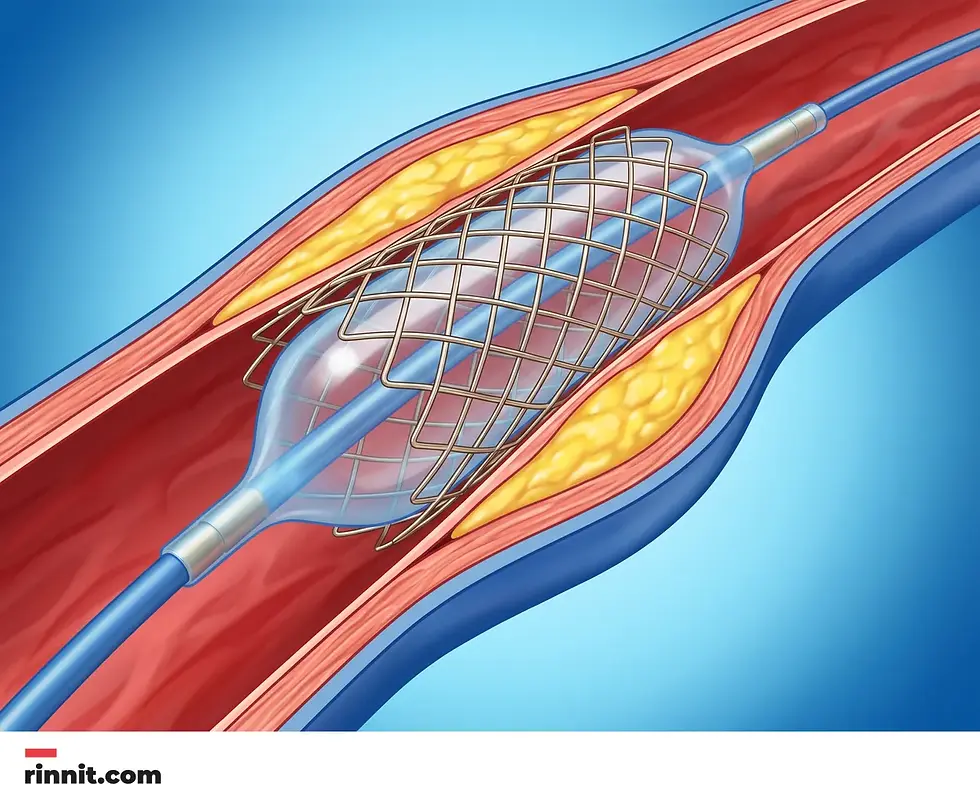
For patients with peripheral artery disease, surgeons often use angioplasty and stenting. This involves inflating a small balloon to clear a blockage and placing a wire mesh tube to keep the artery open. [1] In more severe cases, a peripheral artery bypass surgery may be necessary, where a surgeon creates a detour for blood flow using a healthy vein or an artificial tube. [1]
Carotid and Venous Interventions
Carotid artery disease is particularly dangerous because it limits blood flow to the brain. Surgeons manage this through carotid endarterectomy, where plaque is surgically removed through a neck incision [1], or through carotid angioplasty and stenting. These interventions are critical for preventing strokes and transient ischemic attacks (TIAs). [1]
Venous diseases, which affect the vessels carrying blood back to the heart, also require specialized care. These procedures often focus on repairing failing valves or clearing clots that obstruct blood return. By addressing these issues, vascular surgery improves circulation and reduces the symptoms associated with chronic venous insufficiency.

Related reading: Peripheral artery disease · PAD atherectomy · Vascular bypass · Carotid artery anatomy and stroke prevention · Ascending aortic aneurysm repair
Frequently Asked Questions
What is the difference between open and endovascular surgery?
Open surgery requires a traditional incision to directly access the blood vessel, while endovascular surgery is minimally invasive, using small punctures and catheters guided by imaging to treat the vessel from the inside.
How common is vascular surgery for peripheral artery disease?
Treatments for peripheral artery disease (PAD) are the most common procedures performed by vascular surgeons, as PAD affects millions of people and can lead to severe complications if left untreated.
What is an aortic aneurysm repair?
An aortic aneurysm repair is a procedure to fix a bulge in the aorta, the body's largest artery. The goal is to reinforce the weakened area with a graft to prevent a life-threatening rupture.
Can vascular disease be managed without surgery?
Yes, in many cases, lifestyle changes such as quitting smoking, exercising, and eating a healthy diet, along with medications, can effectively manage vascular disease and prevent the need for surgery.
What is an angioplasty?
Angioplasty is a procedure where a surgeon uses a small balloon to widen a narrowed or blocked artery. Often, a stent is placed during the procedure to help keep the artery open.
Why is carotid artery surgery important?
Surgery on the carotid arteries is vital because it removes plaque that could otherwise break loose or block blood flow to the brain, significantly reducing the risk of a stroke.
What does a vascular surgeon do?
A vascular surgeon specializes in diagnosing and treating conditions that affect the arteries and veins, using both surgical and non-surgical methods to manage vascular health.
What is a vascular bypass?
A vascular bypass is a surgical procedure that creates a new path for blood to flow around a blocked or narrowed section of an artery, using either a healthy vein or a synthetic graft.
What are the risks of untreated vascular disease?
Untreated vascular disease can lead to severe complications, including heart attack, stroke, chronic pain, limb loss (amputation), and life-threatening internal bleeding from an aneurysm.
How long is the recovery after vascular surgery?
Recovery time varies depending on the type of procedure. Minimally invasive endovascular procedures typically have shorter recovery times than traditional open surgeries, which may require a hospital stay.
References
Cleveland Clinic. What Is Vascular Surgery? Cleveland Clinic. Last updated 01/30/2023. https://my.clevelandclinic.org/health/treatments/24658-vascular-surgery
Lim EQ, O'Brien G. Endovascular versus open repair for non-complex abdominal aortic aneurysms: a systematic review and meta-analysis. Ann Vasc Surg. 2026;123:233-246. PMID 41046100. https://doi.org/10.1016/j.avsg.2025.09.044
Hoyos C, Milutinovic S, Delrooz NA, et al. Comparative effectiveness and safety of carotid endarterectomy, carotid stenting, and optimal medical therapy across symptomatic and asymptomatic carotid stenosis: an updated network meta-analysis of randomized controlled trials. Cardiovasc Revasc Med. 2026. PMID 42728198. https://doi.org/10.1016/j.carrev.2026.09.001
Kemmling A, Almohammad M, Moher Alsady T, et al. Carotid artery stenting vs endarterectomy across procedural eras: a systematic review and meta-analysis. Clin Neuroradiol. 2026. PMID 42704462. https://doi.org/10.1007/s00062-026-01718-5
Medical disclaimer
This article is for educational purposes only and is not a substitute for professional medical advice, diagnosis, or treatment. Always seek the advice of your physician or other qualified health provider with any questions about a medical condition.



Comments