Vaginal Rejuvenation

Updated: 3 days ago
Medically reviewed by Dr. Baraa Alnahhal, MD · Last reviewed: October 2026
Vaginal rejuvenation is a broad marketing term for cosmetic procedures that address the look or feel of the vulva and vagina [1]. These treatments can be surgical, such as labiaplasty, or nonsurgical, including laser and radiofrequency therapies [1]. While they claim to improve tightness and sensitivity, they do not fix underlying medical issues like pelvic floor dysfunction [1]. Risks include pain, infection, and scarring, and many nonsurgical results are temporary [1].
Quick Answer: What is vaginal rejuvenation?
Vaginal rejuvenation is a range of surgical and nonsurgical cosmetic procedures intended to enhance the appearance or function of the female genitalia, such as labiaplasty or laser and radiofrequency treatments that boost collagen. They are often marketed for tightness and moisture but are not medical treatments for pelvic floor injuries, so discuss evidence-based alternatives with a healthcare provider.
What the research says
CO2 laser has not outperformed sham treatment for menopausal vaginal symptoms. A meta-analysis of 7 randomized sham-controlled trials found no statistically significant difference between CO2 laser and sham in Female Sexual Function Index scores (mean difference -1.48; 95% CI -5.85 to 2.89) or Vaginal Health Index scores (mean difference -0.18; 95% CI -1.66 to 1.31), leading the authors to conclude that laser may not have a beneficial effect on genitourinary syndrome of menopause (Ni and Lian, Experimental and Therapeutic Medicine, 2023) [2].
PRP injections, the basis of the O-Shot, remain unproven. A systematic review of 18 studies (480 patients, only 2 randomized trials) of platelet-rich plasma injected into the vulvo-vaginal area reported improvements in symptoms, sexual function and vaginal health with few, mild adverse events, but variable protocols, small samples and methodological limitations preclude definitive conclusions (De Ponte et al., The Journal of Sexual Medicine, 2026) [3].
Labiaplasty has high reported satisfaction, but serious complications can occur. A meta-analysis of 46 studies (3,804 patients) found a pooled satisfaction rate of 99% (95% CI 97-99%) after labia minoraplasty, yet complications requiring surgical management were reported, and wound dehiscence and aesthetic concerns were the most common reasons for revision surgery (Escandón et al., Plastic and Reconstructive Surgery, 2022) [4].
Overview of Vaginal Rejuvenation
Vaginal rejuvenation is an umbrella term used primarily in marketing to describe various procedures that alter the anatomy of the vulva or vaginal canal. These procedures are categorized into surgical interventions, which typically require anesthesia and a specialized surgeon, and nonsurgical methods that use energy-based devices or injections. It is essential to distinguish these cosmetic enhancements from medical treatments designed to repair birth injuries or address pelvic floor disorders [1].
"Vaginal rejuvenation" is a marketing term, not a medical term, according to the American College of Obstetricians and Gynecologists (ACOG) [1].
Many patients seek these procedures due to a perceived loss of vaginal tightness, often referred to as laxity. While the vagina is naturally designed to stretch and return to its size, factors such as aging, childbirth, and menopause can cause permanent changes. However, a feeling of looseness is frequently linked to weakened pelvic floor muscles rather than the vaginal tissue itself [1]. In some cases, laxity may be an early indicator of pelvic organ prolapse, a condition where internal organs shift out of place, requiring formal medical evaluation [1].
Surgical Rejuvenation Methods
Surgical options for vaginal rejuvenation are performed by gynecologic or plastic surgeons and involve making incisions to reshape or reinforce tissue [1]. These procedures are typically more invasive and have longer-lasting results compared to nonsurgical alternatives [1].
Procedure Type | Description | Primary Goal |
Labiaplasty | Reshaping the labia minora or majora | Altering the appearance of the vaginal "lips" |
Vaginoplasty | Tightening or loosening the vaginal canal [1] | Modifying the diameter of the canal |
Clitoral Hood Reduction | Removing excess tissue over the clitoris [1] | Enhancing clitoral exposure |
Monsplasty | Removing fatty tissue from the pubic area [1] | Reducing hanging tissue over the pubic bone |
Perineoplasty | Strengthening the perineal area | Reinforcing the space between the vagina and anus [1] |
Nonsurgical and Energy-Based Treatments
Nonsurgical rejuvenation has gained popularity as it does not require incisions or significant downtime. These methods primarily rely on energy-based devices to stimulate the body's natural healing processes or experimental injections to enhance sensation.

One common approach involves the use of CO2 lasers. The laser heats the upper layers of vaginal tissue, which triggers the production of collagen in the deeper layers [1]. This process is intended to make the tissue firmer and more resilient. Similarly, radiofrequency (RF) treatments use waves to heat the tissue, encouraging increased blood flow and collagen synthesis [1]. Another experimental option is the O-Shot, which involves injecting platelet-rich plasma (PRP) derived from the patient's own blood into the clitoris and vaginal walls to theoretically enhance sensitivity.
Claimed Benefits and Medical Reality
Proponents of vaginal rejuvenation claim a wide array of benefits, ranging from cosmetic improvements to functional enhancements. However, it is important to note that many of these claims lack rigorous scientific evidence.
Claimed Benefit | Description | Medical Alternative |
Improved Tightness | Firmer vaginal walls | Pelvic floor physical therapy |
Reduced Incontinence | Better bladder control | Medical devices or specialized surgery |
Increased Lubrication | Reduced vaginal dryness | Estrogen-based medications [1] |
Enhanced Sensitivity | Improved sexual gratification | Counseling or hormonal therapy |
While some patients report satisfaction with their results, energy-based treatments often require multiple sessions to maintain their effects [1]. Furthermore, the American College of Obstetricians and Gynecologists (ACOG) emphasizes that these procedures carry significant risks that must be weighed against their cosmetic goals.
Risks and Safety Considerations
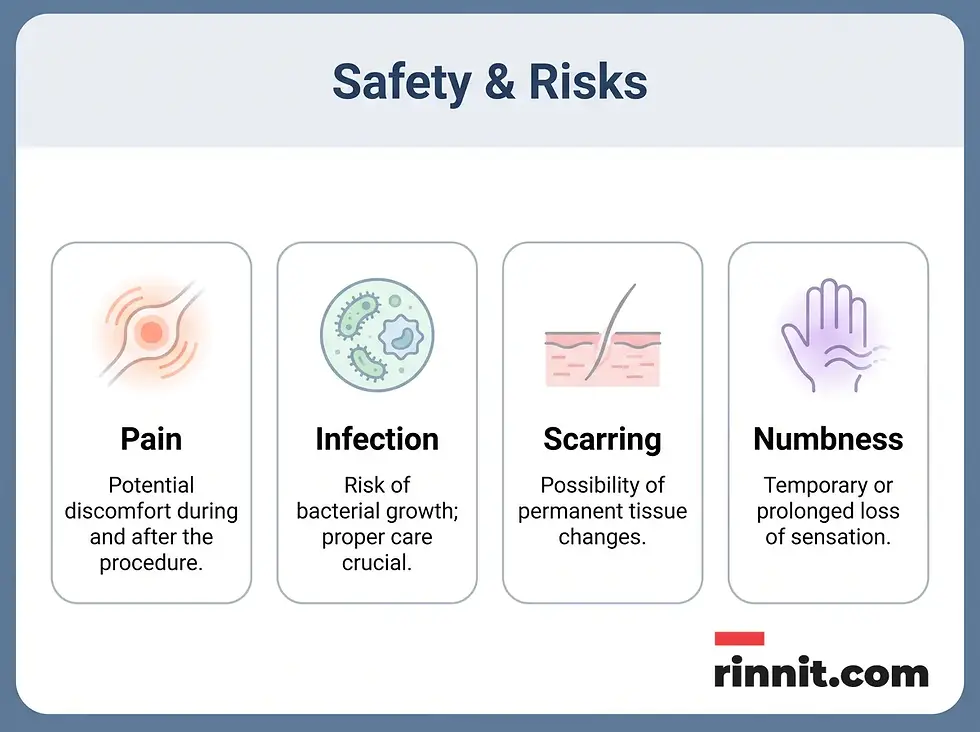
Like any medical or cosmetic intervention, vaginal rejuvenation carries inherent risks. Surgical procedures involve the standard risks of anesthesia, bleeding, and infection. Nonsurgical treatments, while less invasive, are not without complications. The FDA has not approved or cleared any energy-based device for vaginal rejuvenation and has warned that these treatments can cause burns, scarring and pain during sex. Potential side effects include persistent pain, scarring, adhesions (where tissues stick together), and changes in sensation such as numbness or painful intercourse. In some instances, a patient may require follow-up procedures to correct issues arising from the initial treatment [1].
Conclusion
Vaginal rejuvenation offers a variety of paths for those looking to address cosmetic or functional concerns regarding their genitalia. However, because these procedures are often elective and marketing-driven, it is vital to approach them with a clear understanding of what they can and cannot achieve. Consulting with a trusted healthcare provider is the most effective way to ensure that any underlying medical issues are correctly diagnosed and that the chosen treatment is both safe and appropriate for your specific needs.
Frequently Asked Questions
What is the main purpose of vaginal rejuvenation?
The primary goal is to address the cosmetic appearance or the physical feel of the vulva and vagina, often targeting concerns related to aging or childbirth.
Is vaginal rejuvenation a medical necessity?
No, it is generally considered an elective cosmetic procedure and is not used to treat underlying medical conditions like pelvic floor dysfunction.
What is the difference between labiaplasty and vaginoplasty?
Labiaplasty focuses on reshaping the external vaginal lips, while vaginoplasty is designed to tighten or loosen the internal vaginal canal.
How do laser treatments work for vaginal health?
Laser treatments heat the vaginal tissue to stimulate collagen production, which can lead to firmer and tighter skin over several sessions.
Are the results of nonsurgical treatments permanent?
No, energy-based treatments like laser and radiofrequency typically require repeat sessions to maintain the results.
What are the risks of these procedures?
Potential risks include infection, scarring, persistent pain, bleeding, and numbness or painful intercourse.
Can vaginal rejuvenation fix urinary incontinence?
Some procedures claim to help, but standard medical treatments and pelvic floor exercises are generally the proven methods for managing incontinence.
What is an O-Shot?
The O-Shot is an experimental procedure where platelet-rich plasma (PRP) from your own blood is injected into the clitoris and vagina to enhance sensitivity.
Does health insurance cover these procedures?
Since most vaginal rejuvenation procedures are considered cosmetic and elective, they are typically not covered by standard health insurance plans.
Who should perform these procedures?
Vaginal rejuvenation procedures should be performed by qualified gynecologists or plastic surgeons who can properly assess your health and minimize risks.
Related Reading
Understanding Vaginal Laxity: Causes, Symptoms, and Clinical Solutions explains why vaginal laxity happens and the treatment options.
Labiaplasty: Understanding the Procedure, Recovery, and Benefits describes surgery to reshape the labia and the recovery involved.
MonaLisa Touch: Purpose, Procedure, Risks and Results covers a vaginal laser treatment, its results and risks.
Vaginal Atrophy (Genitourinary Syndrome of Menopause): Symptoms, Causes & Treatment — Complete Guide explains vaginal dryness and thinning after menopause and how it is treated.
References
Cleveland Clinic. Vaginal Rejuvenation. Cleveland Clinic. Last updated December 11, 2025. https://my.clevelandclinic.org/health/treatments/17761-energy-based-treatments-and-vaginal-rejuvenation
Ni Y, Lian J. Carbon dioxide laser therapy for the management of genitourinary syndrome of menopause: A meta-analysis of randomized controlled trials. Experimental and Therapeutic Medicine. 2023;27(1):10. PMID 38223331. https://doi.org/10.3892/etm.2023.12297
De Ponte A, Cabrera S, Sparice SSB, et al. Platelet-rich plasma in the management of vulvovaginal disorders: a systematic review. The Journal of Sexual Medicine. 2026;23(1). PMID 41168677. https://doi.org/10.1093/jsxmed/qdaf307
Escandón JM, Duarte-Bateman D, Bustos VP, et al. Maximizing Safety and Optimizing Outcomes of Labiaplasty: A Systematic Review and Meta-Analysis. Plastic and Reconstructive Surgery. 2022;150(4):776e-788e. PMID 35877939. https://doi.org/10.1097/PRS.0000000000009552
Medical disclaimer
The information provided in this article is for educational purposes only and should not be used as a substitute for professional medical advice, diagnosis, or treatment. Always seek the advice of your physician or other qualified health provider with any questions you may have regarding a medical condition.



Comments