Understanding Vaginal Laxity: Causes, Symptoms, and Clinical Solutions

Updated: 2 days ago
Medically reviewed by Dr. Baraa Alnahhal, MD · Last reviewed: October 2026
Vaginal laxity is the sensation of looseness in the vaginal tissues, often occurring after childbirth, aging, or menopause [1]. While common and not physically harmful, it can impact sexual satisfaction and body image. The most effective clinical treatment is pelvic floor physical therapy [1], though other options like labiaplasty or hormonal treatments may be considered based on individual symptoms.
Quick Answer: What is vaginal laxity?
Vaginal laxity is the stretching or loss of firmness in vaginal tissues, causing a sensation of looseness. It is most often caused by vaginal childbirth or the hormonal changes of menopause and aging [1]. Symptoms include decreased sexual pleasure, reduced libido and self-consciousness. Specialized pelvic floor physical therapy is considered the gold standard for restoring tissue support and function.
What the research says
Laser and radiofrequency helped sexual function in observational studies, but not in randomized trials. A systematic review of 38 studies found that pooled data from 8 observational studies showed improved Female Sexual Function Index scores (mean difference 6.51; 95% CI 5.61-7.42), but this was not seen when only 3 randomized trials were analyzed, and radiofrequency did not improve laxity questionnaire scores versus sham (mean difference 1.01; 95% CI -0.38 to 2.40) (Pereira et al., The Journal of Sexual Medicine, 2024) [2].
Pelvic floor training held up better than radiofrequency over 6 months. In a randomized trial of 87 women with vaginal laxity (42 radiofrequency, 45 pelvic floor muscle training), radiofrequency was noninferior at 30 days for sexual function (mean difference -0.08; 95% CI -2.58 to 2.42), but this was not maintained at 6 months, when better results were seen in the training group (Pereira et al., The Journal of Sexual Medicine, 2024) [3].
Laxity is common and often overlaps with prolapse. Among 324 women at a urogynecology service, 24% reported vaginal laxity, which was associated with vaginal parity, prolapse symptoms and objective prolapse on examination and imaging, so the authors suggest it may be considered a symptom of prolapse (Dietz et al., International Urogynecology Journal, 2018) [4].
The Nature and Causes of Vaginal Laxity
Vaginal laxity is a unique and personal clinical condition where the vaginal tissues lose their natural tightness or flexibility [1]. The vagina is composed of flexible tissue designed to stretch, but certain life events can cause these tissues to remain extended, leading to a persistent feeling of sagging or looseness. This condition is exceptionally common, particularly among individuals who have experienced pregnancy and delivery [1].
The development of laxity is typically driven by physical trauma to the pelvic floor or systemic hormonal shifts. Understanding the primary drivers is essential for determining the most appropriate management strategy.
Factor | Clinical Impact on Vaginal Tissue |
Pregnancy & Childbirth [1] | Physical stretching of the vaginal canal and pelvic floor muscles during delivery. |
Aging [1] | Natural loss of tissue elasticity and muscle tone over time. |
Menopause [1] | A significant drop in estrogen levels leads to thinning and weakening of vaginal walls. |
Pelvic Surgery [1] | Alterations to the pelvic structure that may impact overall tissue support. |
Chronic Strain | Long-term pressure from heavy lifting or chronic coughing that weakens support. |
Recognizing Symptoms and Differentiating Conditions
The primary indicator of vaginal laxity is a subjective sensation of looseness. Many individuals report feeling this most acutely during sexual activity or when using tampons. Beyond the physical sensation, the condition can have significant psychological impacts, including decreased self-esteem and a loss of intimacy with partners [1].
It is clinically vital to distinguish vaginal laxity from pelvic organ prolapse (POP). While they may share similar sensations, they are distinct medical issues requiring different interventions.
Laxity isn’t the same as pelvic organ prolapse (POP). Though it may feel like it, nothing is falling out of your vagina. With POP, there’s usually a visible bulge from a pelvic organ sagging through your vagina [1]. — Cleveland Clinic

Diagnostic Procedures and Risk Factors
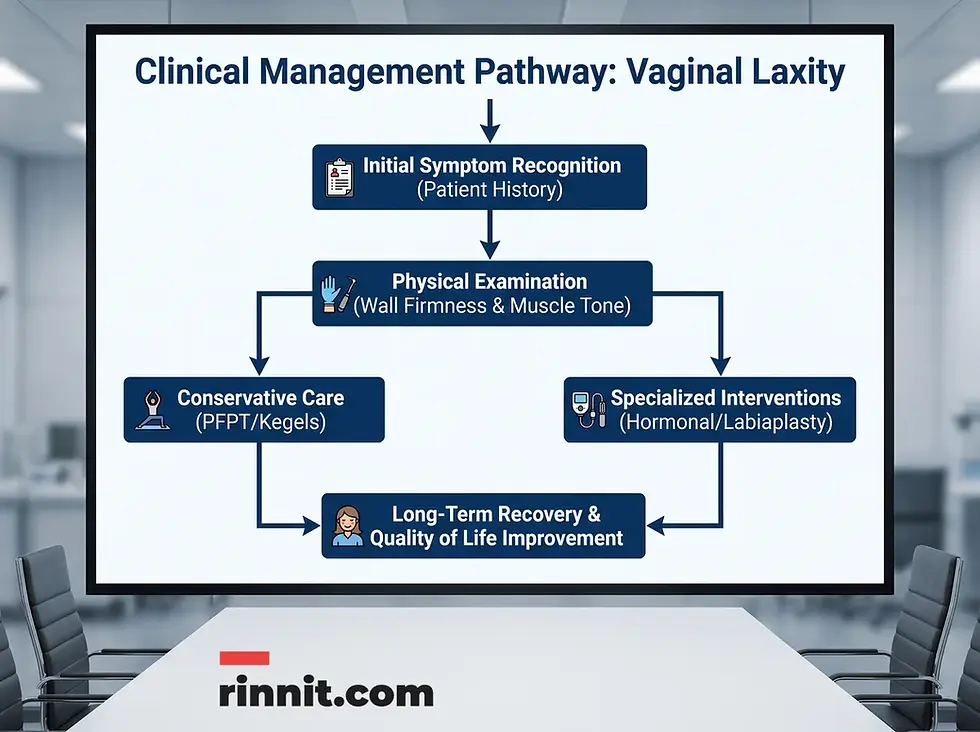
Diagnosis begins with a candid discussion between the patient and a healthcare provider regarding how symptoms affect daily life and intimacy. Because laxity is a personal experience, clinical assessment relies heavily on the patient's reported sensations and quality of life impact.
A physical examination is performed to evaluate the structural integrity of the vaginal walls. The provider will look for specific clinical markers to confirm the degree of laxity and rule out other underlying pelvic floor disorders.
Diagnostic Marker | Clinical Observation |
Wall Firmness [1] | Assessment of the resistance and tone of the vaginal walls. |
Tissue Changes [1] | Identification of thinning or stretching in the vaginal mucosa. |
Muscle Strength [1] | Evaluation of the pelvic floor muscles' ability to contract. |
Labial Anatomy [1] | Checking for elongated labia that may cause physical discomfort. |
Clinical Management and Treatment Pathways
The goal of clinical management is to restore tissue support and improve the patient's quality of life. Treatment is not always mandatory, but several evidence-based options exist for those seeking relief. The choice of therapy depends on the severity of the symptoms and the underlying cause, such as hormonal deficiency versus muscle weakness.
Pelvic Floor Physical Therapy (PFPT)
Specialized physical therapy is widely considered the most effective and safest treatment for vaginal laxity. A physical therapist guides the patient through targeted exercises, such as Kegels, to strengthen the pelvic floor muscles [1]. This intervention not only improves muscle tone but also teaches the patient how to better support the vaginal structure during daily activities.
Energy-Based and Laser Treatments
While various energy-based treatments are marketed for "vaginal rejuvenation," their effectiveness specifically for muscle tightening is limited, and the U.S. FDA has warned that these devices are not approved for vaginal rejuvenation and can cause burns, scarring and pain during sex [1]. These procedures typically focus on the upper tissue layers rather than the underlying muscle.
CO2 Laser Therapy: This method heats the upper tissue layers to stimulate collagen production [1]. It is most effective for treating menopausal symptoms or specific skin conditions like lichen sclerosus [1].
Radiofrequency (RF) Therapy: RF waves are used to promote blood flow and collagen [1]. However, it is not a proven therapy for correcting muscle laxity [1].
Surgical Interventions
Surgery is generally reserved for more severe pelvic floor issues [1]. Vaginoplasty, while intended to tighten the canal, is often not recommended for laxity alone because it can lead to complications such as pain during intercourse [1]. However, labiaplasty is a common and effective surgical option if elongated labia are causing physical irritation or rubbing against clothing [1].
Recovery, Prevention, and Long-Term Outlook
The long-term outlook for individuals with vaginal laxity is positive. While the condition is a natural consequence of life events like childbirth and aging, it is highly manageable. Many patients find significant relief by combining pelvic floor exercises with lifestyle adjustments.
Healthcare providers emphasize that there is no reason for shame or embarrassment [1]. Open communication is the first step toward finding a personalized treatment plan that restores both physical comfort and confidence.
Conclusion
Vaginal laxity is a common clinical experience that affects many individuals, particularly following significant life transitions. While the sensation of looseness can be distressing, modern clinical pathways—led by pelvic floor physical therapy—offer effective ways to restore support and function. By understanding the causes and seeking professional guidance, individuals can successfully manage symptoms and maintain their quality of life.
Frequently Asked Questions
Is vaginal laxity the same as a "loose vagina"?
Yes, "loose vagina" is the common term for vaginal laxity. It refers to the sensation that the vaginal tissues have stretched or lost their firmness, often due to childbirth or aging.
Can I fix vaginal laxity at home?
The most effective home-based intervention is consistent pelvic floor exercises, such as Kegels. However, working with a specialized physical therapist is recommended to ensure the exercises are performed correctly for maximum benefit.
Does every person who gives birth experience laxity?
While changes in vaginal tightness are very common after vaginal delivery, the degree of laxity varies significantly between individuals. Not everyone will find the changes bothersome or require treatment.
Are laser treatments effective for tightening?
Laser treatments like CO2 therapy primarily stimulate collagen in the surface tissues. They are more effective for treating dryness or thinning related to menopause than for tightening the underlying muscles.
Will vaginal laxity go away on its own?
Tissues may naturally tighten to some extent in the months following childbirth, but persistent laxity often requires active management, such as physical therapy, to improve muscle tone.
Is surgery the only way to treat severe laxity?
No. In fact, surgery like vaginoplasty is often discouraged for laxity alone due to the risk of side effects. Pelvic floor physical therapy remains the primary recommendation even for significant symptoms.
Can menopause cause vaginal laxity?
Yes. The decrease in estrogen during menopause leads to thinner, less elastic vaginal tissues, which can contribute to a sensation of looseness or sagging.
What is the difference between laxity and prolapse?
Laxity is a feeling of looseness without structural displacement. Pelvic organ prolapse occurs when an organ, like the bladder or uterus, actually drops and creates a visible bulge in the vagina.
Does heavy lifting make laxity worse?
Chronic strain from heavy lifting can put additional pressure on the pelvic floor, potentially worsening the sensation of laxity or increasing the risk of prolapse.
When should I see a doctor about vaginal laxity?
You should consult a healthcare provider if the sensation of looseness is impacting your sexual satisfaction, causing physical discomfort, or affecting your self-esteem.
Related Reading
Pelvic Floor Muscles: Anatomy, Function, Dysfunction and Care explains how the pelvic floor works and how to strengthen it.
Vaginal Rejuvenation compares surgical and nonsurgical tightening options and their risks.
Perineoplasty: Restoring Comfort and Function to the Pelvic Floor describes surgery that repairs the area between the vagina and anus.
Pelvic Organ Prolapse: What It Is, the 4 Types, and How It’s Treated explains when pelvic organs drop and how this is treated.
References
Cleveland Clinic. Vaginal Laxity. Cleveland Clinic. Last updated March 24, 2026. https://my.clevelandclinic.org/health/diseases/vaginal-laxity
Pereira GMV, Cartwright R, Juliato CRT, et al. Treatment of women with vaginal laxity: systematic review with meta-analysis. The Journal of Sexual Medicine. 2024;21(5):430-442. PMID 38508858. https://doi.org/10.1093/jsxmed/qdae028
Pereira GMV, Almeida CM, Martinho N, et al. Pelvic floor muscle training vs radiofrequency for women with vaginal laxity: randomized clinical trial. The Journal of Sexual Medicine. 2024;21(8):700-708. PMID 38972663. https://doi.org/10.1093/jsxmed/qdae068
Dietz HP, Stankiewicz M, Atan IK, et al. Vaginal laxity: what does this symptom mean? International Urogynecology Journal. 2018;29(5):723-728. PMID 28762179. https://doi.org/10.1007/s00192-017-3426-0
Medical disclaimer
The information provided in this article is for educational purposes only and should not be used as a substitute for professional medical advice, diagnosis, or treatment. Always seek the advice of your physician or other qualified health provider with any questions you may have regarding a medical condition.



Comments