Understanding Wisdom Teeth Removal: A Comprehensive Guide

Updated: 3 days ago
Medically reviewed by Dr. Baraa Alnahhal, MD · Last reviewed: October 2026
Quick Answer: What is wisdom teeth removal?
Wisdom teeth removal is a common surgical procedure to extract the third molars at the back of the mouth, often recommended for pain, impaction or potential damage to nearby teeth and bone. [1] The surgery generally lasts about an hour under local or general anesthesia. Initial recovery takes a few days, and full healing typically occurs within one to two weeks.
What the research says
Whether to remove wisdom teeth that cause no problems is still unsettled. A Cochrane review identified only two eligible studies (one randomized trial and one prospective cohort of 416 healthy men) and concluded there is insufficient evidence to say whether symptom-free, disease-free impacted wisdom teeth should be removed or kept. Very low-certainty evidence suggests keeping them may be linked to a higher long-term risk of gum disease (periodontitis) in the neighboring second molar, and in a 5-year trial no clinically significant effect of removal on dental arch changes was found (Ghaeminia et al., Cochrane Database Syst Rev, 2020) [4].
Antibiotics modestly lower the risk of dry socket and infection after lower wisdom tooth removal. A network meta-analysis of 16 randomized trials (2,158 patients, 2,428 lower third molars) found pooled results favored antibiotics, with a number needed to treat of 25 for dry socket and 18 for surgical site infection. Because those numbers are high, the authors advise weighing each patient's health and infection risk before prescribing (Camps-Font et al., Int J Oral Maxillofac Surg, 2024) [6].
Platelet-rich plasma or fibrin placed in the socket may reduce dry socket. A Cochrane review of 62 trials (4,643 participants) found that placing platelet-rich plasma (PRP) or platelet-rich fibrin (PRF) in sockets may reduce dry socket (alveolar osteitis), with an odds ratio of 0.39 (95% CI 0.22 to 0.67; 2 studies), though the evidence was low certainty (Bailey et al., Cochrane Database Syst Rev, 2020) [5].
Overview of Wisdom Tooth Extraction
Wisdom teeth, or third molars, are the final set of teeth to emerge, usually appearing between the ages of 17 and 25. [1] [3] Historically, these teeth were necessary for our ancestors to process a diet of raw, tough foods. In modern times, evolutionary changes and dietary shifts have rendered them largely unnecessary. While some individuals have all four wisdom teeth, others may have fewer or none at all, both of which are considered normal variations.
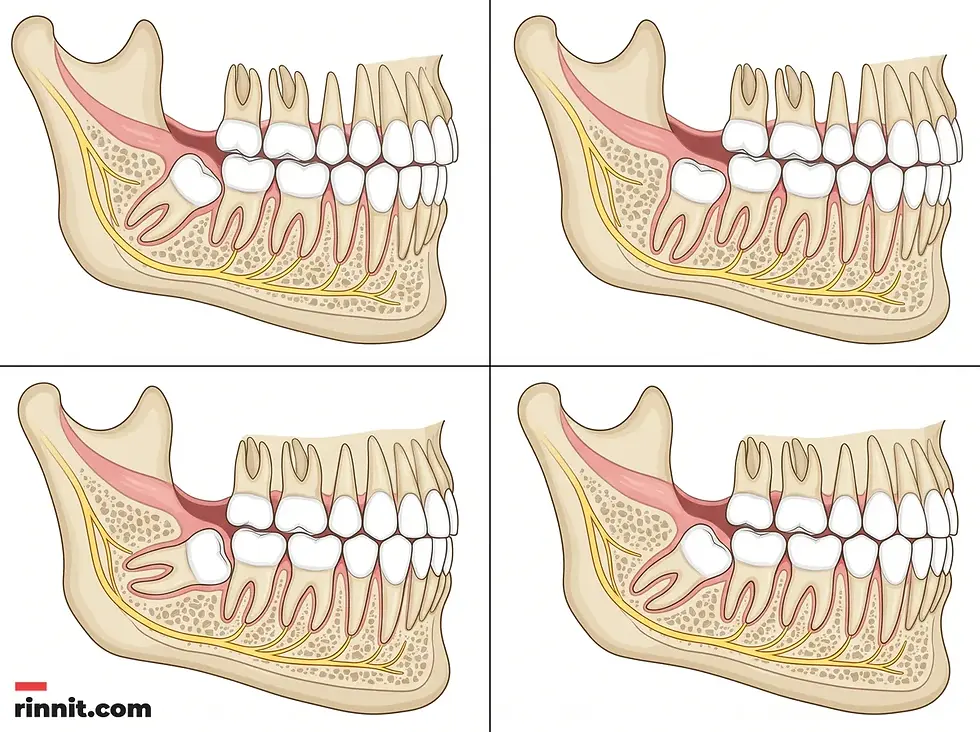
Extraction is frequently recommended when these teeth become “impacted,” meaning they are partially or fully trapped within the gums or jawbone. Impacted teeth can grow at awkward angles, leading to pain, food trapping, and the development of gum disease or tooth decay. [1] In many cases, dental professionals suggest removal as a preventive measure to safeguard overall oral health before symptoms even develop. [1]
Preparation and the Procedure
The journey toward removal begins with a thorough consultation and dental X-rays to map the exact position of the teeth. During this time, patients discuss sedation options, which can range from local anesthesia and nitrous oxide to intravenous sedation or general anesthesia. Those opting for more intensive sedation are typically required to fast for several hours before the appointment.
The surgical process itself is precise and efficient. After administering anesthesia to ensure comfort, the surgeon makes small incisions in the gum tissue if necessary to access the teeth. [1] [2] The tooth is carefully loosened and lifted from its socket, sometimes being divided into smaller sections for easier removal. [1] [2] Once the area is cleaned, the surgeon may place stitches to close the site and gauze to manage initial bleeding. [1]
Post-Operative Care and Recovery
Successful recovery depends heavily on adhering to professional guidelines during the first few days. Managing initial side effects like swelling and mild discomfort is a priority. Using ice packs in 20-minute intervals and taking prescribed medications as directed can significantly ease this transition.

Recovery Milestone | Expected Timeline | Key Activities |
Initial Rest | First 24 Hours | Limit physical activity; keep head elevated. |
Peak Swelling | Days 3–4 | Use ice packs; continue soft food diet. |
Routine Resumption | Days 3–5 | Return to work or school as comfort allows. |
Full Healing | 1–2 Weeks | Gum tissue and bone structure continue to stabilize. |
Dietary choices play a critical role in the healing process. Patients should stick to soft foods like yogurt and smoothies for the first three to five days, gradually reintroducing solid foods as tolerated. It is vital to avoid hard, crunchy, or chewy foods that could irritate the surgical sites.

Post-Operative “Dos” | Post-Operative “Don'ts” |
Rest extensively for at least 3 days. | Do not use straws (prevents dry sockets). [1] |
Use ice packs to control facial swelling. [1] | Avoid exercise for 48–72 hours. |
Soak with mouthwash gently without swishing. | Skip hard or crunchy foods initially. |
Brush other teeth normally to prevent infection. | Avoid alcohol for at least 5 days. |
Potential Risks and Complications
While complications are rare, it is important to be aware of potential issues such as infection or damage to nearby nerves and sinuses. [1] One of the most common post-operative concerns is a “dry socket,” which occurs when the protective blood clot at the extraction site is dislodged [2], exposing the underlying bone. This condition is often caused by using straws or smoking too soon after surgery. If pain or swelling increases significantly after the fourth day, patients should contact their surgical team immediately.
Conclusion
Wisdom teeth removal is a proactive step toward maintaining long-term oral health and preventing future complications. By understanding the procedure and committing to a structured recovery plan, patients can navigate the process with minimal discomfort. Modern surgical techniques and effective sedation options make this common procedure a safe and predictable experience for most individuals.
Next Steps
If your dentist has recommended wisdom teeth removal, schedule a consultation with an oral surgeon to discuss your specific needs and sedation preferences. Prepare your home in advance by stocking up on soft foods and arranging for a recovery period of at least three to five days. Following your surgeon's specific post-operative instructions is the most effective way to ensure a fast and complication-free return to your daily routine.
Frequently Asked Questions
1. How long does the surgery take?
The procedure typically lasts about an hour, though complex cases may take longer.
2. When can I return to work?
Most people can resume their normal routines within three to five days.
3. Is the procedure painful?
Anesthesia and sedation are used to ensure you are comfortable and pain-free during the surgery.
4. Why are wisdom teeth removed preventively?
Removal can prevent future issues like crowding, infection, and damage to nearby teeth.
5. What is a dry socket?
A dry socket is a painful condition where the blood clot at the extraction site is lost, exposing the bone.
6. Can I drive myself home after surgery?
If you receive sedation or general anesthesia, a trusted friend or family member must drive you home.
7. When can I start exercising again?
Most patients can resume fitness routines in about 48 to 72 hours.
8. What foods should I avoid?
Avoid hard, crunchy, or chewy foods for at least the first three to five days.
9. How do I control swelling?
Apply an ice pack to your face for 20 minutes on and 20 minutes off several times a day.
10. Can I use a straw?
No, the suction from a straw can dislodge the blood clot and cause a dry socket.
11. When should I call my surgeon?
Contact them if you experience excessive bleeding or if pain and swelling worsen after four days.
12. Are stitches always necessary?
Not always, but they are often used to close the surgical site and promote healing.
13. What sedation options are available?
Options include local anesthesia, nitrous oxide, IV sedation, and general anesthesia.
14. How long is the full recovery?
Full healing of the gums and bone typically takes one to two weeks.
15. Can I brush my teeth after surgery?
Yes, you should brush your other teeth normally, but avoid the extraction sites to prevent irritation.
Trusted External Resources
Related Reading
Wisdom Teeth: Symptoms, Causes, and Treatment explains impacted wisdom teeth and when they cause problems.
Dry Socket: The Complete Guide describes this painful healing problem after extraction and how to prevent it.
Tooth Extraction: Procedure, Recovery Timeline, Aftercare and Warning Signs covers how teeth are pulled and how to care for the site.
Oral Surgery: A Comprehensive Guide to Mouth Procedures reviews common mouth surgeries and what to expect.
References
Mayo Clinic Staff. Wisdom tooth removal. Mayo Clinic. April 5, 2024. https://www.mayoclinic.org/tests-procedures/wisdom-tooth-extraction/about/pac-20395268
NHS. Wisdom tooth removal. NHS. Page last reviewed June 12, 2024. https://www.nhs.uk/tests-and-treatments/wisdom-tooth-removal/
American Association of Oral and Maxillofacial Surgeons (AAOMS). Wisdom teeth management. MyOMS.org. Last updated September 2026. https://myoms.org/what-we-do/wisdom-teeth-management/
Ghaeminia H, Nienhuijs ME, Toedtling V, et al. Surgical removal versus retention for the management of asymptomatic disease-free impacted wisdom teeth. Cochrane Database Syst Rev. 2020;5(5):CD003879. PMID 32368796. https://doi.org/10.1002/14651858.CD003879.pub5
Bailey E, Kashbour W, Shah N, et al. Surgical techniques for the removal of mandibular wisdom teeth. Cochrane Database Syst Rev. 2020;7(7):CD004345. PMID 32712962. https://doi.org/10.1002/14651858.CD004345.pub3
Camps-Font O, Sábado-Bundó H, Toledano-Serrabona J, et al. Antibiotic prophylaxis in the prevention of dry socket and surgical site infection after lower third molar extraction: a network meta-analysis. Int J Oral Maxillofac Surg. 2024;53(1):57-67. PMID 37612199. https://doi.org/10.1016/j.ijom.2023.08.001
Cleveland Clinic. Wisdom Teeth Removal: Procedure & Recovery. Cleveland Clinic. Last updated August 11, 2026. https://my.clevelandclinic.org/health/treatments/22119-wisdom-teeth-removal
Medical Disclaimer
This content is for informational purposes only and does not constitute medical advice. Always seek the advice of your dentist, oral surgeon, or other qualified health provider with any questions you may have regarding a medical condition or treatment.



Comments