Oral Surgery: A Comprehensive Guide to Mouth Procedures

Updated: 2 days ago
Medically reviewed by Dr. Baraa Alnahhal, MD · Last reviewed: October 2026
Oral surgery is any operation done inside your mouth, from removing a tooth to placing an implant or grafting gum tissue. It treats infection, pain, and damage that routine dental care cannot fix. This guide covers the most common procedures, how to prepare, what happens on the day, and what healing looks like.
Quick Answer: What is oral surgery?
Oral surgery is any operation inside the mouth on the teeth, gums, tongue or oral cavity, such as tooth extractions, wisdom tooth removal, dental implants and bone or gum grafts. It is usually done with local anesthesia. Most people feel normal in two to three days, though full healing takes longer. Call your provider for uncontrolled pain or fever.
What the research says
Chlorhexidine lowered the risk of dry socket without antibiotics. A meta-analysis of 12 studies of third molar surgery with no systemic antibiotics found alveolar osteitis (dry socket) in 9.58% of patients who used chlorhexidine versus 16.8% of controls (P < 0.0001), which the authors describe as a 42.9% lower risk (Pahlevi et al., Swiss Dent J, 2026) [2].
Coronectomy lowered nerve-injury risk for high-risk wisdom teeth. A systematic review and meta-analysis of 34 observational studies (7,115 wisdom teeth in 4,477 patients) found that coronectomy, compared with full extraction, lowered the risk of inferior alveolar nerve injury (relative risk 0.1; 95% CI 0.0-0.2) and of dry socket (relative risk 0.4; 95% CI 0.3-0.7), but more patients needed repeat surgery (3.63%) (Kang et al., J Oral Maxillofac Surg, 2025) [3].
Platelet-rich fibrin placed in the socket reduced dry socket and pain. A meta-analysis of 28 randomized trials after mandibular third molar extraction found that platelet-rich fibrin, compared with natural clot healing, lowered dry socket incidence (relative risk 0.17; 95% CI 0.06-0.49) and reduced postoperative pain from day 1 to day 7 (Sampaio et al., Oral Maxillofac Surg, 2026) [4].
Study details retrieved from PubMed.
What Is Oral Surgery?
Oral surgery is a broad term for any operation inside the mouth. It includes procedures on your teeth, gums, tongue, or any other area of your oral cavity. Dental specialists who have advanced training in oral surgery perform these procedures, and healing times vary with the type of surgery you need. [1]
Conditions Treated With Oral Surgery
Your dentist might recommend oral surgery if you have: [1]
Abscessed teeth
Broken teeth
Bone loss in your jaw
Extensive tooth decay
Impacted teeth
Loose or missing teeth
Oral cancer
What are the most common oral surgery procedures?
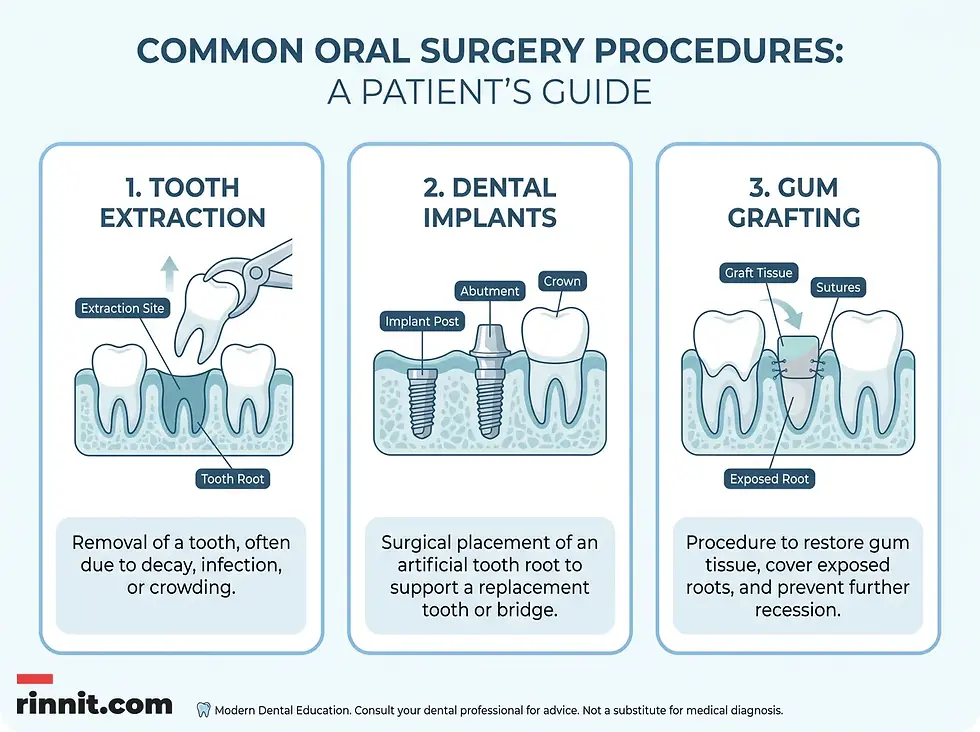
Common oral surgery procedures include wisdom tooth removal, tooth extraction, dental bone grafts, dental implants and gum grafts.
Procedure | Purpose | Common reasons |
Wisdom tooth removal | Treats or prevents pain and infection | Impacted or painful third molars |
Tooth extraction | Removes a decayed or damaged tooth | Severe decay, breakage, or an abscess |
Dental bone graft | Increases the volume and density of your jawbone | Jawbone loss, often before implants |
Dental implant | Replaces a missing tooth | Missing teeth |
Gum graft | Treats thinning or receding gums | Gum recession |
How is oral surgery different from maxillofacial surgery?
The two fields overlap but are not the same. Oral surgeons and maxillofacial surgeons have the same educational pathway and credentials. If you need your wisdom teeth removed, you will probably see an oral surgeon. If you have facial injuries from a car accident, you will see a maxillofacial surgeon. [1]
Oral surgery | Maxillofacial surgery | |
Focus | Teeth, gums, and other parts of the mouth | Face, mouth, jaws, and neck |
Common procedures | Tooth extractions, dental implants, gum grafting | Jaw surgery, cleft lip and palate repair, cosmetic facial surgery, reconstruction of broken facial bones |
Typical setting | A clinical setting such as an outpatient surgery center, or a hospital if you need general anesthesia | Always a hospital |
How should you prepare for oral surgery?
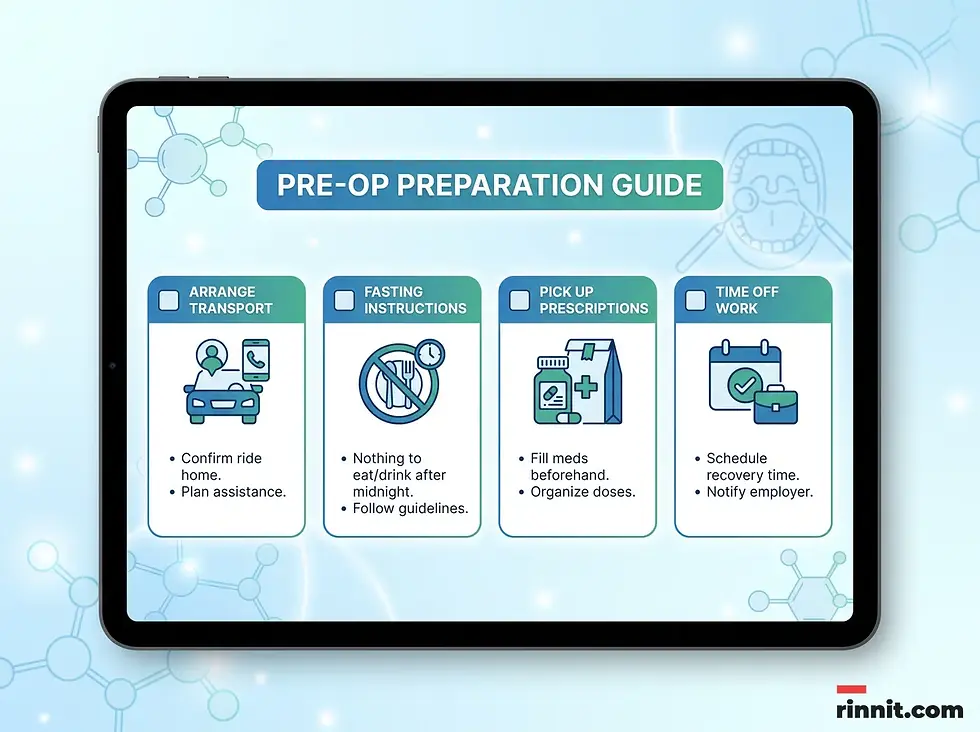
How you prepare depends on the type of surgery and whether you choose sedation. Your provider will give you pre-op instructions if needed. These general steps help, especially if you are having sedation: [1]
Arrange for a friend or family member to drive you to and from your appointment.
Avoid eating or drinking for several hours before the procedure. Your provider will tell you exactly how long.
Pick up any prescriptions ahead of time.
Take a few days off work to recover. Your provider will give you an idea of how long healing should take.
What happens during oral surgery?
Depending on your situation, you may have your procedure at an outpatient surgical center or at a hospital. On the day of your appointment, you can generally expect the following: [1]
A healthcare provider gives you local anesthesia to numb your mouth. They may also give sedative medicine to help you relax or sleep through the procedure.
They make an incision inside your mouth. Its location depends on the area being treated.
Your oral surgeon does the surgery with small, specialized instruments, which may include removing teeth, placing implants, or reshaping bone or tissue. You should not feel any pain.
When the procedure is finished, the surgeon closes the incision with stitches.
How long it takes depends on the type of surgery and how many teeth need treatment. A one-tooth extraction usually takes about 30 minutes, while a more involved procedure such as a gum graft takes at least one to two hours. [1]
What is the recovery and healing timeline after oral surgery?
Healing times vary, but most people feel like themselves again in about two to three days. The more extensive the surgery, the longer recovery takes. You should not have severe pain, but you will have some discomfort, and your provider will give you medicine to keep you comfortable. [1]
How to Care for Yourself After Surgery
Avoid spitting and vigorous swishing. They can disturb healing.
Wait at least 48 hours before exercising. You are more prone to bleeding when your blood pressure and heart rate go up.
Keep your head elevated for the first few days to reduce swelling.
Eat soft foods such as yogurt, soup, pasta, mashed potatoes, pudding, eggs, and rice.
Take all medications exactly as prescribed.
Use heat and cold. Ice packs on your outer jaw help reduce swelling. A warm washcloth can stimulate blood flow to the area.
Long-Term Healing
Your mouth keeps healing even after you feel better. Soft tissues usually heal in about one month, and bone can take up to six months. [1]

What are the benefits and risks of oral surgery?
Oral surgery can correct conditions that nonsurgical treatments cannot, but like any procedure it carries risks such as infection, dry socket and numbness.
Benefits
Oral surgery can correct conditions that nonsurgical treatments cannot. [1]
Better health. Combined with routine dental care, it can treat conditions that cause infection, such as tooth decay and gum disease.
Enhanced aesthetics. It can improve the appearance of your teeth, which affects how comfortable you feel in social situations.
Improved function. It can replace damaged or missing teeth, which eases problems with eating and speaking.
Pain relief. It can correct painful problems such as broken teeth, extensive decay, and sore, bleeding gums.
Prevention. Preventive treatments such as wisdom tooth removal can help you avoid problems later.
Risks and Complications
Like any procedure, oral surgery has risks. Possible complications include: [1]
Infection
Injury to neighboring teeth
Dry socket
Numbness
Tooth fragments left behind
Sinus perforation (a hole in your sinus membrane)
When should you call your healthcare provider after oral surgery?
After oral surgery, call your healthcare provider if you develop these signs of infection: [1]
Severe pain that does not go away with medication
A fever of 102 degrees Fahrenheit (38.9 degrees Celsius) or higher
Pus coming from your incisions
What is the bottom line on oral surgery?
Oral surgery covers everything from a single extraction to implants and grafts, and it is often the only way to treat certain problems in the mouth. Good preparation, a ride home, and a few days of rest make recovery easier, and following your surgeon's care instructions lowers the risk of bleeding, infection, and dry socket. Soft tissue heals in about a month and bone can take up to six months, so keep your follow-up visits. If you feel anxious, ask your provider about sedation options.
Frequently Asked Questions
Will I be awake during oral surgery?
It depends on the procedure and on your choice. Your provider will give local anesthesia to numb your mouth. They may also give sedative medicine to help you relax or sleep through the procedure. If you need general anesthesia, the surgery may be done in a hospital.
How long does a typical procedure take?
It depends on the type of surgery and how many teeth need treatment. A one-tooth extraction usually takes about 30 minutes, while a more involved procedure such as a gum graft takes at least one to two hours.
What should I eat after surgery?
Stock up on soft foods such as yogurt, soup, pasta, mashed potatoes, pudding, eggs, and rice. Your provider will also give you post-op instructions and a list of soft foods to eat.
When can I return to work?
Most people feel like themselves again in about two to three days, though more extensive surgery takes longer. Your provider will give you an idea of how long healing should take, so ask before you plan your time off.
Is swelling normal after oral surgery?
Yes. Swelling is a normal part of healing and usually peaks within about 48 to 72 hours before it gradually goes down. Keep your head elevated for the first few days and place ice packs on your outer jaw to help reduce it.
What is a dry socket?
A dry socket is a painful complication that can follow a tooth extraction when the protective blood clot in the socket is dislodged or does not form. This leaves the underlying bone and nerves exposed to air and food. Avoiding spitting and vigorous swishing helps protect the clot.
Can oral surgery improve my appearance?
Yes. Procedures such as dental implants can replace missing teeth, and gum grafts can treat receding gums. Both can improve the look of your smile, and the appearance of your teeth can affect how comfortable you feel in social situations.
How do I manage pain after the procedure?
You should not have severe pain, but some discomfort is normal. Your provider will give you medicine to keep you comfortable. Take it exactly as prescribed, and use ice packs on your outer jaw to reduce swelling.
Are the stitches permanent?
Often not. Many oral surgeons use dissolving stitches, which break down on their own in about one to two weeks. If your surgeon uses stitches that do not dissolve, they will remove them at a follow-up visit.
When should I call my surgeon?
Call your healthcare provider if you develop severe pain that does not go away with medication, a fever of 102 degrees Fahrenheit (38.9 degrees Celsius) or higher, or pus coming from your incisions. Heavy bleeding that does not stop is also a reason to call right away.
How do I prepare for oral surgery?
It depends on the type of surgery and whether you choose sedation; your provider will give you pre-op instructions if needed. In general, especially with sedation: arrange for a friend or family member to drive you to and from the appointment, avoid eating or drinking for several hours beforehand (your provider will say exactly how long), pick up any prescriptions ahead of time, and plan a few days off work to recover [1].
Related Reading
References
Cleveland Clinic. Oral surgery. Cleveland Clinic. Medically reviewed; last updated October 1, 2024. https://my.clevelandclinic.org/health/procedures/oral-surgery
Pahlevi MR, Istadi D, Arindra PK. Chlorhexidine reduces the incidence of alveolar osteitis in the absence of systemic antibiotics. Swiss Dent J. 2026;136(2):49-63. PMID: 42454528. DOI: 10.61872/sdj-2026-02-05
Kang FW, Yuan XR, Li GC, et al. Coronectomy in lower third molar surgery: a systematic review and meta-analysis. J Oral Maxillofac Surg. 2025;83(5):601-615. PMID: 39956152. DOI: 10.1016/j.joms.2025.01.014
Sampaio P, Shazo S, Ranganathan R, et al. Platelet-rich fibrin after mandibular third molar extraction: a split-mouth and parallel-group stratified meta-analysis of randomized controlled trials (RCTs). Oral Maxillofac Surg. 2026;30(1):152. PMID 42768126. https://doi.org/10.1007/s10006-026-01636-3
Medical disclaimer
This article is for general informational purposes only and is not a substitute for professional medical advice, diagnosis, or treatment. Always consult a qualified healthcare professional about your health.



Comments